 AI image
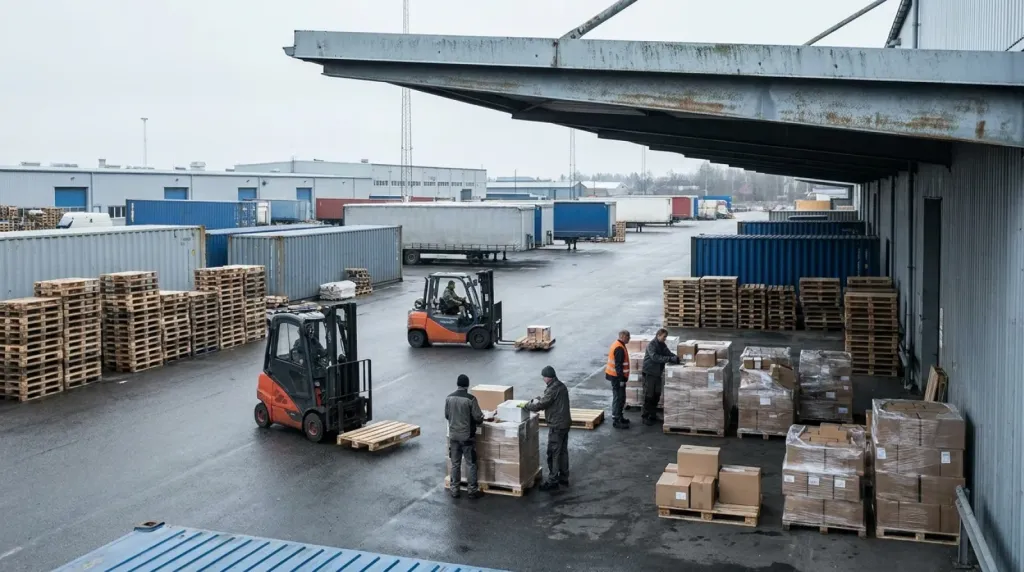
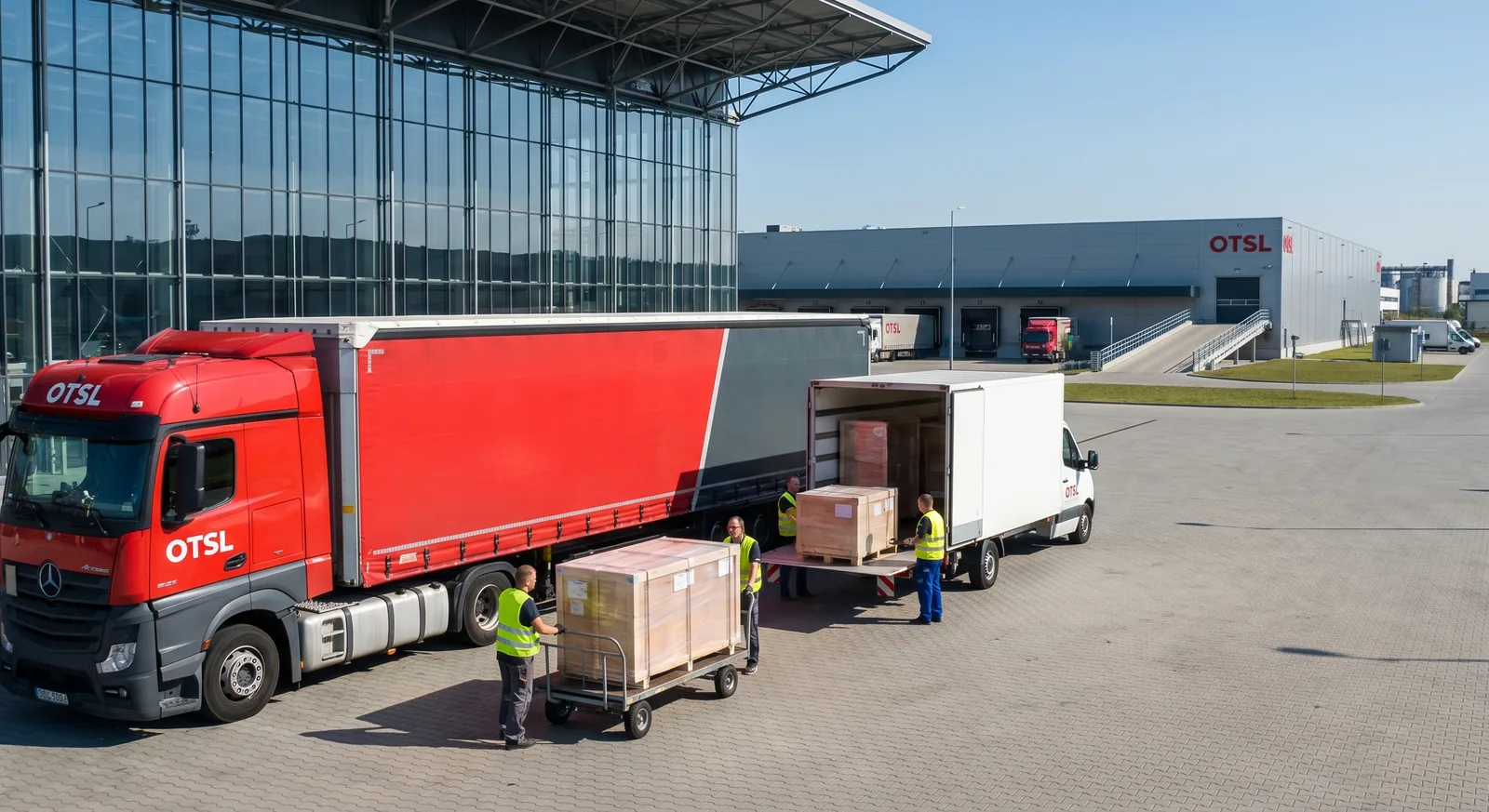
OTSL has a transshipment base in Kielce that serves as warehouse backup next to the Kielce fairground. We store goods before and after the event, keep a buffer when transport arrives earlier than the slot allows, and run deliveries and collections to the venue in step with the bookings. The short way to the hall gives a margin no long-haul transport can match.
What the base next to the venue gives you
- Storage of goods, exhibits and stand elements before and after the fair.
- A buffer when the truck arrives a day or two before the slot.
- Unloading and loading: ramp, crane (HDS), forklifts up to 5T.
- Deliveries and collections to the venue in step with the organiser bookings.
- Keeping packaging and crates for the duration of the event.
Typical scenarios
Transport from the other end of Europe rarely hits the slot perfectly. When the truck arrives early, the goods wait with us, not in a trailer on a car park. When the organiser sets a different slot than the transport plan assumed, we hold the load and bring it in on the new date; that mechanism is described in the text on a different slot and warehouse backup. Bookings and entry to the venue are explained in the article on delivery to Targi Kielce. After the event we collect the exhibits from the hall, store them and arrange return or onward transport.
Why does proximity matter?
A late delivery at a fair does not simply shift by an hour, it drops out of the build-up schedule: the crew stands idle, the stand goes up later, and the organiser does not delay the opening. From the base next to the venue we bring goods in within minutes, not hours, so the build-up plan stops depending on traffic and the queue at the gate. The cost of storage is small against the cost of a lost build-up day.
Who is it for?
The backup is used by exhibitors, stand builders and carriers that need an unloading point next to the venue. We handle single pallets and full loads. See exhibition logistics and the Kielce base.
Got a fair date and a slot that does not match the route? Write through the contact form and we will set up the buffer and an on-time delivery.
How should you plan buffering time and cargo specs before entering the exhibition halls?
Shifting your unloading slot at the fair requires precise timing control. If your haulage arrives at the Kielce hub at least 24 hours before your assigned slot, you gain enough time to verify cargo condition and adjust lashing. The tolerance for late arrival at the main gate is usually restricted to 15 minutes. Beyond this grace period, the organiser cancels your slot, pushing the vehicle to the back of the queue, which causes delays between 2 and 6 hours.
When preparing goods for shuttle runs from the warehouse to the stand, you must account for handling equipment limits. Standard forklifts at the facility process pallet units up to 1200 kg. Maintaining vehicle volume load at roughly 80% ensures manual or mechanical offloading at the hall entrance within 20 minutes. Keep the following operational figures in mind:
- Maximum pallet load height must not exceed 2.2 metres to clear the standard access doors of the halls.
- The short-term storage holding limit of 48 hours applies exclusively to standard palletised freight.
- Vehicle booking submission via the slot management system must be logged at least 2 hours prior to hall arrival.
This procedure does not apply to heavy machinery or out-of-gauge cargo exceeding 3500 kg or a height over 3.0 metres. Such consignments require specialised heavy-lift crane access, specific hall clearance permits, and custom access routes outside the standard vehicle booking system.
Step by step
- Receiving cargo at the base. You deliver the goods to the Kielce facility ahead of the fairground schedule.
- Buffer storage. You keep the exhibition materials in the warehouse until the assigned access window opens.
- Filing the notification. You submit the vehicle details and driver information to the venue organiser.
- Delivery to the hall. You move the shipment onto the exhibition site precisely during the allocated time window.
- Post-event collection. You store empty packaging and transport the exhibits back after the event ends.
Definitions
- Slot: The time window set by the organiser for unloading at the hall.
- Booking: Notifying the organiser of the delivery and the vehicle before entering the fairground.
- Buffer: Short storage between the arrival of the transport and the designated unloading time.
- HDS (Hydraulic Truck Crane): A crane mounted on a lorry used for loading and unloading cargo.
The OTSL role
OTSL organises international groupage (LTL) transport and provides local storage facilities, as highlighted in the article on delivery to Targi Kielce, slots, booking and unloading, ensuring reliable support for event logistics.