 AI image
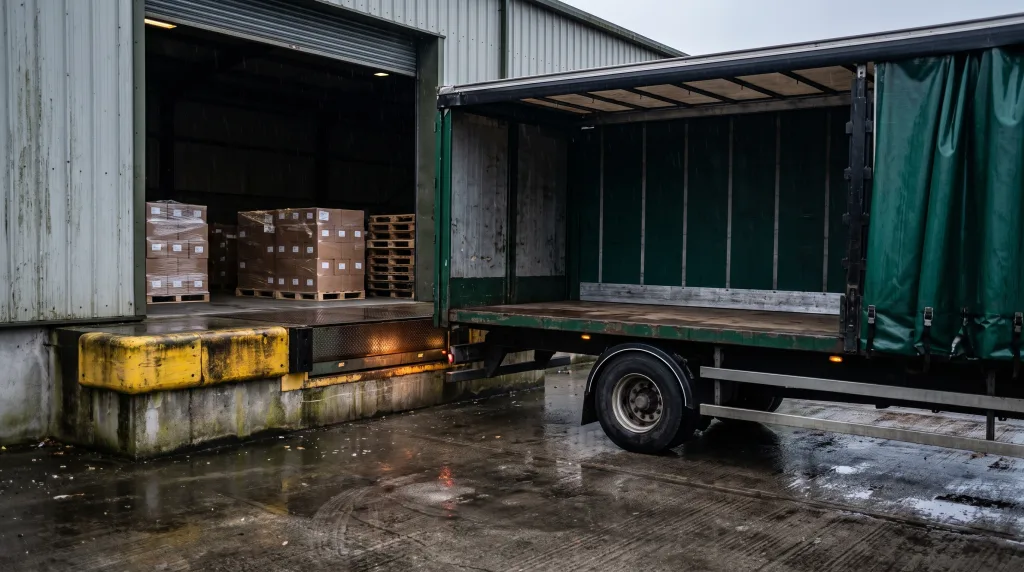
A build-up slot is the time window in which your vehicle may enter and unload at the stand. Missing it does not push delivery by an hour — you drop out of the queue and wait for a free window, and at peak build-up there is none. The real cost is not vehicle waiting time but an idle fitting crew and the risk that the stand is not ready for opening.
What the real cost is made of
| Item | Effect of a missed slot |
|---|---|
| Vehicle waiting | hours up to a full day |
| Fitting crew | waits and bills labour hours |
| Crew accommodation | an extra night if build-up moves to the next day |
| Out-of-hours work | venues charge for work outside the schedule |
| Business risk | stand not ready for opening |
Why vehicles arrive late
- A route planned too tight. No slack for traffic, a roadside check or a driver break.
- Driving hours. The vehicle stops because the driver has run out of daily driving time. That cannot be made up.
- Slot changed by the organiser. It happens, sometimes communicated late.
- Late loading at the exhibitor. The stand build was not ready at the agreed hour.
- City access restrictions. A low-emission zone or delivery window nobody accounted for.
How to plan with slack
Practical rule: the vehicle should be near the venue the day before, or with several hours in hand, not "on the hour". On longer runs that means leaving Poland a day earlier and staying overnight outside the city. It looks like a cost until you compare it with a day of fitting-crew time.
The second element is a fallback window. At large shows it is worth booking an earlier slot as well where the regulations allow, rather than fighting for a change after the fact.
Why the windows are so rigid
The build-up schedule is not an organiser whim but a consequence of the venue physics. A hall has a fixed number of gates, ramps and places where a vehicle can stand without blocking a route. If a window admits twelve vehicles, the thirteenth has nowhere to stand — it is not about goodwill but about metres. That is why asking to move a slot on build-up day almost always ends in a refusal.
Sequence matters
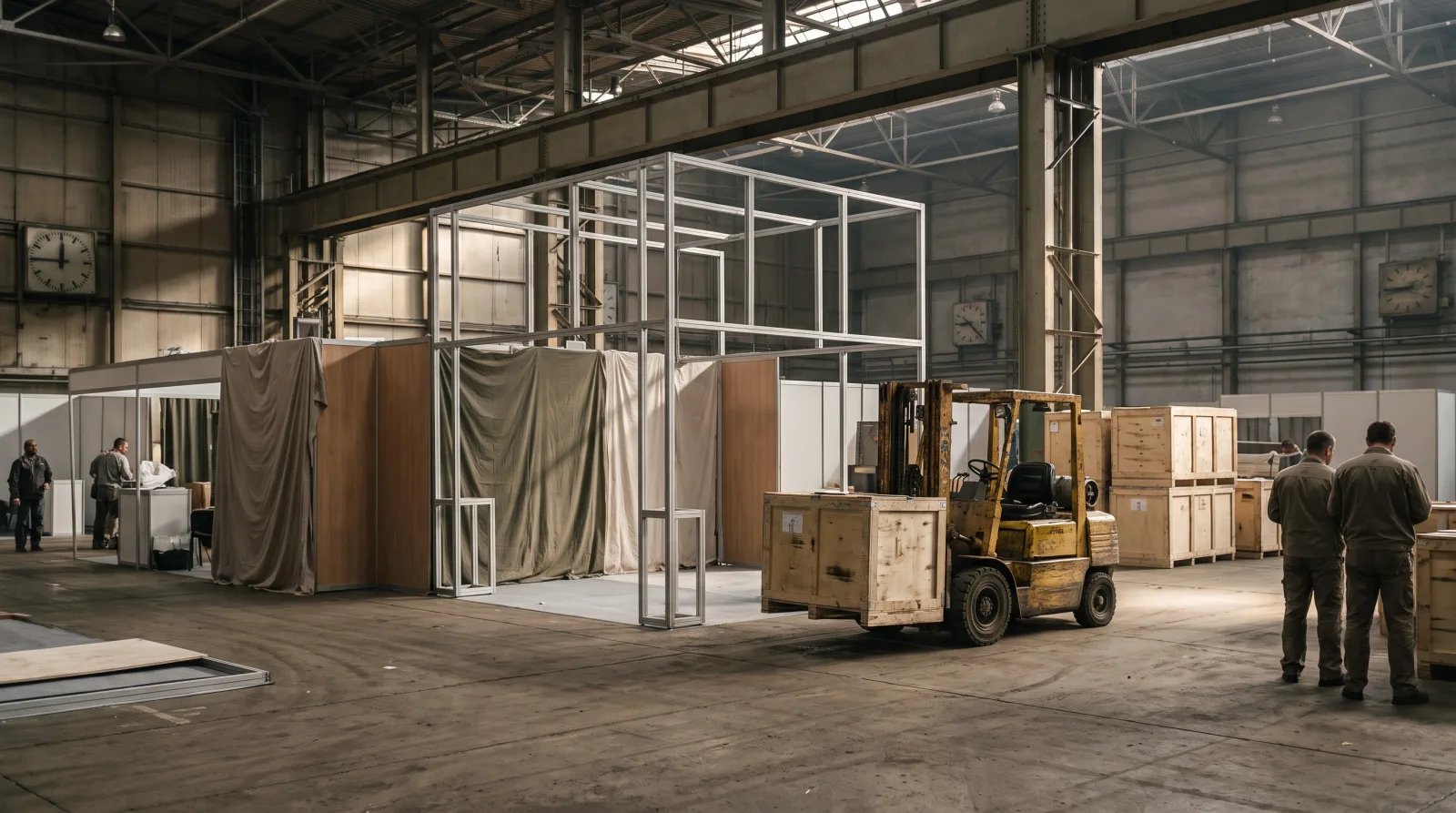
On larger stands the order of deliveries matters as much as the dates. Structure and flooring must arrive before the build, the build before furniture, furniture before exhibits, and marketing materials last. Reverse that order and the crew cannot work even though everything has arrived. With several vehicles, book them as a sequence rather than as independent deliveries.
The buffer that actually works
A buffer measured in hours on the road disappears at the first queue outside the venue. The buffer that works is an overnight stop nearby and presenting the vehicle in the morning, ahead of the window. For deliveries from Poland to shows in Germany, the Netherlands or France that usually means leaving a day earlier. The cost of a night is known in advance; the cost of a missed window is not.
What to do once you know you will be late
The earlier it is reported, the better the chance of a rescue. Telling the organiser a few hours before the window sometimes allows a move to a later slot the same day. Telling them afterwards achieves nothing. That is why staying in contact with the driver en route is part of the service, not a nice extra.
What does OTSL do?
We plan exhibition deliveries with time in hand and treat driving hours as part of the schedule, not a separate variable. We serve shows across Europe with 12 and 18 tonne rigids with tail lifts, so unloading does not depend on forklift availability in the hall.
We deliver stand builds into halls without a ramp using a rigid truck with a tail lift. Full exhibition offer: exhibition logistics.
Definitions
- Build-up slot: A specific time window assigned to a vehicle in the venue schedule for entering and unloading goods at the stand.
- Fitting crew: The team of specialists responsible for assembling and setting up the exhibition stand before the event opens.
- Venue schedule: The timetable controlling access to gates, ramps, and manoeuvring spaces to prevent overcrowding during fair preparations.
- Out-of-hours work: Additional operational time granted by the fair venue outside standard hours, subject to venue fees.
When does this rule not apply?
Strict slot queuing depends on whether the exhibition organiser operates an open-access policy without designated time windows for smaller vehicles.
The OTSL role
OTSL organises transport timed precisely to fit event schedules, preventing delays for build-up teams. If a time slot changes, flexible transport solutions such as Express vans combined with intermediate storage support like A different fair slot? Alternative warehouse backup | OTSL help secure smooth logistics.