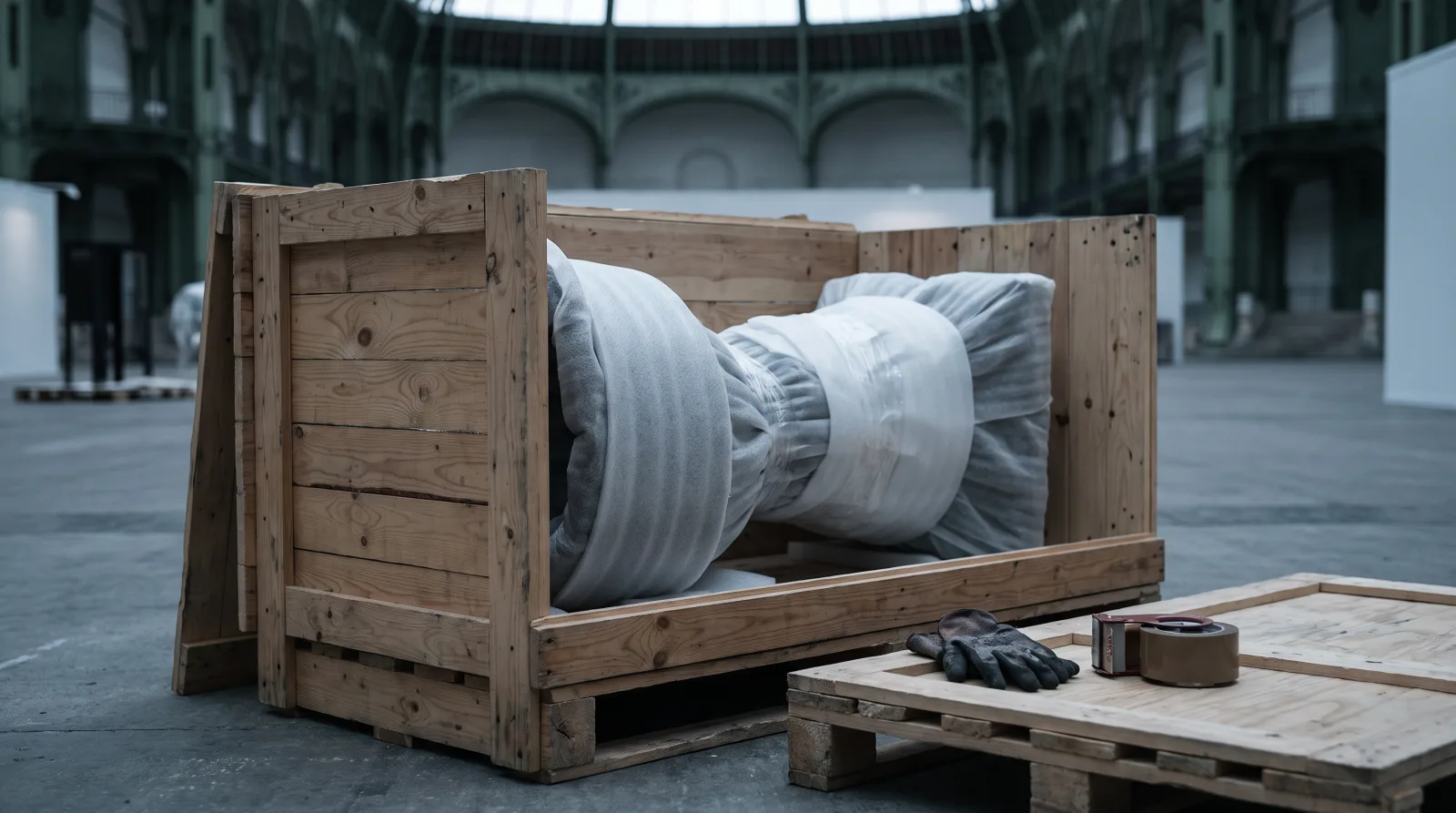
 AI image
SACROEXPO at Targi Kielce is an exhibition of church construction and furnishings, sacred art and devotional articles; the 28th edition is scheduled for 21–23.06.2027 (as of 4.09.2026 — check the organiser's calendar). The exhibits differ from industrial fairs: sculptures, stained glass, textiles, glass and metalwork — fragile, of high unit value and unusual dimensions. That forces three decisions before transport: how to pack, which insurance to put on the goods (carrier liability will not cover light, expensive pieces) and whether a non-EU exhibitor needs an ATA carnet.
How do sacred art exhibits differ from a typical trade fair load?
Stand construction is repeatable pallets of known weight. A polychrome wooden sculpture, a leaded stained-glass panel or an embroidered chasuble are single pieces that cannot be double-stacked or lifted by forks without a crate. Dimensions are often non-standard (tall figures, long altar elements), and weight does not track value: an object weighing a few kilograms may be the most expensive line on the list.
That weight-to-value ratio decides the insurance. Carrier liability under the CMR Convention is capped at 8.33 SDR per kilogram of gross weight. For a light work of art that is a fraction of its worth, which is why OTSL adds cargo insurance for high-value goods for the duration of transport, calculated on the declared value rather than on kilograms.
When does an exhibitor need an ATA carnet and when a normal entry?
An exhibitor from Poland or another EU country has no customs formalities — Sacroexpo takes place inside the customs union. It is different for exhibitors from the United Kingdom, Switzerland or Norway: their exhibits enter temporarily, on an ATA carnet or under temporary admission, with an obligation to re-export. The OTSL in-house customs agency in Kielce handles these formalities as part of the transport order.
The carnet does not cover everything going to the stand. Advertising materials, catalogues and devotional articles meant for sale on site are not temporary exhibits — they need a normal import declaration. Splitting the load into "goes back" and "stays" at the packing stage saves corrections at the border.
Shipping exhibits to Sacroexpo step by step
- Exhibit list. Record every piece with dimensions, weight, material and value; mark advertising materials and goods for sale separately.
- Packing. Wooden crates or lattice cases with fill shaped to the object, "this way up" and "fragile" marks, hall and stand number on every crate.
- Insurance. Declare the value for the cargo policy; carrier liability remains the base layer, but it is not enough for light, expensive pieces.
- Customs documents if you come from outside the EU. ATA carnet issued in the exhibitor's country, or temporary admission through the OTSL agency in Kielce; advertising materials on a separate invoice for import.
- Delivery to the buffer or the hall. Exhibits can arrive at the OTSL warehouse in Kielce (24/7) before build-up and reach the hall in the window given in the organiser's materials.
- Dismantling and return. Empty crates come back from the buffer for the dismantling hour; with an ATA carnet, OTSL looks after the re-exportation voucher on the way home.
Definitions
- ATA carnet (Admission Temporaire / Temporary Admission): an international customs document allowing exhibits to be imported temporarily without duty and VAT, on condition of re-export.
- Temporary admission: a customs procedure under which non-EU goods stay in the customs union for a set period with charges suspended; an alternative to the carnet, handled by a customs agency.
- SDR (Special Drawing Right): the International Monetary Fund's unit of account; under the CMR Convention the carrier's liability limit is 8.33 SDR per kilogram.
- Cargo insurance: a policy on the goods themselves, paid on the declared value regardless of carrier fault; it supplements carrier liability cover.
- Carrier liability insurance (OCP): the carrier's policy covering damage within its CMR liability, that is, subject to the per-kilogram limit.
- Devotional articles: religious objects intended for sale or distribution; at Sacroexpo they are treated by customs as merchandise, not exhibits.
Checklist before shipping sacred art exhibits
- Every piece recorded with dimensions, weight, material and value; condition photographs before packing.
- Crates shaped to the object, marked "fragile", "this way up" and with hall and stand number.
- Value declared for cargo insurance; policy confirmed before loading.
- Load split into exhibits (ATA or temporary admission) and merchandise (import) — if the exhibitor is from outside the EU.
- Edition date confirmed in the organiser's calendar; build-up and dismantling hours downloaded.
- Agreed: delivery to the OTSL buffer or straight to the hall in the entry window.
Does every Sacroexpo exhibitor need an ATA carnet?
No. The ATA carnet does not apply to exhibitors from Poland and the other EU countries, because their exhibits do not cross a customs border. Exhibitors from the United Kingdom, Switzerland, Norway and other countries outside the customs union do need one, unless they choose temporary admission handled by a customs agency. Cargo insurance, on the other hand, depends on the value of the objects, not the country of origin — a Polish workshop sending a high-value stained-glass panel needs it just as much as an exhibitor from London.
The OTSL role
OTSL serves exhibitors at Targi Kielce: it moves exhibits in crates and on pallets, adds cargo insurance for high-value goods and, through its own customs agency in Kielce, handles ATA carnets and temporary admission for non-EU exhibitors. The buffer warehouse next to the venue (24/7) takes exhibits before build-up, stores empty crates during the show and releases them for dismantling. Handling work on the venue grounds and the entry regulations are set by the organiser; OTSL is not the official forwarder of Targi Kielce. Why leaflets and goods for sale do not belong in the carnet is explained in the article on exhibits and advertising materials; the full picture for a visiting exhibitor is in foreign exhibitor at the Kielce trade fair, and the per-kilogram cap in the article on 8.33 SDR/kg. The goods policy is described on the cargo insurance page.