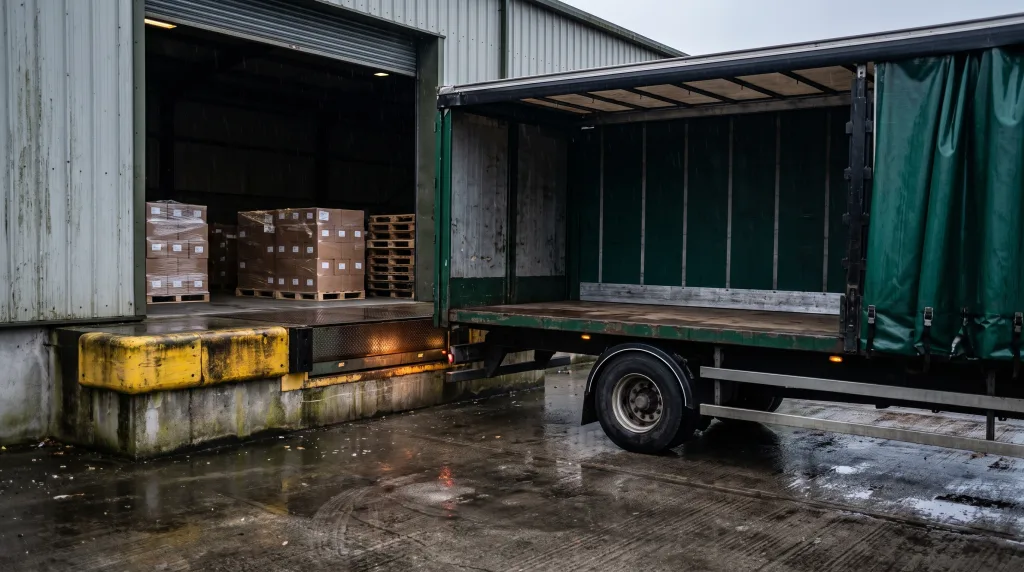
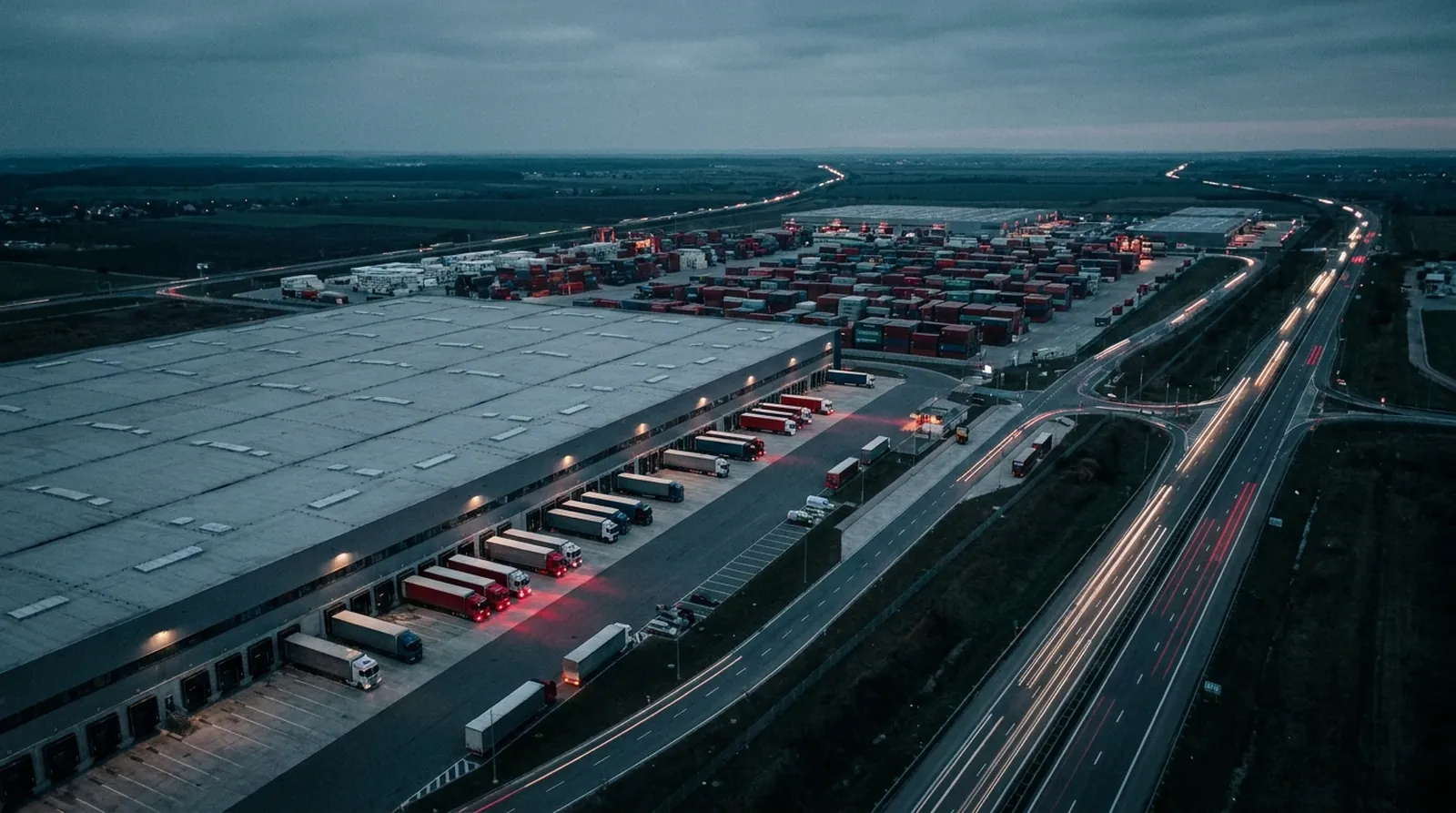
 AI image
A supply chain is the whole journey of goods: from buying raw material, through production, warehousing and transport, to delivery and returns handling. Supply chain management (SCM) is running that journey so goods are in the right place, at the right time, in the right condition, at a predictable cost. Forwarding is the executive link of SCM: it plans and runs the physical flow of goods between the links of the chain.
What a supply chain is made of
In transport practice a supply chain comes down to five repeatable elements: sourcing (where and when goods depart), transport (what carries them and which route), warehousing (where they wait and what happens to them there), formalities (customs, documents, insurance) and distribution with returns (how goods reach the consignee and what happens when they come back). The problem rarely sits in one link. It is usually born at the joint between two: the truck arrives but the warehouse has no slot; the goods exist but the documents do not; the delivery landed but the return has no address.
How forwarding differs from supply chain management
SCM is the decision layer: how much stock to hold, where to place a warehouse, how to split suppliers. Forwarding is the execution layer: a specific truck, a specific ferry, a specific clearance and unloading slot. A good forwarder does not replace the client's logistics team, but takes the whole execution layer off it and says plainly when a decision made a layer above creates risk, for example ordering fair transport too late or running retail deliveries with no buffer.
Where supply chains break most often
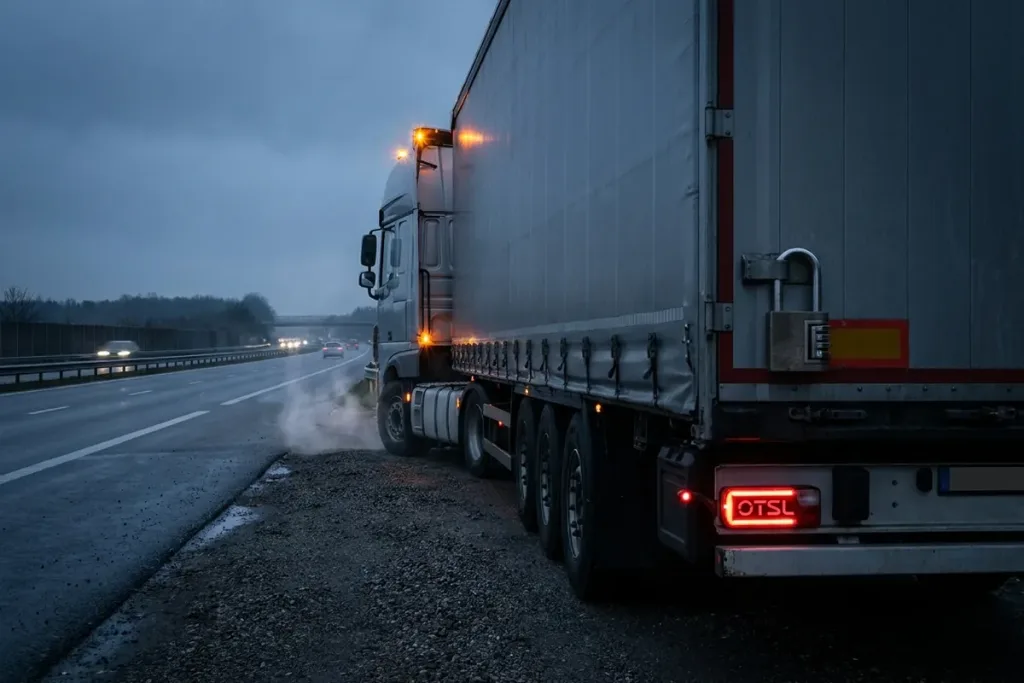
From our practice on Poland–UK–EU lanes, the same joints break: incomplete customs documents at clearance, no booking slot at the consignee, damage at uncontrolled transloading, returns with no local address in the market country, and no plan B when a carrier fails. We cover each of these separately in the knowledge base, and we collected the most common risks in the guide Supply chain risks.
How does OTSL join the chain into one process?
Our model is one window for the whole execution layer: FTL, LTL and express transport, customs clearance and documentation, warehouses in Poland and the UK with repacking and inspection, and returns with a local UK address. The joints between links, where chains break most often, sit on our side and have one owner.
Where to start tidying a supply chain
Not with an IT system, but with a flow map: from where, to where, how often, in what time windows and with what documents the goods travel. On such a map you immediately see where a buffer is missing, where transport is duplicated, and where one delayed clearance stops production. We draw that map with the client at the start, before the first quote.
Step by step
- Sourcing arrangements. You confirm the location and time when goods are ready for collection.
- Transport organisation. You select the vehicle type and optimal route for the journey.
- Warehousing and storage. You store cargo at an intermediate facility prior to final transit.
- Formalities handling. You prepare customs documentation, transit papers, and insurance cover.
- Distribution and returns. You deliver goods to the consignee and handle any rejected cargo.
Definitions
- SCM (Supply Chain Management): Managing the entire movement of goods and information from raw material purchase to final delivery.
- Supply chain: The complete path of a product covering sourcing, production, warehousing, transport, and returns handling.
- Freight forwarding: The executive link responsible for planning and executing the physical flow of goods between chain points.
- Sourcing: The stage of arranging cargo pickup from the point of manufacture or supply.
When does this rule not apply?
This supply chain coordination model does not apply when cargo moves strictly inside a single facility without external road carriage. The requirement for third-party forwarding also depends on whether the buyer collects goods using their own vehicles directly from the manufacturer.
The OTSL role
We bridge supply chain links using our road transport capabilities combined with operational hubs in Kielce and Milton Keynes. For insights into mitigating cross-border delays, read our article on supply chain risks.