 AI image
When a carrier goes insolvent in transit, the cargo is usually still your property, but a driver, a subcontractor or a terminal physically holds it. The priority is to establish fast where the trailer stands and who controls it, because every hour of delay raises the risk of a lien for unpaid freight, standing charges and your load being trapped in the estate.
Where the cargo physically sits when a carrier fails
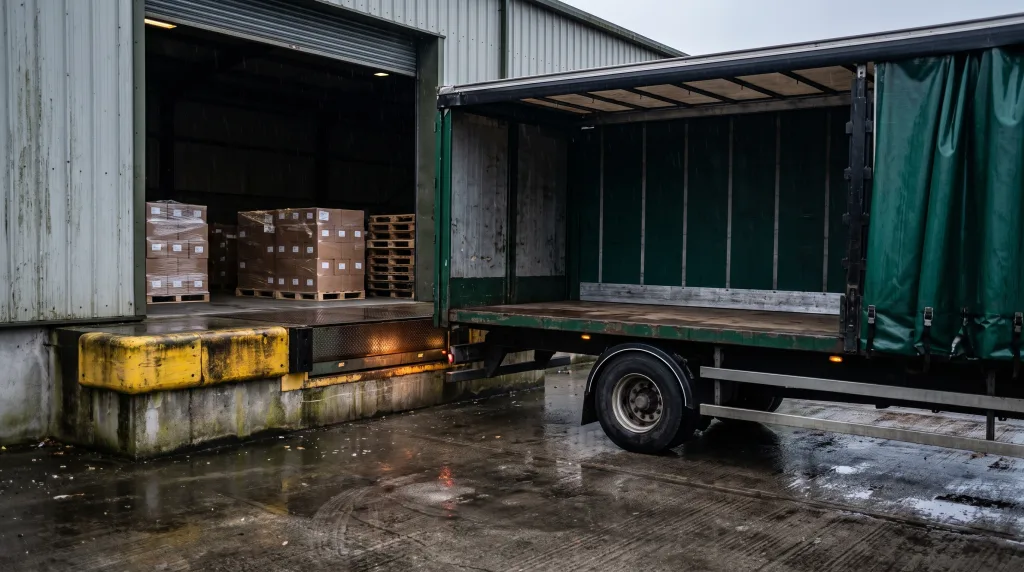
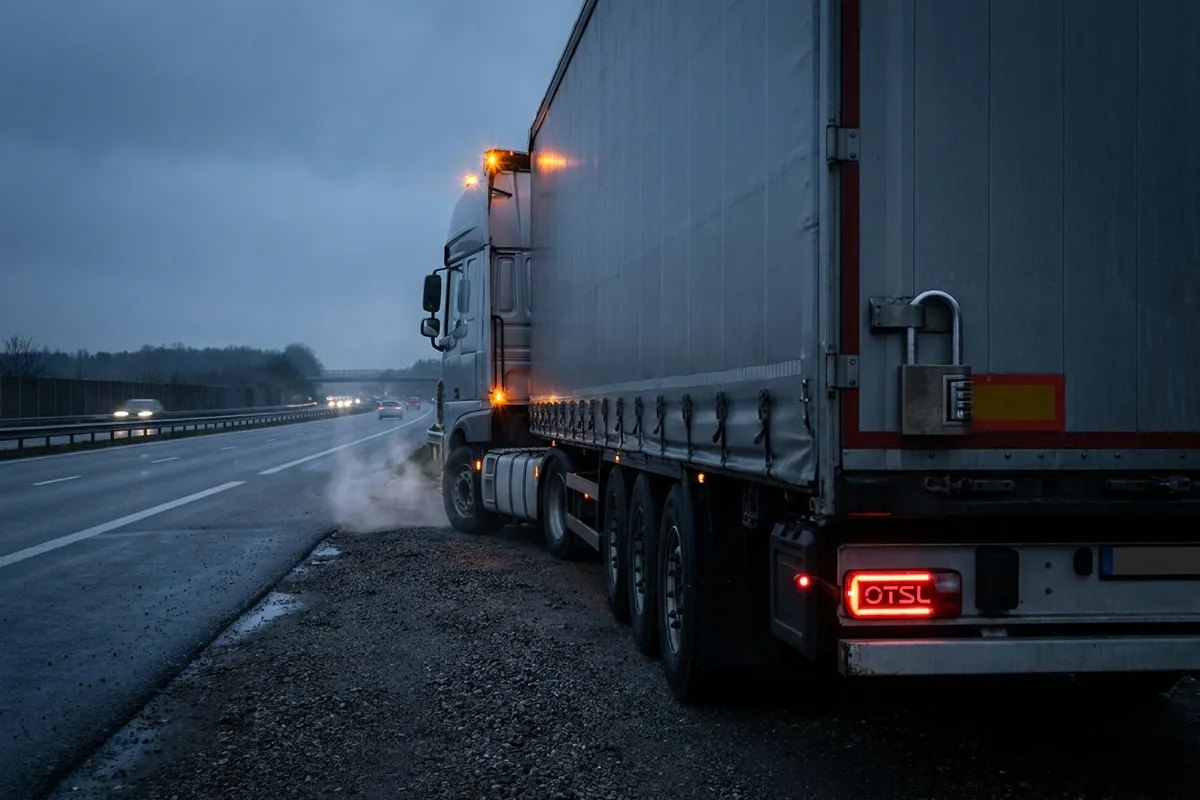
Insolvency rarely arrives at the loading dock. The vehicle usually stops mid-route: on a motorway service area, under an unloading ramp, at a ferry terminal or on a subcontractor's yard. The first question is not who is to blame but exactly where the trailer is and whether the driver still has access to it. Without that, every further decision is a guess.
Establish it at once: the tractor and trailer plates, the last known location, driver details and whether the transport was even run by the carrier you contracted. Very often the job was quietly passed on. If so, you are reading the wrong scenario and it is worth turning to the note on a load resold down a chain (double brokering), because the real holder of the cargo is then someone who does not appear on your paperwork at all.
Who holds the goods and who owns them
The carrier's insolvency does not transfer ownership of the cargo to the carrier or to its creditors. The goods still belong to the owner defined by the sales contract (Incoterms allocate risk and cost, they do not transfer ownership), while the carrier is only their custodian for the duration of carriage. This distinction matters: an insolvency practitioner seizes the estate of the failed company, not third-party cargo that happened to be riding on its trailer.
The problem is practical, not legal. Even if the goods are formally yours, someone has to open the trailer, couple it to another tractor and deliver it. When the carrier disappears, that someone may demand payment for their leg of the route before releasing anything.
Lien and retention for unpaid freight
The most painful mechanism here is retention by a subcontractor who was never paid by the insolvent main carrier. You paid your haulage company, but the money never travelled down the chain. The sub-haulier physically has your cargo and uses it as leverage.
This is a serious topic of its own, covered in our note on a carrier lien for unpaid freight. The key rule: do not pay twice in a panic and do not sign anything on the spot before establishing who owes what to whom. Paying under pressure often does not close the matter, it merely puts you at the back of the queue of claims.
The forwarder's liability in the chain
If you entrusted the transport to a forwarder, then the forwarder is responsible for the proper selection of the carrier and for getting the shipment to destination, not for vanishing along with the bankrupt. A good forwarder keeps back-up capacity, a network of contacts and a rescue procedure: within hours it brings in another vehicle, swaps the trailer or transships the goods and resumes the route.
This is where a cheap load board differs from a standing partner. OTSL does not trade loads on anonymous freight exchanges. Every job is run by one dedicated coordinator who knows the route, the carrier and the shipment status, so in a crisis they know where the trailer stands and who to call. We describe a similar contingency for the case where a carrier did not show up: what counts is a plan B ready before it is needed.
Insurance: what will actually respond
Three different policies meet in this situation and they are easy to confuse. It is worth knowing in advance which one does what before you count on a payout.
| Policy | Who holds it | What it covers here |
|---|---|---|
| Carrier liability (CMR) | Carrier | Damage to goods during carriage. In an insolvency the insurer often disputes liability and the sum insured can fall short. |
| Cargo (goods in transit) | Cargo owner | Protects the load itself regardless of who carried it. The most reliable cover against loss or damage. |
| Freight forwarder liability | Forwarder | Errors in organising the transport, including selecting an insolvent carrier. |
The conclusion is simple: for valuable freight your own cargo policy gives the most certainty, because it pays the owner directly, without having to prove the carrier's fault or wait out a dispute with the carrier's insurer. Relying solely on the liability cover of someone who has just gone bust is the weakest option.
Warning signs before the load leaves the ramp
Most cases can be foreseen. Insolvency does not explode overnight, it builds up. Watch for the signals a carrier sends before loading:
- a rate clearly below market, detached from real fuel and driver costs,
- pressure for fast or partial prepayment of the freight,
- no own fleet and vague answers about who will actually drive,
- constant changes of driver and vehicle number just before loading,
- hard to reach, no fixed coordinator, communication only via a chat app.
Any one of these on its own is not decisive. Several at once are a clear signal that it is worth verifying the carrier or handing the transport to a partner with its own resources.
A step-by-step plan of action
Once you know the carrier is failing and the cargo is in transit, act in a set order instead of reacting chaotically:
- locate the trailer: plates, last position, driver details and availability,
- confirm whether the job was passed on and who really holds the load,
- secure the documents: the CMR consignment note, the order, payment proofs,
- do not pay twice under pressure and do not sign statements before the accounts are clear,
- deploy a replacement vehicle to swap the trailer or transship the goods and finish the route,
- notify the correct policy of the claim and document every step in writing.
This order protects what matters most: physically recovering the cargo before it is stuck on someone else's yard, and clean documents for a later claim.
How does OTSL help?
We run international road freight forwarding from Kielce, Poland, with a Poland-UK lane since 2011 and our own warehouses in Milton Keynes, Kielce and Legnica. When a carrier in the chain fails, our dedicated coordinator locates the trailer, brings in replacement capacity and resumes the route rather than leaving you with cargo trapped on a lay-by. If your shipment has just stalled or you want to place your transport under one reliable point of control, message us through the contact form and describe the situation, and we will call back with a concrete plan.
Step by step
- Rapid localization. Determine the exact trailer location and identify who currently controls it.
- Legal assessment. Evaluate claims made by sub-hauliers regarding unpaid freight and liens.
- Direct contact. Reach out directly to the party holding the shipment to agree release terms.
- Property exemption. Provide official documentation proving your title of ownership to the goods.
- Onward transport. Arrange replacement haulage to carry the shipment onward to its final destination.
Definitions
- Carrier insolvency: A state where a haulage company permanently ceases to settle its financial obligations.
- Right of retention: A legal entitlement to withhold delivery of goods until the freight owed is paid.
- Bankruptcy estate: The total assets of an insolvent debtor designated to satisfy creditor claims.
- Sub-haulier: A transport company performing actual carriage under contract with the main carrier.
- Freight: The remuneration payable for the carriage of goods.
When does this rule not apply?
This rule does not apply if the cargo has been officially impounded by customs or judicial authorities under independent enforcement laws.
The OTSL role
OTSL assists in regaining swift control over interrupted shipments by arranging reliable road transport. We also help navigate liability limits detailed in our article on CARGO insurance vs carrier OCP.