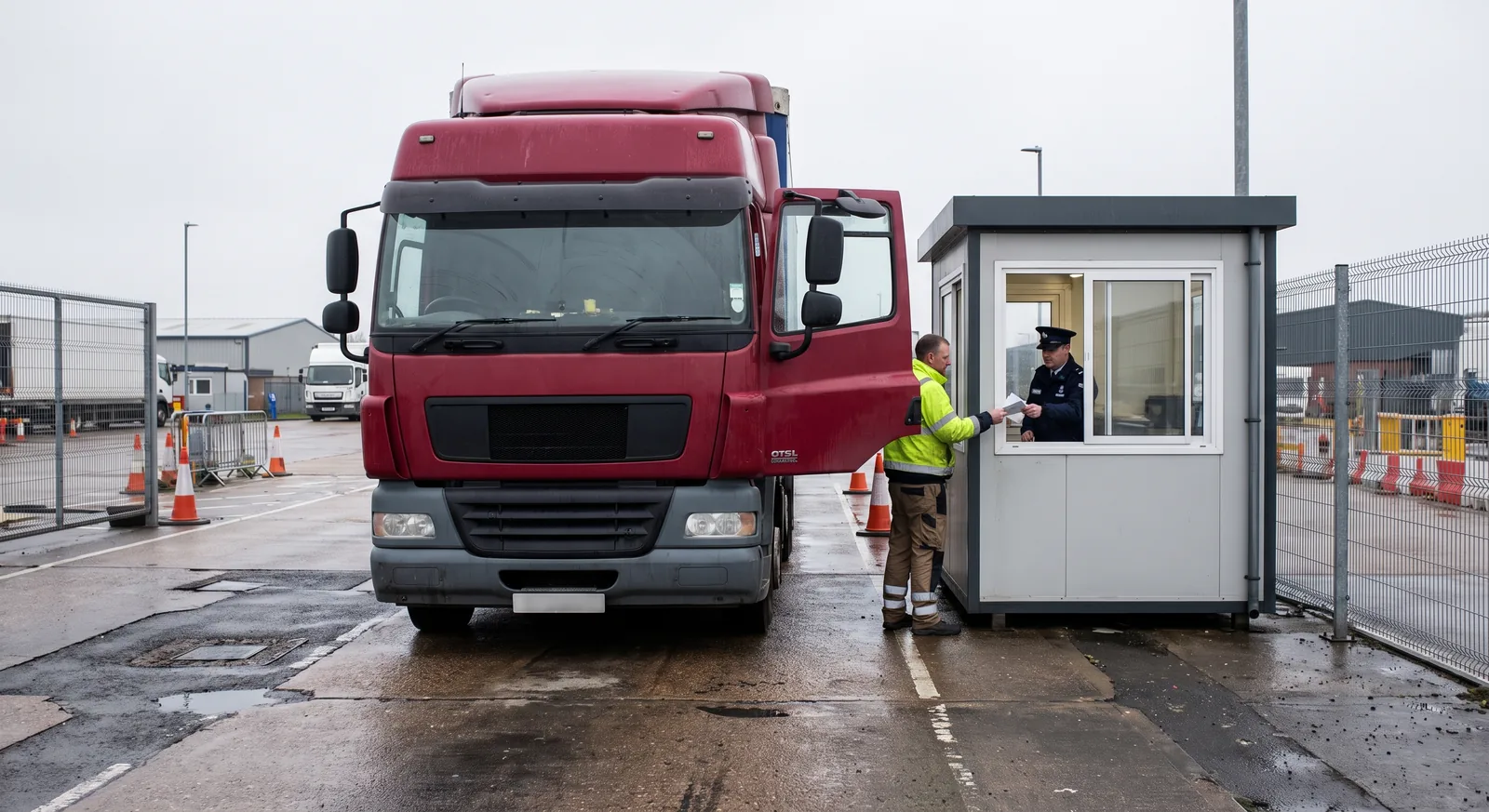
 AI image
T1 is a transit document for goods moving under customs control, EUR.1 is a proof of preferential origin under trade agreements, and a certificate of origin confirms the country of origin of the goods. Three different documents for three different purposes. At OTSL we pick the right one, because a mix-up can cost duty or a hold.
T1 transit
T1 is used when non-EU goods move across the customs territory without clearance at a given point, for example on the way to the place of final clearance. It secures the customs charges for the transit and is discharged at the destination office.
T1 or EX: transit versus export
These two declarations are often confused, yet they serve different purposes. T1 moves uncleared goods under customs control, EX declares the export of Union goods out of the EU. The key differences below.
| Aspect | T1 (transit) | EX (export declaration) |
|---|---|---|
| Purpose | Moving non-Union goods across the customs territory without clearance along the way | Taking Union goods out of the EU customs territory |
| Who opens it and in which system | A customs agency or an authorised consignor, with a guarantee for the charges, in the NCTS system | The exporter via a customs agency in the AES system; the goods travel with an EAD document and its MRN number |
| When to use it | Goods from outside the EU travel to the place of final clearance, e.g. an import cleared inland | Any export of Union goods, e.g. to the United Kingdom, Switzerland or Norway |
| What closes the procedure | Presenting the goods at the office of destination and releasing the guarantee | Confirmation that the goods left the EU (the IE599 message), which also supports the 0% VAT rate |
EUR.1 versus certificate of origin
- EUR.1 concerns preferential origin and affects the duty rate.
- A certificate of origin confirms the country of origin, often for non-preferential purposes, for example contractual or administrative requirements.
- In EU-UK trade preferences are usually claimed with a statement on origin rather than EUR.1, but on other lanes EUR.1 can be the right document.
How do we pick the document?
We start by asking where the goods go, what their origin is and the purpose: transit, customs preference or proof of origin. We have our own customs agencies in Poland and the UK, so choosing the document is part of the service, not another problem for the client. We confirm the right document for your load individually.
See customs clearance and documents for export to the UK.
Step by step
- Verify goods status. Determine whether the cargo has Union or non-Union status.
- Select the appropriate document. Choose between the T1 transit procedure, EX declaration, or origin certificate.
- Submit customs data. Provide commercial invoices and transport data to the customs agency.
- Open the transit procedure. The customs office issues an MRN and applies customs seals to the vehicle.
- Discharge transit at destination. Present the goods and T1 document at the destination customs office.
Definitions
- Transit document T1: Used to move non-Union goods under customs supervision without immediate payment of duties and taxes.
- Movement certificate EUR.1: Confirms preferential origin under trade agreements, allowing reduced or zero customs duty rates.
- Certificate of origin: Issued by a chamber of commerce to certify the country where goods were produced without granting duty preferences.
- Export declaration EX: Confirms the official export of Union goods outside the customs territory of the European Union.
When does this rule not apply?
The requirement for a T1 transit document does not apply to goods transported under the TIR Carnet scheme or Union goods moving solely within the European customs territory, unless the transport route passes through a non-EU country without simplified customs arrangements.
The OTSL role
At OTSL, we handle customs clearance and ensure your transit and origin documents are complete. When arranging your shipments, explore our road transport service and read our article on ELO, ENS, and GMR requirements to prevent delays at customs borders.