 AI image
ELO, ENS and GMR are three elements of customs in transport to the United Kingdom after Brexit. ENS is the safety declaration lodged before the goods arrive, ELO is import readiness on the British side, and GMR is the movement number in the GVMS system the driver uses to cross the border. The sender supplies the data, the carrier or a customs agency ties the set together.
ENS: the safety declaration
The ENS (Entry Summary Declaration) contains data about the consignment for risk analysis and is lodged before arrival at the border, separately from the customs declaration. In principle the carrier is responsible for it. The system rejects generic goods descriptions such as goods or parts, so the description must be specific. We cover the details in the text on Safety and Security declarations for imports into GB.
ELO: import readiness on the GB side
ELO is an entry in the importer records, a confirmation that the import declaration on the British side is prepared and the goods can move. In practice it means the customs agency in the UK finished the documents before the truck reaches the port. Without this readiness a valid GMR cannot be created. ELO also appears in code 42 clearances on the French smart border, which we describe in the article on regime 42 and the smart border.
GMR: the number for the border
The carrier creates the GMR (Goods Movement Reference) in GVMS and assigns the customs declarations for the whole vehicle to it. The driver shows the GMR when entering the terminal; without a valid number there is no boarding the ferry or the train. How it works at the crossing is shown in the text on GVMS in practice.
Who prepares what?
| Element | What it is | Who prepares it |
|---|---|---|
| ENS | safety declaration before arrival | the carrier or a customs agency |
| ELO | import readiness on the GB side | a customs agency, based on sender data |
| GMR | goods movement number in GVMS | the carrier |
Where mistakes happen
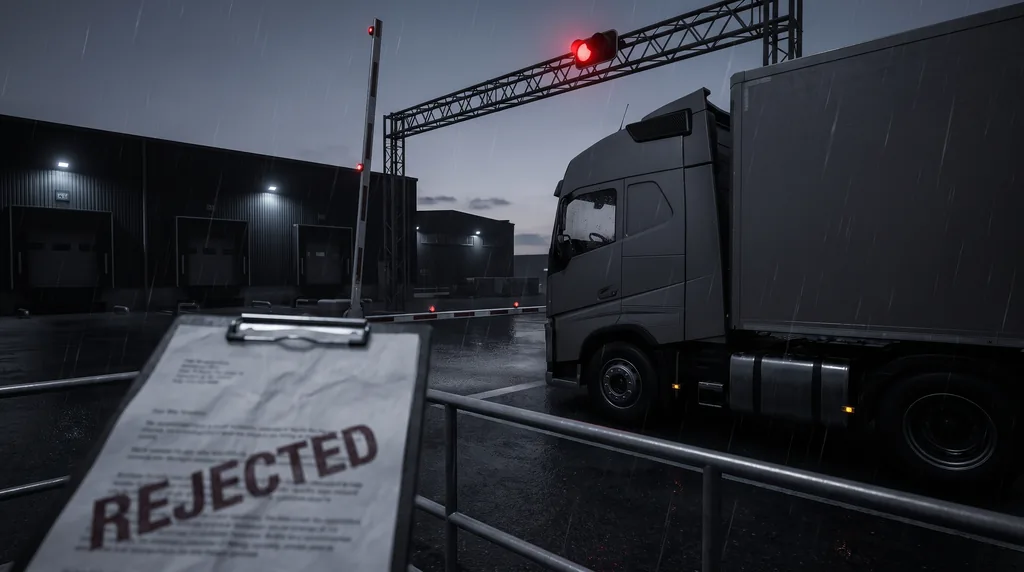
The biggest risk is the order: a GMR created without ready declarations, or import documents sent when the truck is already at the port. The stakes are simple: one missing number means a vehicle standing at the border and a consignee who waits. That is why we set the document list and deadlines at the start of the order and run the whole set together with transport within customs clearance, with our own agencies in Poland and the UK.
Step by step
- Data collection. The sender provides full goods details and commercial documentation.
- ENS lodging. The carrier or customs agency submits the safety declaration prior to port arrival.
- ELO verification. The agency checks the import entry status on the British side to confirm readiness.
- GMR generation. Customs entries and the ENS declaration are linked in GVMS to generate a GMR.
- Border check. The driver presents the GMR number at ferry or Eurotunnel check-in.
Definitions
- ENS (Entry Summary Declaration): A safety and security declaration lodged before goods arrive at the border for risk analysis.
- ELO (Entry in Importer's Records): A confirmation of import readiness on the British side recorded in the declarant records.
- GMR (Goods Movement Reference): A unique reference number generated in the GVMS system that the driver uses to cross the border.
- GVMS (Goods Vehicle Movement Service): The British IT system used to link customs and safety declarations to a transport vehicle.
When does this rule not apply?
This requirement depends on the chosen customs procedure and transport route, as transit movements or special procedures use different documentation.
The OTSL role
At OTSL, we organise transport between Poland and the United Kingdom using our bases in Kielce and Milton Keynes. We coordinate customs documentation alongside our Ferry booking service, helping you navigate requirements such as those described in our article T1, EUR.1 i świadectwo pochodzenia.
Sources
Not sure which declarations your route needs? Describe the consignment in the contact form and we will set the full list and run it from loading to unloading.