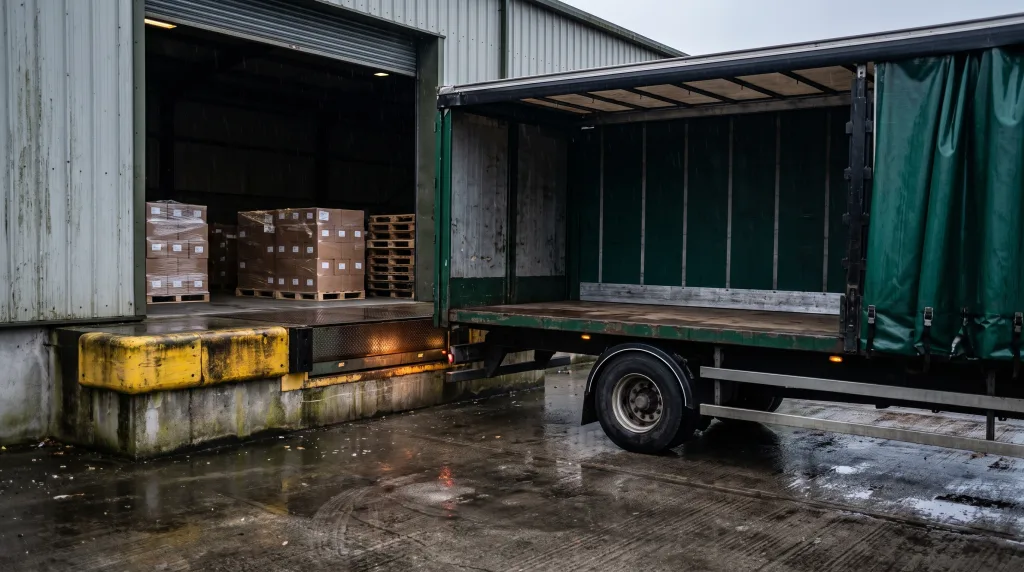
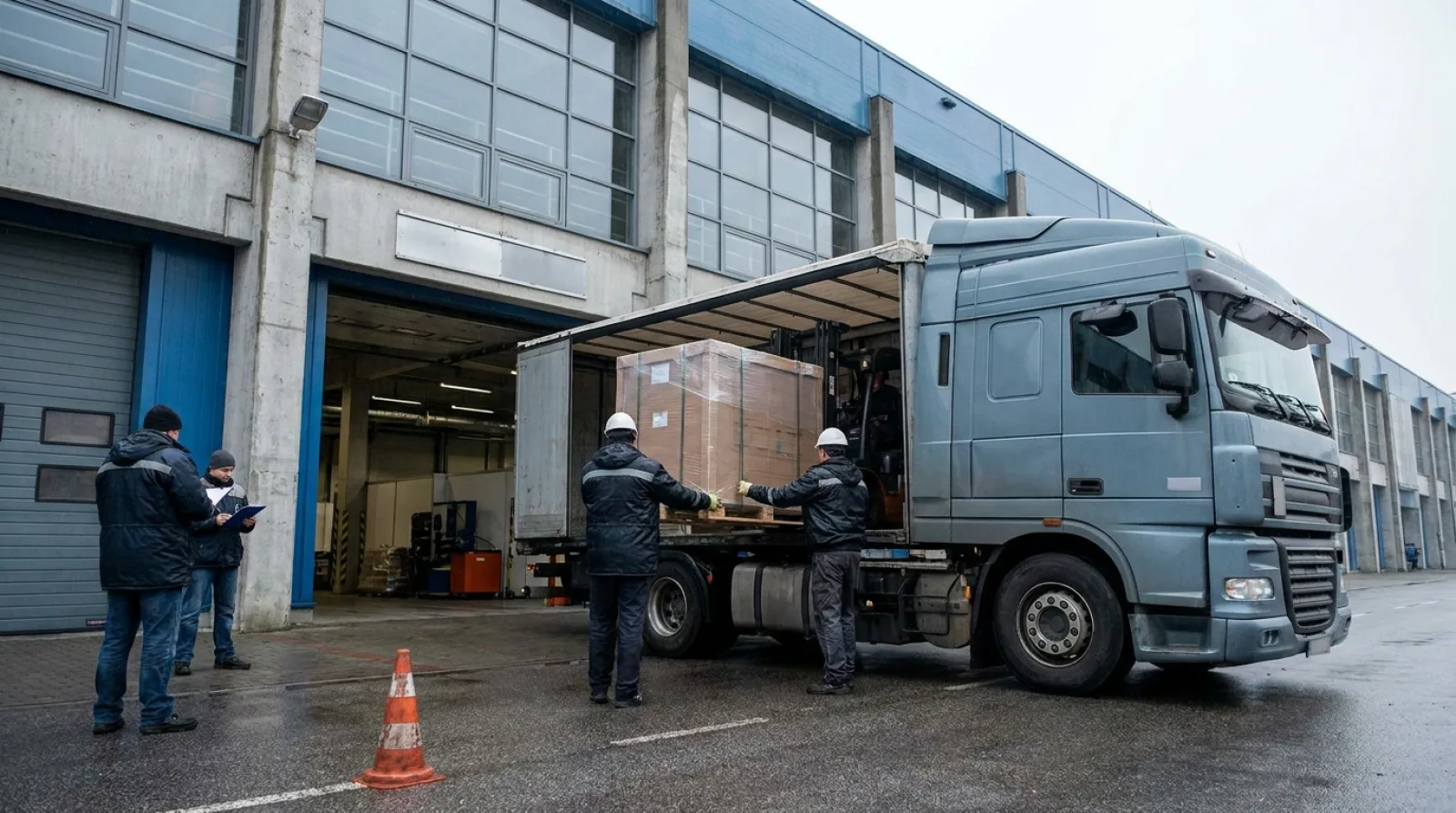
 AI image
Delivery to the Targi Kielce exhibition hall requires precise synchronization of entry time with the assembly slot specified in the exhibitor manual. As Targi Kielce is the second largest trade fair centre in Poland, entry rules and unloading equipment selection depend entirely on the event organiser's guidelines. For shipments originating outside the European Union, customs procedures must be handled using an ATA Carnet. Utilizing a local Kielce buffer warehouse prevents vehicle downtime and allows goods to enter the hall precisely when the stand is ready.
How is truck entry organised at the Targi Kielce venue?
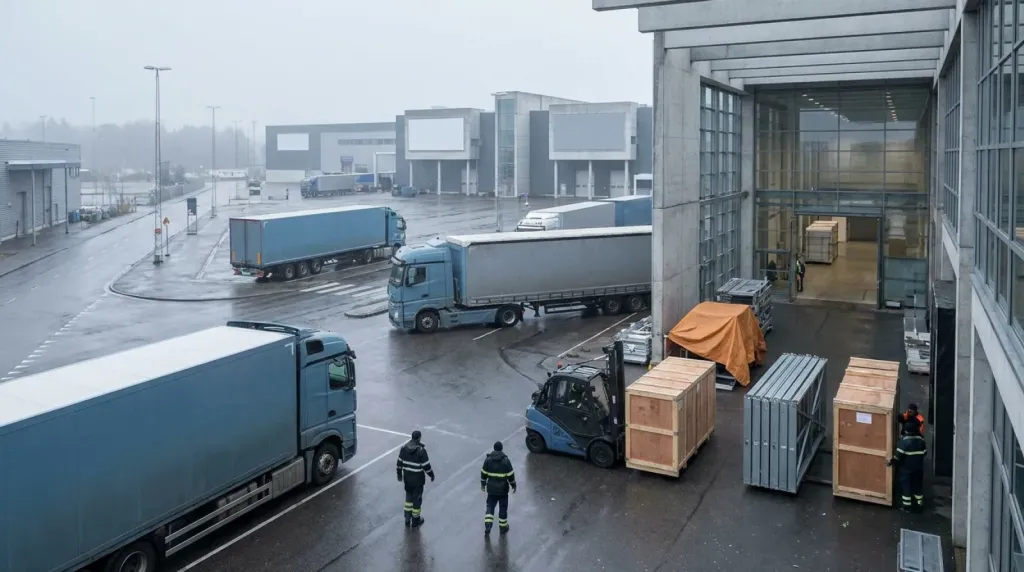
The organisation of lorry entry into the Kielce exhibition grounds is strictly tied to the schedule set by the organiser of the specific event. Every trade show features its own exhibitor documentation, detailing traffic flow regulations on the manoeuvring yard and operating hours for access gates. The delivery driver must hold valid transport documents and an entry permit if demanded by the venue's site regulations. Before approaching the hall gate, it is vital to confirm that the stand space is cleared and the assembly team is present on site.
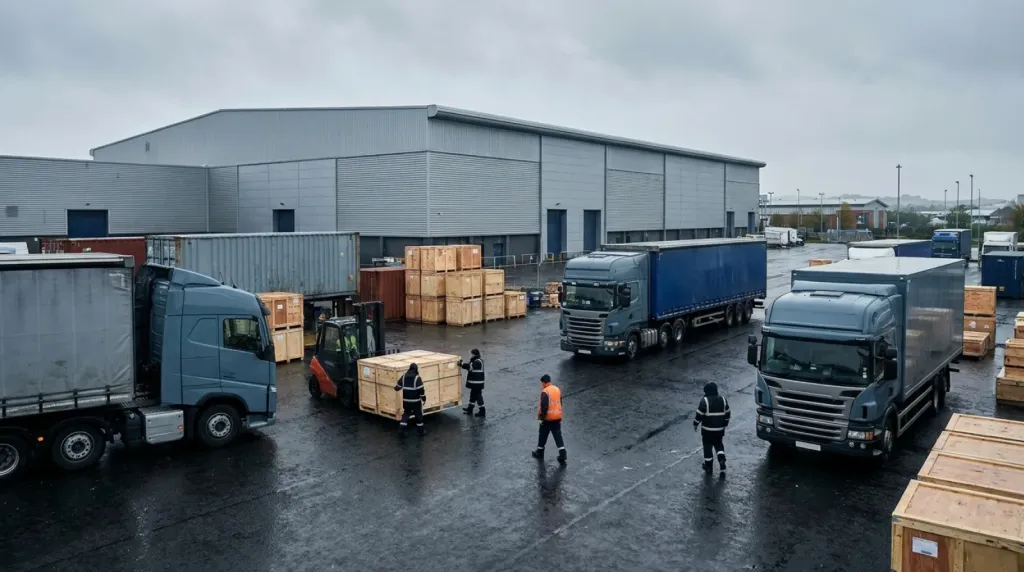
Due to space constraints around the exhibition halls during peak assembly periods, heavy goods vehicles are not permitted to park inside the venue grounds indefinitely. Access is granted for a restricted duration intended solely for unloading packages or pallets. If a vehicle arrives too early or if stand preparation is delayed, the lorry must vacate the entry zone. Consequently, using a buffer facility located close to the fairground is essential to hold the cargo until the exact unloading slot arrives without incurring demurrage fees.
What equipment requirements apply during hall unloading?
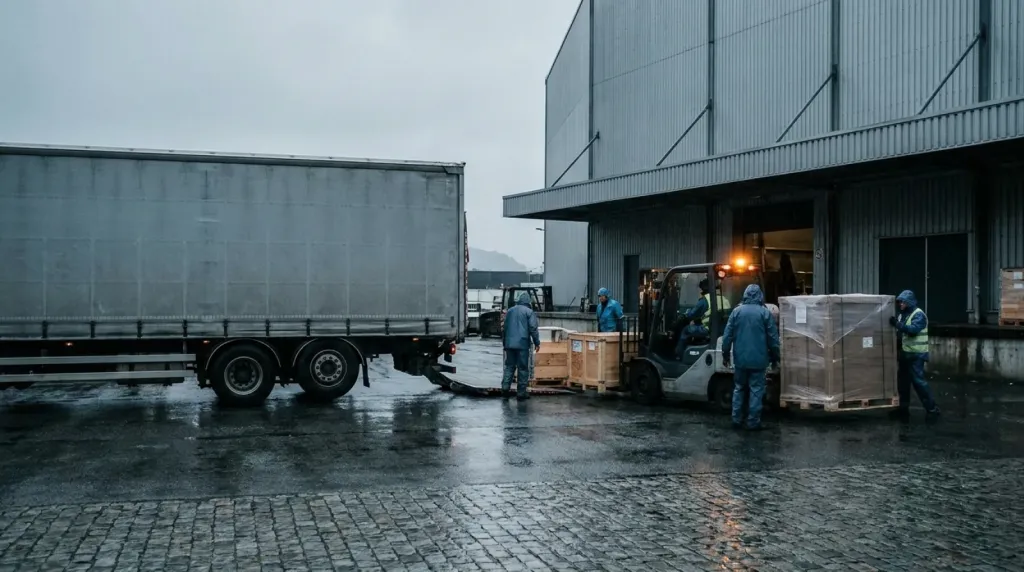
The physical form of the delivered cargo dictates the equipment required to execute efficient unloading inside the exhibition hall. Standard palletised freight is typically offloaded using a forklift operated by venue technicians or an appointed logistics contractor. If the transport includes non-standard long items, such as structural beams or long trusses, this requirement must be reported to the organiser in advance to reserve suitable handling equipment.
Heavy exhibits, machinery, and out-of-gauge equipment demand prior technical verification with the hall management. All parameters concerning floor load capacity, access gate dimensions, and the hiring of specialized cranes or heavy-duty lifters must be arranged directly with the venue staff. Failing to report oversized dimensions prior to transport arrival may result in entry refusal at the hall or lengthy delays waiting for available heavy equipment.
Hall delivery procedure step by step
- Exhibitor manual verification. Consult the exhibitor manual issued by the event organiser to confirm entry gates, traffic rules, and assigned assembly hours.
- Customs and transport documentation setup. Prepare consignments notes, entry passes, and for shipments coming from the UK, Switzerland, or Norway, a valid ATA Carnet.
- Dispatch to the buffer warehouse. Route the transport to the local Kielce warehouse facility where goods can wait for the exact hall slot without blocking the venue.
- Check-in at the gate. The driver presents documents at the Targi Kielce control gate during the designated time slot to collect an entry permit.
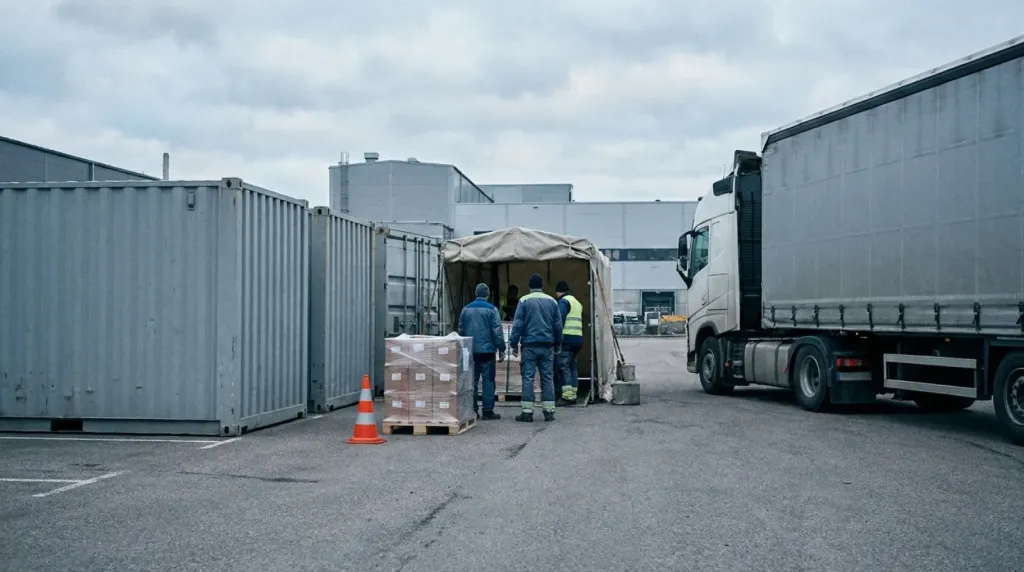
- Unloading at the hall gate. The vehicle moves to the designated hall gate for pallet unloading via forklift or heavy equipment arranged with venue staff.
- Pass surrender and site departure. Once unloading is finished and proof of delivery is signed, the driver promptly exits the fairground area.
Definitions
- ATA Carnet (Admission Temporaire/Temporary Admission): An international customs document that permits duty-free temporary importation of goods for trade fairs and exhibitions.
- Assembly window: The specific time slot assigned by the exhibition organiser during which exhibitors can enter the hall to build stands and unload exhibits.
- Buffer warehouse: A logistics facility situated in close proximity to the exhibition venue, used for temporary storage and flexible dispatch of goods to the hall.
- Exhibitor manual: A set of technical guidelines, rules, and forms issued by the event organiser for companies displaying products at the exhibition.
Checklist for trade fair delivery preparation
- Assembly time slots and hall opening hours are confirmed in the exhibitor manual.
- Forklift or heavy lifting equipment needs for long cargo and heavy machines are cleared with venue staff.
- Customs documents and ATA Carnets are fully prepared for non-EU shipments.
- The stand personnel or assembly team is present at the stand for cargo reception.
- A contingency delay plan using the Kielce buffer warehouse is established.
- Detailed gate, hall, and stand instructions are delivered to the transport driver.
When do these entry and unloading rules not apply?
The outlined entry and unloading procedure does not apply to shipments destined for open-air display areas or external zones that do not involve entering enclosed exhibition halls, unless the specific event organiser specifies otherwise. These steps also do not apply to standard courier deliveries addressed to administrative venue offices. Specific access conditions always depend on the individual event regulations published by Targi Kielce.
The OTSL role
OTSL provides warehousing facilities in Kielce and operates road freight services across Poland, the UK, Switzerland, Norway, and the rest of Europe. Operating 24/7 in Kielce, the company allows exhibition cargo to be received early at the local warehouse and delivered to the hall precisely inside the assigned slot. OTSL assists non-EU exhibitors with customs formalities, handling ATA Carnet documents and comprehensive customs clearance. For oversized cargo or schedule shifts, we offer secure transloading at our Kielce facility. Read more in our articles on delivery to Targi Kielce, slots and booking and the warehouse next to the Kielce fairground.