 AI image
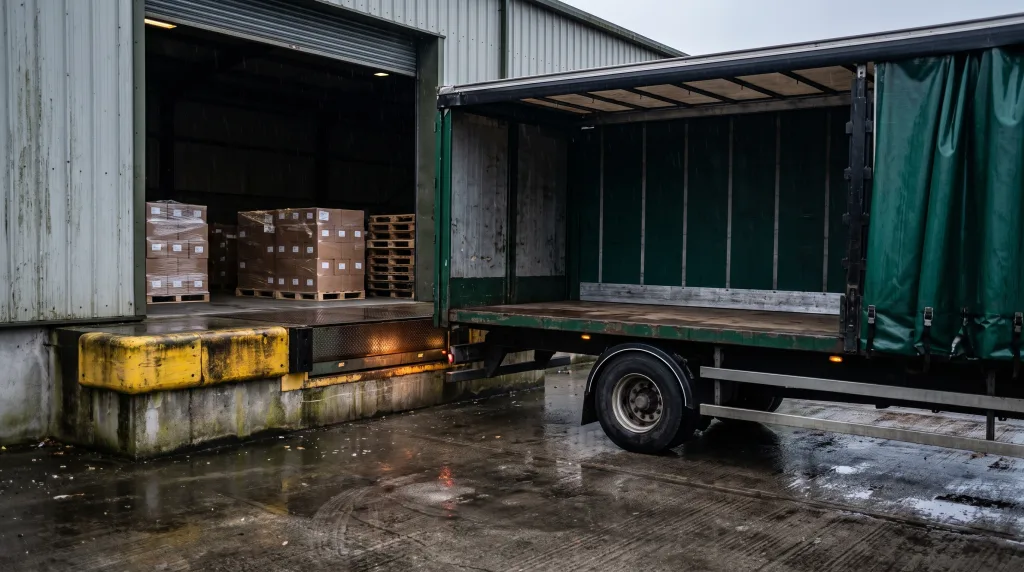
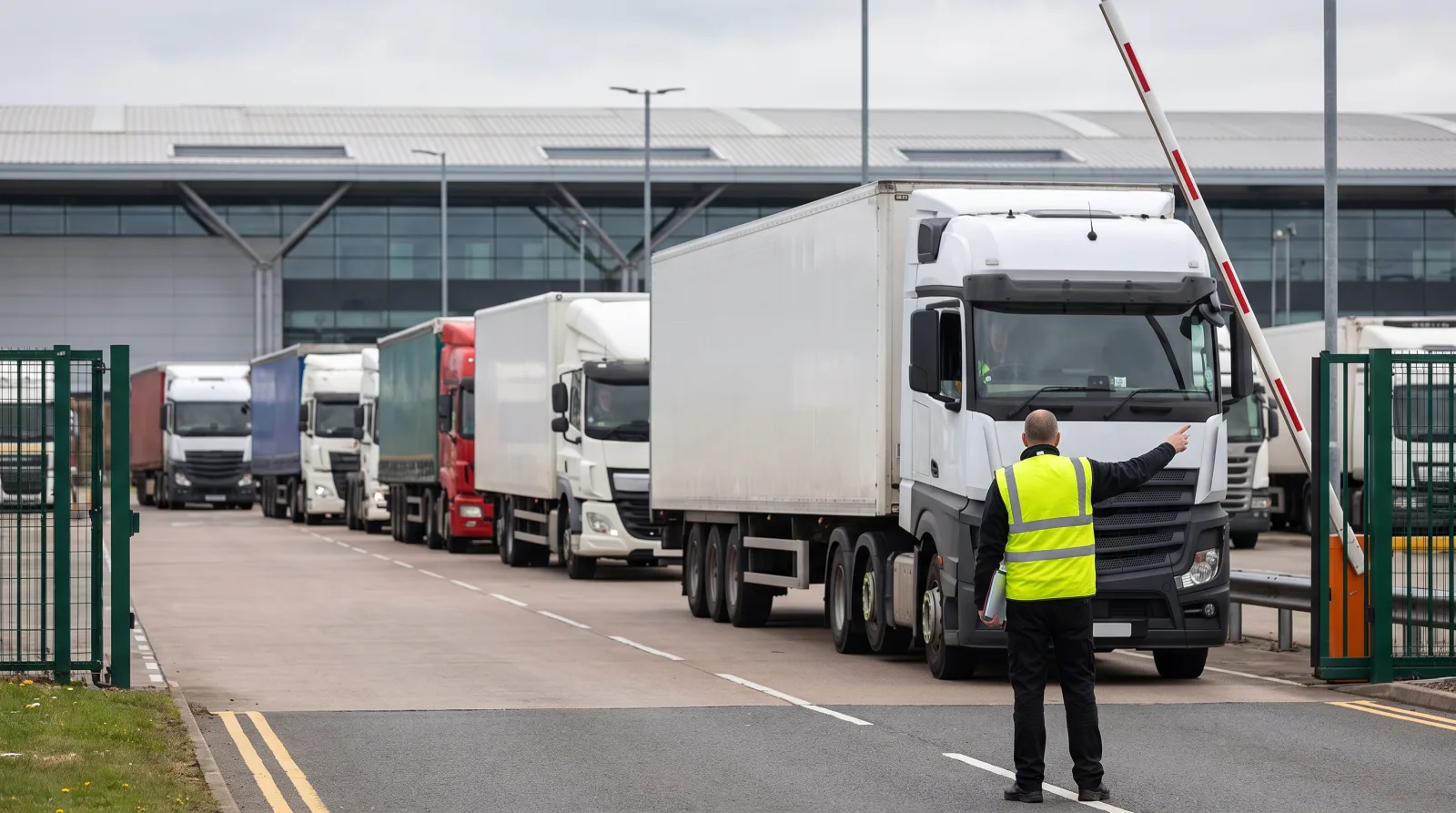
Booking-in is a reservation of a specific time window for entering the showground and unloading. Without it a vehicle does not get in, however punctual it is — European venue gates work strictly on allocated slots. The booking is filed in advance, typically from a few days to two weeks before build-up, stating the stand number, load dimensions and weight, vehicle type and driver details.
What does the booking contain?
- Show name, hall and stand number — the identifier everything is matched against.
- Date and preferred build-up window.
- Vehicle type and dimensions including height — gates and ramps have limits.
- Number and type of load units, total weight and heaviest single item.
- Unloading method: tail lift, forklift, crane, manual.
- Driver details and registration, often required 24–48 hours before entry.
Who files it
It depends on the show regulations. Sometimes the exhibitor files from their own account in the organiser system, sometimes the forwarder does it on their behalf, and at some shows the official show forwarder holds exclusivity on in-hall handling, in which case any external transport must hand over at the gate. Settle this at the first enquiry, because it changes the whole delivery plan.
What happens when the slot is lost
A late vehicle does not enter on its allocated window; it waits for a free one. At peak build-up, with dozens of vehicles queuing at the gate, that usually means several hours of waiting, and at large shows a move to the next day. The stand build sits idle while the fitting crew charges for waiting time.
Why bookings get rejected
- No stand number, or a number not yet assigned to the exhibitor.
- Vehicle taller or longer than the hall gate allows.
- Tail-lift unloading declared for a load the lift cannot raise.
- Filed after the booking deadline.
- Entry or handling fee unpaid, where the venue charges one.
How exhibition booking differs from a normal delivery
On an ordinary delivery, notifying the warehouse is a courtesy: you call, agree an hour, and may be late. At a trade show the booking is a pass. The venue admits a set number of vehicles per window, because that is what the gates and ramps hold. There is no room for two vehicles in one slot, so a late vehicle does not enter but waits for a free one — and at peak build-up there are none.
The stand number is the key to everything
Everything on the showground is matched to the stand number: the booking, the documents, the labels on pallets, the in-hall handling account and empty packaging storage. The organiser assigns it, sometimes late, a couple of weeks before the show. Until it exists no booking can be filed — so that date deserves as much attention in planning as the stand build completion date.
Labelling the freight
Every pallet, crate and loose item should be marked clearly and durably: show name, hall, stand number, exhibitor name, item number and total items in the consignment. This is not a formality. In a hall where dozens of companies unload at once, an unlabelled item ends up somewhere random and turns up after build-up finishes, which is too late.
When is the booking not enough?
Some venues additionally require a purchased entry pass, the driver named 24–48 hours ahead, or in-hall handling paid up front. These requirements sit in the event technical regulations and do not always match last year. Read the regulations fresh for every edition.
What does OTSL do?
We handle exhibition logistics across Europe and file bookings ourselves from the exhibitor data. We run a large fleet of 12 and 18 tonne rigids with tail lifts up to 1.5 tonnes — vehicles that actually fit build-up windows and cope without a ramp inside the hall.
We deliver stand builds into halls without a ramp using a rigid truck with a tail lift. Full exhibition offer: exhibition logistics.
Definitions
- Booking-in: Notification of delivery submitted to the venue operator or official show freight forwarder to receive an access slot.
- Time window (Slot): Allocated time frame for entering the exhibition grounds and unloading the vehicle.
- Venue operator: Entity managing the showground facilities and controlling site access gates.
- Show freight forwarder: Official logistics provider managing on-site handling and deliveries within the venue.
The OTSL role
We handle the slot reservation process with venue operators and coordinate time-critical deliveries using our express vans service. To learn more about managing fixed unload slots, read our guide on delivery to Targi Kielce slots.