 AI image
The official freight forwarder at an exhibition centre holds exclusive rights to perform all lifting and handling work on the venue grounds, including forklifts, cranes and hall transport. The exhibitor's forwarder, such as OTSL, manages transport to the venue, customs clearance, ATA Carnets, storage buffering, and timed delivery. The boundary of liability and insurance coverage passes at the vehicle tailboard.
Where does the boundary of responsibility lie between forwarders?
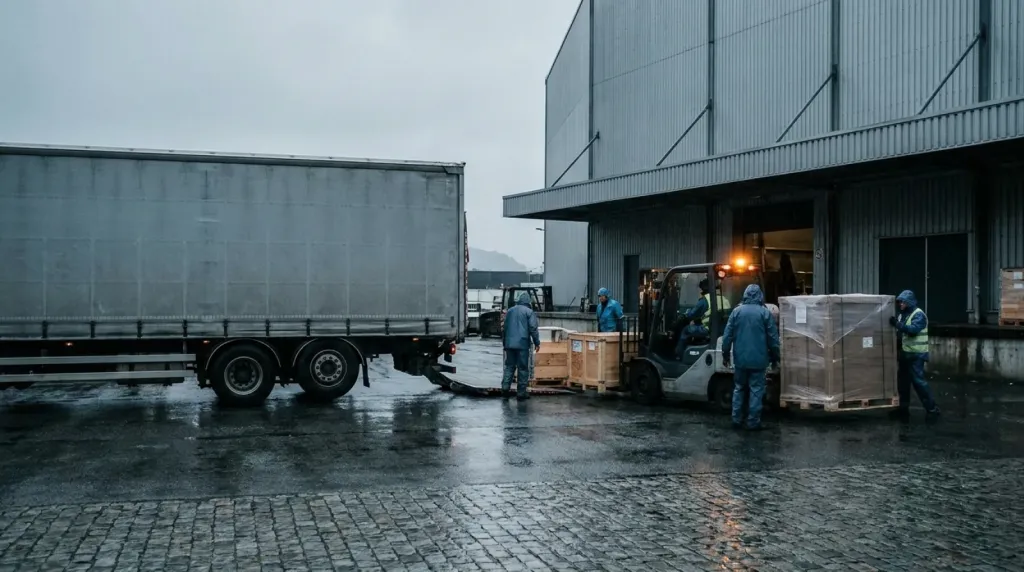
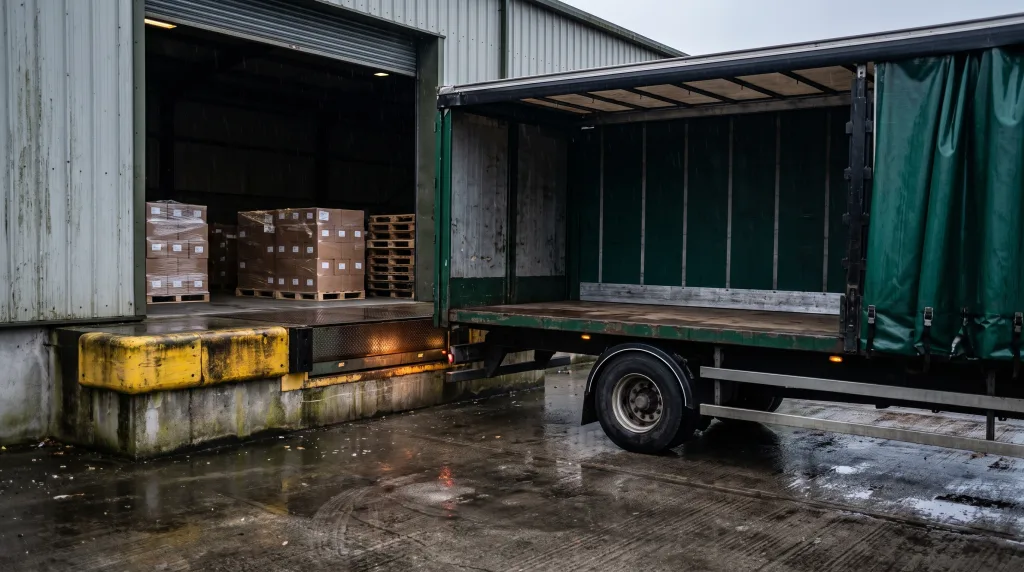
Defining the exact division of responsibilities is essential for smooth trade fair logistics. In industry practice, this boundary is physically located at the vehicle tailboard or side of the truck. The exhibitor's forwarder takes full responsibility for transporting the exhibit securely to the exhibition site, adhering to the allocated time slot, and presenting the vehicle ready for unloading. Until the cargo is lifted from the truck bed, the road carrier and the exhibitor's forwarder hold complete legal responsibility.
The moment the forks of a forklift or the hook of a crane belonging to the official lifting contractor lift the pallet or crate from the truck bed, responsibility transfers to the venue contractor. The insurance structure follows this exact line. Goods-in-transit insurance provided by the exhibitor's forwarder covers the items only up to the vehicle side. All operations inside the halls, including heavy equipment handling and empty container storage, fall under the policy and published tariff of the official venue forwarder.
What tasks are performed by the official venue forwarder?
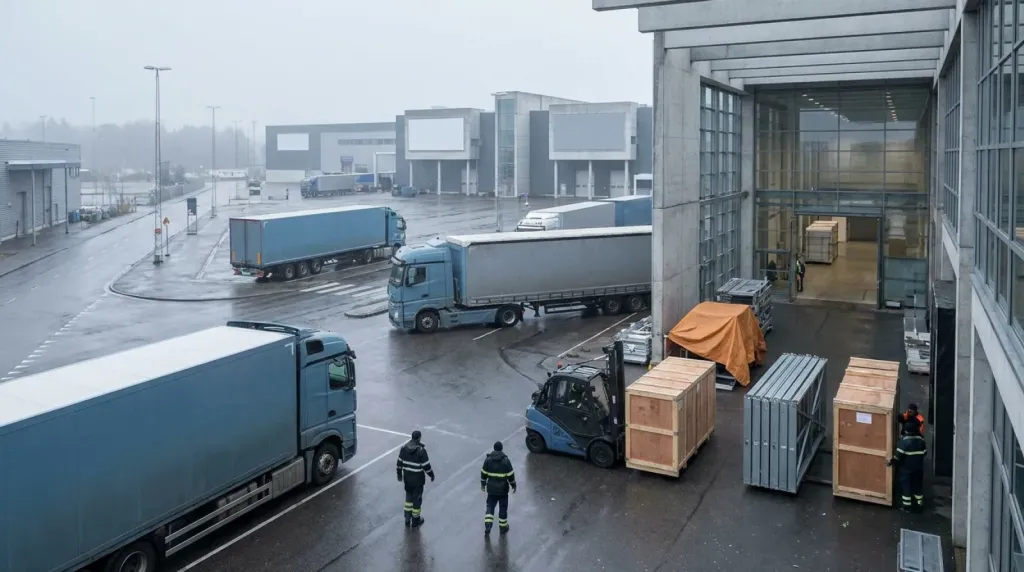
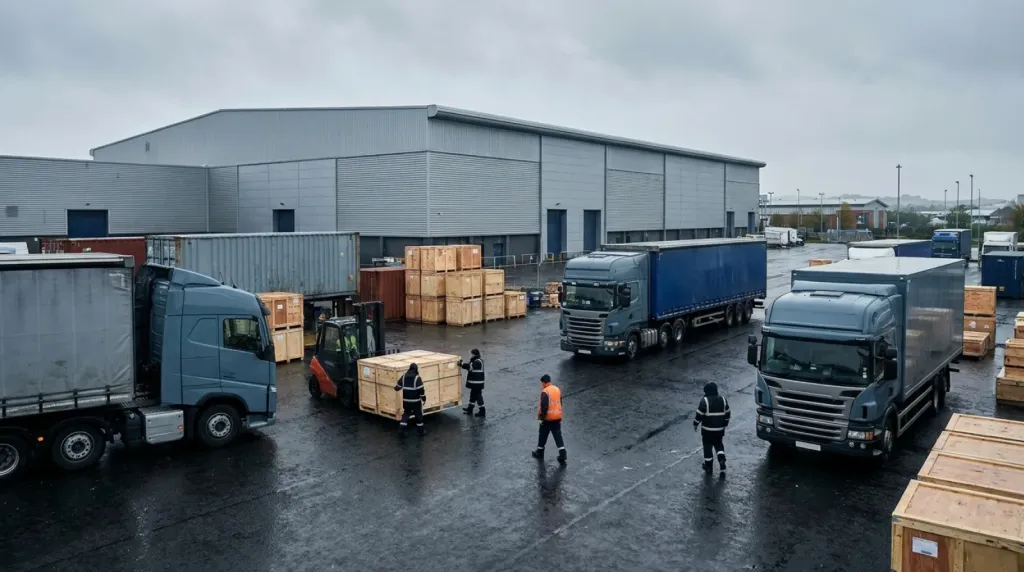
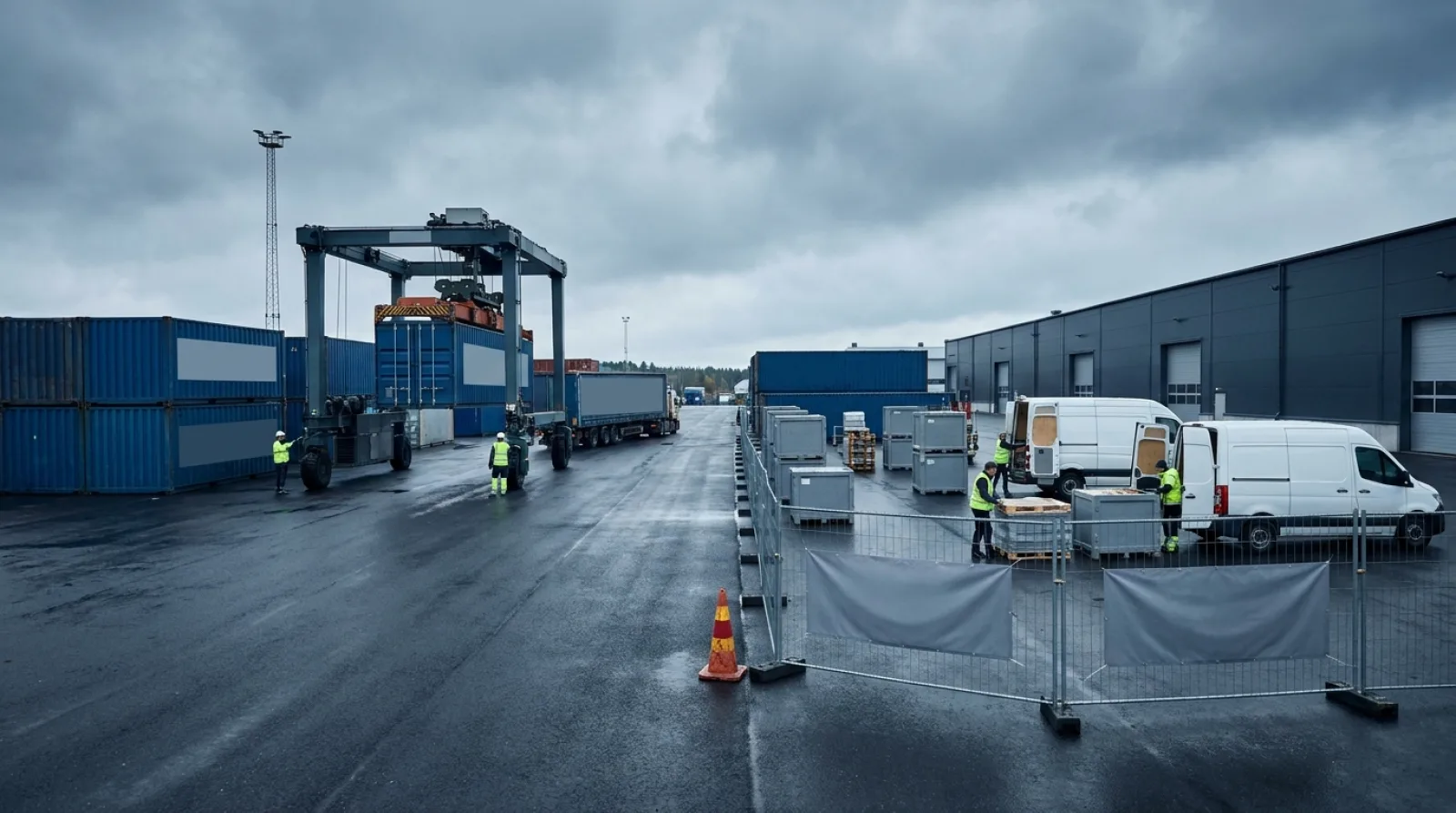
Major exhibition venues assign an official lifting contractor primarily for site safety and operational control. Allowing external forklifts or unauthorized mobile cranes into narrow hall aisles creates significant risks to structures and personnel. The official contractor coordinates unloading for all vehicles arriving in the queuing area, manages the marshalling yard, and directs technical traffic around the exhibition halls.
Every service carried out by the official contractor is billed according to an official document provided prior to the event. The tariff for official lifting services lists fixed rates calculated per pallet, per tonne, or per hour of forklift operation. Submitting handling orders after the deadline stated in the organiser regulations can lead to surcharge fees. The official forwarder is also responsible for collecting empty crates after stand erection, storing them during the event, and delivering them back to the stand when the show ends.
How to organise trade fair transport step by step?
- Examine the exhibitor manual. Read the official venue regulations to check time slot procedures, access rules, and the official handling contractor tariff.
- Book lifting equipment in advance. Order required forklift services directly from the official forwarder before the deadline specified in the manual.
- Prepare customs and transport documentation. Organise shipping notes, customs declarations, or an ATA Carnet if the shipment crosses international customs borders.
- Arrange road carriage. Instruct your chosen forwarder to transport the stand materials from the warehouse buffer to the venue according to the booked arrival window.
- Hand over cargo at the vehicle side. Present the truck at the venue so the official lifting contractor can unload the goods and move them into the hall.
- Coordinate return loading. Ensure the official forwarder returns empty packaging to the stand post-event and reloads the materials onto your carrier's truck.
Definitions
- ATA (Admission Temporaire/Temporary Admission) Carnet: An international customs document used for the temporary admission of exhibition goods without paying duties or import taxes.
- Official freight forwarder (lifting contractor): A venue-appointed logistics provider with exclusive rights to operate lifting equipment and handle cargo within the exhibition centre.
- Exhibitor manual: A document package issued by trade fair organisers outlining technical rules, deadlines, site access protocols, and handling tariffs.
- Exhibitor forwarder: The transport provider appointed directly by an exhibitor to manage road freight, customs formalities, and pre-show storage.
Trade fair transport checklist
- Verified whether the venue enforces an exclusive official lifting contractor.
- Reviewed the official handling price list in the official exhibitor manual.
- Secured written confirmation of the vehicle arrival time slot.
- Completed customs paperwork and ATA Carnets for non-EU borders.
- Confirmed insurance boundaries up to the truck tailboard.
- Booked post-setup empty container storage with the venue contractor.
When does this rule not apply?
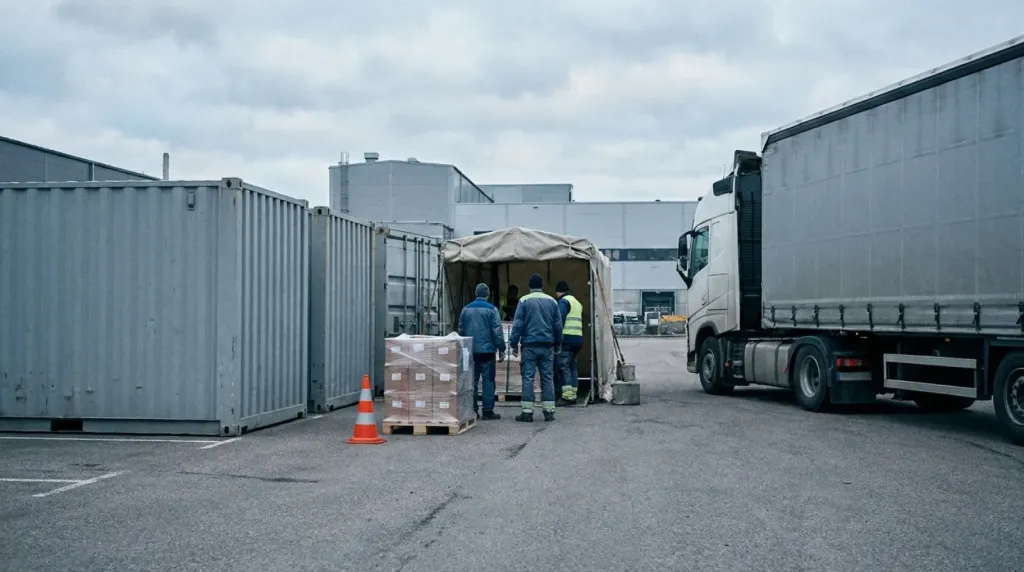
The described division of venue handling does not apply at smaller exhibition centres where the venue organiser does not grant exclusive rights to an official lifting contractor. At such locations, unloading depends on arrangements made prior to departure and can be handled by the truck driver using a tail lift or by the exhibitor's own assembly crew.
The OTSL role
OTSL Sp. z o.o., based in Kielce, coordinates road haulage and customs compliance between Poland, the United Kingdom, Switzerland, Norway, and mainland Europe. As an exhibitor forwarder, we ensure prompt arrival at exhibition gates, utilizing our logistics hub in Kielce and our secondary warehouse in Milton Keynes, England. We assist with customs procedures, including ATA Carnet filing, and transport stand structures directly to the venue. Read more about site delivery procedures in our article Delivery to Targi Kielce, slots, booking and unloading. Our transport obligation ends at the vehicle tailboard, where venue-appointed teams take over handling.