 AI image
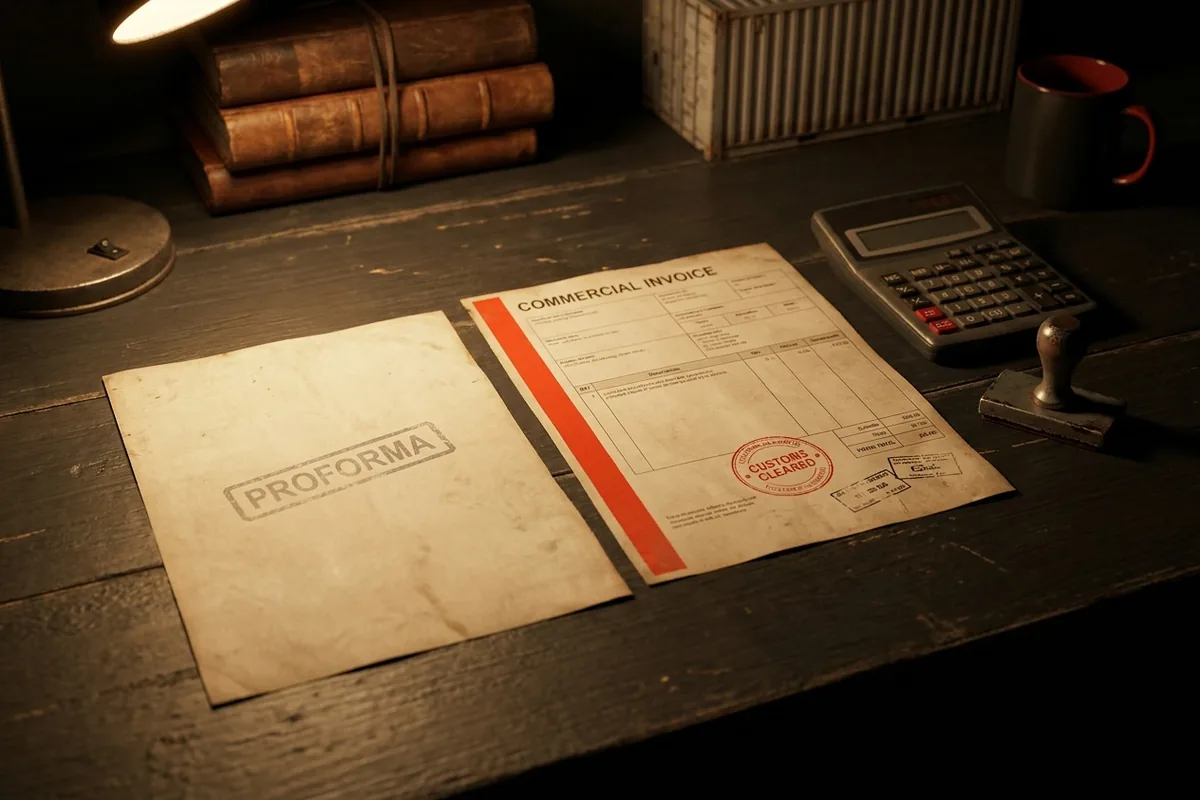
For customs clearance authorities normally require a commercial invoice. It sets the customs value, drives the duty and VAT calculation and feeds your books. A proforma invoice is non-binding: it works as an offer, a basis for a deposit or shipment pre-advice. A proforma alone usually will not close the clearance.
What does the difference mean in practice?
A proforma is issued before the deal. The seller sends it so the buyer knows the price, the goods and the terms. It creates no tax liability and never enters the VAT ledger. A commercial invoice is issued once the sale is settled and the goods move. It has full evidentiary weight: you book it, account for VAT and present it to customs.
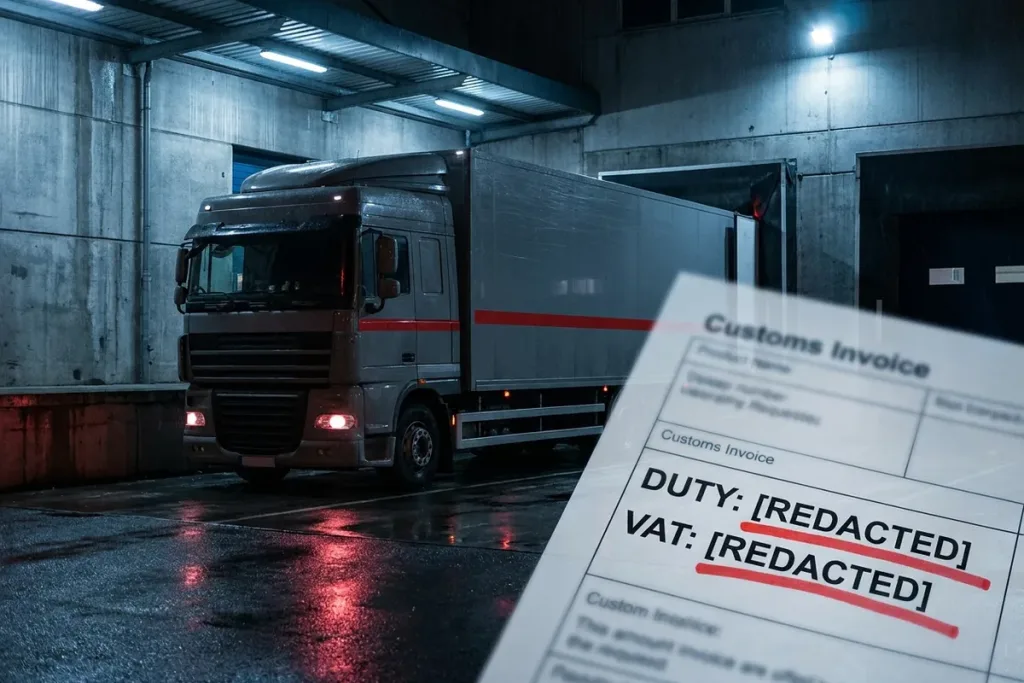
In freight this difference has a price tag. If a driver reaches the border with only a proforma, the customs agent often cannot close the declaration and the truck waits. Detention costs money and the delivery slot is lost. That is why we check the full document set before a job leaves the yard.
Which one to use for clearance
The rule is simple: prepare a commercial invoice for clearance. It should carry the seller and buyer details, the description and quantity, the value in a stated currency, the delivery terms (Incoterms), the country of origin and ideally the tariff code. Customs uses all of this to fix the customs value and the charges. We set out the full document pack and what it must contain in our guide to the commercial invoice and packing list for customs.
There are moments where a proforma is enough for now: early pre-advice with the carrier, working out a deposit or bond, freight quoting. But before goods cross a non-EU border you need the commercial one. Special cases (consignments of no commercial value, samples, warranty returns) follow separate rules and there a proforma marked for customs value only can be accepted. That is a different scenario from an ordinary sale.
Proforma vs commercial: comparison table
| Feature | Proforma invoice | Commercial invoice |
|---|---|---|
| Nature | Non-binding, preliminary | Binding sales evidence |
| Accounting weight | None | Full (booking, VAT) |
| Basis for clearance | Usually no | Yes |
| Typical use | Offer, deposit, pre-advice | Sale, clearance, settlement |
| Entry in VAT ledger | No | Yes |
What does a commercial invoice needs for custom?
- Full seller and buyer data with a tax identification number (VAT) and a separate EORI (Economic Operators Registration and Identification) number required for customs clearance.
- A precise description of the goods, quantity, weight and value in a stated currency.
- Incoterms delivery terms that state who pays for transport and carries risk on each leg.
- Country of origin and, where possible, the CN or HS tariff code that sets the duty rate.
- Invoice number and date, consistent with the rest of the transport documents.
Origin of goods and preferential duty
The commercial invoice links to the origin paperwork, and the rules differ by country. In trade with the United Kingdom under the Trade and Cooperation Agreement (TCA), preferential origin is claimed with a statement on origin placed on the commercial document, or on the importer's knowledge; the EUR.1 certificate does not apply to UK trade (gov.uk). For Switzerland the preference rests on an invoice declaration up to 6000 EUR, and above that value on a EUR.1 movement certificate or authorised exporter status. A proforma will not do this, because it is not a sales document. If the goods meet the origin rules the saving on duty can be real, so it is worth checking on every shipment.
The most common document mistakes
- Sending only a proforma to the border instead of a commercial invoice. Result: the truck waits and detention costs.
- A mismatch of value or description between the proforma and the commercial invoice. Customs asks for an explanation.
- Missing Incoterms or country of origin. The agent cannot fix the customs value correctly.
- An invoice in a language the authority will not accept without a translation.
Each of these mistakes means lost hours and the risk of a penalty. On harder lanes it pays to hand the paperwork to a customs agent who checks the full set before departure.
How does OTSL help?
We run customs clearance through our own agencies in Poland and the United Kingdom, so we check the documents before the goods move. One handler runs the whole job and makes sure you have the commercial invoice where it is required and a proforma where it is enough. If you are planning a shipment outside the EU and are unsure which document to prepare, reach out through our form. We will tell you what to attach so clearance runs smoothly.
Step by step
- Proforma issuance. The seller prepares a preliminary document to confirm offer terms or request a deposit from the buyer.
- Sales finalisation. Once terms are accepted and payment is arranged, the official commercial invoice is issued.
- Document handover. You send the complete documentation, including the commercial invoice, to the freight forwarder and customs broker.
- Customs declaration entry. The customs broker submits invoice details to border systems to calculate duties and VAT.
- Clearance completion. Border authorities release the shipment based on the verified commercial invoice.
Definitions
- Proforma invoice: A preliminary, non-binding commercial document issued before a deal to outline offer terms or enable deposit payment.
- Commercial invoice: The final sales document used by customs authorities to establish customs value, calculate duties and taxes, and record entries in accounting books.
- Customs value: The total monetary amount used by customs to calculate duty and tax obligations during import clearance.
- Customs declaration: The official statement submitting required documentation and shipment details to customs authorities for clearance.
The OTSL role
OTSL assists shippers in verifying commercial invoices and clearance paperwork before goods reach the border. When booking road transport, our team checks documentation accuracy to prevent delays during customs clearance. You can also read more about procedures in our guide on customs clearance terms for the UK and EU.