 AI image
EXW (Ex Works) is the Incoterms 2020 rule with the seller's absolute minimum of obligations: you place the goods at the buyer's disposal at your own premises, and the buyer arranges loading, transport and the entire export clearance. For an exporter this is a trap, because without proof that the goods left the EU customs territory you can lose the right to zero-rate VAT and end up paying the tax yourself.
What does EXW actually mean?
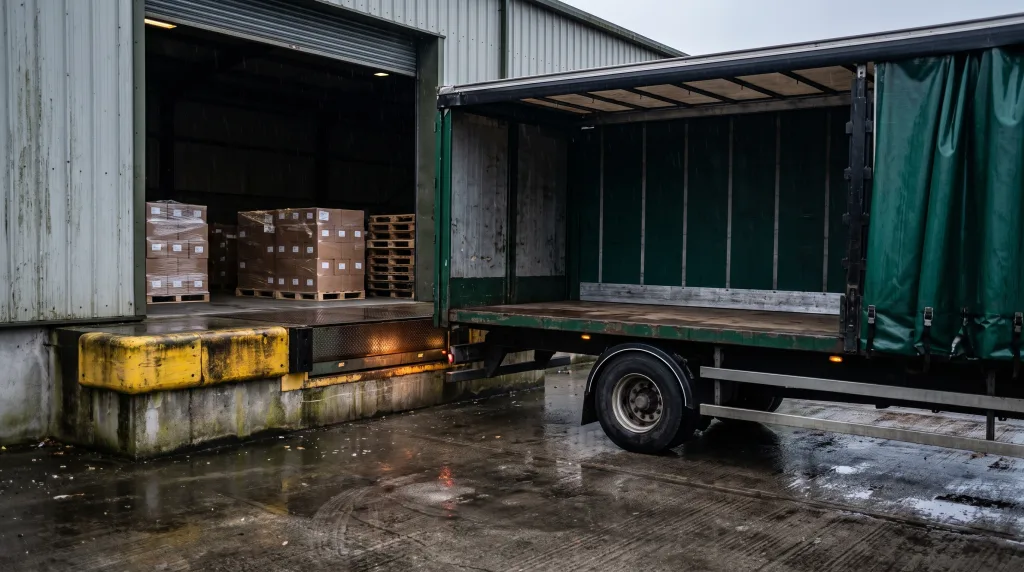
EXW pushes onto the buyer everything that happens after the goods sit on a pallet in your warehouse. The buyer (or their forwarder) sends the truck, loads it, files the export declaration and moves the cargo across the border. On paper this looks like the most convenient rule for a seller, because in theory you do nothing. In practice you hand over control of the very process where you have the most to lose in tax terms. The full set of rules is in our Incoterms 2020 table.
Why does EXW tempts exporter?
Sales teams reach for EXW for simple reasons. Pricing is easy, because you quote "from the warehouse" with no freight and no formalities. It looks like the lowest responsibility. Overseas buyers often ask for EXW themselves, because they have their own carrier and want to control logistics. The catch is that the benefit is illusory: you save a few calls to a forwarder and risk 23% of the invoice value in tax.
The real stake: zero-rated VAT and export proof
This is the heart of the trap, and it is exactly what full Incoterms tables leave out. To apply a zero VAT rate on an export you must prove the goods left the EU customs territory. That proof (message IE-599) is issued in favour of whoever is named as the exporter on the export declaration. Under EXW the buyer (or their agent) lodges the declaration and controls the process, so in practice you lose your grip on who is named as exporter and on whether the confirmation ever reaches you.
If you do not enforce a copy of that document, you are left with an invoice and no proof of export. The consequence: the tax office makes you settle the transaction at the domestic rate. You sold goods for PLN 100,000 net and suddenly have to top up PLN 23,000 in VAT you never charged the buyer. Recovering that money from a foreign counterparty is often wishful thinking.
Losing control of export clearance
Under EXW you cannot see how or when your goods were declared. You have no influence over whether the buyer's carrier cleared them correctly, or cleared them at all. Sometimes the cargo leaves undeclared, and you, as the brand owner and invoice issuer, are left with an empty export record. When the destination is outside the customs union the risk grows. For shipments to Britain it is worth reading who arranges customs in UK transport, because there import clearance on the other side of the Channel is added on top.
EXW versus FCA: one word, a different world
In most cases the fix is to move from EXW to FCA (Free Carrier). The difference looks small, but it changes the exporter's legal standing completely.
| Element | EXW | FCA |
|---|---|---|
| Loading onto the vehicle | Buyer | Seller (when loading at own site) |
| Export clearance | Buyer | Seller |
| Who is named as exporter | Buyer | Seller |
| Access to export proof (IE-599) | Difficult | Natural, in your hands |
| Control over zero-rated VAT | Weak | Full |
Under FCA you (or your forwarder) declare the goods for export, so the exit confirmation (IE-599) reaches you automatically. You keep the right to zero-rate and hold hard evidence in case of an audit. Transport costs can still sit with the buyer, so commercially you lose nothing.
When EXW makes sense and when it does not
EXW can be acceptable in domestic trade, or when the buyer has a strong, proven customs agency that commits in writing to give you the export proof. In exports outside the customs union, and especially on lanes that need customs documents, EXW is asking for trouble. Watch out too for a mismatch of rules along the chain, which we cover in the piece on who pays duty and import VAT under DAP and DDP.
How to secure the export if you must stay on EXW
- Write into the contract the buyer's duty to give you a copy of the export-exit confirmation (IE-599) by an agreed deadline.
- Agree who is named as exporter on the declaration, and demand the MRN of the export entry.
- Consider EXW "loaded", where the seller is at least responsible for loading, which tidies up liability.
- Best of all: hand export clearance to your own customs agency, so the proof of export never slips out of your hands.
At OTSL we run clearances through our own customs agencies in Poland and the UK, so on FCA sales, or on a secured EXW, we make sure the export confirmation lands where it protects your VAT. One account manager sets the rule and the formalities with you for the specific lane. Message us through the form and we will show you how to word the Incoterms in your contract so EXW does not turn into a bill for 23% VAT.
Step by step
- Agreeing sales terms. You select the delivery terms and define the requirements for transport documentation carefully.
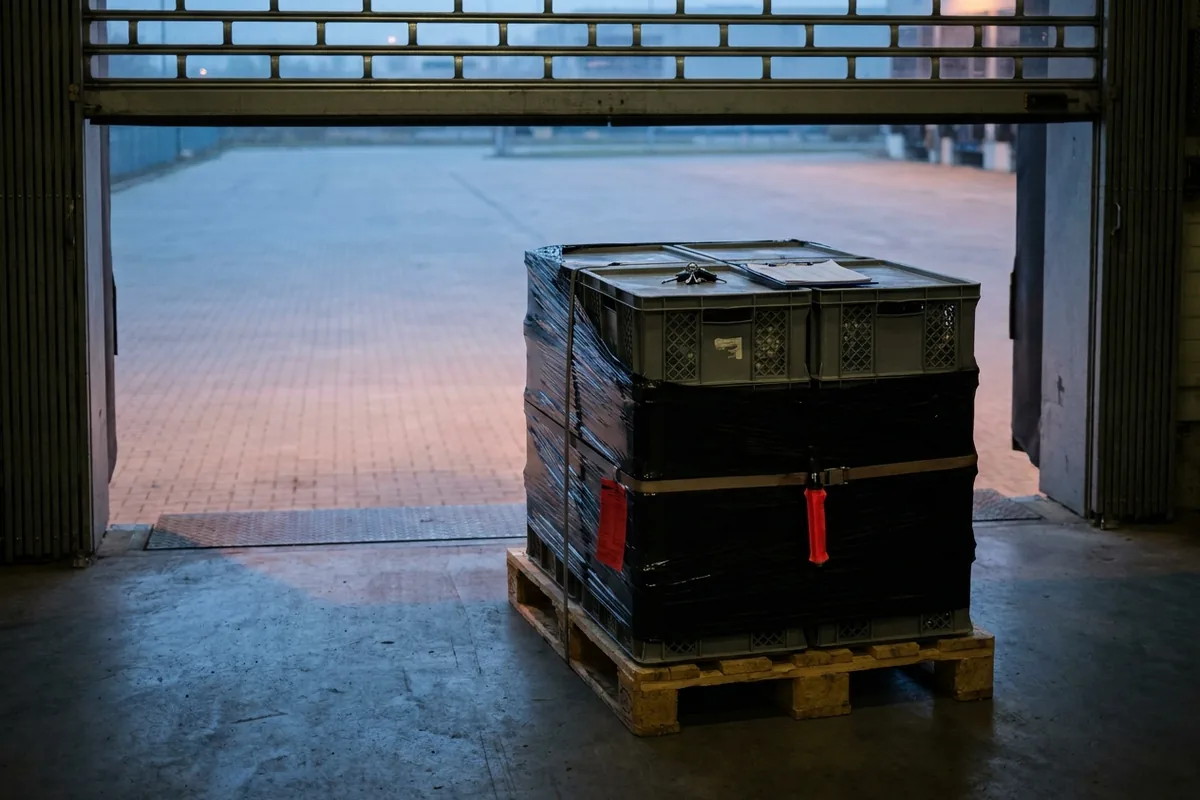
- Preparing the goods. You pack and mark the cargo at your premises, placing it ready for the buyer's carrier.
- Overseeing customs clearance. You confirm that the buyer or their agent correctly lodges the export declaration.
- Tracking export exit. You monitor the progress of the movement until exit validation is processed at the border.
- Obtaining message IE-599. You collect the official electronic export confirmation required to substantiate zero-rated tax treatment.
Definitions
- EXW (Ex Works): An Incoterms rule placing minimal obligations on the seller, who only needs to make goods available at their premises.
- Incoterms (International Commercial Terms): Standardised international trade terms allocating duties, costs and risks between seller and buyer.
- IE-599 message: An electronic customs document confirming that goods have physically left the European Union customs territory.
- Zero-rate VAT: A tax rate applicable to export transactions provided official proof of export leaving the territory is obtained.
- Export clearance: The customs process of lodging export documentation to allow goods to legally exit the customs zone.
When does this rule not apply?
This rule does not apply when the seller chooses FCA terms instead and takes responsibility for export customs formalities and loading the goods.
The OTSL role
OTSL assists exporters in organising international logistics safely while protecting against tax risks linked to missing export proof. When you book road transport (FTL), our operations in Milton Keynes and Kielce manage cross-border flows effectively, while checking the tariff code (CN/HS) ensures compliance.