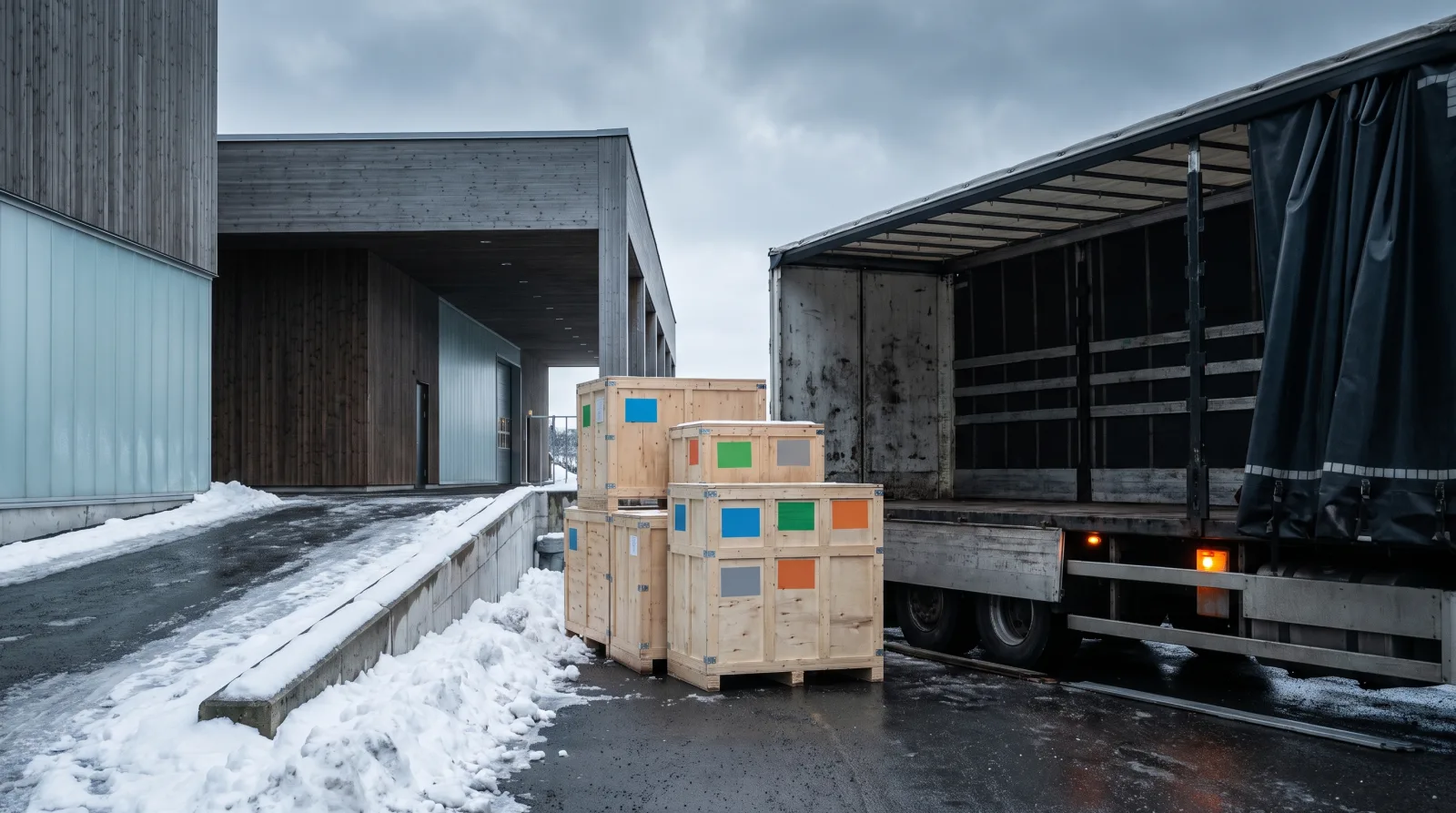
 AI image
Norway is outside the EU customs union, so a Polish exhibitor's exhibits enter the country temporarily: on an ATA carnet (Norway is a party to the ATA system) or under temporary admission, both with an obligation to re-export. Regardless of the carnet, the movement is subject to a Digitoll notification before the border is crossed. Promotional material, samples for distribution and goods sold at the fair do not fit into the ATA carnet and need ordinary import clearance with duties and taxes. The route runs through Sweden and Svinesund, and the venue's build-up window sets the delivery time.
Why does a stand for a fair in Oslo go through customs clearance?
Exhibitors heading to a fair in Norway often assume that, since the country is in the EEA and in Schengen, the stand and exhibits will travel as they would to Sweden. They will not. Norway does not form a customs union with the EU, so every truck with goods crosses a customs border. An exhibit that returns to Poland after the fair is not an import, but it must be declared as a temporary admission and its return documented. Otherwise Norwegian customs treats it as sold in Norway and claims the charges.
The ATA carnet was created for exactly this: an international customs document that replaces import and export declarations and the security for charges on temporary admission. In Poland it is issued by the Polish Chamber of Commerce (Krajowa Izba Gospodarcza). The alternative is temporary admission in the Norwegian system with a guarantee, which we choose when a carnet does not suit the load or the schedule. A separate OTSL article compares the two routes.
What at a trade fair does not fit into an ATA carnet?
The carnet covers goods that return in unchanged condition: exhibits, equipment, stand components. It does not cover what stays in Norway: catalogues and leaflets, samples for distribution, giveaways, drinks and food for the stand, and goods the exhibitor sold during the fair. These items need ordinary import clearance in Norway with duties and taxes, and therefore a separate invoice, tariff codes and a Norwegian importer or representative.
Digitoll works independently of the carnet. A movement to Norway is subject to digital notification of the means of transport and the goods before the border, and the way goods on an ATA carnet are notified in Digitoll must be checked on toll.no before departure, because Tolletaten defines the required messages. In practice this means that the carnet item list and the invoice for promotional material must be ready before the truck boards the ferry.
Exhibits for a fair in Norway step by step
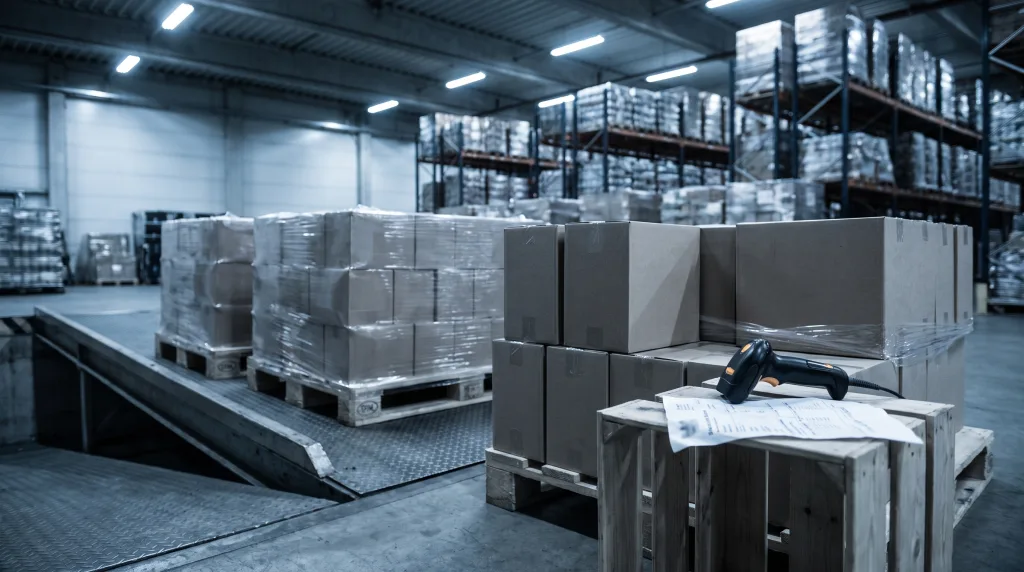
- Split the load into two lists. What returns (ATA carnet or temporary admission) and what stays (ordinary import). The split determines the documents, so we make it at quotation, not at loading.
- Obtain the ATA carnet. Application to the Polish Chamber of Commerce with a list of goods, values and weights; the list must match reality, because customs may check it item by item.
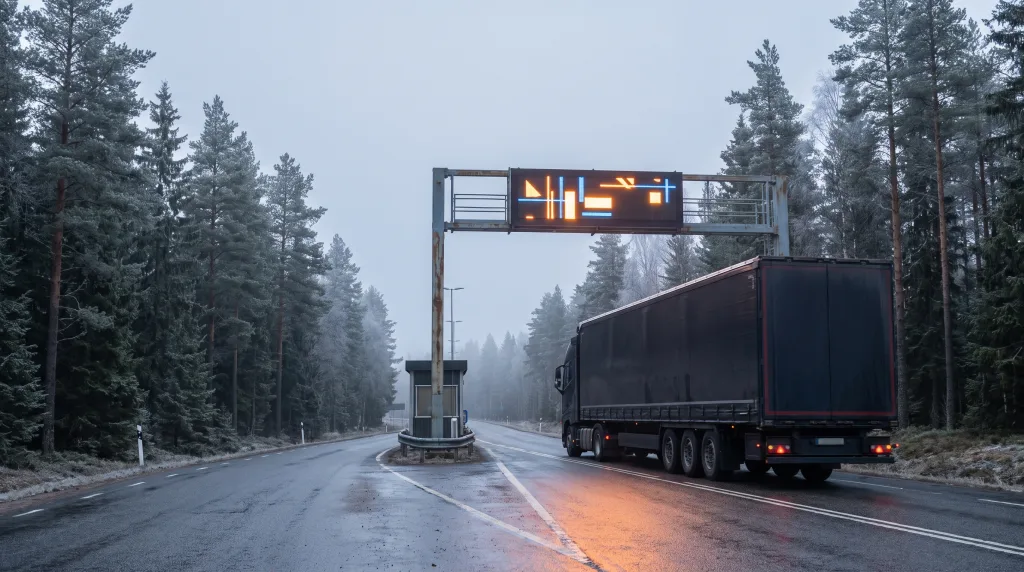
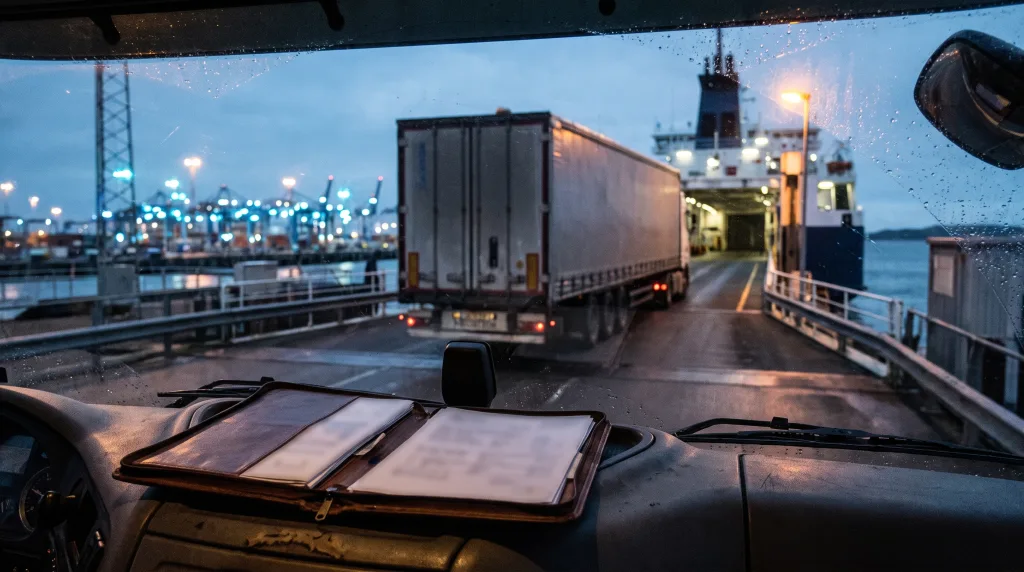
- Plan the route and the ferry booking. Ferry to Sweden, E6 to Svinesund, arrival at the venue within the build-up window. Driver hours are planned with a margin for the crossing and the border.
- Submit the Digitoll notification and prepare the clearance. Vehicle and goods messages before the border, the carnet endorsed on export from the EU and import into Norway, separate import clearance for the material that stays.
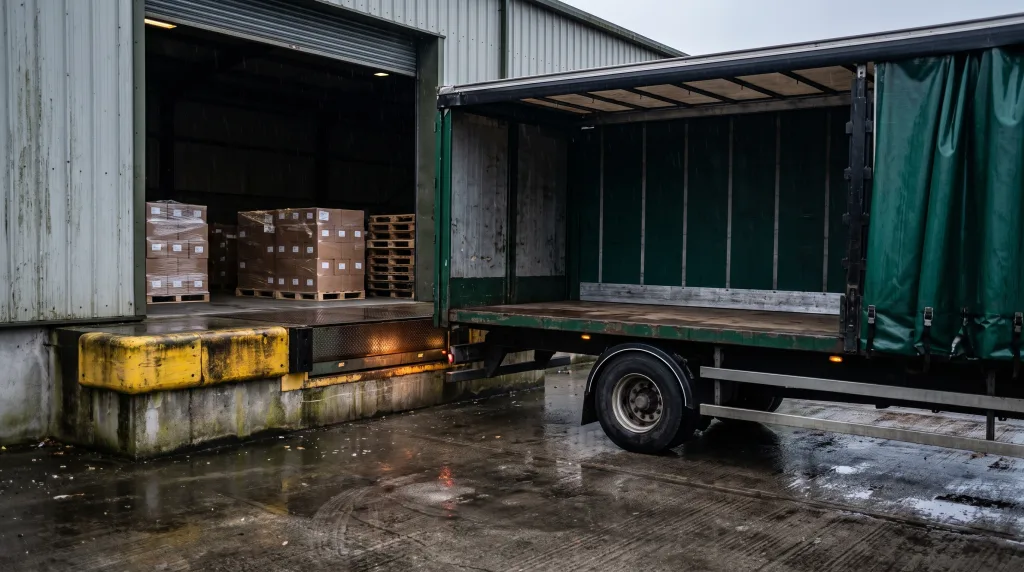
- Deliver to the venue. Nova Spektrum in Lillestrøm, Oslo Spektrum, Telenor Arena in Fornebu, Stavanger Forum, Trondheim Spektrum and Grieghallen in Bergen each have their own access and unloading rules; the organiser sets the delivery slot.
- Close the carnet on the way back. Endorsement of re-export from Norway and re-import into the EU; missing stamps are the most common cause of demands for payment months after the fair.
Definitions
- ATA carnet – an international customs document for the temporary admission of goods, including trade fair exhibits; Norway is a party to the ATA system, and in Poland carnets are issued by the Polish Chamber of Commerce.
- Temporary admission – a customs procedure allowing goods to be brought in for a defined period with an obligation to re-export, secured by a guarantee instead of a carnet.
- Digitoll – the Norwegian Customs (Tolletaten) system for digital notification of the means of transport and the goods before the border is crossed.
- EEA (European Economic Area) – the agreement linking the EU with Norway, Iceland and Liechtenstein; it does not remove the customs border.
- Build-up window – the period set by the organiser for delivery and construction of the stand; outside it the loading dock is occupied by other exhibitors.
Exhibitor checklist before leaving for Norway
- ATA carnet goods list matching reality: names, quantities, values, weights, serial numbers where they exist.
- Separate invoice for promotional material, samples and goods for sale, with tariff codes.
- Norwegian importer or representative for the items that stay in Norway.
- Ferry booking and route plan via Svinesund matched to the build-up window.
- Digitoll notification submitted before the border, carnet in the driver's cab.
- Collection date and place after the fair agreed with the organiser, so the carnet can be closed without a standstill.
When is the ATA carnet not the right route?
The ATA carnet does not apply to goods that are to stay in Norway: sold, given away or consumed on the stand. Nor does it apply when the exhibitor wants to sell an exhibit to a Norwegian customer after the fair; the goods must then be transferred to ordinary import clearance with charges before they leave the hall. The choice between a carnet and temporary admission depends on the type of load, the number of trips a year and whether the same equipment then travels to further fairs outside the EU. If the stand is hired from a local contractor in Norway, that whole part of the procedure falls away and only the exhibits cross the border. See also: Digitoll step by step: pre-arrival notification for Norway.
The OTSL role
OTSL handles ATA carnets and temporary admissions through its own customs agency and combines them with the haulage and the ferry booking in one order, with one lead forwarder from loading in Poland to closing the carnet after the return. The formalities are described on the ATA carnet service page, and the decision between carnet and temporary admission is easier with ATA carnet or temporary admission. The specifics of the capital's largest hall are in trade fair transport to Oslo Spektrum, and the other Norwegian venues, each in its own article, are collected on the trade fairs in Norway page.