 AI image
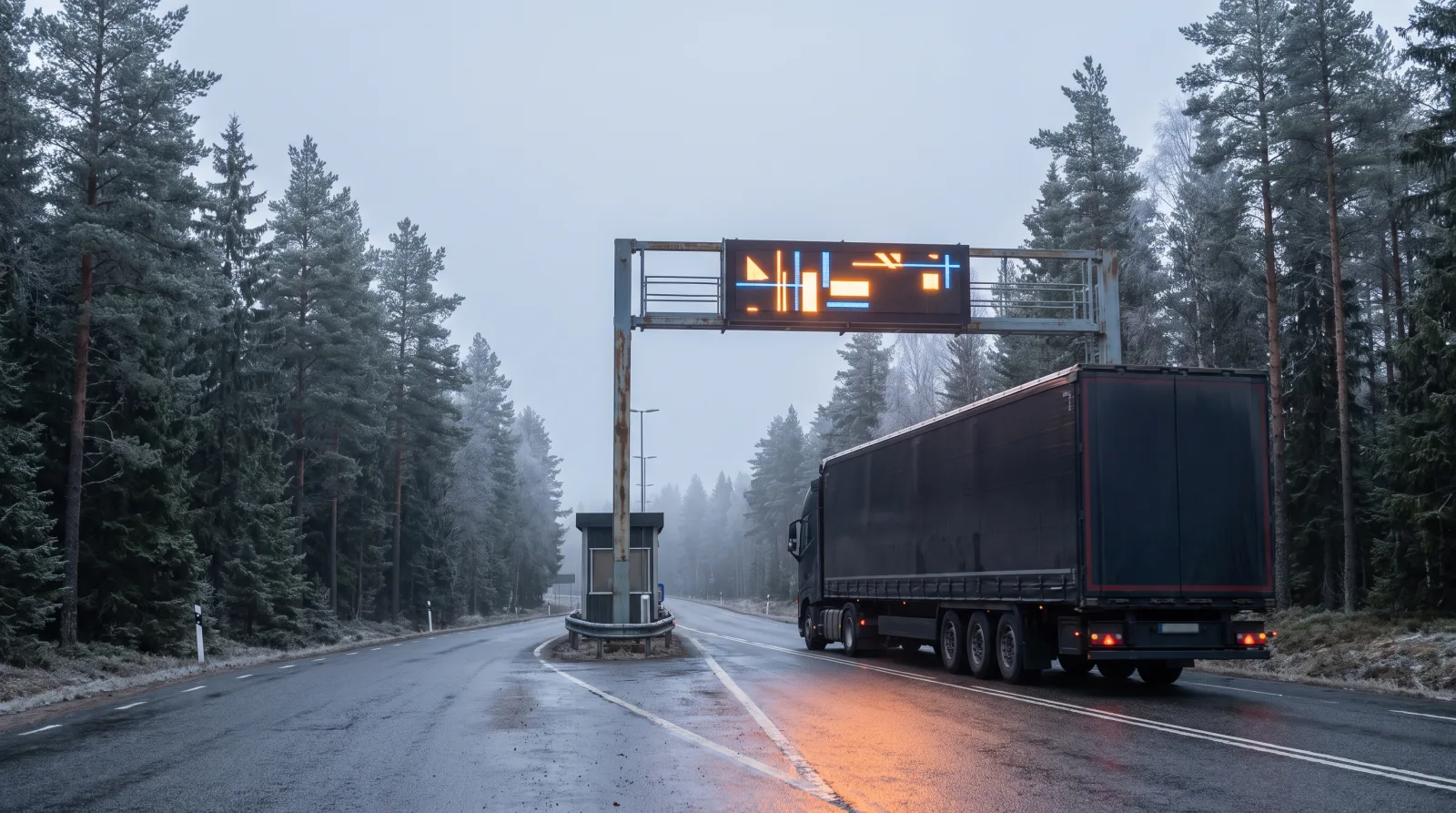
Digitoll is the Norwegian Customs (Tolletaten) system in which information about the means of transport and the goods is submitted digitally before the border is crossed, or at the latest at the moment of crossing. Customs assesses the risk before the truck reaches Svinesund, and a vehicle with a complete notification can often pass without stopping. According to the revised implementation plan (Norwegian Customs, as at 4 September 2026), digital notification becomes mandatory from 15 September 2026, and from 1 March 2027 the customs declaration must be lodged no later than at the border.
What is Digitoll and why did Norway introduce it?
Norway is outside the EU customs union, although it belongs to the European Economic Area. Every commercial movement from Poland therefore crosses a customs border, and until recently that meant a stop at the crossing, paper documents and clearance "after arrival" at an inland customs office. Digitoll reverses the order: the data about the vehicle and the load reach Tolletaten in advance, and the decision on whether to inspect is taken before the driver arrives at the border.
For the carrier the effect is straightforward. A vehicle whose data customs already holds and has assessed as low risk may drive through the crossing without stopping. A vehicle with no notification, or an incomplete one, is directed to inspection. Digitoll does not replace the export declaration in the EU or the import declaration in Norway: these are three separate steps of one movement.
Which messages do you submit in Digitoll, and when?
The notification and disclosure obligation is fulfilled by a set of four messages, all submitted digitally before or at the moment of crossing the border. They concern the means of transport and the goods, and they link a specific vehicle to a specific consignment and customs declaration. Tolletaten publishes the detailed description of each message on its pages about notification and disclosure obligations, and that description is the only binding source.
The dates come from the revised implementation plan published by Norwegian Customs (as at 4 September 2026): digital notification and disclosure mandatory from 15 September 2026; customs declaration no later than at the border and the end of the "direct transport" system (direktekjøring) from 1 March 2027. If the plan changes, the current publication on toll.no prevails, not this article. Separately, since 1 April 2025, road and rail movements from third countries have been subject to advance entry summary declarations in ICS2.
Digitoll notification step by step
- Collect the data before loading. Commercial invoice, packing list, vehicle and trailer details, the planned border crossing and the approximate time of arrival. Without these a complete notification cannot be submitted.
- Complete the EU export declaration. The export declaration with the exporter's EORI (Economic Operators Registration and Identification) number generates an MRN, which you later link to the movement to Norway.
- Open a transit if you travel through Sweden. Norway is a party to the Convention on a common transit procedure, so the goods can move to a Norwegian customs office under transit.
- Submit the Digitoll messages. The carrier or its representative submits the vehicle and goods data before reaching the border. In parallel, the customs agent prepares the import declaration.
- Give the driver the reference numbers. The driver must know that the movement has been notified and have the numbers to hand in case of an inspection.
- Finish the import clearance. On the Norwegian side: customs declaration in TVINN, settlement of duties and taxes, release of the goods for delivery.
Definitions
- Digitoll – the layer of digital notification and disclosure of information about the movement and the goods to Norwegian Customs before the border is crossed.
- TVINN – the Tolletaten system for lodging customs declarations (import, export) by declarants and customs agents.
- EEA (European Economic Area) – the agreement linking the EU with Norway, Iceland and Liechtenstein in a single market; it does not create a customs union.
- MRN (Movement Reference Number) – the number assigned to a customs declaration in the EU, including export and transit declarations.
- ICS2 (Import Control System 2) – the EU system of advance safety and security declarations for goods entering the EU customs territory.
- Direktekjøring – the Norwegian "direct transport" practice to date: goods travel to an inland customs office and are cleared after arrival; under the Tolletaten plan it ends on 1 March 2027.
Checklist before departure for Norway
- Commercial invoice with value, currency, Incoterms and a description of the goods sufficient to assign a tariff code.
- Packing list consistent with the invoice: pieces, gross and net weights, type of packaging.
- Registration numbers of tractor and trailer, plus driver details.
- MRN of the export declaration and, where applicable, of the transit.
- Organisation number of the Norwegian importer and the agreed way of settling import VAT.
- Confirmation that the Digitoll messages have been submitted before the driver heads for the border.
When does Digitoll not apply to your movement?
Digitoll does not apply to movements that do not cross the Norwegian customs border, for example deliveries ending in Sweden. The scope of the obligation depends on the type of movement and the means of transport, and whether a given notification is complete is judged solely by Tolletaten. The dates above come from the revised implementation plan and may be changed, so do not rely on them unless toll.no confirms them on the day you depart. Check the source, not your memory. See also: Trade fairs in Norway: ATA carnet, Digitoll and the return trip and TVINN vs Digitoll: two Norwegian customs systems, who does what and Winter in Norway for trucks: chains, winter tyres and convoy driving.
The OTSL role
OTSL combines road haulage with the formalities on both sides of the border: the EU export declaration, the Digitoll messages and the import declaration are handled by one lead forwarder, and the data for the system come from the invoice, packing list and vehicle details you provide before loading. How we work on this lane is described on the transport to Norway page, customs formalities are covered by customs clearance, and the full clearance path is in the article customs clearance for transport to Norway step by step. Why proximity and the EEA do not remove the border is explained in deliveries to Norway from outside the EU.