 AI image
A dangerous-goods spill in transit costs far more than the cargo itself. The bill includes neutralising the substance, certified disposal of contaminated goods and packaging, cleaning and immobilising the vehicle, mandatory reporting, and downtime that blocks the next jobs. The biggest losses come from a poor packaging and consignor check, not from the transport itself.
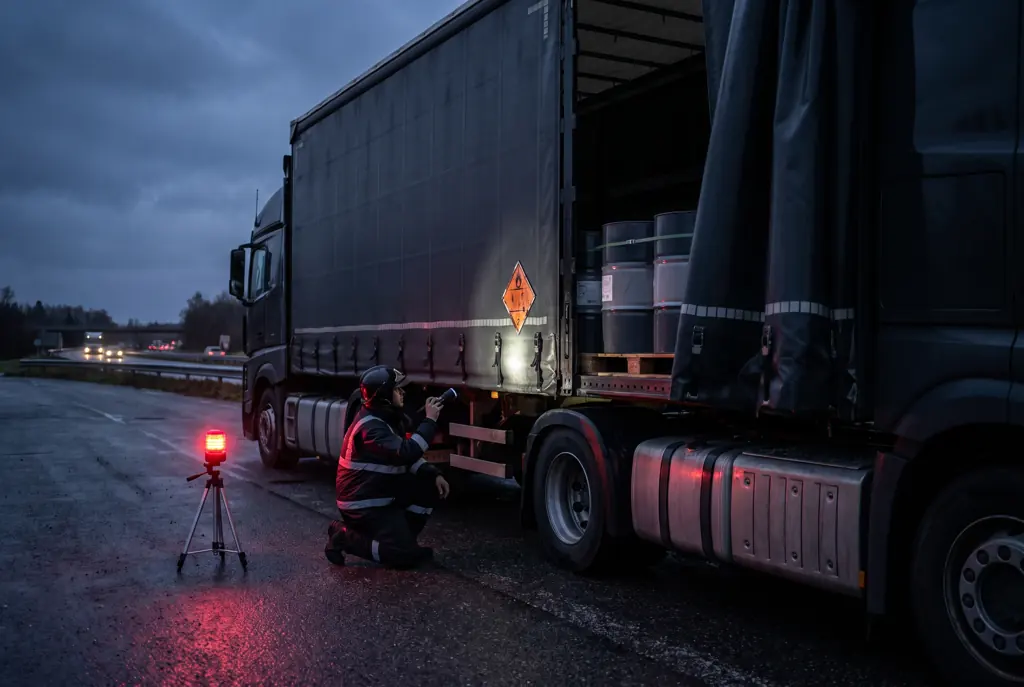
What goes wrong in an ADR spill
Damaged dangerous-goods packaging is rarely random. It usually stems from specific, repeatable mistakes that could have been caught before loading.
- Packaging without valid approval or not matching the ADR class of the substance.
- Leaking cans, drums or IBCs due to poor closure or damage from an earlier transport.
- Lithium cells with unprotected terminals, mechanical damage, or in a state that signals overheating risk.
- Missing or wrong marking and transport document, so the driver and authorities do not know what they are dealing with.
- Poor load securing that lets packages shift and knock against each other.
In ADR transport, responsibility starts with the consignor. They classify the goods, choose the packaging and pack it. If that stage is done carelessly, a leak is only a matter of time, and the whole chain pays for it.
The real cost of one spill
A breached chemical or a damaged cell is not a single invoice, but several parallel costs that grow hour by hour.
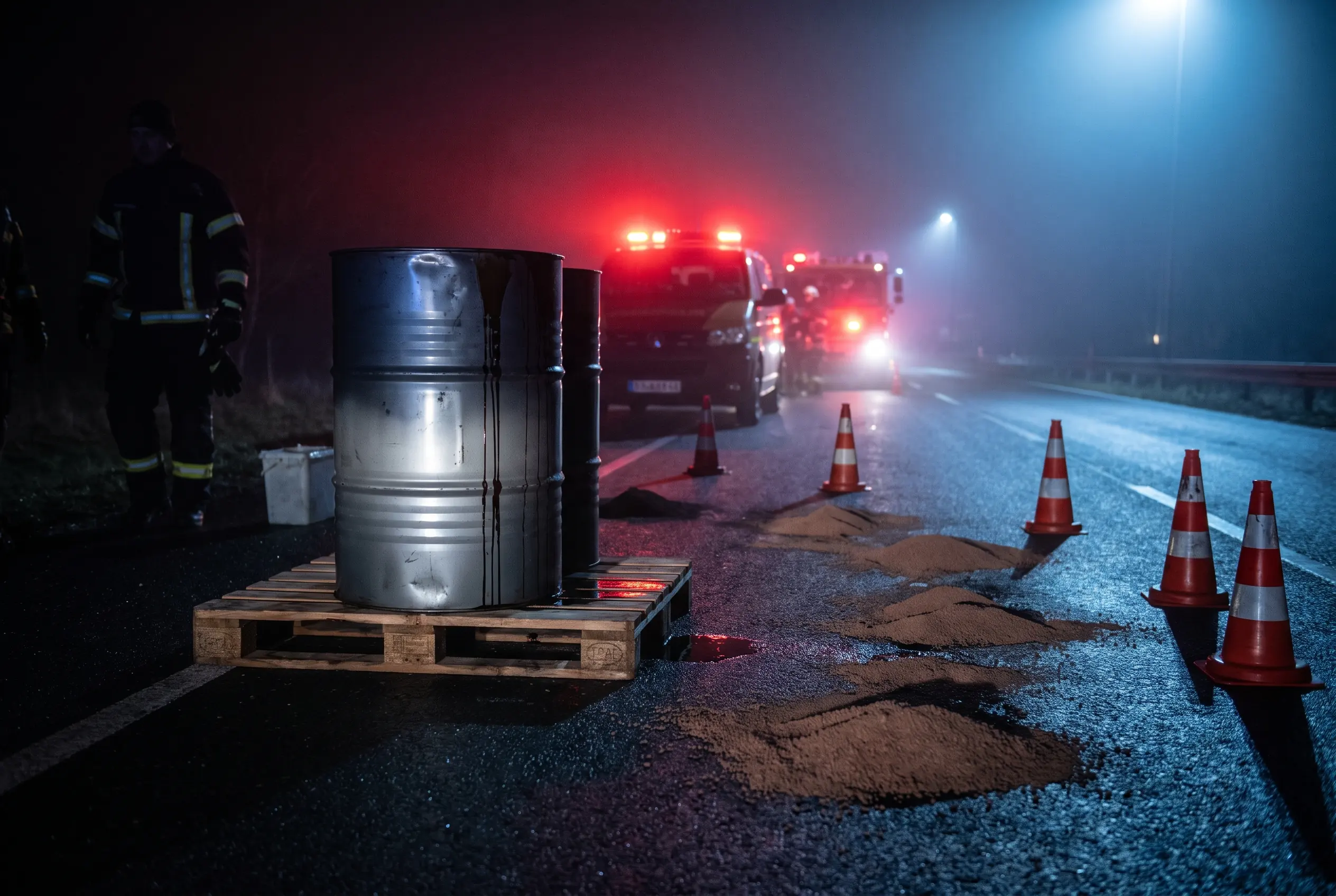
- Neutralisation and clean-up. The substance has to be contained, collected and neutralised according to its class. These are specialist services, not a routine trailer wash.
- Disposal of contaminated goods and packaging. Contaminated cargo often cannot travel any further and needs certified disposal as hazardous waste. The value of the goods is then lost twice: it never arrived, and you pay to have it removed.
- Downtime and vehicle cleaning. The trailer is out of service until decontamination. Every day parked is work the vehicle is not doing.
- Reporting and formalities. A dangerous-goods event carries documentation and reporting duties. Skipping them turns a technical incident into a legal problem.
- Knock-on effect on the schedule. A blocked vehicle and shifted deadlines hit the next deliveries, not just the one job that went wrong.
How does OTSL cut this risk?
An ADR spill is predictable, so most of the work happens before the goods move. A check and a procedure are cheaper than neutralisation.
- Packaging and classification check. We verify that the packaging matches the ADR class and the consignor declaration, and that the marking and transport document line up.
- Load securing. We secure the cargo so packages cannot shift or knock into each other in transit and under braking.
- Emergency procedure. The driver knows how to react if a leak is suspected, and the operations team manages the case and brings in the right services.
- One responsible contact, 24/7. In an ADR event, minutes matter. One person who knows the cargo and the route runs it, with no handoffs between departments.
OTSL handles ADR transport as part of full forwarding responsibility on the Poland, United Kingdom, Switzerland and wider European Union lanes. If you move chemicals, lithium cells or other dangerous goods, describe the cargo through our form. We will check the packaging and the procedure before one breach turns a delivery into a neutralisation bill.
Step by step
- Inspect packaging integrity. Examine drums, cans, and IBCs carefully for any structural defects before accepting the cargo.
- Verify approval markings. Check that packaging approvals match the specific hazard class of the transported substance.
- Secure battery terminals. Ensure all lithium cells have protected poles and adequate mechanical cushioning against movements.
- Audit transport documents. Confirm that the consignor statement and emergency instructions match the cargo details.
- Check emergency equipment. Ensure the vehicle carries the required safety kits and personal protective equipment.
Definitions
- ADR (Agreement concerning the International Carriage of Dangerous Goods by Road): An international treaty setting unified standards for shipping hazardous materials safely.
- IBC (Intermediate Bulk Container): A reusable industrial container designed for handling and transporting liquids or bulk solids.
- Approval certification: Official confirmation that packaging meets required safety and structural standards for dangerous goods.
- Lithium cells: High-energy battery units that require strict terminal insulation to prevent short circuits and thermal risks.
When does this rule not apply?
This strict checking protocol does not apply to dangerous goods shipped under limited quantities or special exemptions, unless specific carrier requirements are mandated by the consignor or transit authorities.
The OTSL role
At OTSL, we manage safety checks and logistics coordination, delivering reliable ADR transport across Europe and the UK. Our team also coordinates efficiently managed road transport solutions to keep your freight moving without unexpected downtime. See also: Mis-declared ADR goods: what happens when hazardous cargo travels as an ordinary pallet and Are goods fit for sale after trailer tampering? | OTSL.