 AI image
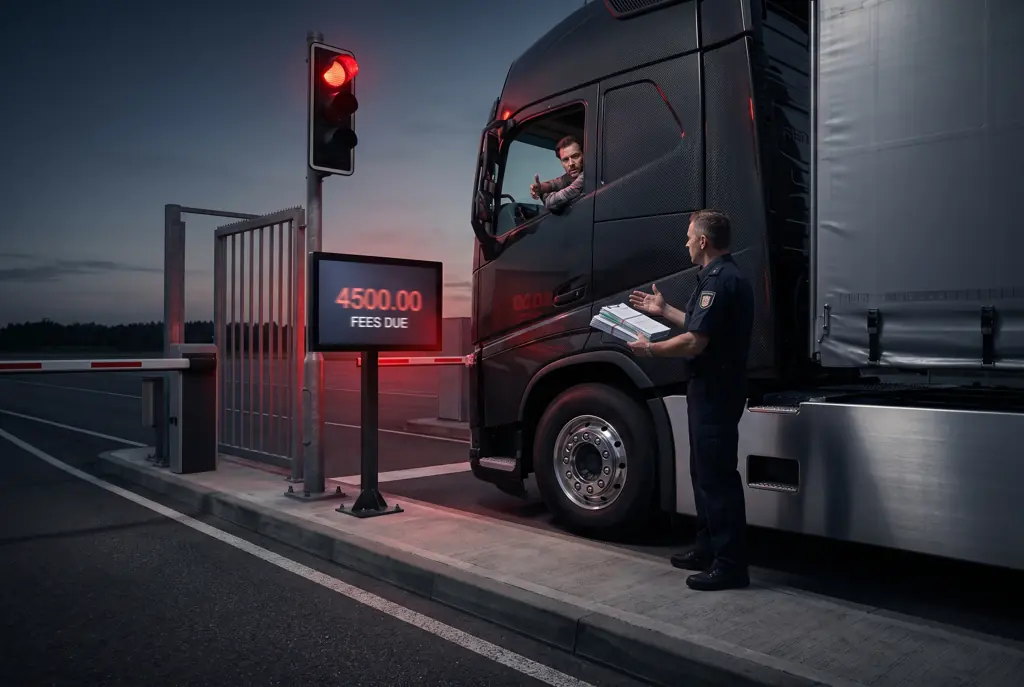
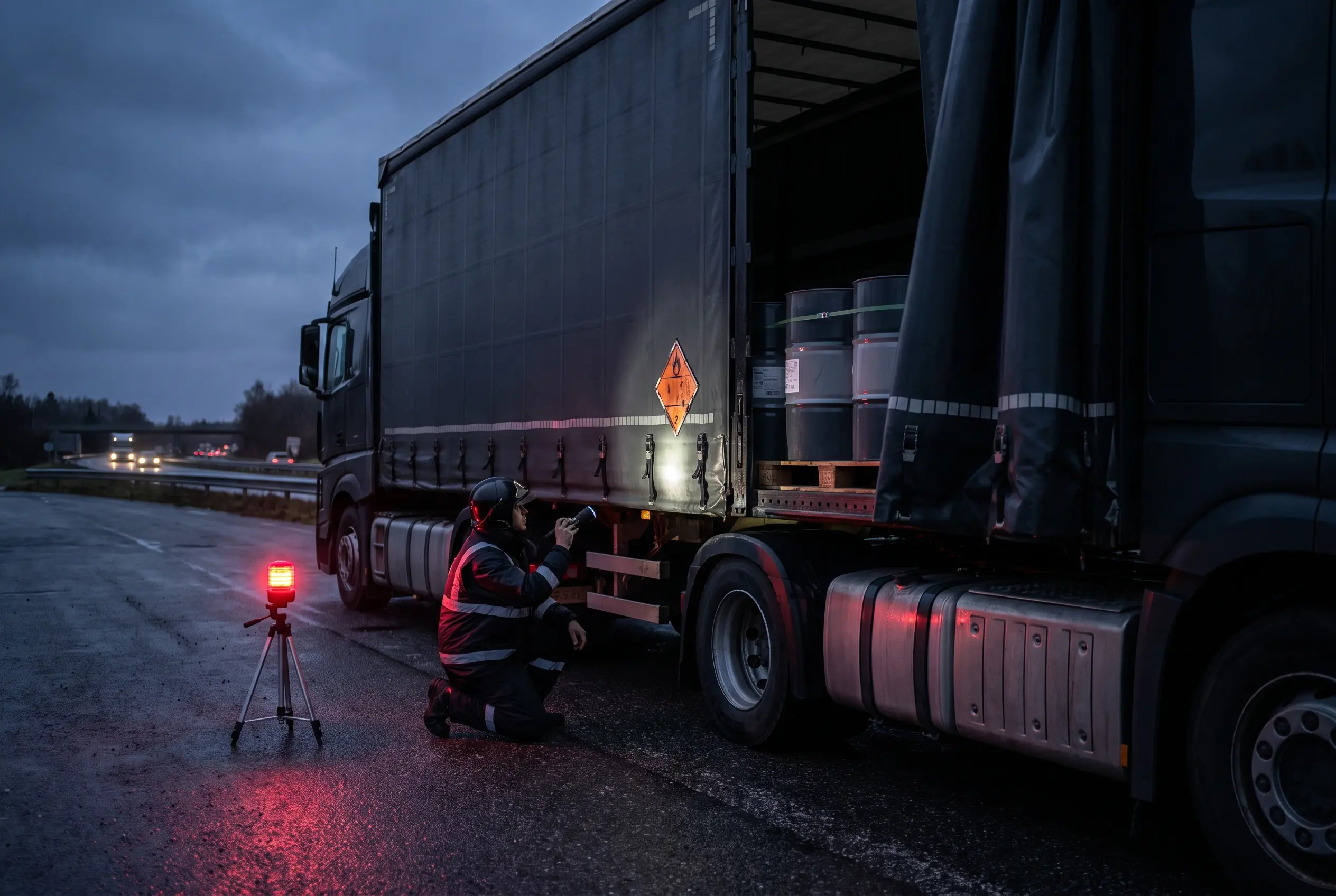
When dangerous goods travel as an ordinary pallet or with the wrong UN number, class or packing group, a roadside inspection can fine you and immobilise the vehicle until the fault is corrected. (source: unece.org) The critical point: the consignor, not only the carrier, is liable for correct classification, documents and packaging. A paperwork error becomes your legal and financial problem.
What goes wrong?
A mis-declared ADR shipment rarely comes from bad intent. Usually it is a knowledge gap on the shipper side, or an attempt to avoid formalities and cost. Typical scenarios:
- Hidden dangerous goods. Aerosols, lithium batteries, paints, adhesives, chemicals or waste travel booked as ordinary groupage because nobody checked the safety data sheet.
- Wrong class or UN number. The same product ends up assigned to the wrong hazard class, which changes the rules for marking, load segregation and vehicle equipment.
- Wrong packing group. An understated hazard level means unsuitable packaging that will not do its job in an incident.
- Missing documents. A missing or incorrect ADR transport document, missing hazard labels, placards and driver instructions.
The real cost to the client
Roadside inspections catch these discrepancies routinely. The consequences land on the cargo and on the consignor, and they do not disappear once the truck drives off:
- Financial penalty. Irregularities in the carriage of dangerous goods carry sanctions that can reach the consignor responsible for classification and documents.
- Immobilised vehicle. The truck is held until the hazard is removed. The cargo stops, the driver stops, the whole supply chain stops.
- Delay and a broken schedule. The shipment misses its slot, and for export, trade-fair or production-line deliveries the delay can cost more than the fine itself.
- Legal liability. It is the consignor who certifies that the goods were correctly classified, packed and described. An error here is hard to push onto the carrier.
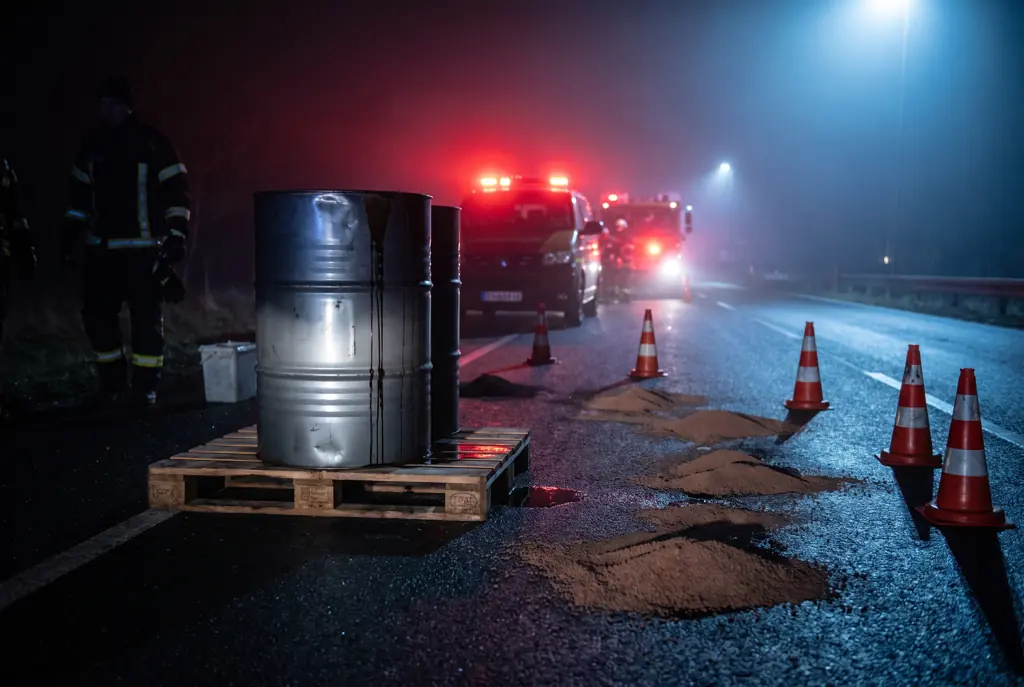
- Risk of a real incident. A wrong class or packing group is not just paperwork. In a fire, spill or collision, a wrong declaration means wrong packaging and a wrong emergency response.
How does OTSL prevent it?
We treat ADR as something checked before loading, not a problem discovered on the road. In practice that means a concrete review at the start of the order:
- Classification verified up front. Before the load moves, we check with the consignor whether the goods fall under ADR at all, and what their UN number, class and packing group are. We ask for the safety data sheet when anything looks unclear.
- Transport document control. We check the ADR transport document, the required entries and whether the described cargo matches what is actually shipping.
- ADR-trained drivers. Carriage is handled by drivers trained in dangerous goods who know how to act on the road and during an inspection.
- Correct marking and segregation. We watch the labels, placards and vehicle equipment, and the rules on which loads may not travel together.
- A warning signal for the client. When a product looks hazardous but the booking does not reflect it, we stop and clarify instead of sending the problem down the road.
A well-described ADR load travels calmly and clears inspection without friction. A badly described one is a time bomb for the consignor. If you are not sure whether your goods fall under ADR, let us settle it before dispatch, not on the hard shoulder during an inspection.
Step by step
- Safety data sheet review. Check section fourteen of the document to confirm if the product is classified as hazardous.
- Identification of UN details. Determine the correct identification number, hazard class and packing group before booking.
- Packaging and labelling. Apply certified packaging alongside the mandatory hazard labels on the pallet.
- Transport document issuance. Prepare the consignment note with the accurate dangerous goods declaration.
- Carrier notification. Inform the transport operator about the hazardous nature of the goods prior to collection.
Definitions
- ADR (Agreement concerning the International Carriage of Dangerous Goods by Road): An international treaty setting standards for the safe transport of hazardous cargo.
- UN number: A four-digit identification number assigned to a specific dangerous substance or article.
- Hazard class: A classification category indicating the primary type of risk presented by a consignment.
- Packing group: An indicator specifying the level of danger of a substance and the required packaging strength.
- ITD (Road Transport Inspection): The enforcement authority responsible for inspecting commercial road transport compliance.
When does this rule not apply?
This rule does not apply when transporting dangerous goods packaged in limited or excepted quantities, unless the total volume or mass exceeds the permitted exemption thresholds.
The OTSL role
OTSL assists shippers in verifying documentation and arranging compliant road freight. Learn more about our ADR transport services and consult our guide on ADR transport, moving dangerous goods step by step | OTSL to keep your supply chain secure.