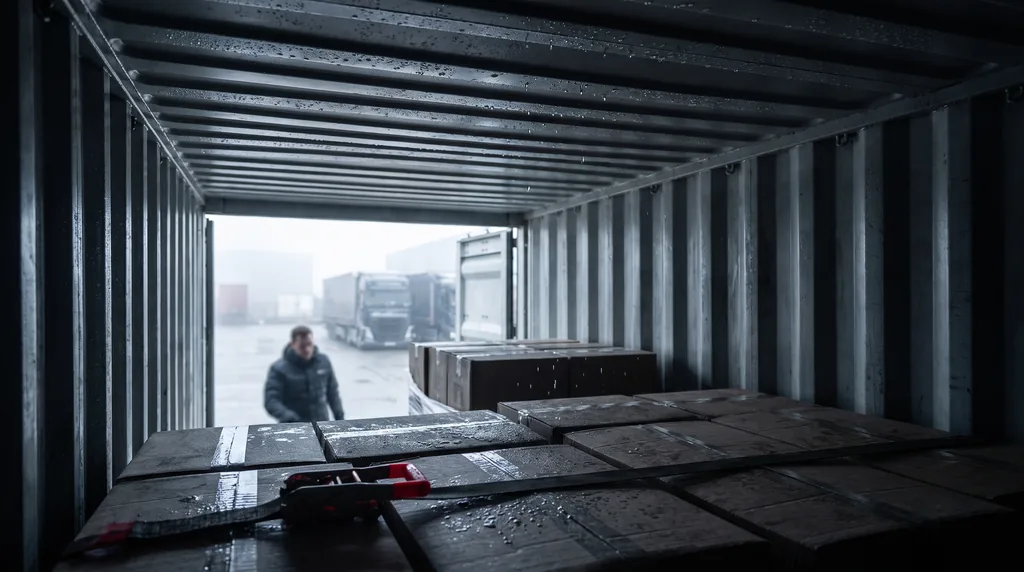
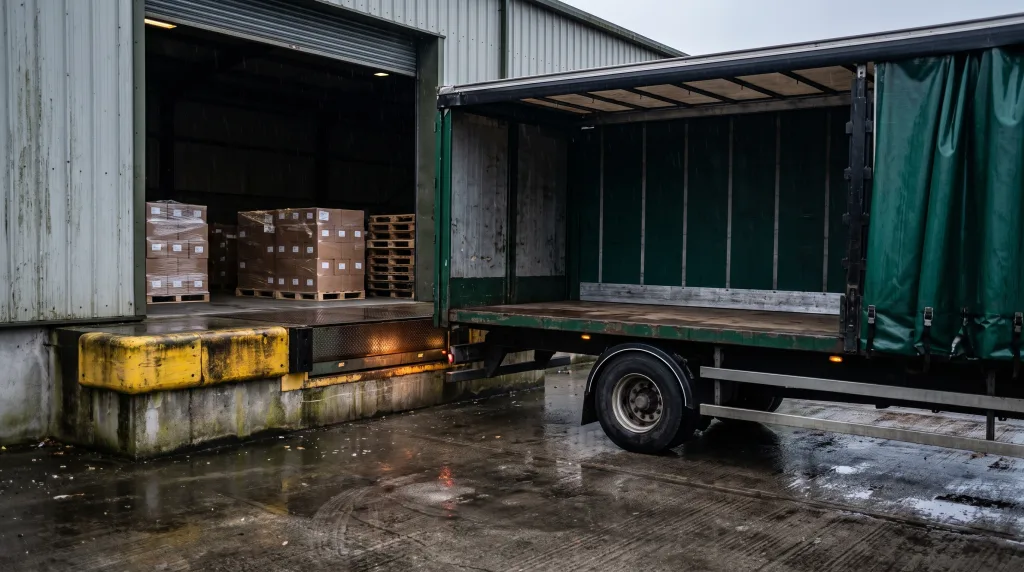
 AI image
At unloading, count the pieces and pallets received and compare them with the consignment note and the packing list. If a shortage or overage appears, document it at once: enter a reservation on the consignment note, take photos and record the actual quantity. A missing reservation at the moment of delivery makes a later claim harder.
What to check on delivery
Delivery is the moment when a discrepancy can still be caught and described while the driver is present. The reference point is the paperwork travelling with the cargo: the CMR consignment note and the packing list. They state how many pieces and pallets should arrive.
- Number of pallets. Count the pallets coming off the trailer and compare them with the number stated in the documents.
- Piece count and pallet completeness. Check whether each pallet is complete, whether layers or packages are missing, and whether the piece count matches the packing list.
- Marks and labels. Verify that pallet numbers and labels match the positions in the documents, because a scanning error or a swapped pallet easily creates an apparent shortage or overage.
- Condition of packaging. Note any signs of opening, repacking or damage that may be linked to a difference in quantity.
How to count and document a discrepancy
If the count does not match, the discrepancy must be described at the moment of delivery, not reported after the driver has left. The key step is a reservation on the consignment note, meaning a note written directly on the document that the goods were received short or in excess.
- Entry on the consignment note. Mark on the CMR what the discrepancy concerns and its scale, as established by your actual recount.
- Photos. Photograph the cargo, pallets, labels and the trailer, so the documentation shows the state at the moment of receipt.
- Record of the actual quantity. Write down how many pieces and pallets were actually received and set it against the documents.
- Report. Draw up a discrepancy report signed at delivery that ties the reservation, photos and record into one set.
The fuller the documentation created while the driver is there, the less room there is to argue about when and on whose side the discrepancy arose.
Common causes of shortage and overage
A discrepancy does not always mean lost goods. The most common causes are:
- A loading mistake. A different number of pallets ends up on the trailer than the documents record.
- Bad scanning. A read error overstates or understates the number of positions against the actual quantity.
- Swapped pallets. Pallets from different orders get mixed, which creates a shortage at one consignee and an overage at another.
- Theft. Part of the goods disappears during transport or a stop.
So the mere fact of a difference does not decide fault. Fault is decided only by sound documentation tied to the transport documents.
Why is the reservation key?
A reservation on the consignment note is proof that, at the moment of delivery, the goods did not match the documents. Without that note a later claim is harder, because there is no evidence that the discrepancy already existed at receipt rather than arising afterwards. Accepting delivery without remarks and then reporting a shortage later is the weakest possible position.
In practice this means a simple rule: count while the driver is there, and enter anything that does not match straight onto the consignment note, backed by photos and a report. Those few minutes at unloading decide whether a claim is grounded in documents.
The OTSL role
At OTSL we treat the recount and completeness of the cargo as part of the delivery, not a formality settled afterwards. We advise what to count and what to record, and when there is a discrepancy we help gather the full set: a reservation on the consignment note, photos, a record and a report, so the documentation is created at the moment of delivery. If you want to agree receipt-control rules for your loads, write through the contact form. We also support cargo inspection and warehousing, and we explain transport terms in the glossary. See also: Clandestine entrant penalties in the UK: how the civil penalty scheme works and Are goods fit for sale after trailer tampering? | OTSL.
Step by step
- Counting the goods. Carefully count all pallets and individual pieces coming off the trailer during unloading.
- Cross-checking documents. Compare the actual count with the quantities stated on the CMR consignment note and packing list.
- Entering reservations. Write clear comments regarding any shortage or overage directly on the consignment note in the presence of the driver.
- Photographing evidence. Take clear photos of the unloaded pallets and any identified discrepancies in the cargo.
- Signing the protocol. Obtain the driver's signature on the written reservations and the prepared discrepancy report.
Definitions
- Shortage: A situation at unloading where the actual number of received pieces or pallets is lower than declared in the transport documents.
- Overage: A state where more goods or pallets are received during delivery than specified in the shipping documentation.
- CMR consignment note: The International Consignment Note confirming the contract of carriage by road and stating the quantity and condition of the cargo.
- Packing list: A detailed breakdown of the shipment contents specifying the exact number of packages, pieces, and pallets in a delivery.
When does this rule not apply?
The described procedure for checking pallets upon delivery does not apply to shipments delivered in sealed containers or trailers, where cargo verification takes place after the receiver officially breaks the transport seals.
Sources
- UNCITRAL, CMR Convention on the Contract for the International Carriage of Goods by Road: the text of the convention governing international road carriage and the CMR consignment note.
- UNECE, unece.org: the United Nations Economic Commission for Europe, the body responsible for road transport and transport documents.