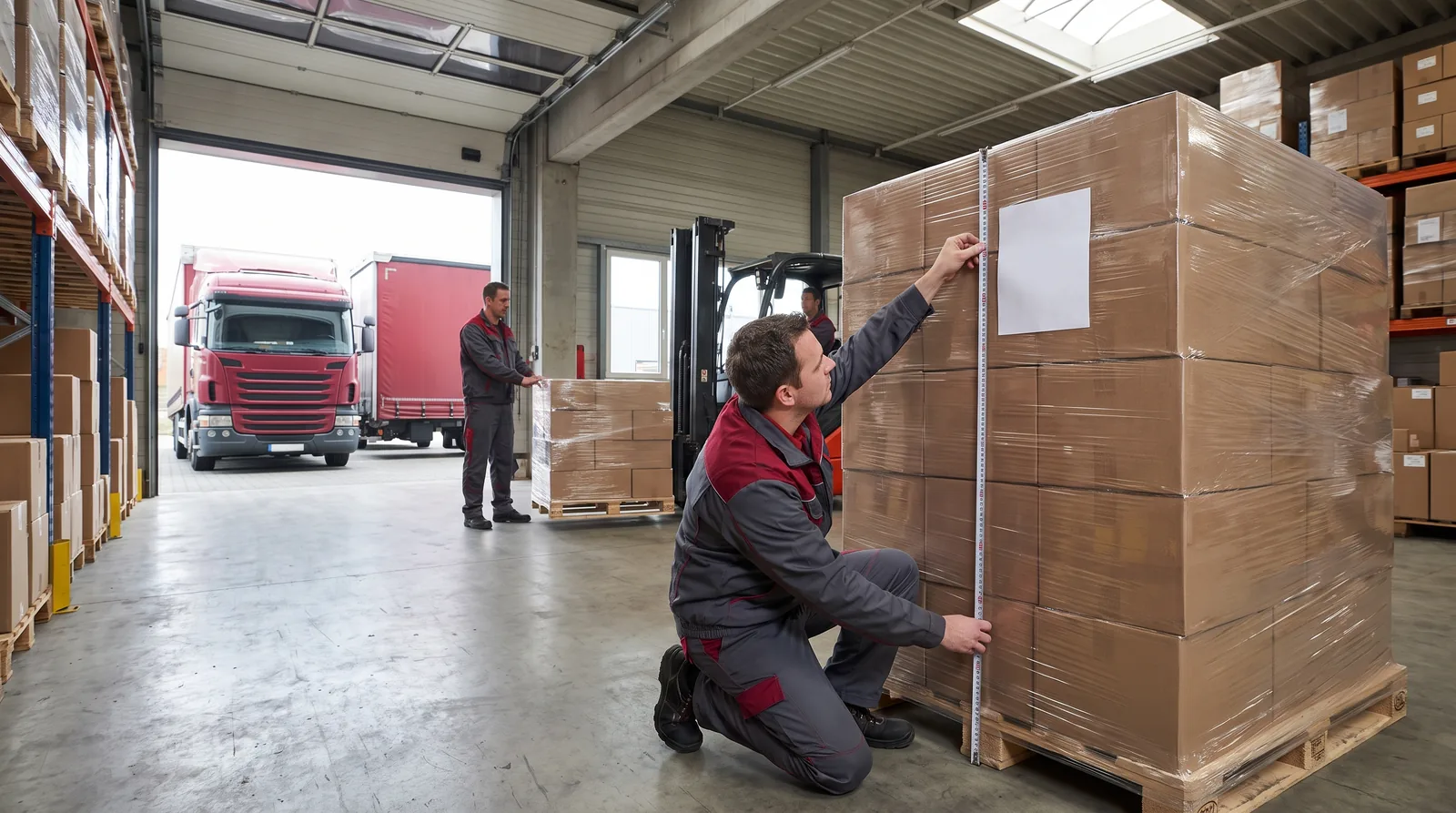
 AI image
A pallet for Amazon FBA in the UK has to meet a few constant rules: a sound pallet matching the specification, no goods overhanging the footprint, height within the limit for the delivery type, stable stretch-wrapping and labels placed where the scanner can see them. The exact dimensions and weights change, so the only source of current numbers is Seller Central, not blog guides.
The rules that do not change
- The pallet: good condition, no broken boards or protruding nails; type as required by the delivery programme.
- The footprint: nothing overhangs the pallet edge, because an overhanging carton means damage and refusal.
- Height: the limit depends on delivery type and site; a few centimetres over can stop the whole pallet.
- Stability: stretch film binding the load to the pallet, heavy cartons at the bottom, even layers.
- Weight: within the specification and within what the receiver forklift will take.
Labels: where most deliveries fail
Every carton carries its FBA shipment label, the pallet carries its own pallet label, and film must not cover the codes. A label stuck over tape or across a carton edge can be unreadable to the scanner, which ends the same way as no label at all. Placement and quantity rules are shown in Seller Central when you create the shipment, and that version is the one that counts on delivery day.
Why do we quote no centimetres?
Because they are not ours to quote. Amazon updates its delivery programme requirements, and what was true for the last shipment may not pass on the next one. As a reference point, Amazon's own carrier guidance in the UK lists the standard pallet at 1200 by 1000 mm and a maximum height of 1.8 metres including the pallet, but the binding version is always the Seller Central specification on delivery day. Our rule is simple: before every loading we check the current specification in Seller Central and build the pallet to that, instead of trusting memory.
What we do before loading
We check client pallets before they leave for the UK: footprint, wrap, labels, carton counts against the shipment. When something is off, the goods pass through our Milton Keynes warehouse for repacking and relabelling, rather than learning the spec at the site gate. What happens when a pallet still fails is covered in our piece on a rejected FBA delivery, and the whole route is run by our Amazon delivery service.
How do you schedule Carrier Central appointments to prevent delivery rejections?
Amazon rules mandate that every freight delivery must be booked via Carrier Central at least 24 hours prior to the estimated arrival at the UK fulfilment centre. Drivers receive a strict delivery slot, and arriving more than 30 minutes late usually results in a refused entry, requiring a slot re-booking with a delay of up to 2 days. If an individual carton on your pallet exceeds 15 kg, you must apply a clear heavy package warning label; any carton weighing over 23 kg cannot be mixed on a standard pallet layout without separate handling procedures.
Key operational dependencies at the Goods In area dictate whether your load is accepted:
- Pallets exceeding 500 kg total gross weight require verified structural stability of the timber base under forklift handling.
- Inbound barcode scanners require at least 80% flat surface area on the outer stretch wrap to successfully read shipment labels.
- The driver has a maximum window of 15 minutes to dock the trailer once the vehicle registration is called by the yard management system.
Note that these specific Carrier Central booking requirements and slot penalties do not apply when shipping small parcel deliveries (SPD) via partner couriers or when making direct full-truckload deliveries to regional Sort Centres, which operate under separate network schedule agreements.
Step by step
- Verify specifications. Check Seller Central for current weight and height restrictions applying to your destination site.
- Select the pallet. Choose a sound pallet base free from damaged boards or exposed nails.
- Stack the cartons. Place heavier boxes at the bottom while keeping all cargo inside the footprint.
- Secure the load. Wrap stretch film firmly around both the cartons and the pallet base.
- Apply labels. Position labels on flat outer surfaces where automated scanners can process them.
Definitions
- FBA (Fulfilment by Amazon): A logistics model where the seller sends inventory to Amazon fulfilment centres for storage and dispatch.
- Seller Central: The online portal for Amazon merchants containing current delivery guidelines and specifications.
- Pallet footprint: The physical boundary of the pallet base beyond which no packaging may project.
- Stretch film: Flexible plastic wrapping used to secure cartons tightly to the pallet structure.
The OTSL role
We manage transport to UK fulfilment hubs using our Amazon UK deliveries service alongside our facility in Milton Keynes. If you encounter issues at receipt, check our overview Rejected Amazon FBA delivery: the usual causes and plan B.