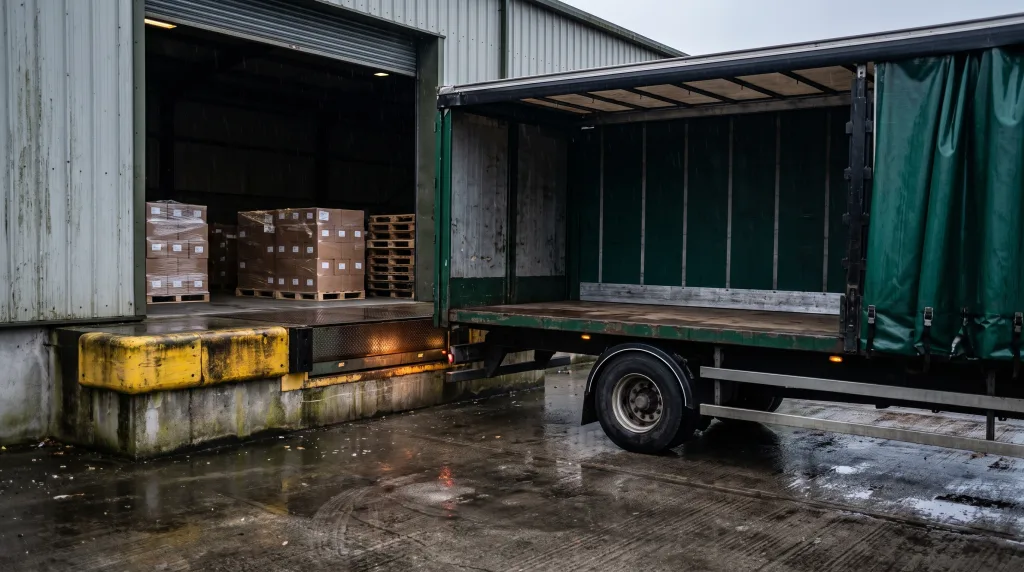
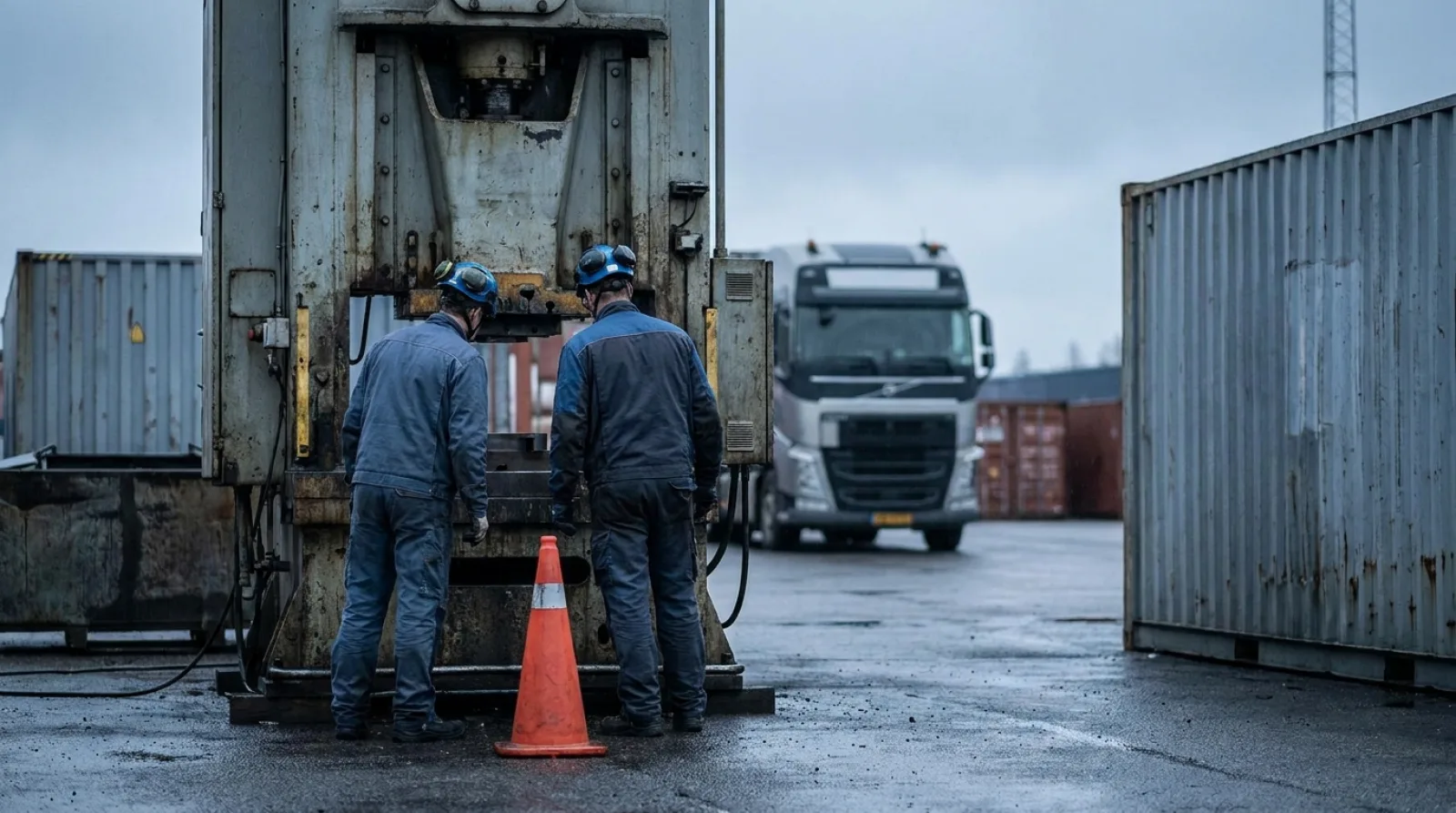
 AI image
A missing CE declaration of conformity does not block customs clearance when importing a used machine from the UK, as customs authorities only require an auction invoice with value details. However, machinery lacking a nameplate and serial number poses a high risk of identity disputes, meaning such bids should be avoided. Documentation can be partially retrieved from the manufacturer using the serial number, but this requires extra time and money.
Does a missing CE declaration prevent UK customs clearance?
Auction houses across the UK frequently sell used equipment under 'as is' conditions, meaning there is no guarantee regarding the completeness of technical documentation. From a customs perspective, the absence of a CE declaration is not an obstacle to completing the clearance process. To file an import customs entry, the authority requires a valid auction invoice stating the transaction value and details of the buyer and seller. Technical documentation is not a mandatory condition for border clearance, as customs officers focus primarily on duty and tax assessment.
However, you must distinguish between customs clearance and putting a machine into service within the European Union. The employer is responsible for ensuring that equipment complies with minimum health and safety requirements in the workplace. Consequently, after importing the machine to your facility, you remain responsible for completing a risk assessment and ensuring compliance with applicable technical standards before allowing staff to operate it.
Why is the serial nameplate critical before placing a bid?
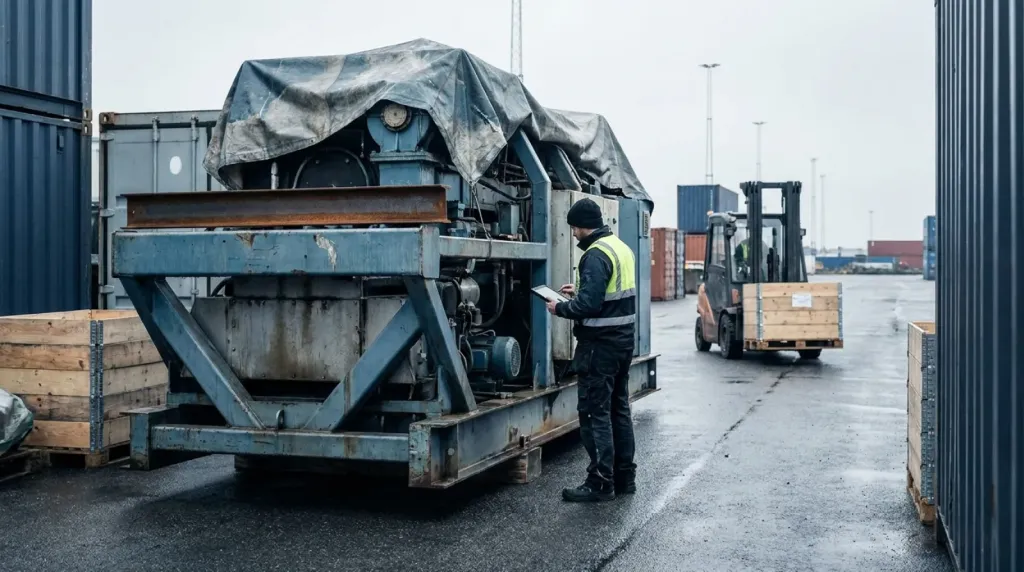
A nameplate showing a clear serial number is the absolute minimum requirement for identifying any industrial machine. A machine that completely lacks a serial number or nameplate creates a severe risk of disputes regarding its identity, origin, and year of manufacture during border checks or audits. It is safer to skip bidding on unidentifiable units, as attempting to clarify their history later is often complex and cost-prohibitive.
When a machine retains a legible serial number, missing user manuals and technical records can often be recreated. Doing so involves contacting the original manufacturer or an authorised service centre. Obtaining replacement manuals and arranging official technical inspections involves costs that directly affect the economic viability of the deal, so you must factor these expenses into your initial budget.
What risks arise when purchasing a vehicle without a V5C logbook?
Registered vehicles or mobile machinery sold without a UK V5C logbook represent a distinct legal challenge. Without this document, the burden of proving ownership and establishing vehicle history falls entirely on the buyer. Before participating in an auction, check what ownership records the auctioneer provides. Verifying the presence of a V5C prior to bidding is far cheaper than rectifying registration complications through official channels afterwards.
How to verify an auction machine step by step
- Inspect the nameplate. Review auction photographs or inspect the unit in person to ensure the nameplate and serial number are legible.
- Confirm V5C availability. Ask the auctioneer whether a registered vehicle includes the official UK V5C document.
- Review the auction invoice. Ensure the invoice displays full buyer and seller details alongside an explicit purchase value.
- Contact the manufacturer. Quote the serial number to an authorised dealer to request manual replacement fees and service inspection terms.
- Calculate total costs. Add document recovery and inspection fees to your maximum bidding limit.
- Ensure safety compliance. Complete necessary technical updates at your facility prior to putting the machine into service.
Definitions
- CE (Conformité Européenne): A manufacturer declaration confirming that a product meets essential EU health and safety directives.
- V5C: The official UK vehicle registration document issued by the DVLA.
- As is: Auction terms stating that goods are sold in their current state without warranties.
- Putting into service: The first use of machinery by workers within the European Union for operational purposes.
Checklist before bidding on UK auction machinery
- Does the machine feature a readable nameplate with a clear serial number?
- Has the auction house confirmed the inclusion of a V5C for registered vehicles?
- Will the auction invoice contain explicit transaction values and identity details?
- Can the original equipment manufacturer provide replacement user manuals?
- Have inspection and compliance costs been included in the overall budget?
When do these rules not apply?
The rule allowing customs clearance solely based on an auction invoice does not apply to machinery subject to specific trade sanctions or where transaction terms depend on individual conditions established in the auctioneer rules. If the item purchased is not classified as machinery or a registrable vehicle, obligations regarding V5C documents and machinery regulations do not apply. Always review the specific auction conditions published by the seller.
The OTSL role
OTSL operates a facility in Kielce and a consolidation warehouse in Milton Keynes to organise efficient freight movement from the UK. We provide machinery transport and manage customs clearance based on purchase documentation. Read more about import logistics in our article on Import from the UK to Poland, procedures and costs.