 AI image
Import clearance of machinery in France is advantageous when the transit route goes via Calais or Dunkirk and VAT is settled via reverse charge or procedure 42 with a fiscal representative. The smart border system processes UK transport efficiently during transit, avoiding port delays unless clearance in the Netherlands or Poland is preferable.
How does the smart border system operate in France?
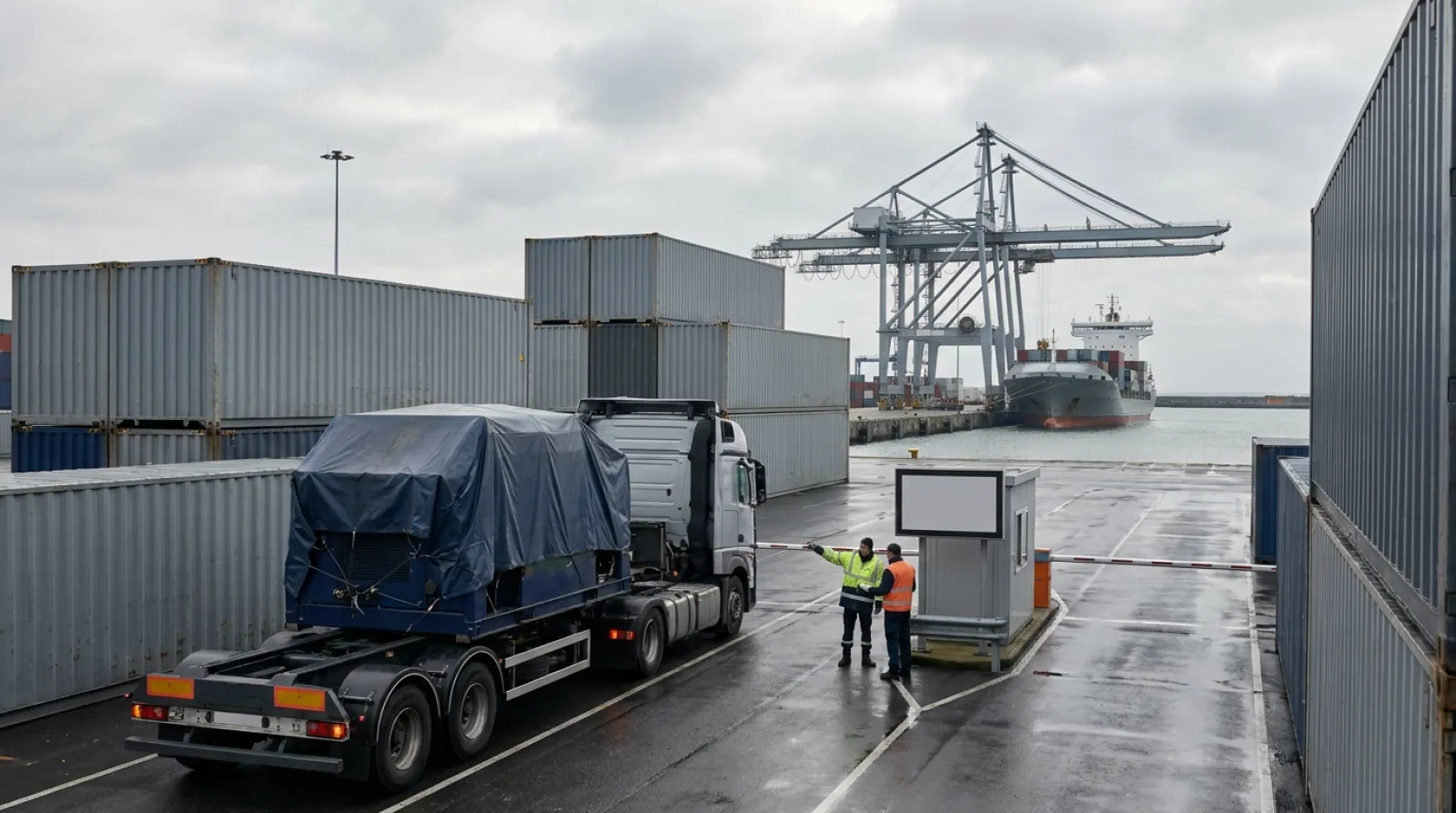
France manages freight traffic from Great Britain using a smart border system. Prior to the ferry crossing or rail transit, the customs declaration is paired with the vehicle registration plate of the truck carrying the machinery. This pairing allows customs processing to take place automatically during the channel transit. Upon arrival at the port in Calais or Dunkirk, the driver receives a status notification indicating whether the vehicle is released or selected for physical inspection.
Eliminating mandatory stops at the port exit speeds up the movement of machinery purchased in the UK. Provided that the declaration is correctly lodged and paired in the system, the transport vehicle continues its route into the European Union without unnecessary delays at the border terminal.
What is autoliquidation and how is procedure 42 applied?
When importing machinery into France using a French VAT registration number, import Value Added Tax (VAT) is settled through the reverse charge mechanism (autoliquidation) directly within the tax return. This means no cash VAT payment is required at the French border. For businesses operating without a French VAT number, an appointed fiscal representative manages this settlement process.
For machinery destined for Poland, customs procedure 42 offers an effective alternative. It enables clearance in France with immediate dispatch to the final destination country without paying French import VAT. Applying this procedure requires valid VAT numbers for both parties and transport documentation proving movement from France to Poland.
Clearing machinery step by step
- Preparing customs declarations. Complete the necessary import documentation for the machinery and verify entries in the customs system before transport commences.
- Pairing declarations with vehicles. Link the truck registration number with the customs declaration barcode in the French smart border platform before boarding.
- Processing during transit. Customs authorities review data while the vehicle crosses the English Channel, determining release status prior to docking.
- Checking port status. Driver verifies the system status upon exiting the vessel at Calais or Dunkirk to proceed on route or report to inspection.
- Settling import taxes. Finalise tax accounting through autoliquidation in the periodic VAT return or via procedure 42 for immediate transport to Poland.
Definitions
- Smart border: An IT system linking customs declarations with vehicle registration numbers to automate customs formalities on the French-British border.
- Autoliquidation (reverse charge): A accounting mechanism allowing import Value Added Tax (VAT) to be reported directly in tax declarations without cash payment at the border.
- Procedure 42: A customs regime allowing goods imported into one European Union member state to be cleared with deferred VAT when intended for immediate intra-Community dispatch.
- VAT (Value Added Tax): A consumption tax assessed on the value added to goods and services at each stage of production and distribution.
Checklist for machinery clearance
- Verify active status of VAT numbers for both importer and supplier prior to shipment.
- Obtain commercial invoice and technical specifications for the machinery from the UK seller or auction.
- Ensure pairing of the customs declaration with the vehicle registration before ferry embarkation.
- Prepare transport documents confirming continuous transit from Great Britain to the final destination.
- Confirm fiscal representation arrangements in France if no local VAT registration exists.
When does the French clearance route not apply?
The described route does not apply when clearing machinery in the Netherlands or directly in Poland proves simpler or more cost-effective. The selection of the clearance location is not fixed and depends on the transit route, the client's VAT status, and fiscal representative fees. In such circumstances, alternative customs entry points are selected.
The OTSL role
OTSL Sp. z o.o., headquartered in Kielce with facility support in Milton Keynes, England, organises transport and customs clearance between Poland, Great Britain, Switzerland, Norway, and the rest of Europe. We manage import clearance for auction machinery from the UK through France and the Netherlands. The decision on the clearance country is made on a case-by-case basis, considering the transport route, client VAT status, and representative costs. Our services include machinery transport, handling under customs procedure 42, and complete customs clearance. For more details on alternative routes, see our article on import from the UK to Poland and our guide on regime 42 EU import clearance.