 AI image
Organising transport for machinery purchased at the Cheffins auction in Sutton requires arranging flatbed or low-loader transport and completing post-Brexit customs procedures. This involves raising an EX1 export declaration in the UK CDS system, generating a GMR via GVMS for port crossing, and managing import clearance into the European Union. Specific collection timelines, buyer's premiums, and storage charges depend on the auction terms set by the auction house for each sale.
What are the characteristics of Cheffins auctions in Sutton?
Cheffins auctioneers operate their primary machinery sales ground at Sutton in Cambridgeshire, host to the Cambridge Machinery Sales. This event represents one of the largest regular auctions of agricultural and construction machinery in England. The inventory primarily covers agri and plant categories, including tractors, combine harvesters, excavators, telehandlers, and secondary attachments. Due to online bidding facilities, international buyers from across Europe regularly participate.
Risk and responsibility for purchased items transfer upon the fall of the hammer, requiring immediate transport planning. Buyers must note that collection deadlines, buyer's fees, and potential storage costs are not universal. These parameters depend on the specific terms published in the exhibitor manual or sales conditions for each individual auction event.
What customs and biosecurity rules apply when exporting machinery from the UK?
Exporting agricultural or construction plant from Great Britain to Poland requires full customs compliance applicable to third-country trade. Key requirements include valid UK and EU EORI numbers, an Export Accompanying Document (EAD) created within the UK Customs Declaration Service (CDS), and a Goods Vehicle Movement Record (GMR) generated through the Goods Vehicle Movement Service (GVMS). Hauliers will be refused boarding at UK ferry ports or the Channel Tunnel without a valid GMR barcode.
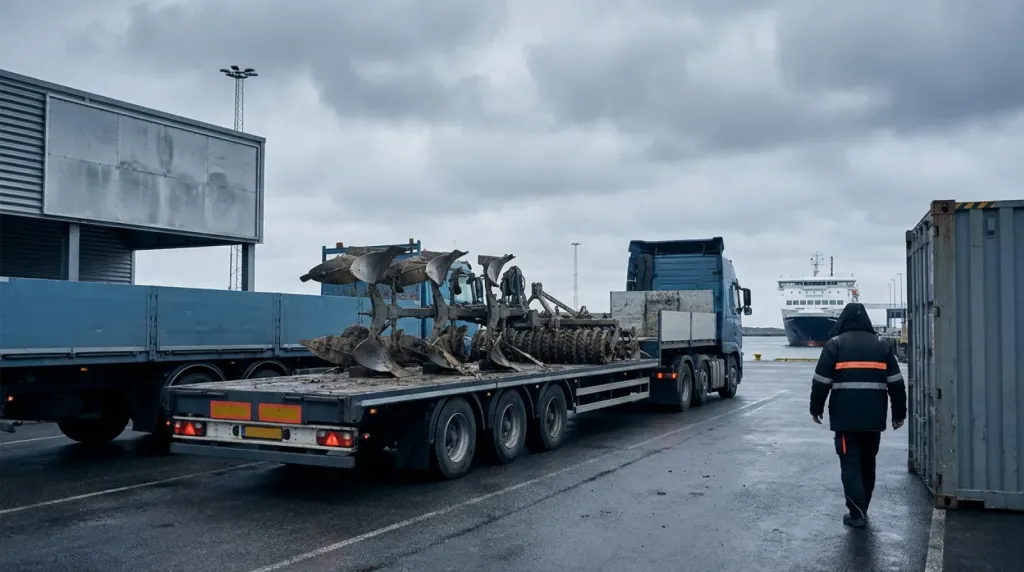
Furthermore, biosecurity measures apply to used agricultural machinery (agri). Equipment must be thoroughly cleaned to remove soil, mud, and plant residue before leaving the UK site. Border authorities reserve the right to inspect vehicles and reject contaminated machinery, sending it for mandatory washdown at the buyer's expense.
Buying and transporting machinery step by step
- Registration and bidding. Registering for the auction in Sutton or via the online platform, bidding, and obtaining the official invoice confirming machinery acquisition and serial numbers.
- Reviewing site conditions. Verifying collection rules, site opening hours, and driver booking requirements specified in the auction terms.
- Customs documentation setup. Submitting the export declaration in the UK CDS system, issuing the EAD, and preparing the EU import or T1 transit documentation.
- Cleanliness and condition check. Ensuring used agricultural equipment is thoroughly washed and verifying that physical dimensions match the transport booking.
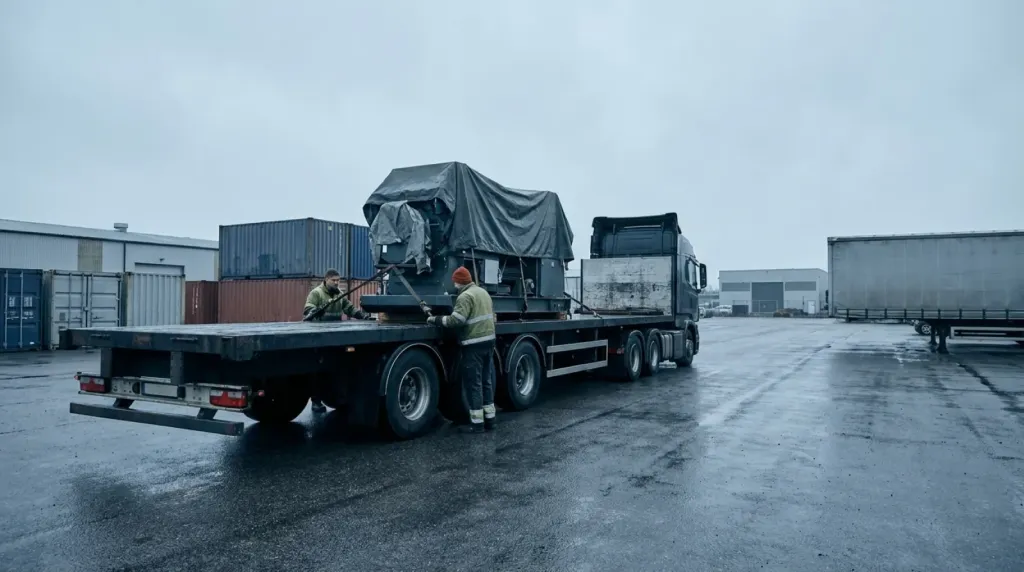
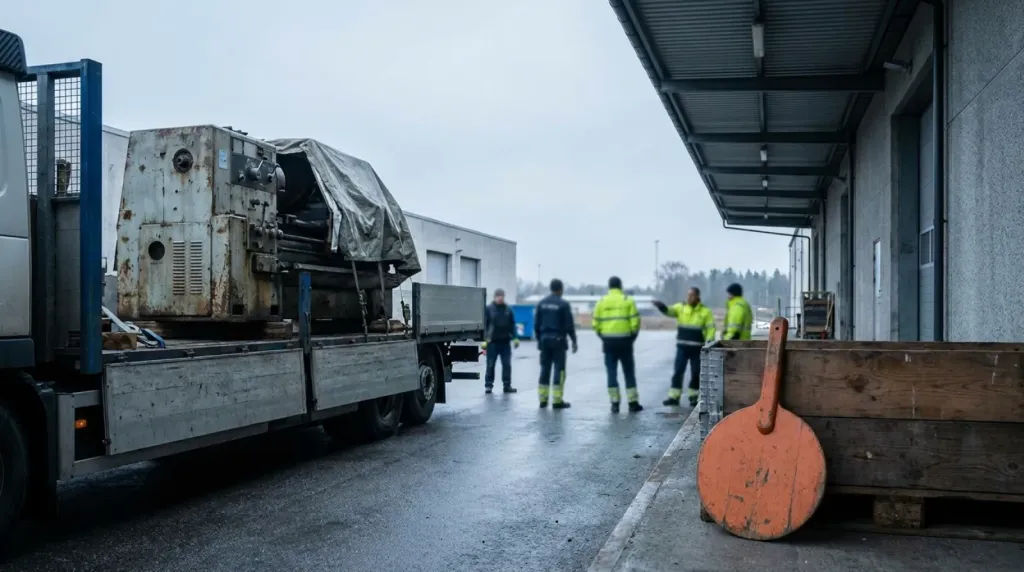
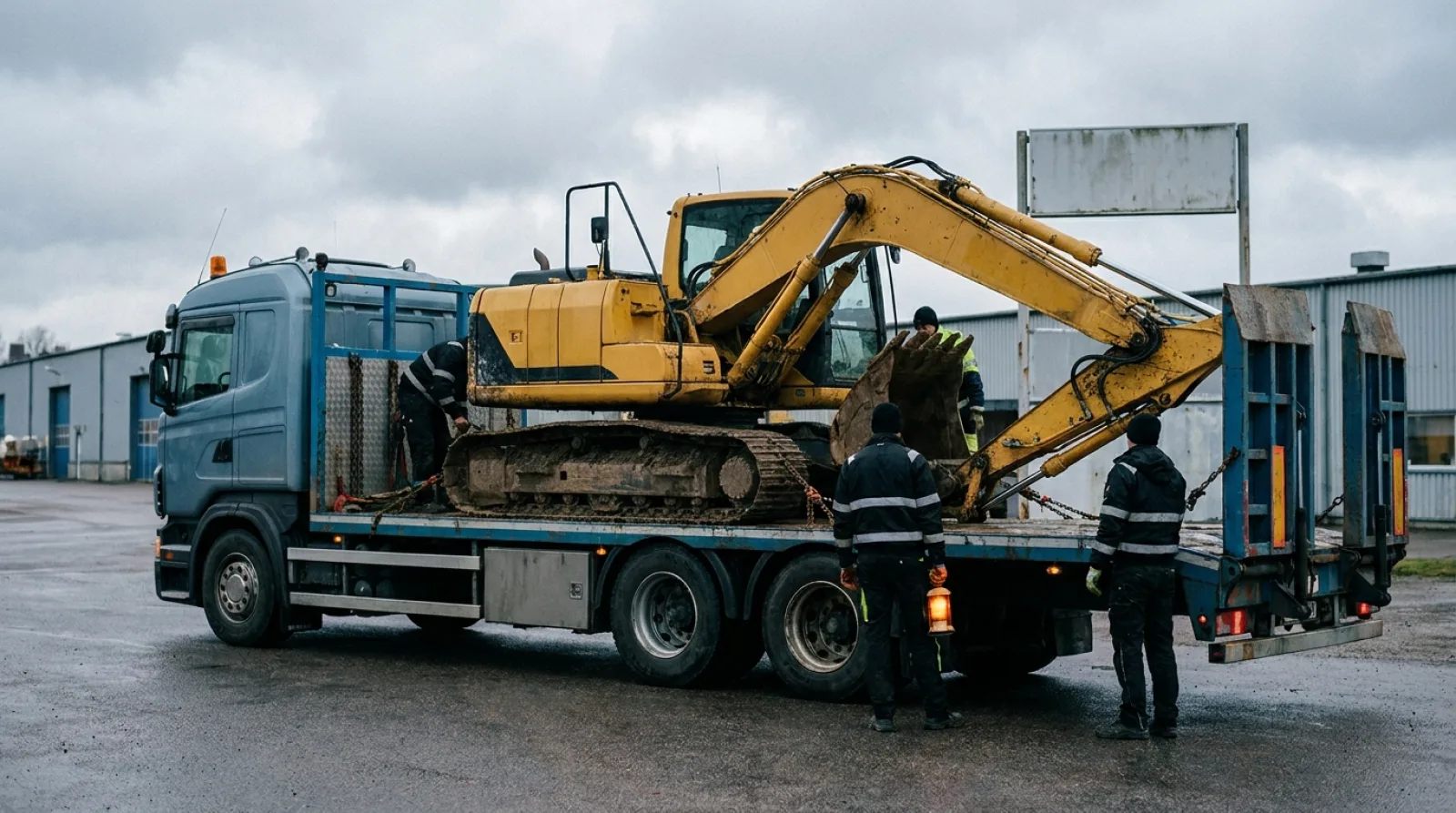
- Collection at Sutton. Driver arrival at the Cambridgeshire site, loading the machine onto a suitable trailer, and securing the load with appropriate lashing chains or straps.
- GMR generation and transit. Linking the EAD and transit numbers in GVMS, completing the English Channel crossing, and finalizing import customs clearance in Poland.
Definitions
- CDS (Customs Declaration Service): The UK electronic customs portal used for handling import and export declarations within Great Britain.
- GVMS (Goods Vehicle Movement Service): A UK IT system that links customs declaration references to the transporting vehicle's registration number before arrival at the port.
- GMR (Goods Vehicle Movement Record): A unique reference code produced by GVMS required for goods crossing UK borders.
- EORI (Economic Operators Registration and Identification): A unique identification number used by customs authorities across the EU and the UK to track commercial traders.
- EAD (Export Accompanying Document): Official export release document containing the Movement Reference Number (MRN) for UK customs departure.
Checklist for documents and collection
- Official purchase invoice from Cheffins auction specifying VIN or serial numbers.
- UK EAD export document with an active MRN number.
- Valid EU and UK EORI numbers for the respective parties.
- GMR barcode linked to the haulage vehicle registration number.
- Cleanliness certificate or verification of soil removal for farm machinery.
- Accurate dimensional specification (length, width, height, mass) for transport allocation.
When do these transport rules not apply?
The outlined export procedures do not apply if the purchased machinery remains within Great Britain, in which case local UK VAT rules apply without customs requirements. Furthermore, these steps do not apply when goods move under a temporary admission process such as an ATA (Admission Temporaire, the temporary admission document) Carnet, which is strictly reserved for temporary displays or exhibitions where ownership does not transfer. In addition, trailer type requirements and abnormal load permits depend on the exact dimensions and total weight of the machine, which must be assessed individually against road regulations.
The OTSL role
OTSL Sp. z o.o., headquartered in Kielce, coordinates cross-border machinery transport for agricultural and construction equipment moving from UK auction sites to Poland and continental Europe. Operating a logistics facility in Milton Keynes, England, alongside facilities in Kielce, OTSL manages cross-docking and haulage operations. The team assists with customs clearance and export-import documentation. Detailed information regarding post-Brexit regulatory terms can be reviewed in our guide on import from the UK to Poland.