 AI image
Deliveries to Switzerland follow their own rules: digital customs declarations (the Passar system, being modernised by the Swiss customs administration), the LSVA road charge for trucks and import charges that depend on the type of goods. These elements affect the time and cost of delivery, so we plan them in advance.
What to know
- Passar, the electronic customs declarations in Switzerland. The customs administration is modernising its systems, so we confirm the details as they stand.
- LSVA, a truck charge based on distance, weight and emissions, added to the transport cost.
- Import charges, depending on the type and origin of the goods.
Why does it affect the quote?
Charges such as LSVA and any import duties are real cost items that do not exist on routes within the EU. We include them in planning so the quote is sound and you are not caught out. The exact amounts depend on the route and goods, so we confirm them individually.
How do we work?
We combine transport, customs and knowledge of CH specifics in one process, run by one responsible contact. We say plainly which elements affect cost and time.
See transport to Switzerland, customs procedures to CH and customs clearance.
How do driving bans and customs clearance windows affect delivery times to Switzerland?
In road freight operations to Switzerland, a critical factor determining your delivery schedule is the Swiss night driving ban. This restriction applies daily between 22:00 and 05:00 for all goods vehicles with a permissible gross vehicle weight (GVW) exceeding 3.5 tonnes. In practice, a heavy goods vehicle carrying your consignment of up to 24 tonnes (equivalent to 33 euro pallets) must arrive at the border terminal with a sufficient time buffer. You must allow at least 2 hours for border customs clearance procedures and system registration. If your driver arrives at the border crossing after 21:00, further movement is prohibited, forcing the vehicle to remain parked until 05:00 the following morning.
Furthermore, a full Sunday driving ban is enforced across Switzerland for 24 hours (from 00:00 to 24:00 on Sundays and recognized public holidays). The maximum permitted gross weight for a lorry combination is capped at 40 tonnes, making accurate weight checks mandatory before dispatch from your warehouse. If border customs processing experiences delays, the driver must incorporate statutory driving rest periods. Due to the overnight ban, this can add an obligatory 9 hours of waiting time at border holding areas.
When do these operational rules not apply? The night and Sunday driving bans do not apply to transport booked using light commercial vehicles with a GVW of 3.5 tonnes or less. These vehicles can operate across the Swiss road network 7 days a week without overnight holds, provided your consignment does not require physical customs inspection during closed hours. Additionally, exemptions exist for the transport of live animals and highly perishable goods with a shelf life of less than 3 days, subject to a special permit issued by the Swiss transport authority.
Step by step
- Document preparation. Gather commercial invoices, packing lists, and certificates of origin before shipping.
- Passar submission. Submit the transport and cargo details into the Swiss digital customs portal.
- LSVA calculation. Determine the applicable heavy vehicle charge based on vehicle specifications and route distance.
- Border verification. Present the declaration numbers and transport paperwork at the Swiss border station.
- Payment settlement. Finalize duty payments and receive official release documentation following border entry.
Definitions
- Passar: The digital customs declaration system deployed and modernised by the Swiss customs administration.
- LSVA (Leistungsabhängige Schwerverkehrsabgabe): The Swiss distance-related heavy vehicle charge calculated from total weight, route length, and emission class.
- Import charges: Customs duties and taxes applied to goods entering Switzerland depending on their origin and commodity type.
- BAZG (Federal Office for Customs and Border Security): The Swiss government agency supervising border procedures, customs clearances, and road fees.
When does this rule not apply?
The LSVA heavy vehicle charge does not apply to lighter commercial vehicles below the weight threshold, while specific clearance obligations depend on the trade procedure used.
The OTSL role
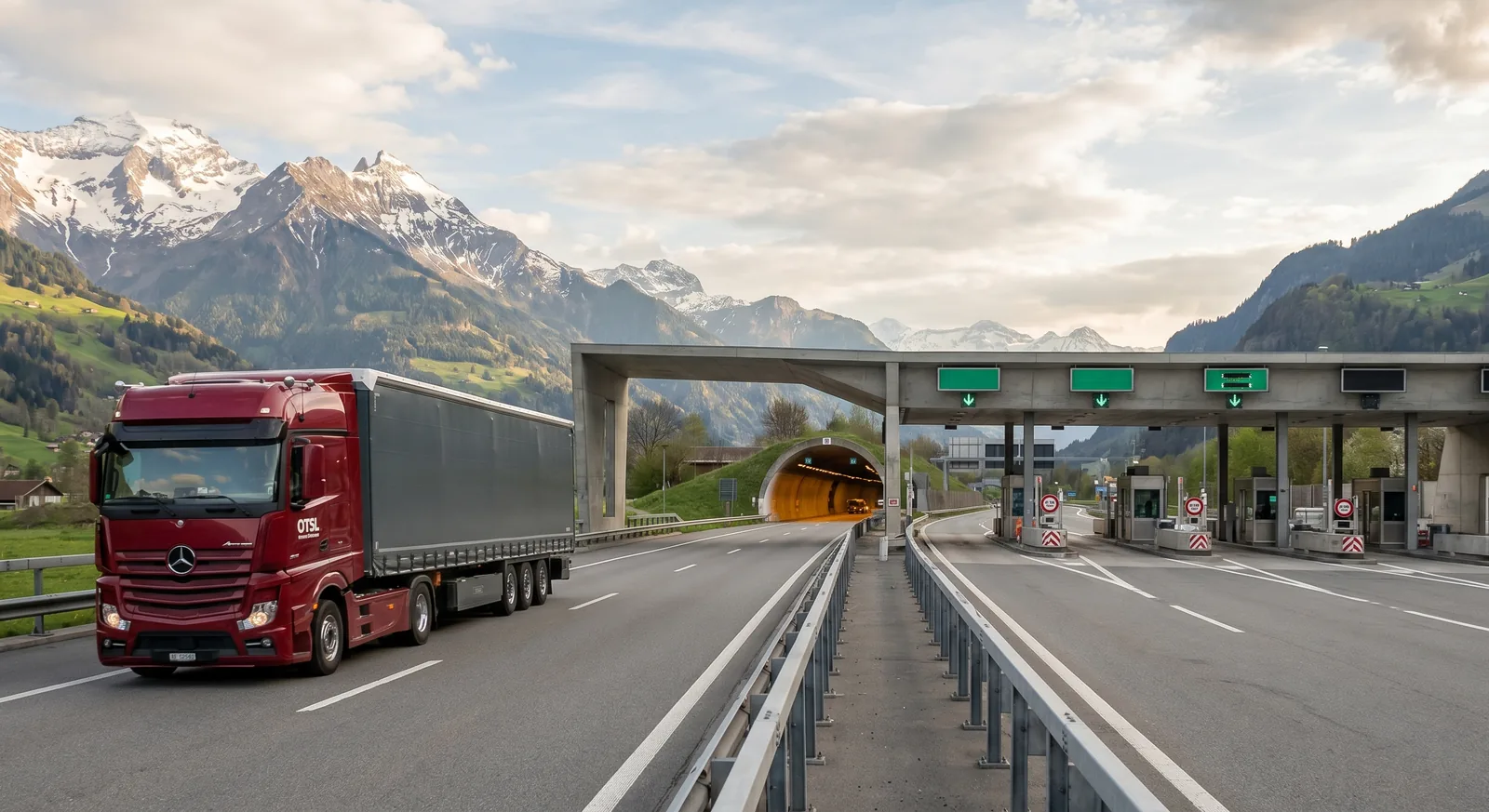
If you are planning goods movement into Switzerland, OTSL manages the entire route through our international road transport services. For further operational insights on digital declarations and clearance rules, explore our detailed guide on the Passar Swiss customs guide.