 AI image
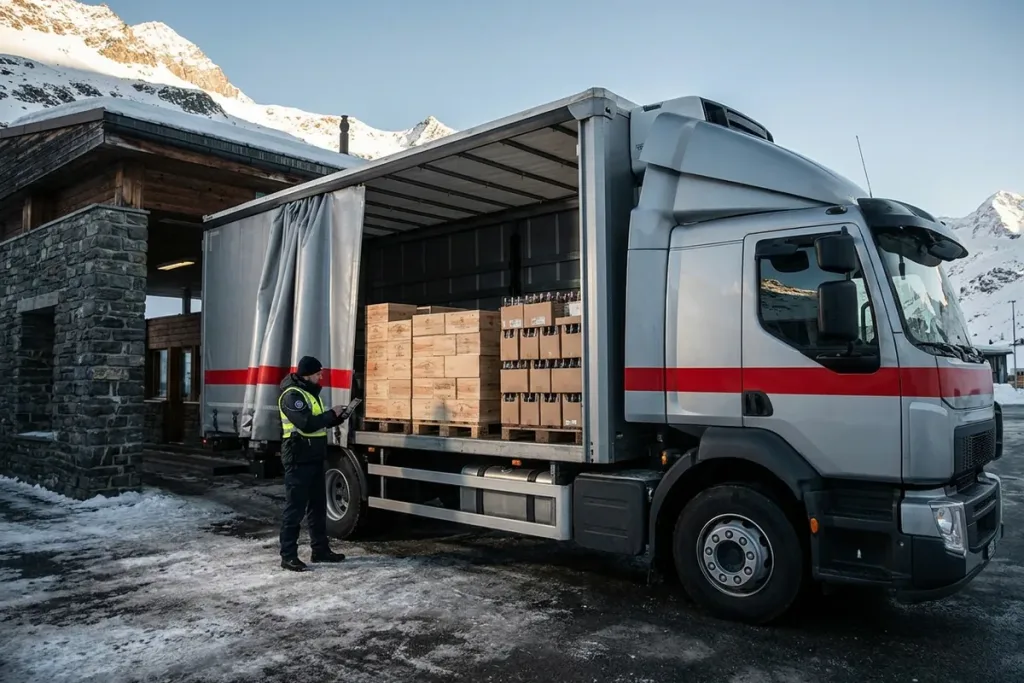
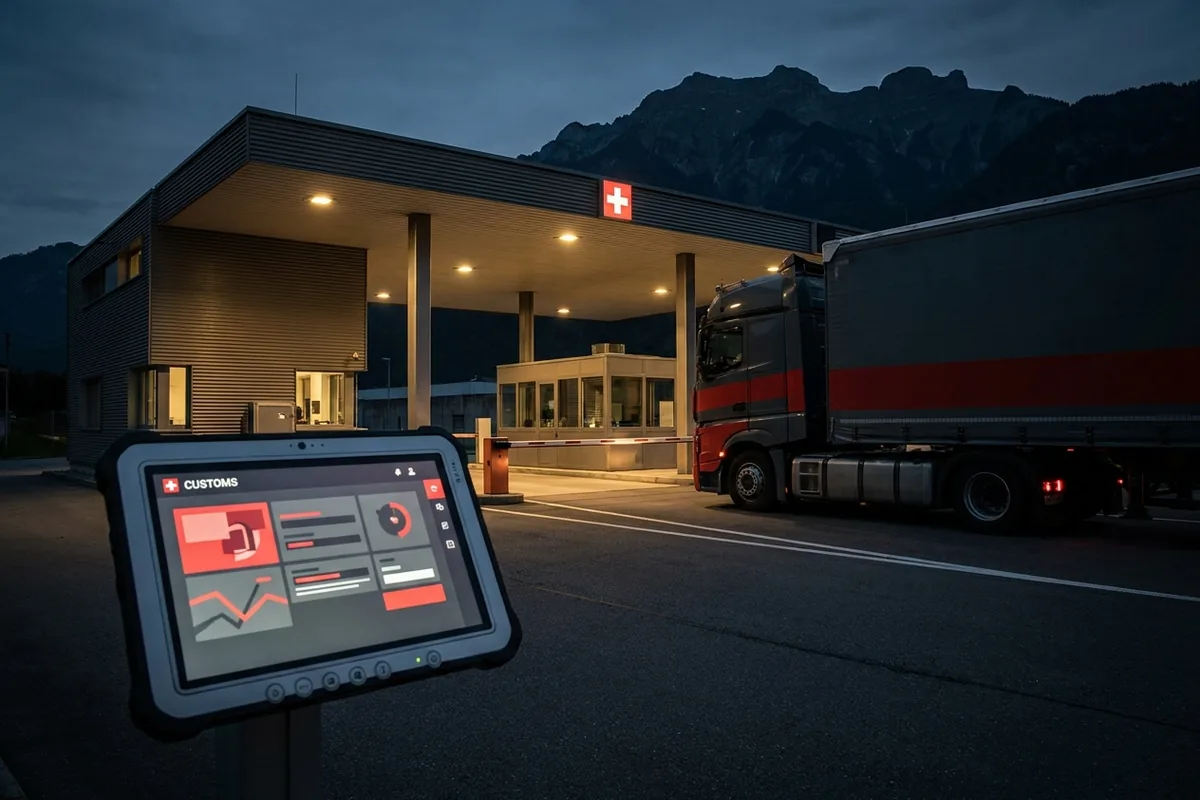
Passar is the new digital customs platform of the Swiss BAZG authority (the federal customs and border security office) that is gradually replacing the e-dec system. It handles electronic declaration of goods for import, export and transit through Switzerland. The declaration is filed before the truck reaches the border, and the driver presents the generated reference number. BAZG publishes the current migration timeline.
Why Switzerland is changing its customs system
Switzerland is not part of the European Union or the EU customs union, so every crossing of its border is a full customs clearance, not an ordinary intra-EU delivery. For years e-dec served that purpose. BAZG runs a modernisation programme (known as DaziT) that produced Passar. The goal is simple: one digital process instead of several separate tools, less paper and faster handling at the crossings.
For a company that regularly moves goods to and from the Confederation this means one thing: a procedure that worked for years is changing. A wrong declaration or the wrong channel means the truck stands at the border, and for a reefer load or a trade-fair deadline that standstill costs real money. So it pays to understand the mechanism, not just click blindly. If you are new to this route, start with our guide to transport to Switzerland, clearance and documents.
Passar vs e-dec: what actually changes
The most important difference is conceptual. e-dec treated the customs declaration on its own. Passar links the goods declaration (shipment data, tariff, value) with the transport pre-notification, that is the information that a specific transport will cross the border at a given point. The driver no longer carries a stack of printouts, but uses a reference number generated in the system.
| Feature | e-dec (legacy) | Passar (new) |
|---|---|---|
| Scope | Customs declaration of goods | Goods declaration + transport pre-notification in one process |
| Document for the driver | Declaration printouts | Reference number / code from the system |
| Direction | Import, export (transit separate) | Import, export, transit in one environment |
| Status | Being phased out in stages | Target system, rolled out gradually |
Practical note: while migration is under way, some procedures may still run on e-dec and others already on Passar. Do not assume that because something once went through the old channel, it will be the same next time. BAZG publishes the current status and schedule on bazg.admin.ch.
Who files the declaration in Passar
A customs declaration in Switzerland is normally filed by a registered declarant, most often a customs agency or a freight forwarder acting on behalf of the importer or exporter. Working in Passar requires an account and authentication on the Swiss side. A typical consignor from Poland does not log into the system on their own. That job is done by a customs agency that knows the tariff, the procedures and the current state of the migration.
At OTSL we run clearances through our own structures and trusted partners on the CH side, so the client does not have to face a new authority interface. They receive one set of data to prepare and one dedicated coordinator who watches the declaration from order to border crossing. We cover this in more detail on the Switzerland direction page and in the customs clearance section.
Passar step by step
In practice, from the carrier and forwarder side, the process looks like this:
- 1. Gather the data. Commercial invoice, party details, goods description, customs tariff code (HS), gross and net weight, value, country of origin and a proof of origin if it matters for preferential duty (an origin declaration on the invoice, or an EUR.1 movement certificate above EUR 6,000; the EU-CH free trade agreement).
- 2. Declare the goods in Passar. The declarant enters the shipment data into the system before the truck reaches the border and receives the system response.
- 3. Transport pre-notification. The goods declaration is linked to a specific crossing so that the data matches at the border.
- 4. Reference number for the driver. The driver receives a code or number to present or scan when crossing the border.
- 5. Clearance at the border. The customs service verifies the declaration. On the green channel the crossing is smooth, under control an inspection or clarification of the data follows.
- 6. Assessment of charges. Since 1 January 2024 Switzerland has abolished duty on industrial products (HS chapters 25-97, with few exceptions), so machinery, electronics and most manufactured goods enter duty-free. Where duty still applies, mainly on agricultural and food products (HS 1-24), Switzerland levies it as a rule on gross weight (per 100 kg at the tariff rate). Import VAT (8.1%, reduced 2.6%) applies regardless of duty. Settlement goes to the indicated account. Source: BAZG.
The order and details can differ for import, export and transit, and can change as the system is rolled out. Treat the above as a map of the process and confirm the specifics for the day with your customs agency or in BAZG notices.
The most common mistakes that stop a truck
- Wrong channel. A declaration through the phased-out system when the procedure already requires Passar (or the other way round). Result: no valid declaration at the border.
- Gross weight does not match the document. Where duty is charged on gross weight, an error in kilograms is an error in the assessment and a risk of correction.
- Missing or wrong HS classification. A wrong tariff code means wrong duty, wrong permits and a possible inspection.
- No proof of origin with preferential duty. Without the right origin evidence the payer can lose the preference from the EU-CH agreement.
- Pre-notification without a backing declaration. A number in the driver's hand with no complete goods declaration behind it means a standstill.
In practice the cost of a standstill, reloading or a lost trade-fair window is higher than the cost of a properly prepared clearance. That is why it pays to understand the charges and the settlement mechanism upfront. We write more about it in the article on deliveries to Switzerland and customs charges.
How to prepare your company for the e-dec migration
You do not have to follow every notice from the authority, but a few rules help. First, work with a customs agency that actively handles the Swiss lane and knows the current state of Passar. Second, standardise your source data (invoice, weight, HS, origin), because it does not change between systems and that is where clearance most often fails. Third, when planning deadline-driven deliveries (trade fairs, just-in-time production) leave a buffer for a possible inspection. We described the export rules step by step in the article on export to Switzerland and customs procedures.
Passar and everyday transport to and from CH
For the client the key point is that despite the system change, the logic of the direction does not change. Switzerland is still outside the customs union, so every crossing is a clearance, and the preparation of the goods decides how smoothly things go at the border. The tool on the authority side changes, not the meaning of the process. If you run regular transports to the Confederation, set a repeatable data standard and one partner responsible for clearance instead of solving it order by order.
Do you move goods to Switzerland, or are you preparing for the switch from e-dec to Passar and want to be sure the declaration goes through the right channel? Get in touch. We will check your direction, prepare the clearance through our own structures and give you one coordinator who guides the transport from order to unloading.
How does Passar change the Swiss customs process compared to e-dec?
Passar streamlines clearance by combining the declaration of goods with transport pre-notification into a single digital entry that must be filed prior to the vehicle reaching the border.
Step by step
- Gathering shipment details. You compile commercial invoices and tariff codes for the transported goods.
- Submitting the declaration. You input the shipment information into Passar prior to border arrival.
- Obtaining the reference code. You receive a customs reference number generated by the system.
- Handing over to the driver. You share the generated reference code directly with the vehicle driver.
- Border presentation. The driver presents the reference number to border officers for inspection and release.
Definitions
- BAZG (Federal Office for Customs and Border Security): The Swiss government authority responsible for customs control and border safety.
- Passar: The new digital customs platform in Switzerland used for declaring goods in import, export and transit.
- e-dec: The legacy Swiss electronic customs declaration system that is being phased out.
- OFDF (Office fédéral de la douane et de la sécurité des frontières): The French title for the Swiss Federal Office for Customs and Border Security.
- LSVA (Performance-related Heavy Vehicle Fee): A Swiss distance- and weight-dependent tax levied on heavy goods transport vehicles.
The OTSL role
When organising goods movement to and from Switzerland, OTSL supports shippers in handling cross-border clearance requirements. We provide structured road transport services and align documentation with current operational standards. Read more about border formalities in our article on deliveries to Switzerland and charges.