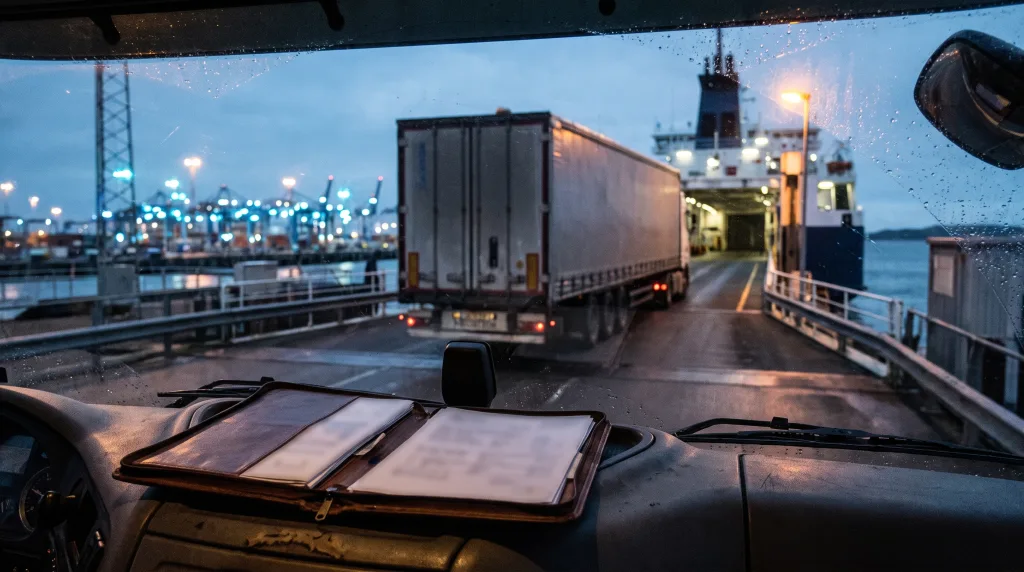
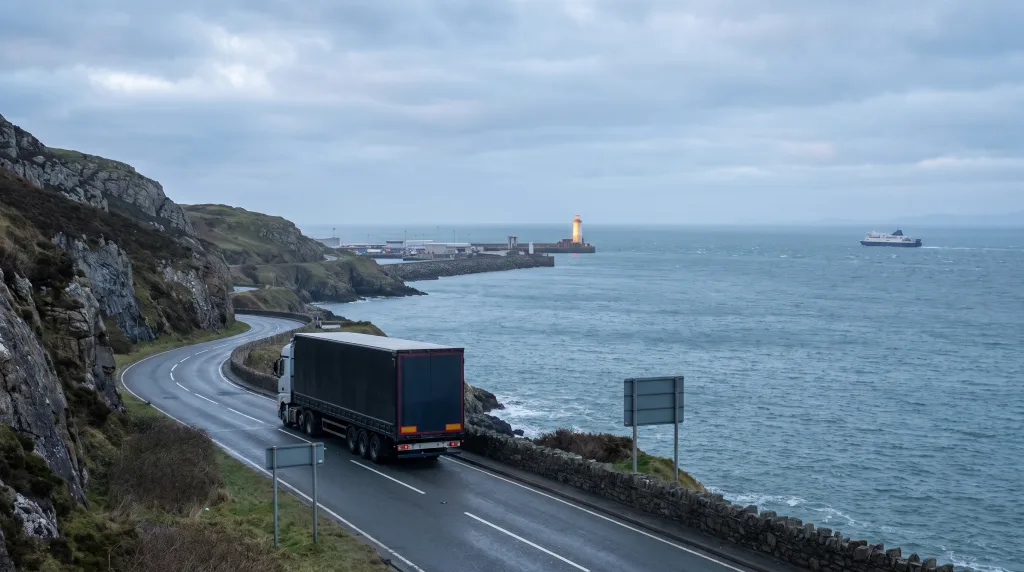
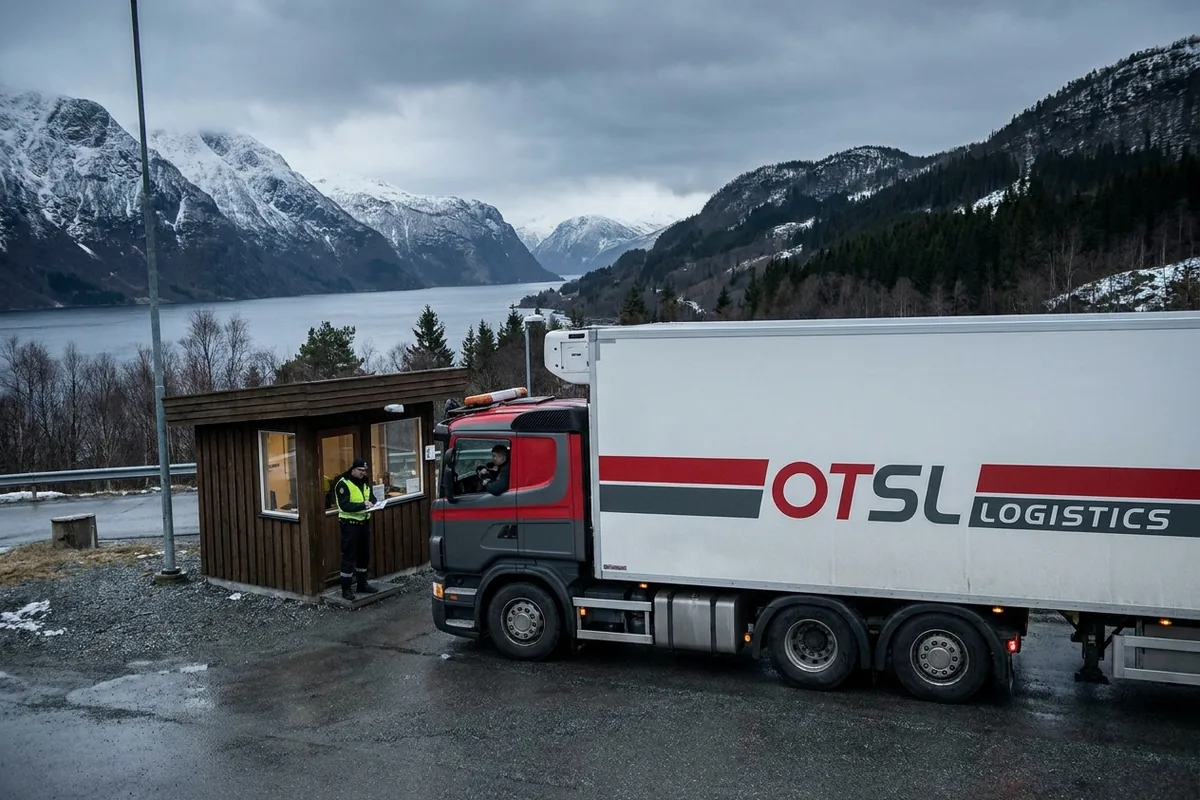
 AI image
Norway sits in the EEA but outside the Customs Union, so for food from Poland the border is defined first by customs clearance, not by third-country sanitary control. Thanks to the EEA agreement, EU goods need no prior notification to Mattilsynet, and products of animal origin move under harmonized internal-market rules. Always confirm current requirements at mattilsynet.no.
Why Norway is not a normal EU destination
Norway belongs to the European Economic Area but is not in the Customs Union. That has two consequences. First, every entry of goods means customs clearance and, for food, possible agricultural duty. Second, on the sanitary side Norway applies EU food law under the EEA agreement, so goods from Poland do not enter a third-country regime the way they do when you export to the United Kingdom. This distinction decides which documents you actually prepare. We set out the pure customs side in our guide to customs clearance to Norway step by step.
Customs clearance and agricultural duty are the main cost
For food from the EU it is the customs side, not the sanitary side, that tends to cost the most. Norway levies duty on agricultural products to protect its own farming, and part of the trade enters under tariff-rate quotas at a reduced or zero rate. Above the quota the rate rises. We do not quote specific tariffs here, because they change and depend on the commodity code, origin and period. You check the duty and available quotas with the Norwegian customs administration, and you settle the tariff classification before loading, not at the border.
Sanitary control: what actually applies to EU goods
Thanks to the EEA agreement, sanitary control of EU goods looks different from a third country. As a rule, Mattilsynet requires no prior notification for consignments from the EU and EEA, and products of animal origin move under harmonized internal-market rules rather than a full veterinary clearance at a border control post. Plants are different: Norway runs its own phytosanitary import regime, so for many plants and plant products a phytosanitary certificate can be required. We describe the scope of certificates in our article on the phytosanitary and health certificate.
Certificates and documents: when they are really needed
For animal products from the EU you usually do not need a third-country health certificate, provided the establishment is approved for trade within the EEA. The goods travel with commercial documents and health marks, and for some categories with an internal-trade attestation. For plants a phytosanitary certificate is more often in play. In both cases the key is a consistent set: the invoice, the CMR (the Convention on the contract for international carriage of goods by road) transport document, the customs declaration and any certificate must describe the same goods. A mismatch is the most common cause of a hold.
The customs and sanitary sides at a glance
| Element | Customs side | Sanitary side (EU goods) |
|---|---|---|
| Basis | Norway outside the Customs Union | EEA agreement, EU food law |
| Prior notification | Electronic customs declaration | None for EU/EEA consignments |
| Animal products | Agricultural duty, possible quota | Internal-market rules, no full veterinary clearance |
| Plants | Agricultural duty by commodity code | Often a phytosanitary certificate |
| Main risk | Wrong classification, quota used up | Missing phyto certificate, data mismatch |
The mistakes that hold a load
- Treating Norway as a third country and duplicating needless veterinary certificates instead of closing the customs side.
- Skipping tariff classification and quota, so the duty is a surprise only at the border.
- Missing a phytosanitary certificate where Norway requires one for plants.
- A mismatch between the invoice, the customs declaration and the CMR transport document.
- A broken cold chain on sensitive goods, documented by the temperature logger.
Each of these ends in a hold, and with food a hold often means losing the goods. That is why we close the documents and the classification before loading, not at the border.
Norway versus Switzerland
Norway is often confused with Switzerland, because both sit outside the Customs Union and both protect their farm markets with duties and quotas. In both the real threshold is the customs side, not sanitary paperwork, because both are closely harmonized with EU food law. If you serve both directions, separate the tariffs and quotas from the start. We collected the specifics of the Swiss market in our article on food exports to Switzerland and tariff quotas. For what a genuine third country with full sanitary control looks like, see exporting to the United Kingdom.
Where does to confirm current requirement?
Import requirements, tariffs and quotas change, so always confirm them at the source. Sanitary requirements and the product list are held by Mattilsynet, while duties, quotas and the customs declaration are handled by the Norwegian customs administration (Toll). Do not rely on how it was a year ago, because a single change to a tariff or a plant requirement can stop a delivery.
We have carried food on routes outside the Customs Union for years, we run our own customs agencies in Poland and the UK, and one contact person handles each order. If you are planning an export to Norway, reach us through the form. We will check the tariff classification, the available quotas and whether your goods need a certificate, so the load does not stall at the border. There is more about our scope on the customs clearance page.
Step by step
- Verify commodity codes. You check tariff rates and potential tariff-rate quotas for exported food products.
- Prepare customs documentation. You assemble commercial invoices, waybills, and required quality certificates.
- Organise transport. You arrange appropriate temperature-controlled vehicles and cargo protection.
- Submit customs clearance. You complete border formalities or submit documents at the designated customs office.
- Deliver to final destination. You hand over the goods once cleared by Norwegian customs authorities.
Definitions
- EEA (European Economic Area): A zone allowing free movement of goods and services including Norway, simplifying trade with the EU.
- Mattilsynet (Norwegian Food Safety Authority): The body responsible for monitoring food safety as well as animal and plant health in Norway.
- TRQ (Tariff-Rate Quota): A set volume of a product allowed for import at a reduced or zero tariff rate.
- Customs Union: A single trading area with common external tariffs, of which Norway is not a member.
When does this rule not apply?
Simplified border procedures do not apply to food shipments originating from third countries passing through the European Union.
The OTSL role
OTSL assists with international freight by providing reliable temperature-controlled transport across European routes. You can read more about customs regulations in our guide on transport to Norway and VOEC clearance.