 AI image
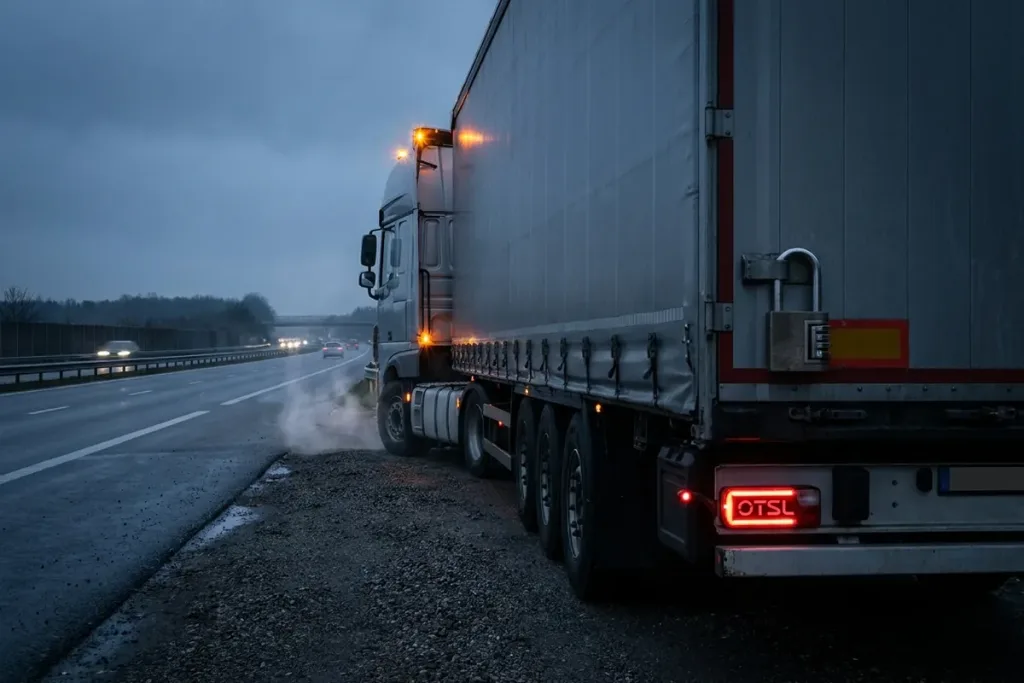
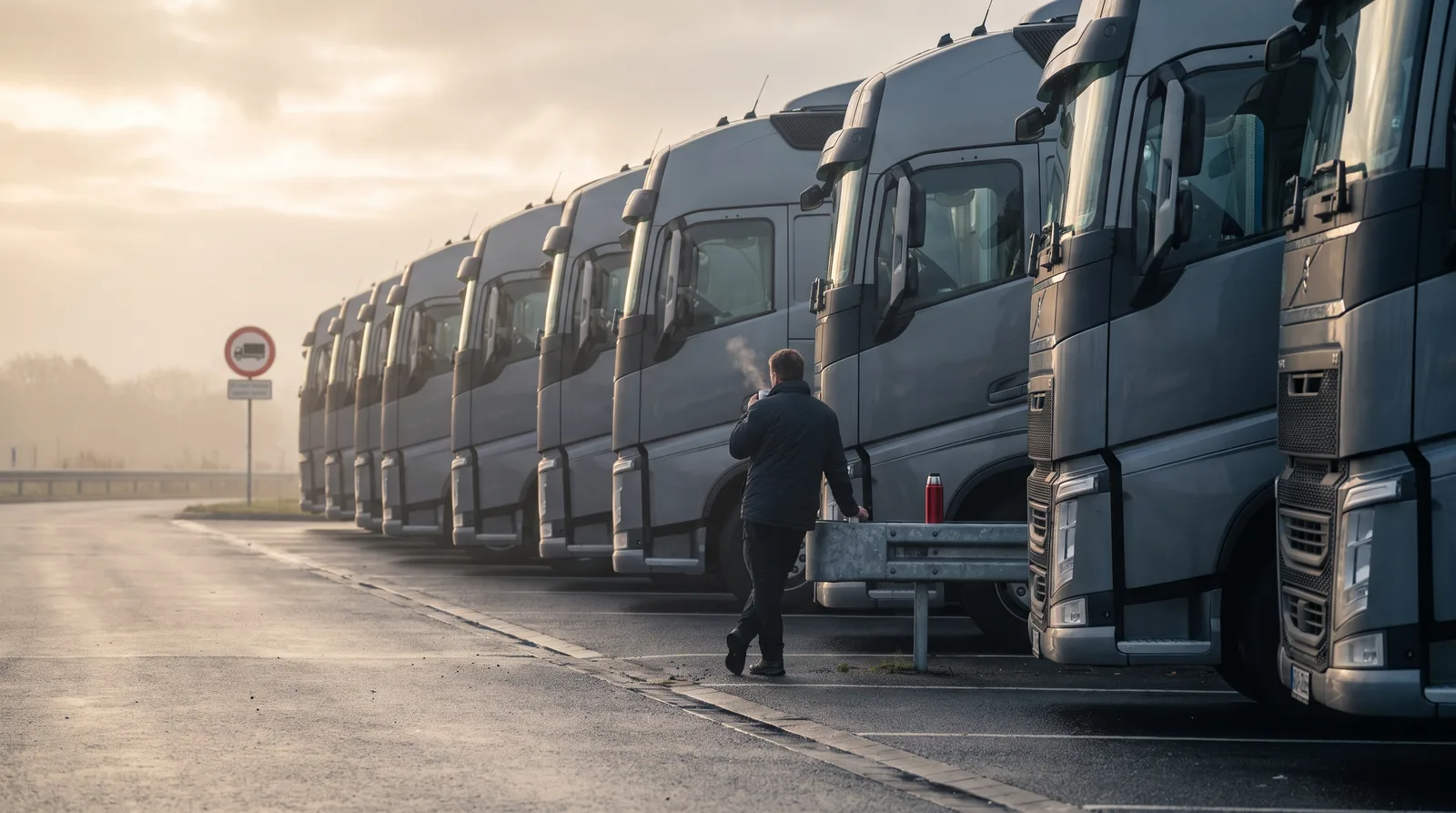
Driving bans stop trucks over 7.5 tonnes across Germany every Sunday and public holiday from midnight to 22:00, and on selected Saturdays in summer. Austria and France run their own restrictions. If you load on Friday afternoon, the vehicle can sit until Sunday evening and your delivery slips by a full weekend.
For a shipper this is not legal trivia. Every hour the vehicle stands instead of driving means goods released later, a rebooked unloading slot at the receiver and an invoice in which standstill and secure parking are already priced in. If you plan shipments without a ban calendar, you pay for your cargo to spend weekends on car parks.
Germany: Sundays and public holidays (Section 30 StVO)
The legal basis is Section 30 of the German road traffic code (StVO). On Sundays and public holidays, from midnight to 22:00, vehicles over 7.5 tonnes gross weight and tractors with trailers may not use German roads. For anyone planning a shipment the conclusion is simple: a vehicle that does not leave the ban zone before Sunday stands until 22:00.
There are exemptions. The most important cover perishable foodstuffs, among them fresh milk, meat, fish, fruit and vegetables, and combined transport on the way to the nearest terminal. In justified cases a special permit can be applied for, but that is a case-by-case procedure, not a rule, and no delivery schedule should rely on it.
Regional holidays: the local trap
Some German public holidays apply only in certain federal states. The same Thursday can be a working day in Brandenburg and a public holiday in Bavaria, with a full driving ban on the Bavarian stretches of the route. Planning from memory fails here: a route through southern Germany can stop on a day that looks perfectly ordinary in the shipper's calendar. Check the holiday calendar in official sources before every time-critical transport, separately for each state on the route.
Summer Saturdays: the Ferienreiseverordnung
In summer a second mechanism kicks in: the holiday traffic regulation (Ferienreiseverordnung). During the holiday season, on Saturdays between 7:00 and 20:00, trucks over 7.5 tonnes may not use the motorways and roads listed in the regulation, the ones carrying the heaviest holiday traffic. The list of routes is fixed, but it covers key transit corridors. In practice, in the middle of summer Saturday stops being a reliable driving day in Germany and schedules have to account for that in advance.
Austria and France: their own calendars
Austria combines weekend and holiday bans with night-time restrictions for trucks on selected routes, with a particularly strict regime on the transit axis through Tyrol. There, trucks stop as early as Saturday afternoon. France bans vehicles over 7.5 tonnes from Saturday evening until Sunday evening and on public holidays, and announces additional restrictions on peak holiday travel days. The exact hours and exemptions differ between countries and do change, which is why we do not print a full calendar here: before a transport through several countries, we check every leg separately against official sources.
What does this mean for your delivery date?
| Loading day | What happens on a route through Germany |
|---|---|
| Thursday | The driver has two full driving days ahead. Even with breaks and rests the goods usually clear the ban zone before Sunday. |
| Friday morning | Still realistic, but with no reserve. One delay at the loading ramp and the vehicle enters the weekend in the middle of Germany. |
| Friday afternoon | The driver covers a few hours at most, then the daily rest stops him, then the Sunday ban. Delivery slips to Monday or Tuesday. |
| Saturday in summer | On routes covered by the Ferienreiseverordnung, driving is possible only after 20:00, and on Sunday after 22:00. The weekend is effectively lost. |
We take this mechanism apart in our article on loads collected on Friday afternoon: there we count what a weekend on a car park really costs.
How to plan so bans do not eat your deadline
- Schedule time-critical loads for Thursday, or Friday morning at the latest, with a reserve for a delay at the ramp.
- Count driving bans and driver hours together, because the limits add up: the driver cannot make up for a ban by driving faster.
- On routes through several countries, check the holidays of every country and every federal state separately, not just your own calendar.
- If the receiver works at weekends, consider out-of-hours transport with a vehicle that clears the ban zone before the ban starts.
- Leave a margin: our guide shows how far a truck really gets in 24 and 48 hours.
The OTSL role
We plan European transports every day, so we track the ban calendars of transit countries as a matter of routine and set loadings so that the vehicle does not spend the weekend parked with your goods. If a deadline is tight, we say so before the load is collected, not afterwards. Contact us if your delivery depends on a weekend, or browse our knowledge base.
Step by step
- Check restriction calendars. Verify national public holidays and regional driving bans along the entire planned route.
- Analyze loading schedules. Plan cargo collection early enough so the vehicle clears critical areas before bans take effect.
- Select suitable transport options. Choose appropriate vehicle types or alternative routings while accounting for necessary driver rest stops.
- Coordinate delivery windows. Inform the receiver about potential weekend delays and adjust the warehouse unloading slot.
- Track route progress. Monitor vehicle location continuously to adapt to unexpected road delays in real time.
Definitions
- Fahrverbot: A statutory prohibition on heavy goods traffic operating on defined days.
- StVO (Straßenverkehrsordnung): German road traffic regulations governing vehicle movements.
- GVW (Gross Vehicle Weight): The total permissible weight of a vehicle and its cargo determining restriction applicability.
- Unloading slot: A scheduled time window assigned by a receiving warehouse for accepting deliveries.
Sources
Section 30 StVO, German road traffic code (gesetze-im-internet.de)
German Federal Ministry for Digital and Transport (bmdv.bund.de)
Regulation (EC) No 561/2006 on driving times (eur-lex.europa.eu)