 AI image
Importing a hydraulic breaker and attachments purchased at a UK auction into the EU requires road transport arrangements and customs clearance procedures at the border. These items usually weigh between 100 kg and 5 tonnes and typically do not require disassembly for transport. The standard commodity code for this equipment is CN 8431 49. Attachments must be declared under a separate tariff line from the main machine.
Why does attachment tariff classification cause post-auction issues?
When purchasing equipment at UK auctions, the invoice provided by the auctioneer frequently lists the machine and its auxiliary tools under a single line item. Under European Union customs rules, attachments are classified under a different tariff heading than the base machine itself. Grouping all items under the machine's primary code is a frequent error in post-auction customs declarations.
For hydraulic breakers and their attachments, the correct commodity code is CN 8431 49. Incorrect classification on customs paperwork can lead to clearance holds, mandatory document amendments, and additional inspection fees by border authorities. Importers should check technical specifications prior to filing customs entries to ensure line items are correctly split.
Does a hydraulic breaker require disassembly before transport?
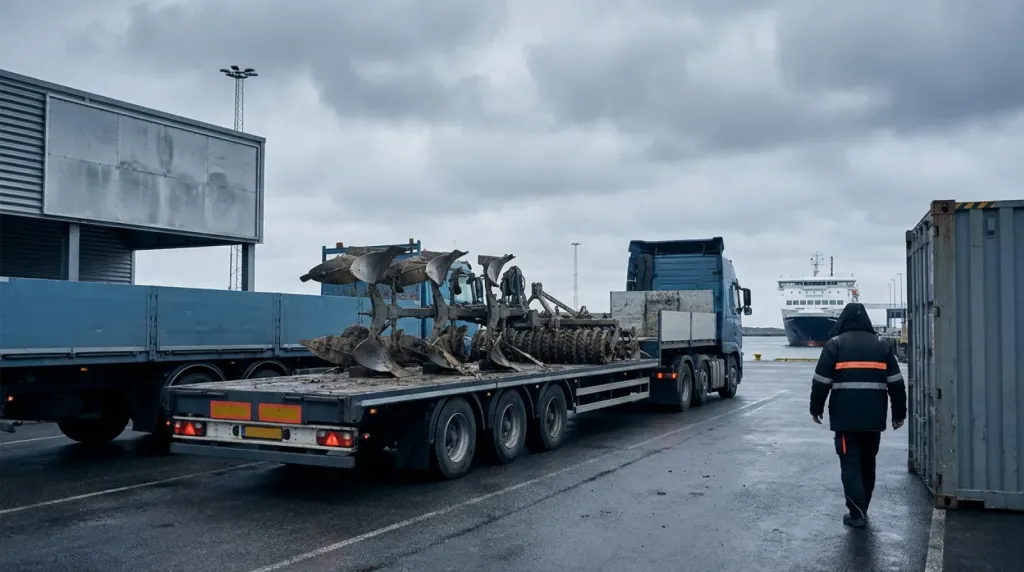
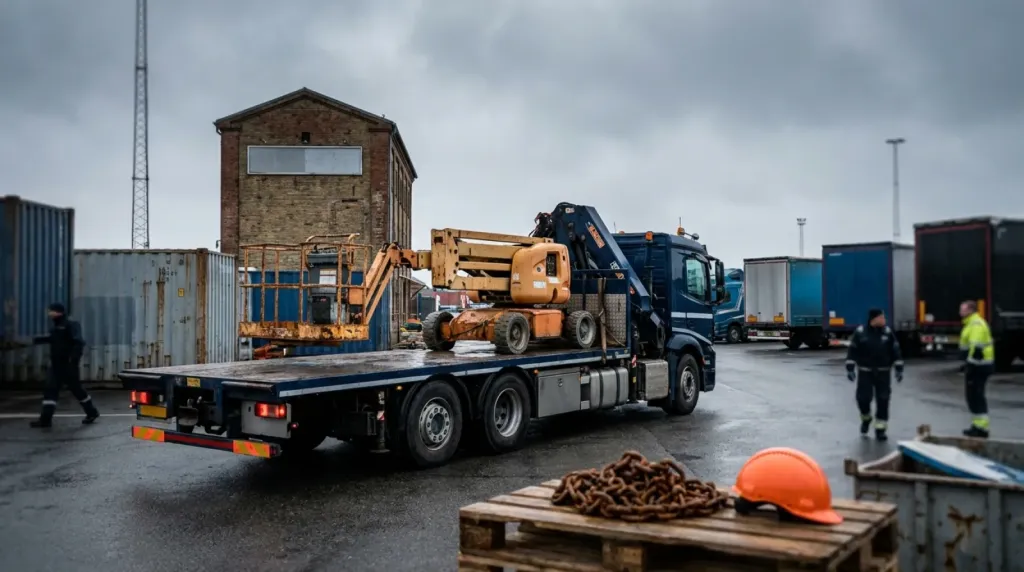
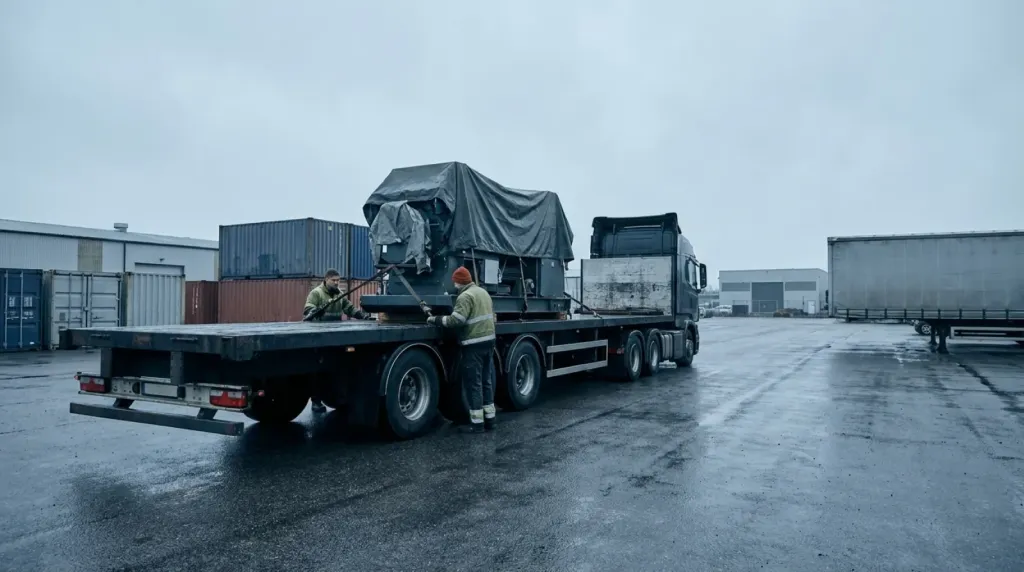
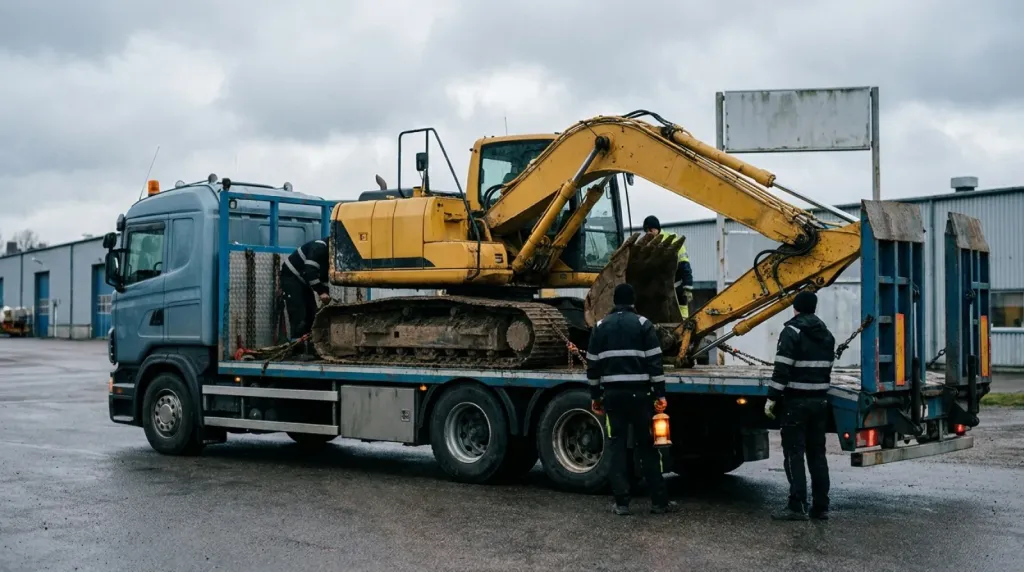
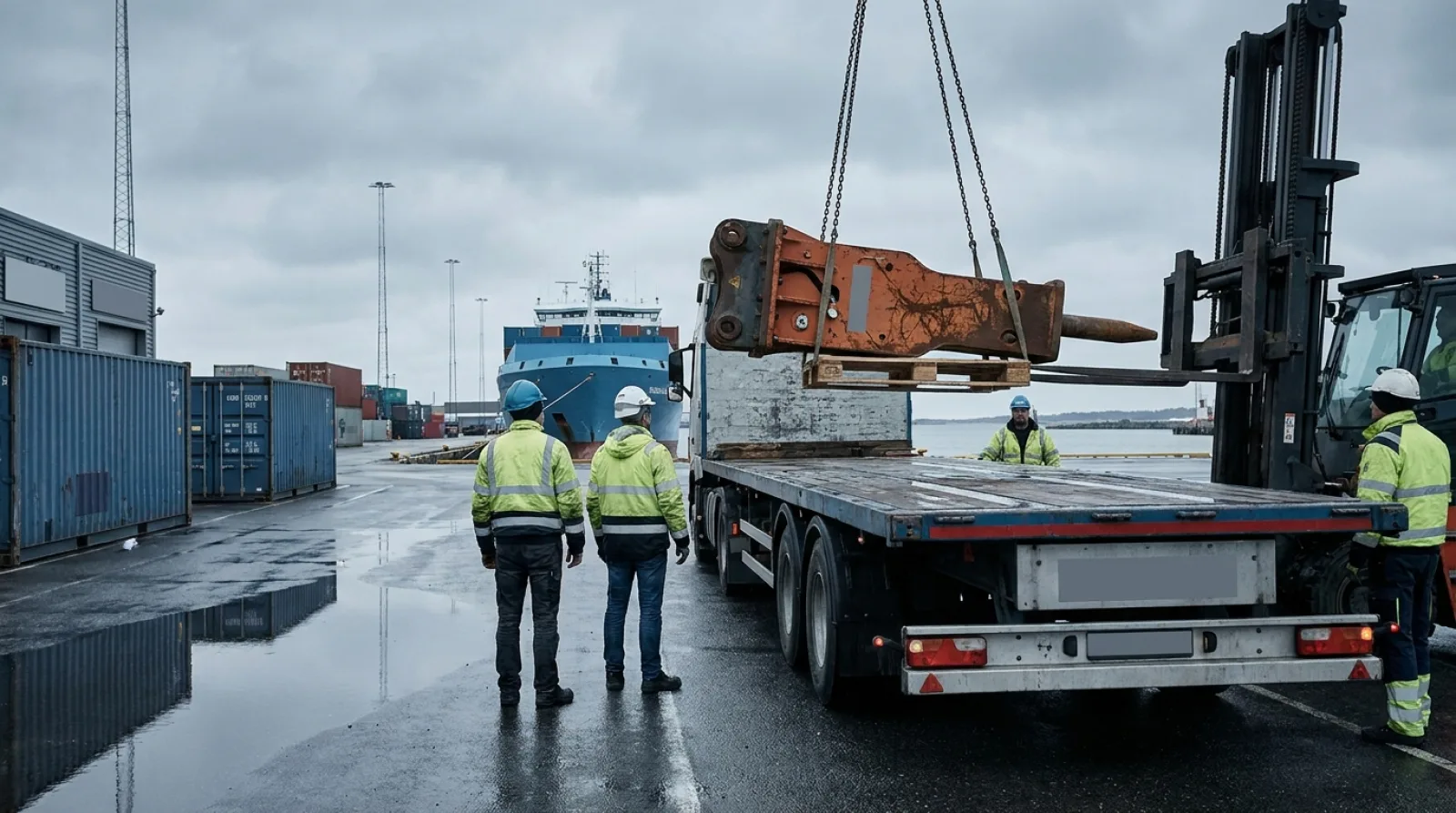
Most hydraulic breakers and associated attachments fall within the weight range of 100 kg to 5 tonnes. Owing to their rigid structural design, these units usually do not require disassembly for transport. The equipment is loaded intact and secured onto the vehicle bed using appropriate tension straps or chains to prevent movement during transit.
Loading procedures and site requirements depends on the rules of the specific pickup location and the exhibitor manual provided by the auction house. When collecting equipment in the UK, it is essential to confirm in advance whether suitable lifting equipment is available on site to avoid delays during collection.
Importing attachments from the UK step by step
- Auction win verification. Review the purchase invoice to ensure all items and descriptions match the physical goods acquired.
- Tariff classification check. Assign the correct commodity codes, applying CN 8431 49 for the hydraulic breaker and attachments separately from the base unit.
- Collection scheduling. Arrange the collection timeframe, adhering strictly to the instructions set out in the auctioneer's exhibitor manual.
- Customs filing. Prepare the UK export declaration and EU import entry using the relevant customs procedures.
- Cargo secures and transport. Transport the load (100 kg – 5 t) securely strapped without disassembling the main component structure.
- Clearance completion. Finalise customs processing at the destination office to release the goods into free circulation within the EU.
Definitions
- CN code: The eight-digit Combined Nomenclature code used within the European Union for classifying traded goods.
- EORI (Economic Operators Registration and Identification): A unique reference number used by businesses when interacting with UK and EU customs authorities.
- SAD (Single Administrative Document): The standard official form used for customs declarations in international trade with non-EU countries.
- Exhibitor manual: A document issued by auction organizers specifying pickup deadlines, site safety rules, and loading requirements.
Checklist for UK auction collection
- Obtain a detailed invoice separating base machinery from attachments.
- Verify that CN code 8431 49 is assigned to the breaker and attachments.
- Review collection rules in the auctioneer's exhibitor manual.
- Confirm the accurate shipment weight within the 100 kg to 5 t range.
- Check that no disassembly is required prior to loading.
- Ensure the importer holds an active EORI number.
When does this tariff procedure not apply?
The rules outlined here do not apply if the machinery is moved under a temporary admission procedure, such as for trade fairs or testing, where the items will return to the country of export without changing ownership. Furthermore, the application of specific codes depends on the exact technical setup — if an attachment is permanently integrated into a machine and cannot function as an interchangeable unit, a different customs tariff heading may be required.
The OTSL role
OTSL Sp. z o.o., based in Kielce, Poland, with logistics support in Milton Keynes, England, coordinates freight transport and customs declarations between the UK, Poland, and continental Europe. We assist with moving industrial tools and machinery components. Explore our services for machinery transport and read our overview of customs regime 42 and deferred VAT in the EU.