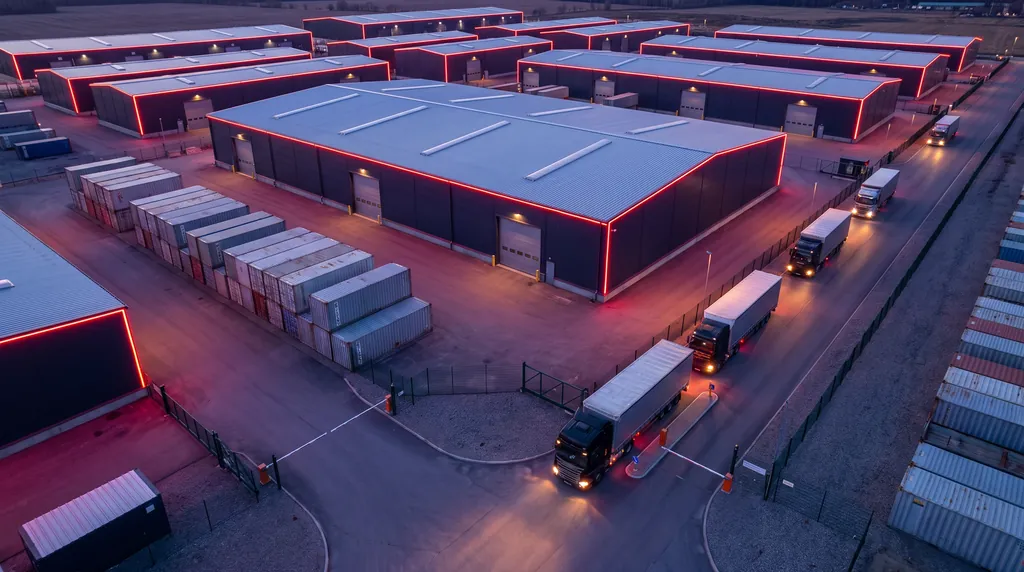
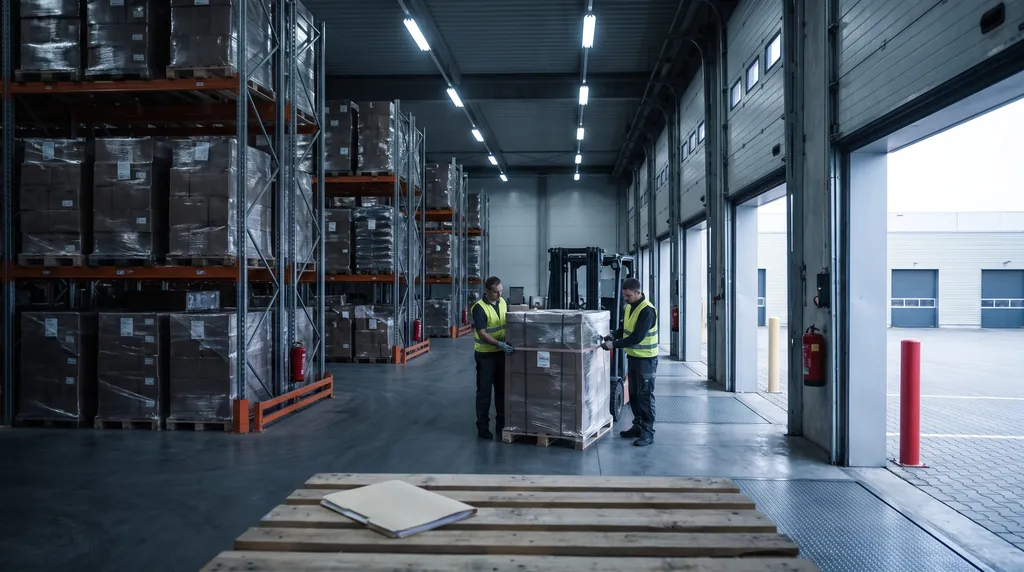
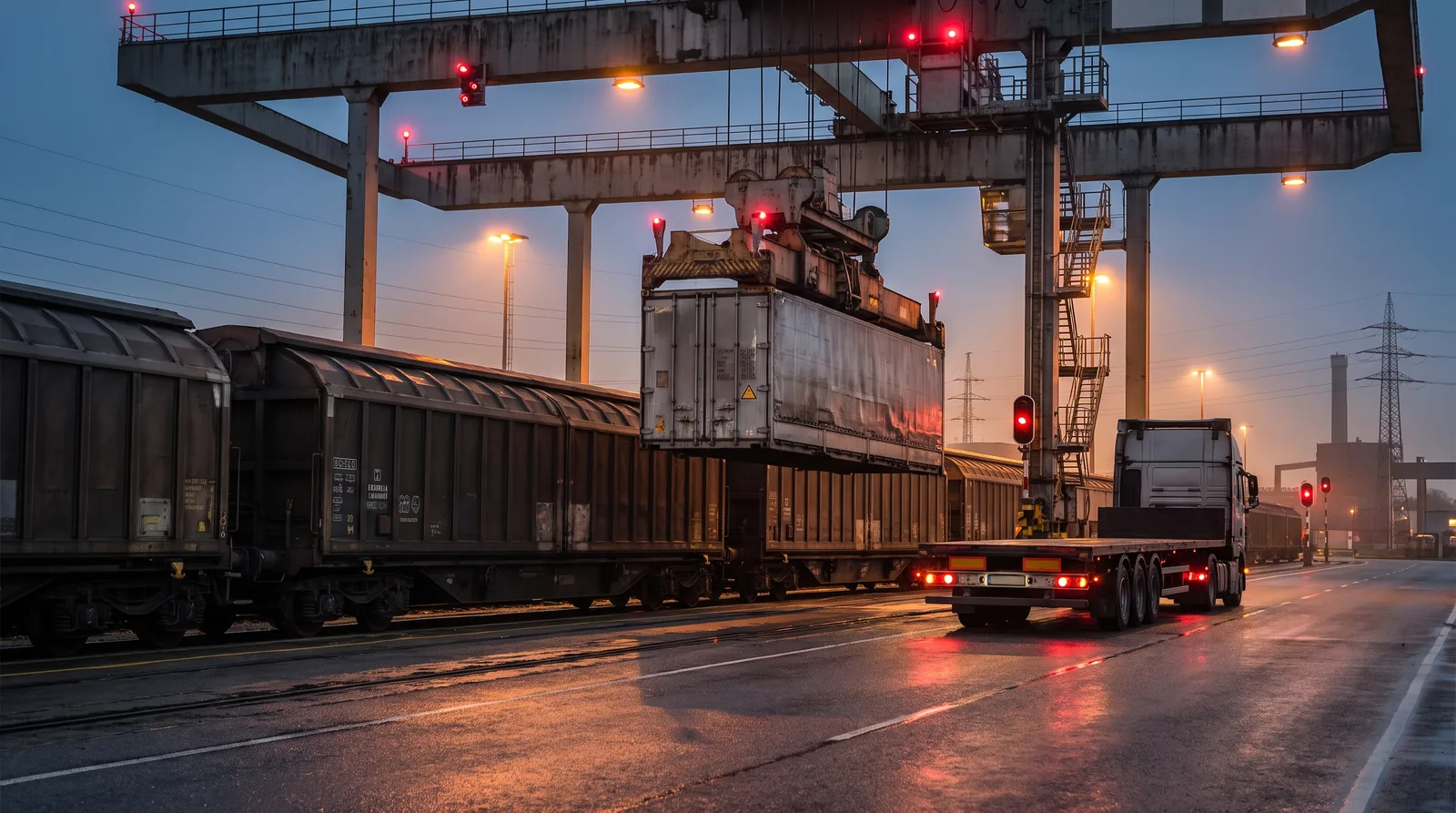
 AI image
Intermodal transport moves one loading unit (a trailer, container or swap body) by several modes without handling the goods themselves: the main leg runs by rail or ferry, while road transport covers the pre-carriage and on-carriage to the terminal. It pays off on long, regular lanes where fuel cost, CO2 emissions and the coming ETS2 charge matter. On short and urgent routes, road still beats intermodal on time and flexibility.
Intermodal, multimodal, combined: three words that get confused
Forwarders often use these three terms interchangeably, yet they do not mean the same thing. Choosing between them is not semantics; it is a real split of risk and cost.
- Intermodal stresses the loading unit: one trailer, container or swap body runs the whole route and only the unit is transhipped from truck to wagon or ferry. The goods inside stay untouched.
- Multimodal is the broader contractual concept: one carrier or operator takes responsibility for a whole chain made of several modes under a single contract, regardless of whether the unit stays the same.
- Combined is a sub-type of intermodal in which most of the route runs by rail or inland waterway and road transport is limited to the shortest possible pre- and on-carriage at each end. This definition matters for many support schemes and heavy-traffic rules; check the exact conditions and any incentives in national and EU sources (europa.eu), because they differ between countries and change over time.
When does rail or short-sea actually pay off?
Intermodal is not always cheaper. Distance, the steadiness of the flow and access to terminals govern it. It makes sense when several conditions hold at once:
- A long, repeatable distance. The longer the main rail or ferry leg, the more the transhipment cost at each end is spread out. On lanes of several hundred kilometres and more, run regularly, the maths starts to favour the track.
- Pressure on fuel cost and emissions. Rail uses less energy per tonne-kilometre than road, and a ferry operator takes over the long sea leg. That translates into a lower carbon footprint, increasingly a requirement rather than an extra.
- The coming ETS2 charge. Bringing road-transport fuels into emissions trading will raise the diesel cost of the road leg. The main leg on the track is not covered in the same way, which changes the calculation on longer lanes. We describe the mechanism and timeline in our article on ETS2 and the cost of CO2 in road transport; always verify dates and rates in the official material (europa.eu).
- A natural water barrier. On lanes to Scandinavia or the British Isles, a ferry or short-sea leg is not a choice but a geographic necessity. How we choose crossings from Polish ports is explained in our piece on ferries to Scandinavia.
The drawbacks to know before you decide
Lower cost and lower emissions come with trade-offs you must build into the plan rather than discover afterwards.
- Time and rigid schedules. A train and a ferry run to a timetable, not on call. Missing the loading window for a wagon or the ferry departure can cost a day. For urgent cargo that is often a disqualifier.
- Dependence on terminals. Intermodal works where there are transhipment terminals with the right equipment. If the sender or consignee sits far from a terminal, the long road leg eats the saving from the main leg.
- Limited last-mile flexibility. Changing the delivery address or an urgent re-route is harder than in door-to-door road transport, where a call to the driver is enough.
- More interfaces, more documents. Every transhipment and every mode is a control point with its own requirements. Ferry carriage adds the full booking pack and vehicle lists; what exactly such a booking covers is set out in our article on the ferry booking for UK crossings.
Intermodal versus all-road FTL: how to compare
| Criterion | Intermodal / combined | Whole trip by road (FTL) |
|---|---|---|
| Best for | long, steady lanes | short, urgent and unusual routes |
| Last-mile flexibility | lower, terminal-dependent | high, door to door |
| Sensitivity to schedule | high, rail and ferry windows | low, departure on demand |
| Carbon footprint per tonne-km | usually lower | usually higher |
| Exposure to fuel cost and ETS2 | limited to the road legs | along the whole route |
The same calculation is worth doing inside road transport itself: whether a load runs as a full truck or as groupage. How to match one to the other is set out in our article on FTL or LTL. Intermodal does not replace that decision; it adds a third axis of choice for the longer leg.
The OTSL role
We are a road freight forwarder, and in an intermodal chain we own what we do best: the road pre-carriage and on-carriage between the sender, the rail terminal or port and the consignee, with window planning, documentation and crossing bookings. The main leg on rail or sea we arrange with intermodal operators so the whole route closes on time. We run lanes between Poland, the United Kingdom, Switzerland and the rest of Europe, with warehouses in Kielce, Legnica and Milton Keynes. Discuss a specific route, and whether intermodal beats all-road FTL in your case, through the contact form; more material sits in the knowledge base.
Step by step
- Cargo loading. The sender packs and secures goods inside the loading unit directly at their facility.
- Drayage to terminal. A truck hauls the sealed trailer or container to the local intermodal hub.
- Unit transhipment. A crane transfers the entire loading unit onto a rail wagon or vessel.
- Main linehaul. The rail or short-sea ferry covers the longest leg of the journey efficiently.
- Final delivery. A local truck collects the unit from the destination terminal and delivers it to the consignee.
Definitions
- Intermodal transport: The carriage of goods in a single loading unit using multiple transport modes without handling the cargo itself.
- Multimodal transport: The movement of cargo under a single contract using at least two different modes of transport.
- Combined transport: A form of intermodal transport where the major leg runs by rail or water and road feeder legs are kept as short as possible.
- ETS2 (Emissions Trading System 2): The European Union carbon pricing system extended to fuels used in road transport.
When does this rule not apply?
This rule does not apply to short-distance regional hauls or urgent shipments where terminal handling times prevent meeting strict deadlines.