 AI image
Trucks from Poland enter Scandinavia in two ways: by ferry from Polish ports, meaning Swinoujscie-Ystad, Swinoujscie-Trelleborg or Gdynia-Karlskrona, or by land through Germany and Denmark over the bridges. The ferry shortens the road leg and tidies up the driver's working time, the land route offers departure flexibility. Norway adds a third element: a border outside the EU and full customs clearance.
Routes from Polish ports
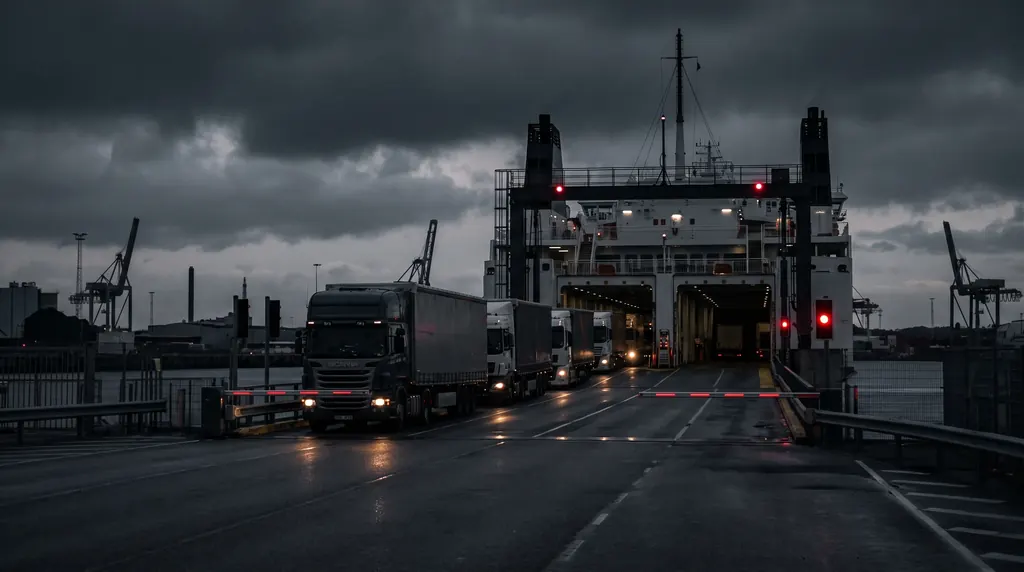
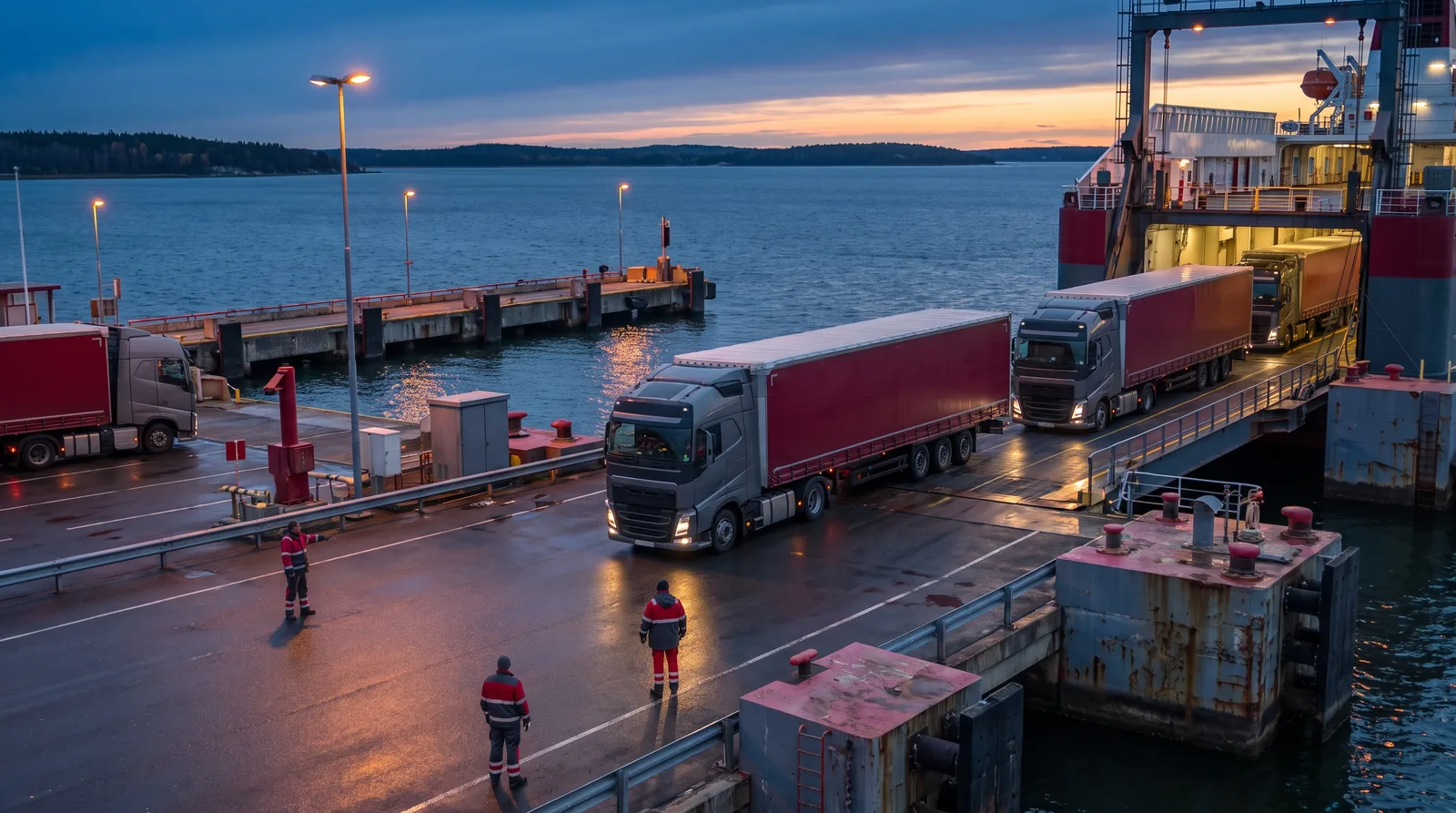
From Swinoujscie the sailings run to Ystad and Trelleborg in southern Sweden, from Gdynia to Karlskrona. The Swinoujscie-Ystad crossing takes about 6.5 to 7.5 hours by the Unity Line timetable, and Stena Line quotes roughly 10.5 hours for Gdynia-Karlskrona, with up to 3 departures a day. The choice of port depends mostly on the loading point: for western Poland Swinoujscie is the natural exit, for Pomerania and the east of the country Gdynia. A night sailing has an extra advantage: the driver takes the rest during the crossing and rolls off the ramp in the morning straight towards the receiver. Reserving space, declaring the cargo and matching the sailing to the delivery window is the job of our ferry booking service.
Ferry or overland through Denmark
The land route through Denmark and the strait bridges is fully road-based and independent of ferry bookings, but longer in kilometres and loaded with bridge tolls. The ferry from Poland usually wins when the receiver sits in central or eastern Sweden, when driver hours are the constraint, or when the truck starts near a port anyway. The overland variant saves deadlines when sailings are full and for cargo a ferry operator will not accept. Choosing between the two is daily work for our forwarders on the Swedish and Danish lanes, within the road transport service.
Norway: the ferry is not the whole story
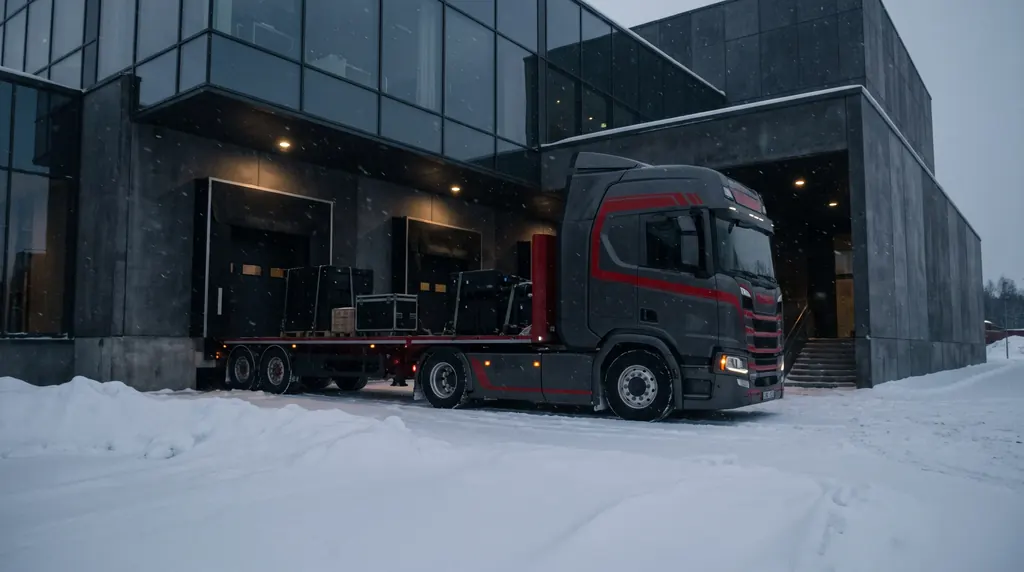
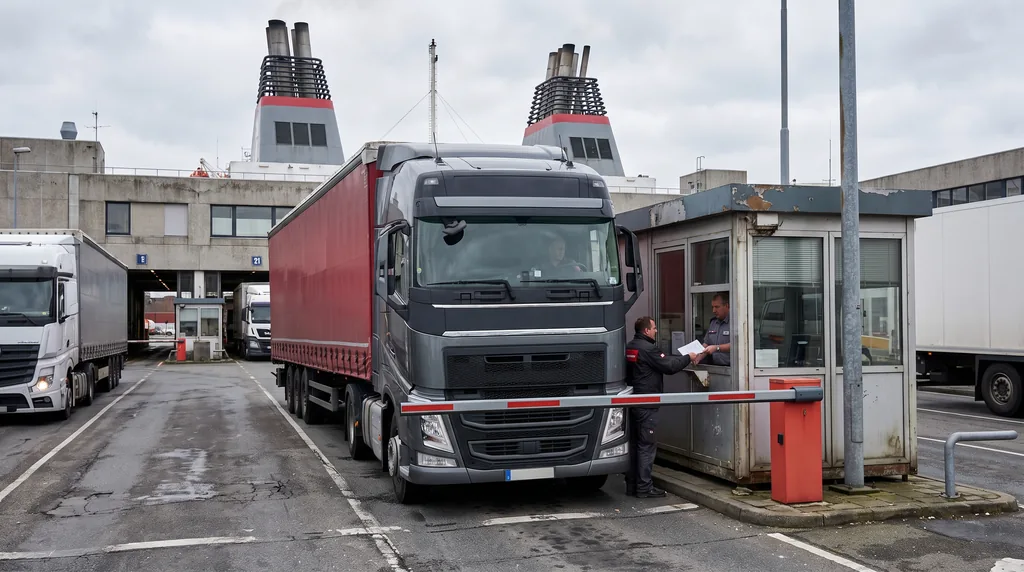
Norway is not in the European Union, so whether the truck arrives by ferry or by land through Sweden, the goods go through full customs clearance. This changes the planning more than the crossing itself: the documents must be ready before the border, and an error in them stops a truck more effectively than a storm. We describe the procedures step by step in customs clearance in Norway and on the destination page for transport to Norway.
What decides in practice
For a quote and a plan we need three pieces of information: where the truck starts, where and by when the goods are due, and what is on board. From that follow the port, the sailing and the fallback. A lost sailing on the Baltic hurts more than one on the Channel, because departures are fewer and the next one may be a day away: so we book with margin and keep a plan B on land.
How do you plan a ferry crossing without exceeding driver hours limits?
When driving an articulated lorry onto the deck, you must calculate all manoeuvring operations precisely. A driver's regular daily rest period on a ferry can be interrupted a maximum of 2 times, and the total duration of these interruptions must not exceed 60 minutes. You must complete both the embarkation into the hold and the disembarkation upon arrival within this window. If your vehicle combination exceeds a length of 16.5 metres or a gross weight of 40 tonnes, check-in at the ferry gate requires additional axle load checks, which can extend the loading procedure by up to 30 minutes.
For refrigerated trailers, you must request a 380 V mains electricity connection at least 3 hours before departure. Failing to book an electrical point forces the reefer unit to run on its diesel engine. Many vessels strictly prohibit diesel generators below deck for fire safety reasons, resulting in refused boarding and a 100% cancellation fee on the booking.
Note the operational boundary of these rules: the split rest interruption provision does not apply if the ferry crossing is shorter than 8 hours or if the driver is taking a weekly rest period. In those scenarios, time spent on board cannot count towards the rest requirement, and the driver must head directly to a parking area immediately after disembarking.
Step by step
- Select the departure port. You match the port of Swinoujscie or Gdynia to the loading location in Poland.
- Book the crossing. You reserve space on the ferry according to the planned sailing timetable.
- Organise the rest period. You plan the route so the driver takes mandatory rest during the crossing.
- Prepare customs documents. You arrange paperwork required for shipments heading to non-European Union countries.
- Continue the road leg. You collect the vehicle at the destination port and deliver the cargo to the recipient.
Definitions
- Swinoujscie-Ystad: A ferry route connecting the Polish port in Western Pomerania with southern Sweden.
- Gdynia-Karlskrona: A maritime ferry link between the port of Gdynia and southern Sweden.
- Customs clearance: A goods and document control procedure required when crossing the border of a non-European Union country.
- Driver working time: Regulated periods of driving and mandatory rest required for professional drivers.
The OTSL role
When you plan transport to Sweden or Norway, we help you arrange both the ferry crossing and the road journey smoothly. You can use our Ferry booking service to secure space on the ship quickly. Read more about transport routes in our guide Transport to Scandinavia: ferry or road to Sweden, Denmark and Finland.