 AI image
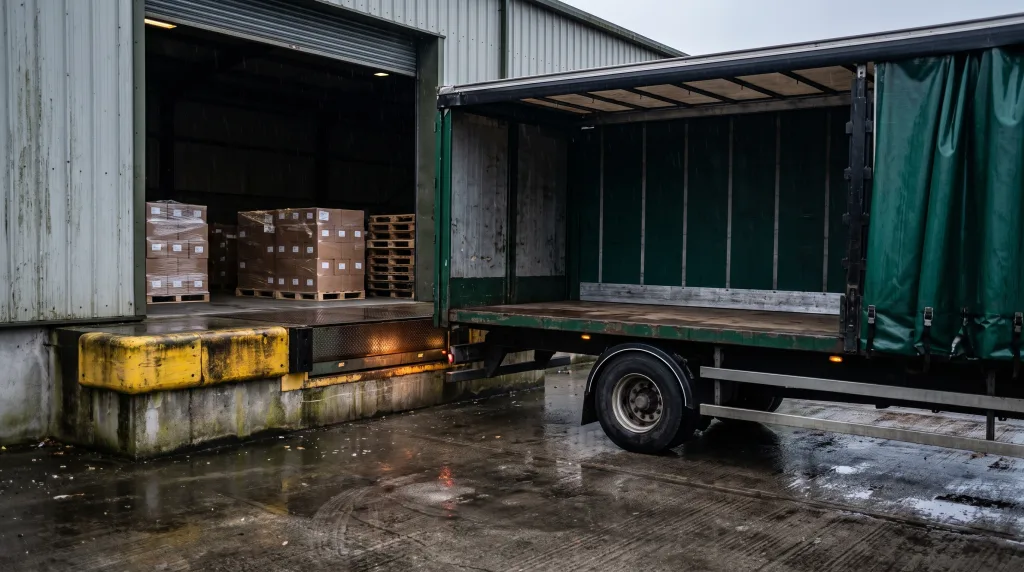
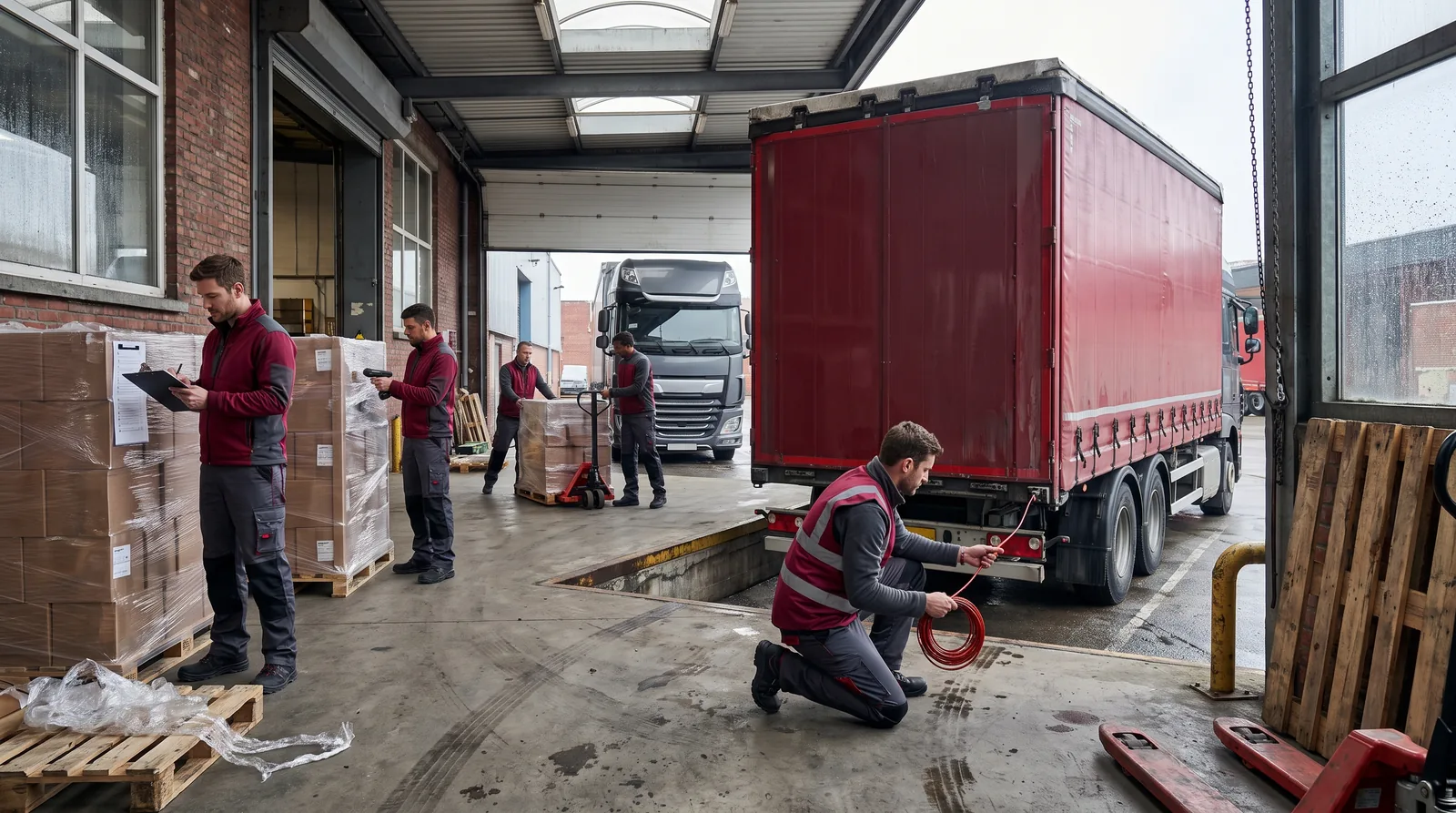
On the route from Poland to the United Kingdom the Legnica base is the last convenient consolidation point before the German border: it sits on the A4 motorway, about 100 km from the border. Here we combine UK-bound batches, tidy pallets and the data for customs declarations, while the clearances run through our own agencies. Gaps surface at the ramp in Legnica, not at the port.
Why the last point before the border matters
After leaving Legnica the truck runs west by motorway, and the next real chance to fix anything is at the Channel. Everything incomplete then shows up in the worst possible place: in the crossing queue, where every hour of a standing truck costs money and a correction means sending goods back. That is why we close the picking of UK shipments while still in Poland.
What happens at the base before departure
- Consolidation: batches from different shippers heading for the UK are combined into one load instead of several part-full trucks.
- Load preparation: repacking and palletisation so the goods survive the crossing and the intake at the receiver.
- Data check: pallet counts, weights and goods descriptions must match the documents, because customs declarations run on them.
Working with customs clearance
Customs declarations are handled by our own agencies on the Polish and the British side. The role of the Legnica base is to hand them a complete, correct data set before the truck departs: a consolidated load, matching documents, no surprises at the crossing. How the clearance itself works is described on the customs clearance page.
Who does this make sense for?
For exporters shipping less than a full truck to the UK, and for those whose goods come together from several places. Instead of three independent shipments with three clearances, one consolidated load travels, handled by our road transport. Collection of smaller batches is covered in the article on consolidation in Legnica, and the role of all bases on the OTSL warehousing page and the Legnica base page.
Which weight and time thresholds determine vehicle dispatch from the hub?
At the Legnica ramp, physical verification of payload mass and axle load distribution is a crucial operational step. When a trailer carries 33 Euro-pallets, total cargo weight must not exceed 24000 kg, but uneven weight distribution frequently creates illegal axle overload. Exceeding the 11.5-tonne drive axle limit requires shifting pallets inside the trailer by as little as 0.5 metres. Furthermore, any discrepancy exceeding 2% between the gross weight recorded on the CMR (the Convention on the contract for international carriage of goods by road) consignment note and the actual weighbridge reading halts vehicle departure. UK customs mechanisms processing Goods Vehicle Movement Service (GVMS) data require strict accuracy; a discrepancy of 300 kg can invalidate a Goods Movement Record (GMR) and trigger mandatory physical checks at Dover or Folkestone.
Time windows for groupage (LTL) flows follow strict operational dependencies:
- Physical weight and dimension checks require up to 2 hours after the vehicle enters the yard.
- Amending customs declarations and updating the GMR requires a minimum buffer of 4 hours prior to the booked ferry or Eurotunnel slot.
- Consolidated LTL shipments from secondary suppliers are held in the transit warehouse for a maximum of 48 hours to prevent downstream delivery delays.
Note that these weight verification and consolidation protocols do not apply to direct full-truckload (FTL) transit from a single consignor, provided the loading site features calibrated weighbridges and all customs transit documents are fully validated before the vehicle departs the origin facility.
Step by step
- Receiving goods at the base. You check the physical condition of pallets and confirm invoice details upon arrival in Legnica.
- Consolidating shipments. You combine smaller UK-bound parcels and freight into one structured vehicle load.
- Verifying customs data. You ensure declaration files and transport codes are accurate before crossing the border.
- Ramp loading. You organise the trailer space efficiently to prevent damage and speed up border checks.
- Departure westwards. You dispatch the fully prepared truck along the A4 motorway towards the Channel crossing.
Definitions
- Consolidation: The process of combining smaller freight batches from multiple senders into a single vehicle load.
- Cross-docking: The direct transfer of goods from incoming to outgoing transport without long-term storage.
- A4 motorway: The main southern Polish highway linking eastern routes directly to the German border.
- LTL (Less than Truckload): Freight transport where a shipment occupies only a portion of the trailer space.
When does this rule not apply?
This approach does not apply to full truckloads loaded at a single origin with clean customs documentation that proceed straight to the port.
The OTSL role
At OTSL, we manage seamless cross-border logistics between the EU and the UK. When you book groupage (LTL) services, our network helps consolidate freight smoothly. Learn more about cross-dock on the A4: why transship goods in Legnica to optimize your route.