 AI image
Cross-docking is the transfer of goods from the inbound vehicle to delivery vehicles without long-term storage. The OTSL warehouse in Milton Keynes runs it 24/7 and sits in central England on the M1 between London and Birmingham, so cargo from the east-coast and south-coast ports can be split here into deliveries across the country. For a container line or NVOCC the deconsolidation point takes goods out of the container, divides them into consignments and hands them to carriers. The container goes back empty to the depot sooner than if it toured every consignee.
Why does a container line or NVOCC need a deconsolidation point in central England?
A container for one consignee goes to that consignee. A container carrying goods for several or a dozen consignees in different parts of England is a different problem: either it tours them one after another, tied up for days, or it goes to one point where the load is split and delivered by distribution vehicles. The second route shortens the time the container is occupied and allows it to return to the depot inside the line's free time. Demurrage and detention are set by the shipping line in the booking terms; a deconsolidation point does not change the rates, only the number of days they apply to.
Location matters. Milton Keynes lies on the M1 roughly halfway between London and Birmingham; from Felixstowe, Southampton, London Gateway and Tilbury the run is on trunk routes, and from here distribution to the Midlands, the north and the south goes outwards in every direction without doubling back. For an NVOCC that has neither ships nor warehouses of its own in England, such a point is the missing link between the port and the end customer.
What does a cross-dock from container to deliveries look like?
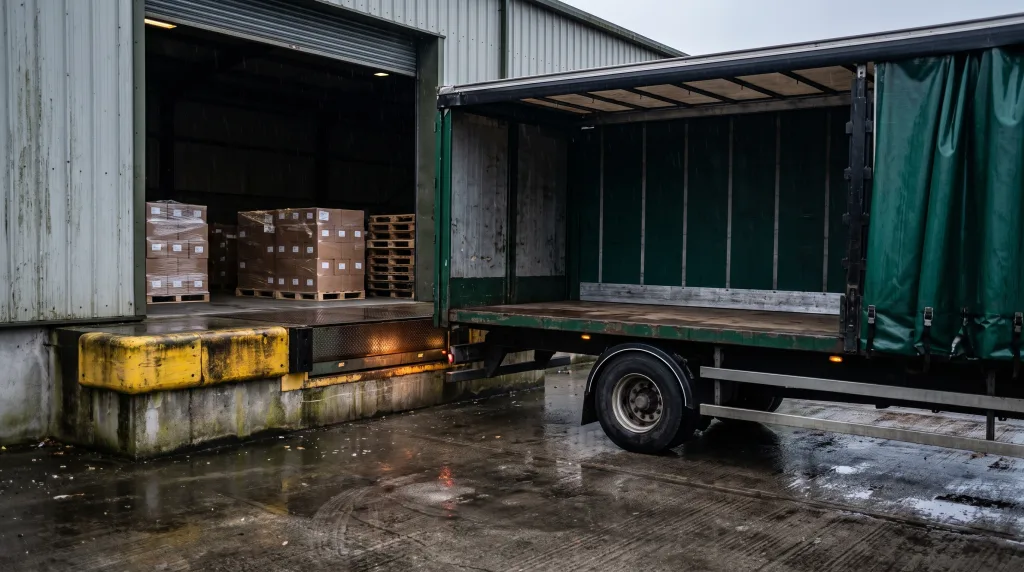
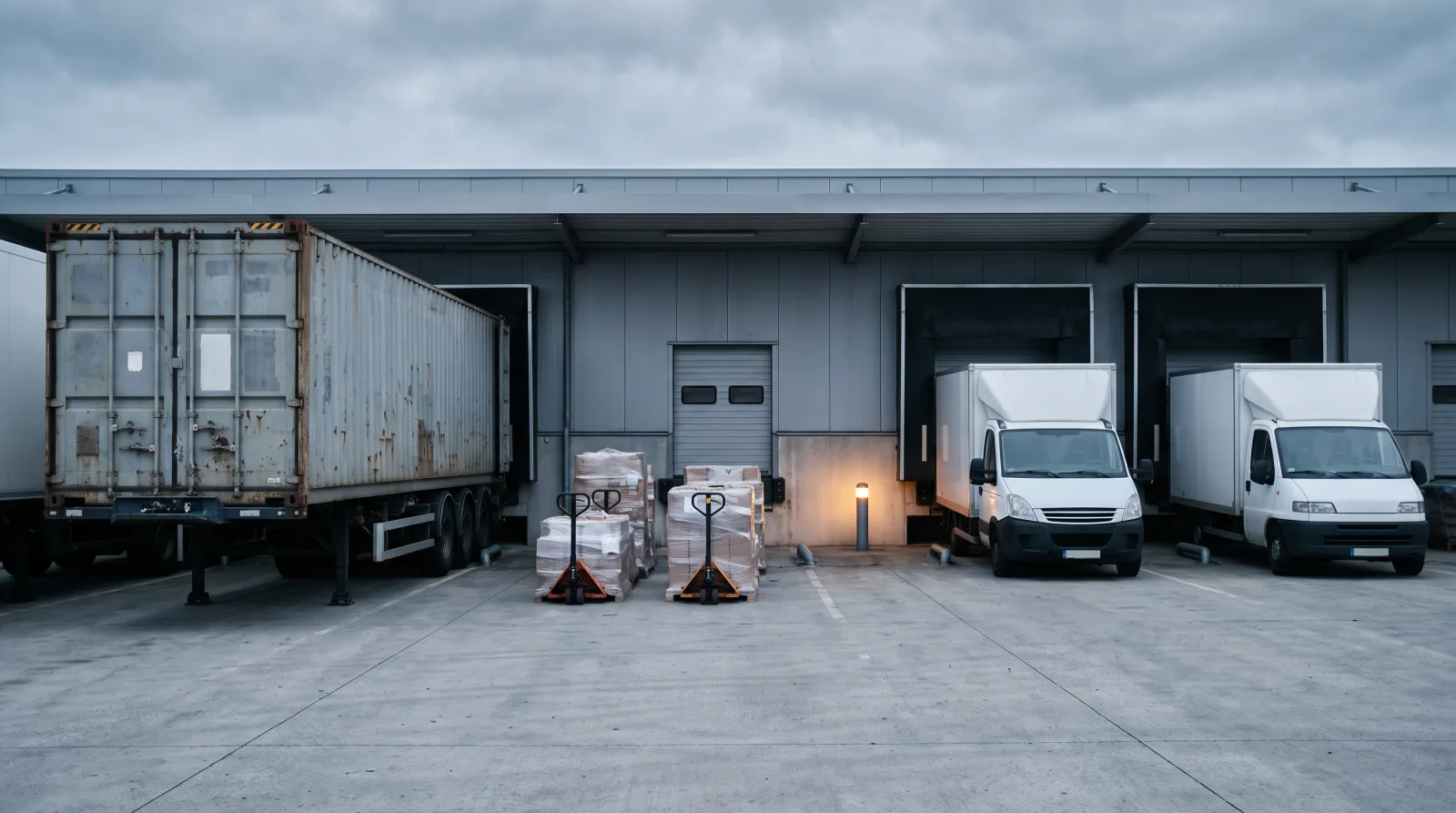
Goods from the container are unloaded, identified from documents and markings and assigned straight to consignees without going onto racking. Each consignment is counted, palletised or labelled for the consignee where needed, and loaded onto a delivery vehicle: LTL groupage from a single pallet for small consignees or FTL for large ones. OTSL combines the cross-dock with its own road transport, so consignments do not wait for a third-party haulier. GB import clearance can be lodged by the OTSL customs agency in the UK if we agree so.
Receiving containers directly on the ramp in Milton Keynes and drayage from the port are arranged individually for each job; the alternative is to receive goods already devanned at the port and cross-dock from there. The current OTSL container transport service describes operations in Poland; in England the scope is set in the job.
Cross-dock for a container line step by step
- Manifest and consignees. You send the list of consignments in the container with consignees, addresses, unit counts and delivery requirements; vehicles are planned from this.
- Release and drayage. After GB import clearance the container moves to MK (by agreement) or the goods are devanned at the port and brought in on pallets.
- Unloading and assignment. Units are identified and routed straight to consignee zones, without racking.
- Count and preparation. Each consignment is counted against the manifest; palletised or labelled for the consignee where needed, with discrepancies photographed.
- Loading for delivery. Consignments leave as LTL groupage or FTL on OTSL transport, booked in with consignees that require it.
- Empty return and report. The container returns to the depot inside the free time, and you receive a dispatch report with proofs of delivery.
Definitions
- Cross-docking: transfer of goods from the inbound vehicle to delivery vehicles without long-term storage.
- NVOCC (Non-Vessel Operating Common Carrier): a consolidator that sells ocean carriage and issues its own bills of lading without operating ships.
- Deconsolidation: splitting a groupage load into individual consignments according to the documents.
- LTL (Less than Truckload): a groupage delivery in which the consignment occupies part of a vehicle; at OTSL from a single pallet.
- FTL (Full Truckload): a full-vehicle delivery for one consignee.
- Depot: the place designated by the shipping line for returning the empty container; the deadline follows from the booking's free time.
Checklist before the first cross-dock from a container
- Consignment manifest with consignees, addresses, unit counts and delivery requirements.
- Customs status of the cargo and who handles GB import clearance.
- The line's free time and the depot for returning the empty.
- Agreement on whether the container comes into MK or the goods arrive devanned from the port.
- Consignee requirements: slots, pallets, labels, receiving hours.
- Who receives the dispatch report and proofs of delivery.
When is a cross-dock in Milton Keynes not the right solution?
A cross-dock does not apply when the whole container goes to one consignee with its own ramp and a free slot; direct delivery is then shorter. It will not work either when consignments have to wait weeks for an instruction, because that calls for storage rather than transloading, unless we combine both models for part of the load. Transit time through MK depends on the number of consignees, whether the goods need palletising and on the consignees' delivery windows; for Scotland and the far north the route via MK can be longer than going direct from an east-coast port.
The OTSL role
OTSL combines the Milton Keynes warehouse with its own FTL road transport and LTL groupage from a single pallet, while GB import clearance is handled by our own customs agency. Container haulage from the port is agreed in the job; the general principles are set out in our container transport service. How pallet transloading without storage works is explained in our article on the cross-dock warehouse in Milton Keynes, and how line charges arise in container demurrage and detention costs. See also: Clandestine entrants found in the trailer: what happens to the load and Container devanning in Milton Keynes: FCL unloading near the M1 and FBA prep service for freight forwarders: a stop in Milton Keynes.