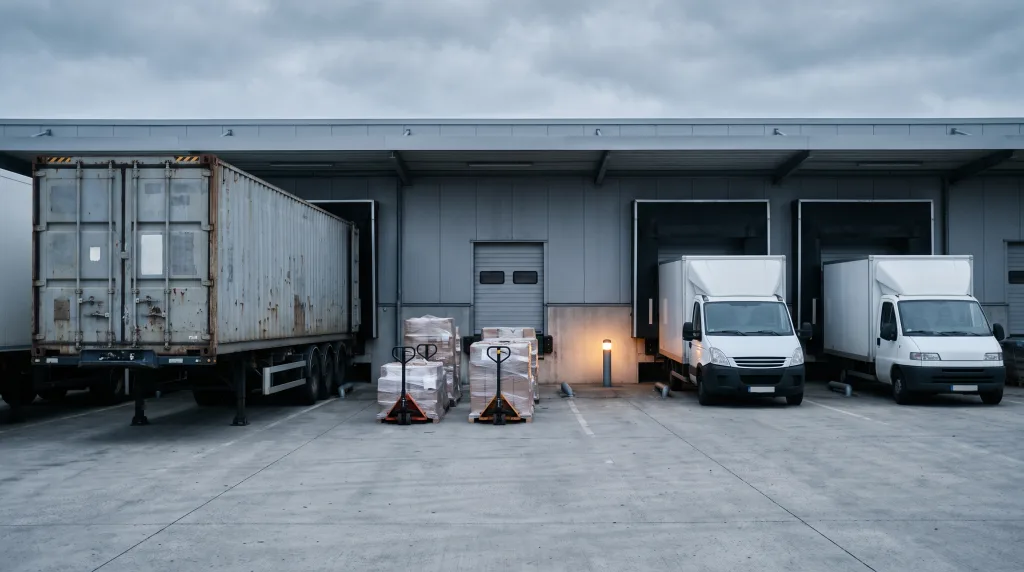
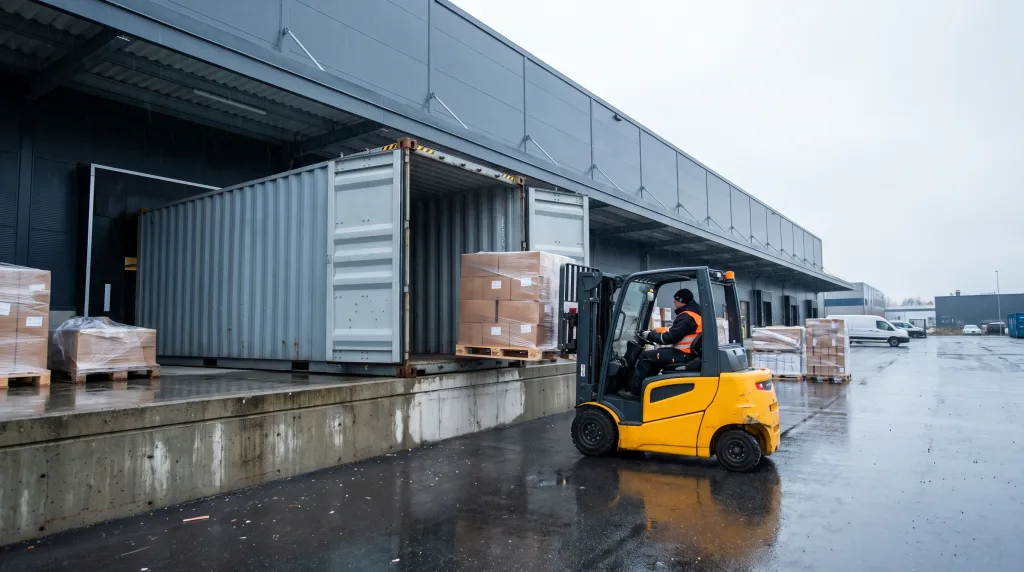
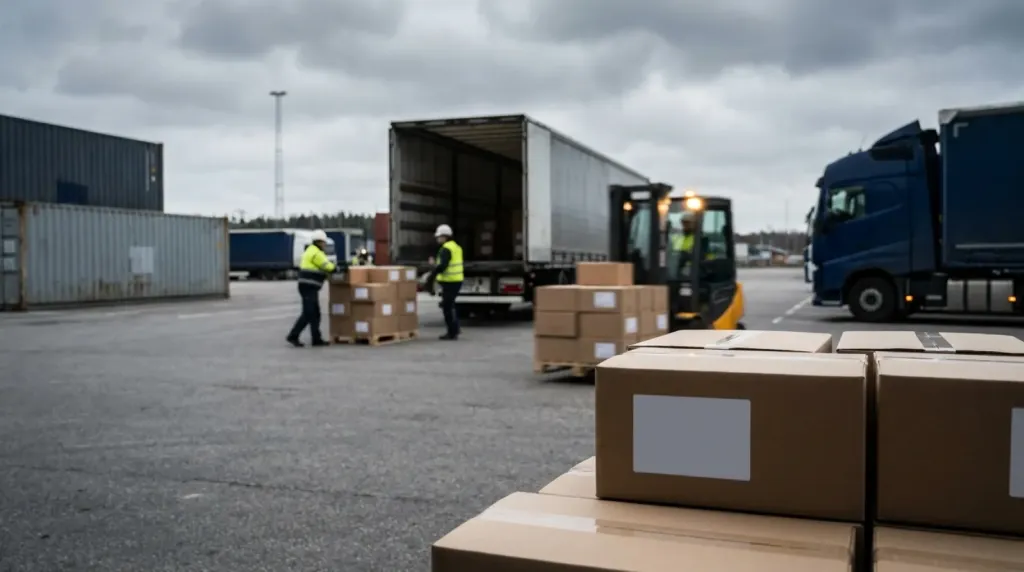
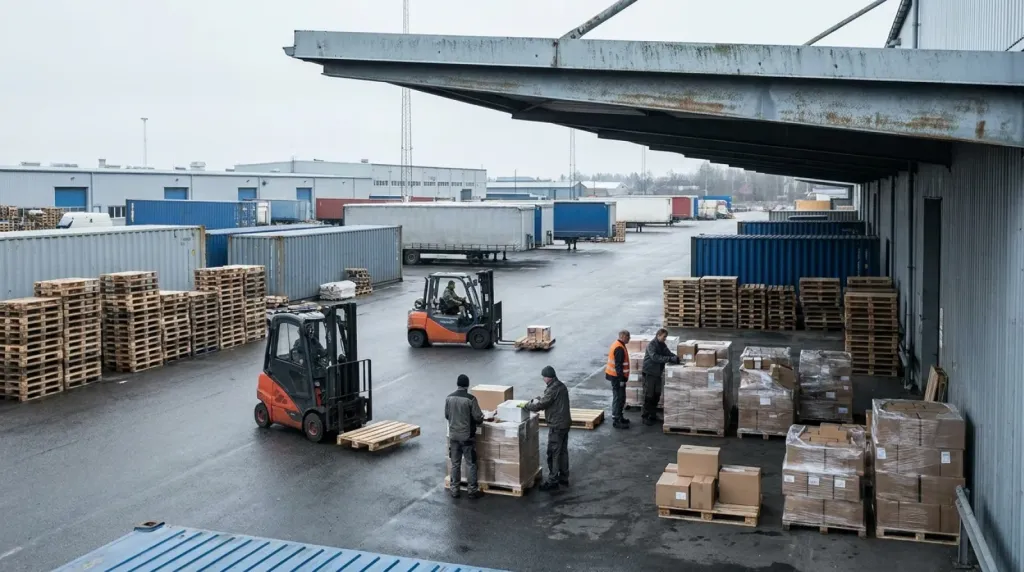
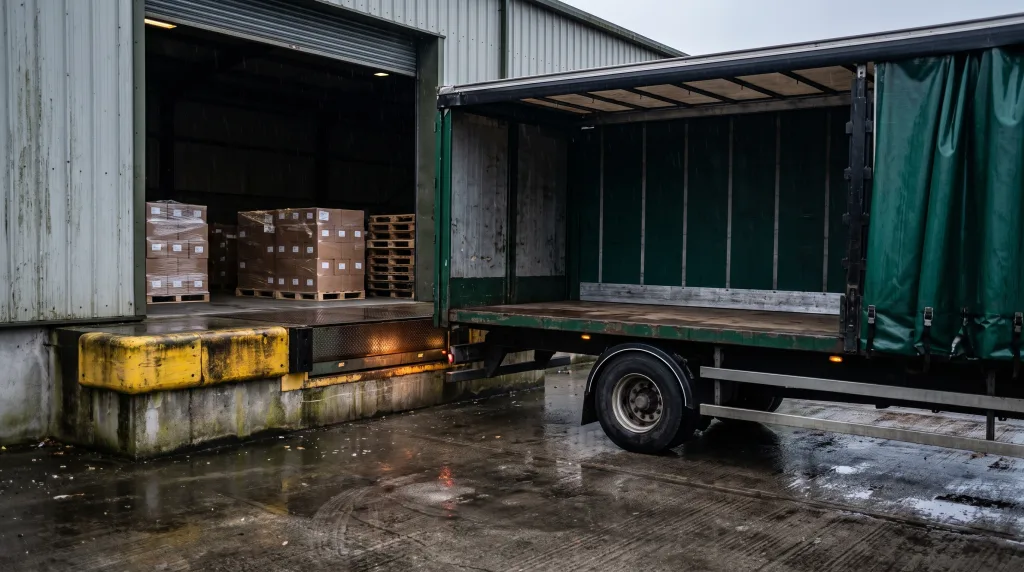
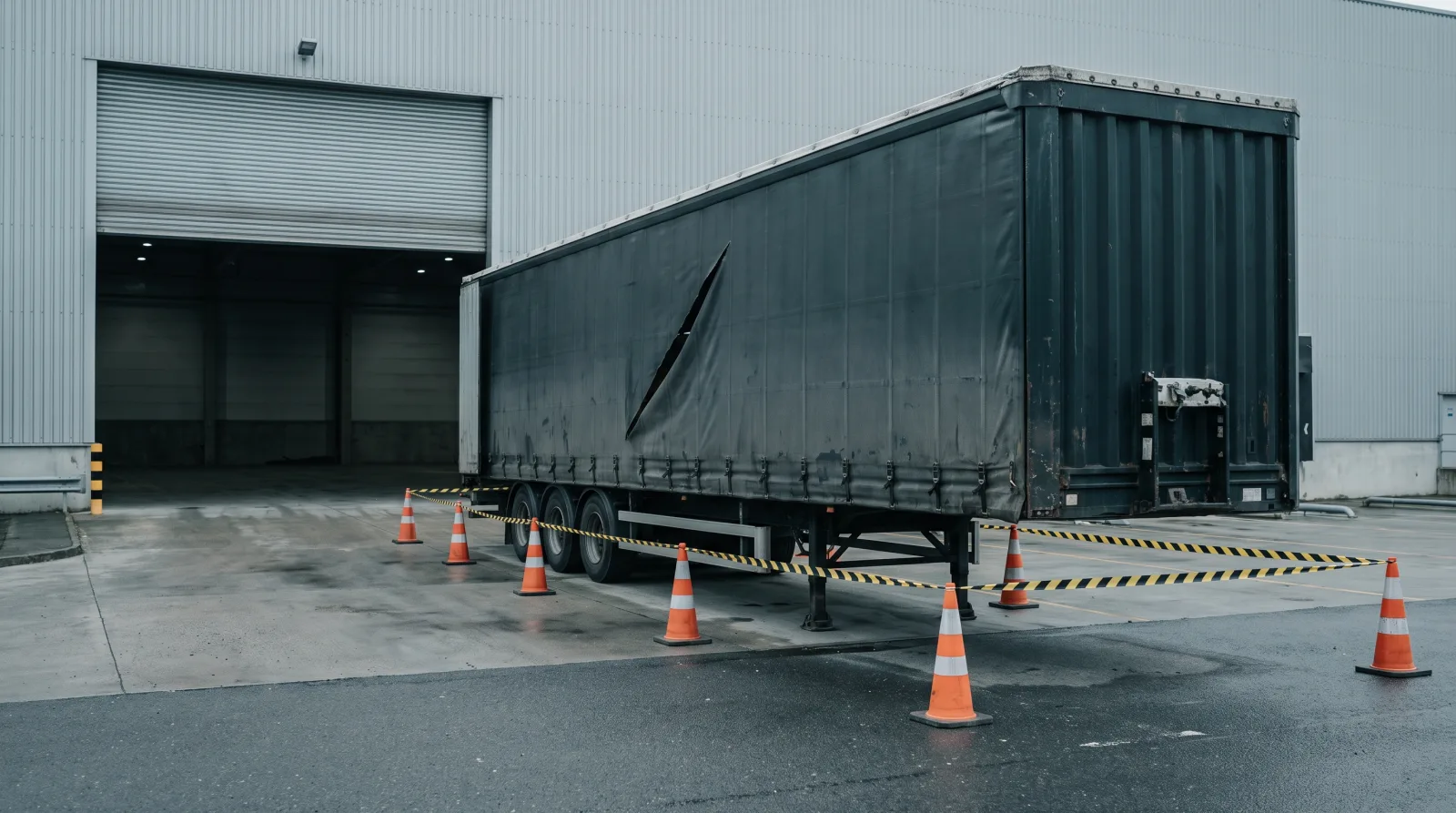
 AI image
Once clandestine entrants have been found in a trailer, the load becomes goods of uncertain condition: it may have been contaminated, tampered with or partly destroyed, so delivery to the consignee without inspection usually ends in a refusal. Penalties under the civil penalty scheme are set by the Home Office; this text is about the load. The OTSL warehouse in Milton Keynes inspects the cargo in white and UV light, counts it and carries out sanitary checks, and the photo report goes to the owner of the goods and the insurer, who decide on delivery, decontamination or disposal.
Why can the load not go straight to the consignee after people are found in the trailer?
Because nobody knows what condition it is in. People hidden in a trailer for many hours leave traces: body fluids, litter, damaged packaging, cut straps and curtain. A consignee who receives such a load without a document confirming an examination will refuse it, and for food there is a legal basis: under Regulation (EC) 178/2002 a food business operator may not place on the market food whose safety it cannot be sure of. The truck comes back loaded, and time and cost rise.
For the carrier the matter runs on two tracks. The first is the penalty procedure: the driver documents the incident and keeps his own trailer check list, because that is evidence for Border Force and the Home Office; the driver procedure and the penalty rules are covered in separate OTSL articles. The second track is the load, and that is what this text is about: what to do with goods standing in a breached trailer at the port.
What is the route from port to inspection, and what does the insurer receive?
Once the authorities have finished at the port, the trailer with its load moves to Milton Keynes; the warehouse runs 24/7, so receipt does not wait for the morning, but it needs notice: trailer number, type of goods, temperature regime, circumstances of the incident. At the warehouse the load is inspected: trailer and goods examined in white light, unloading with pallet numbering, UV examination, count against documents and sanitary checks. Every unit goes into one of three groups: clean, for decontamination, for disposal.
The insurer receives a photo report with identification of the consignment and trailer, description of the circumstances, photographs tied to pallet numbers, unit classification and a recommendation for next steps. The report is evidence of the extent of the loss, not a decision: delivery, decontamination or disposal is decided by the owner of the goods together with the insurer. Until then the goods wait in the warehouse, temperature-controlled where required.
Handling the load after people are found step by step
- Documentation at the port. The driver photographs the trailer, seal and damage, keeps the check list and any documents from the authorities, and reports the incident to the principal and the insurer.
- Notice to the warehouse. The carrier or forwarder gives OTSL the trailer number, type of goods, temperature regime and circumstances; the warehouse prepares an inspection zone.
- Receipt and white-light examination. Trailer and load are photographed before unloading: pallet positions, signs of people having been inside, packaging damage.
- Unloading, numbering and UV. Every pallet receives a number, is counted against the documents and examined under UV light; fluorescing traces are photographed with the pallet number.
- Classification and report. Units are split into clean, for decontamination and for disposal; the report goes to the owner of the goods and the insurer.
- Decision and execution. The owner and insurer decide on delivery, UVC decontamination or disposal; OTSL carries out the chosen route and documents it.
Definitions
- Clandestine entrants: unauthorised people hidden in a vehicle or trailer in order to enter the United Kingdom illegally.
- Civil penalty scheme: the UK scheme of administrative penalties for carrying clandestine entrants, applying to the owner, hirer and driver of the vehicle; amounts are set by the Home Office.
- Border Force: the UK border agency that carries out checks at ports and detects people hidden in vehicles.
- UV inspection: examination of cargo under ultraviolet light, in which some organic contamination fluoresces; it shows where a trace is, not what it is.
- Regulation (EC) 178/2002: the EU general food law prohibiting the placing of unsafe food on the market.
- Extent of loss: the list of units affected by the incident with classification and reason; the basis for settlement with the insurer.
Carrier checklist after people are found in the trailer
- Photographs of the trailer, seal and damage taken at the port before departure.
- The driver's trailer check list and any documents received from the authorities.
- Incident report to the principal, the owner of the goods and the insurer.
- Notice to the warehouse: trailer number, goods, temperature, circumstances, arrival time.
- Packing list or CMR (the Convention on the contract for international carriage of goods by road) note so that the count has a reference.
- Contact for the person on the owner's side who will decide on the goods.
When is a warehouse inspection not needed?
An inspection does not apply when the trailer proved intact and the people were found outside the load space, for example on the chassis; the owner of the goods then decides on the onward route, unless the consignee requires an examination before acceptance anyway. Nor does it replace laboratory testing when food had direct contact with contamination and primary packs are open. The scope of the inspection depends on the type of goods, the policy requirements and what the consignee expects; it is agreed before the trailer is received.
The OTSL role
The OTSL warehouse in Milton Keynes carries out cargo inspections after a trailer breach with a report for the customer and the insurer, while unloading and storage pending a decision take place under secure transloading; when the truck has to move on, emergency transport takeover helps. How the penalty scheme works is described in our article on cargo inspection after unauthorised people, the driver procedure and check list in trailer inspection after clandestine entrants, and our full inspection procedure in the trailer breach inspection scenario. See also: UV inspection report for cargo: what it shows and how insurers read it.