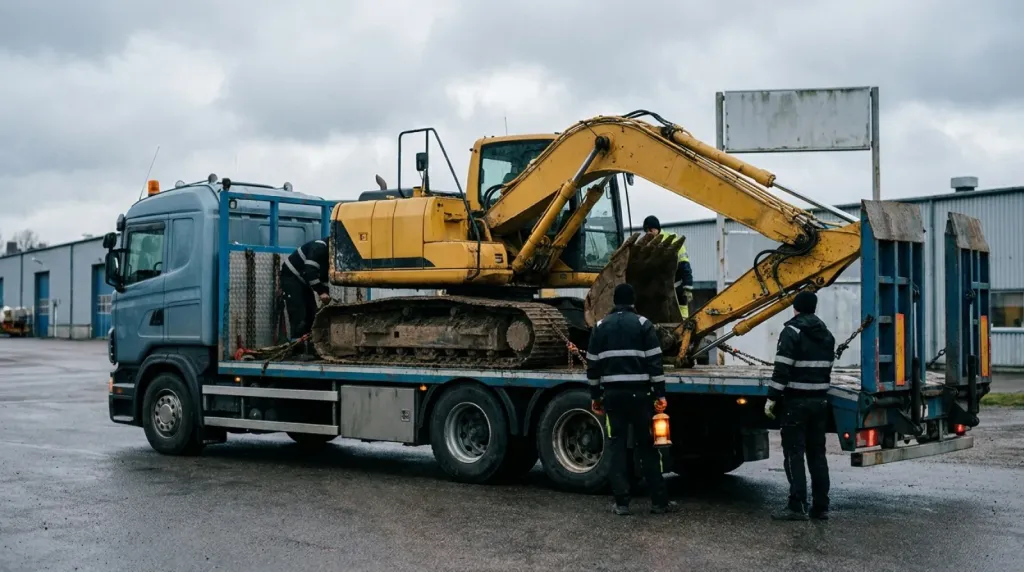
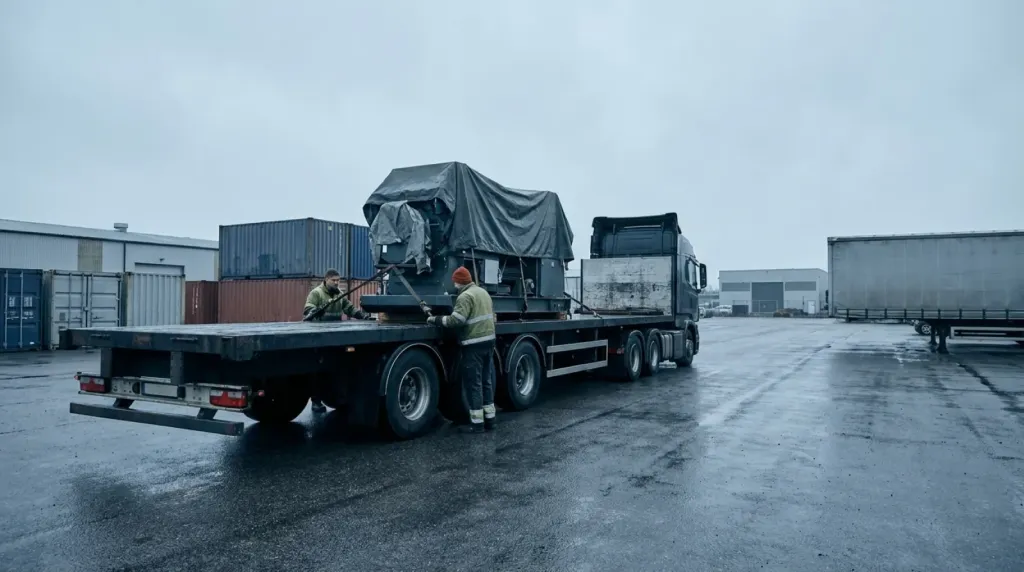
 AI image
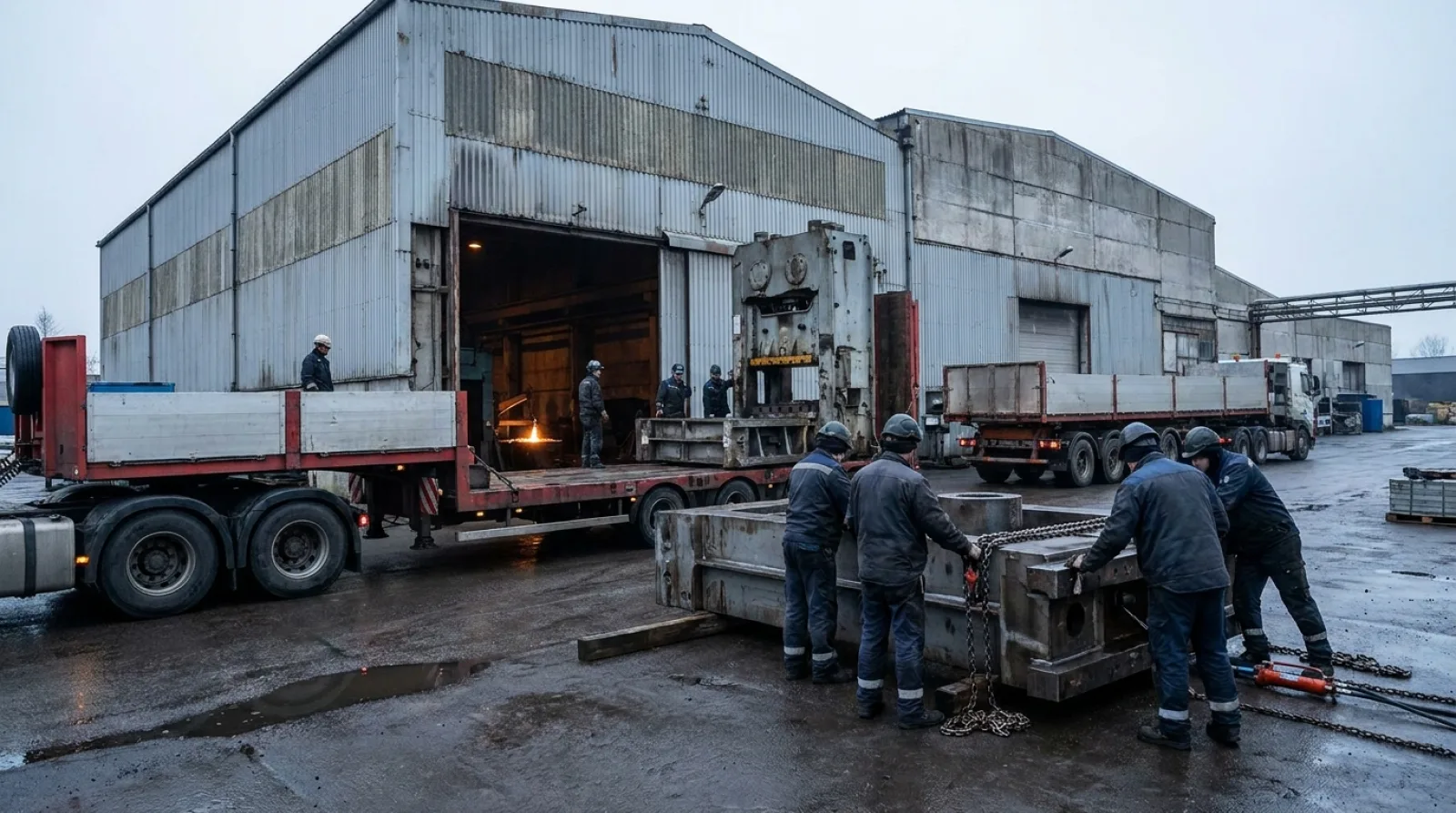
Removing machinery purchased in situ involves collecting equipment directly from the production floor rather than an auction yard. The buyer is responsible for having authorized personnel disconnect utilities such as electricity, compressed air, and water, as well as managing dismantling, securing components, and organising transport within a specified time window while meeting plant health and safety requirements.
How does an in situ machinery purchase differ from collection at an auction yard?
When machinery is sold in situ, it remains in its original operating position inside a manufacturing facility. Unlike traditional auction yards where equipment is cleaned, moved outside, or placed in a holding bay ready for standard loading, active industrial plants enforce strict controls on external contractors. Collection requires careful scheduling to align with the operational constraints of the seller or plant liquidator.
The auction rules and sales conditions dictate buyer responsibilities. The purchaser must handle all technical steps on site, including safe disconnection from electrical supplies, compressed air lines, and water circuits. Qualified personnel must carry out these tasks to ensure compliance with site rules. Failing to prepare correct safety documentation or worker credentials can result in immediate suspension of work by factory Health and Safety (HSE) officers.
What technical constraints must be checked before sending a team to the plant?
Access to a factory floor is often restricted by physical and operational limitations. Before dispatching loading equipment or technicians, you must verify door height and width, floor load capacity, and the availability of internal lifting equipment such as an overhead crane. If no overhead crane is available or its lifting capacity is insufficient, mobile cranes or low-profile forklift trucks must be arranged.
Administrative requirements must also be resolved in advance. Site passes, allowed working hours, and personal protective equipment rules must be agreed beforehand. Furthermore, a dismantled machine rarely travels as a single load. Dismantling a production line creates several components of varying dimensions and weights. A road haulage plan is drawn up based on the itemised list of dismantled parts, not from a photograph of the assembled machine.
Dismantling and removing machinery from a plant step by step
- Review regulations and terms of sale. Examine the sale terms establishing the pickup window and specific requirements set by the liquidator or site owner.
- Confirm site safety and entry passes. Submit contractor details, obtain named passes, and confirm permitted operating hours for dismantling inside the facility.
- Disconnect utilities using qualified personnel. Isolate electricity, compressed air, and water lines safely according to site rules and technical standards.
- Dismantle and list all components. Disassemble the machine into manageable sections, mark parts, and compile an accurate inventory of dimensions and weights.
- Secure and load components. Secure components onto pallets or frames, then load using suitable equipment such as mobile cranes or forklifts.
- Transport and manage export clearance. Move loads out within the agreed time window and complete export customs procedures when departing the UK.
Definitions
- In situ: The sale of machinery in its original working location on the plant floor without prior removal to an auction warehouse.
- HSE (Health, Safety and Environment): The regulatory standards and operational rules governing safe working practices during site disconnections and loading.
- Low-loader: A specialised trailer design used in road freight to transport heavy or over-dimensional machinery.
- Liquidator: The entity appointed to manage the sale of plant assets and enforce removal deadlines and safety protocols.
Checklist for in situ machinery collection
- Review sales terms for specified collection time windows.
- Verify credentials of technicians performing utility disconnections.
- Assess site access limits including gate height, floor load, and crane availability.
- Prepare an itemised list of dismantled parts with exact weights and sizes.
- Secure site passes and HSE clearance for all personnel on site.
- Select suitable haulage vehicles and lifting equipment.
When do these in situ collection procedures not apply?
The procedures described above do not apply if the machinery has already been decommissioned, dismantled, and moved to an external storage yard or auction logistics centre. In those circumstances, utility disconnections and working factory HSE protocols are not required. The buyer's scope of work depends on the specific terms published in the auction catalogue, and items collected from storage yards are generally ready for direct loading onto standard trailers.
The OTSL role
OTSL Sp. z o.o., based in Kielce with a UK logistics facility in Milton Keynes, organises in situ machinery removals across the UK, Poland, Switzerland, Norway, and Europe. We establish operational conditions with the liquidator, select suitable transport equipment including mobile cranes and low-loaders, and align dismantling work with fixed collection windows. Our team manages machinery transport and carries out customs clearance for UK export and European import. For further guidance on UK auction machinery haulage, see our practical guide on buying machinery via UK auctions. See also: Buying at Bonhams auction in UK and machinery transport to Poland and Buying Machinery at Eddisons CJM Auction and Transport to Poland.