 AI image
EUR pallet exchange looks innocent: you hand back as many pallets as arrived with the goods. In practice, a missing swap at unloading triggers pallet vouchers, balances and deposits, and the bill grows with every unexchanged unit, because return logistics and staff time come on top of the pallet price. The key is a clear clause in the order and document discipline.
EUR pallet versus one-way pallet
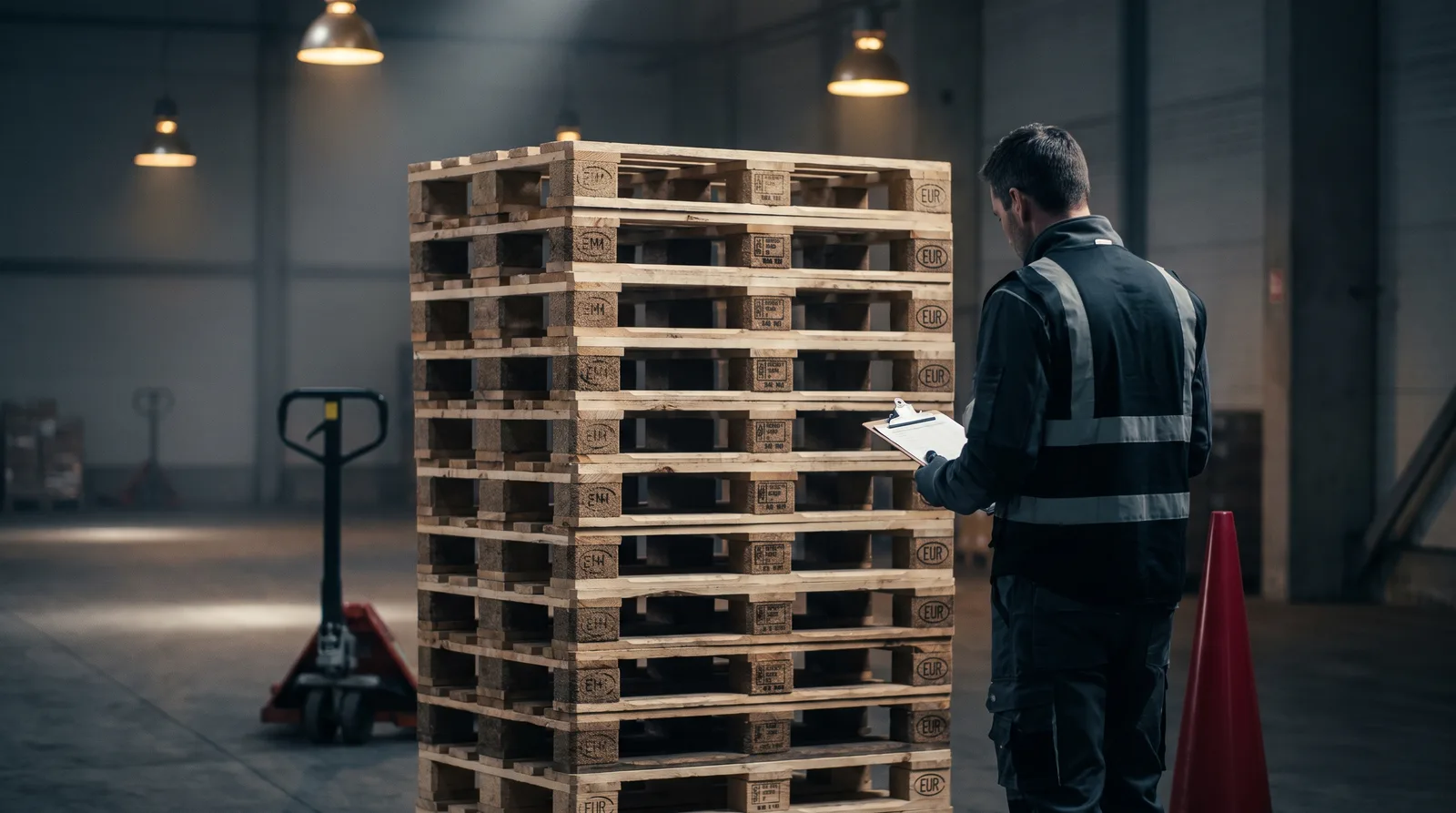
A licensed pallet has a known load capacity, repeatable dimensions and a market value, which makes it work like a quasi-currency in the supply chain. A one-way pallet is cheaper to buy but ends its life after a single trip: it is not exchangeable, is often structurally weaker and can fail under stacking or in automated warehouses. The choice of carrier is a cost decision for the whole chain, not just for the purchase invoice: on regular lanes with EUR exchange the cost of the carrier spreads over many trips, while with one-way pallets you pay for a new carrier on every shipment and for disposal at the end.
The 1:1 swap at unloading: how it should work
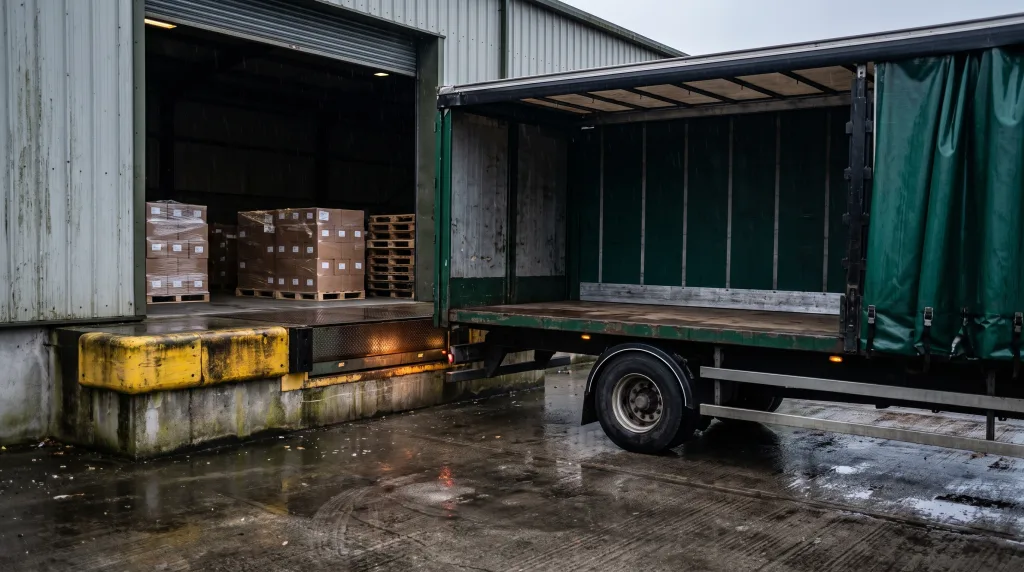
The model case is simple: the driver brings goods on 33 EUR pallets, the warehouse takes the goods off and hands over 33 empty exchange-grade EUR pallets. The balance is zero and everyone moves on. There are three conditions: the exchange must be agreed in the transport order, the warehouse must hold empty pallets of the agreed grade, and both sides must agree on the quality assessment. If just one of these elements is missing, the paperwork begins.
Why the driver cannot always wait
The most common friction looks like this: the goods are off, but empty pallets are issued at a different point of the site, with a queue. The driver is pushed by driving time limits and the next booking, so he leaves without pallets. Second variant: the warehouse questions the quality and issues lower-grade pallets or none at all. Third: the swap works, but nobody records it, and a month later no one can tell who owes whom how many. In each of these cases a document should be created: a pallet voucher or an entry on the consignment note. Without it, the pallet disappears from the balance for good.
The pallet voucher: paper that is money
A pallet voucher confirms that the receiver kept a given number of pallets and undertakes to hand them over later. To be enforceable it must contain:
- the date and place of issue,
- the number and grade of pallets (for example exchange-grade EUR),
- the issuer's details and a legible signature of an authorised person,
- the collection deadline and place, if the parties agreed one.
Vouchers have a dark side too: collecting pallets against them requires a vehicle, a booking and a person who follows up. An unsigned, illegible or lost voucher is practically worthless. That is why vouchers are logged right after the trip, and their collection is planned around the next deliveries to the same area, not as a separate transport.
A deposit instead of an exchange
Some receivers and pool operators do not swap pallets on the spot at all; they charge a deposit instead: you pay a set amount for every pallet arriving with the goods and get it back once the carrier is returned in the agreed grade and time. The mechanism is fair on one condition: the rules must be known before the first delivery. Check the deposit amount, the grade in which a pallet comes back without deductions, who assesses the condition at return and how quickly the deposit is refunded. Without these points a deposit easily turns into a hidden cost: deductions for alleged damage and drawn-out refunds can swallow more than the pallets are worth.
The pallet account in the contract
In regular cooperation, individual vouchers give way to a pallet account: the parties keep a joint record of pallets issued and returned and settle it periodically, for example monthly. A good clause defines who keeps the record, within what period discrepancies can be raised, which pallet grade is exchangeable and at what rate a shortfall is settled. That last item surprises people: the market price of a EUR pallet is variable, driven by timber prices and the economy, so contracts usually refer to the current price or set an agreed rate. Without such a clause, the first bigger shortfall is a ready-made dispute.
What does a missing swap cost?
The bill for an unexchanged pallet has several layers: the price of the pallet itself, the cost of getting it where it is needed, staff time spent reconciling the balance and, in disputes, the value of the business relationship. With one pallet it is a trifle. With several hundred pallets a month on one lane, poor pallet discipline can eat the margin of the entire transport line. So treat pallets like goods: count them at loading and unloading, document differences immediately and settle the balance regularly, not once a year. How to count carriers at handover is covered in our article on shortage and overage at unloading.
The OTSL role
In our warehouses in Poland and the UK we run EUR pallet exchange and handle the UK pool, count carriers at every receipt and dispatch, and document differences immediately, before they turn into disputes. When a pallet suffers in transit, we can re-palletise and straighten the load instead of sending it back to the shipper. Contact us if the pallet balance on your lanes refuses to add up, or browse our knowledge base.
Scale of the system: according to the European Pallet Association, around 670 million EPAL Euro pallets are in circulation (2026 figure), making it the largest open pallet exchange pool in the world; that is exactly why a pallet voucher has real cash value (source: EPAL).
Step by step
- Order verification. Check the pallet exchange agreement before dispatching the vehicle for loading.
- Condition assessment. Ensure at the ramp that the pallets meet standard technical requirements.
- Swap at unloading. Exchange functional pallets with the consignee on a one-for-one basis.
- Collect paperwork. Obtain a signed pallet voucher if a physical swap was not possible.
- Balance settlement. Forward the documentation to the office to close the carrier account.
Definitions
- EPAL (European Pallet Association): The organisation managing the open exchange pool of standardised cargo carriers.
- EUR pallet: A licensed 1200 x 800 mm carrier designed for repeated use in international supply chains.
- Pallet voucher: A document confirming the balance of unexchanged pallets at the unloading point.
- Pallet deposit: Financial security charged in the event of failure to return carriers within a set timeframe.
- Pallet balance: A statement tracking pallets issued and received between logistics partners.
When does this rule not apply?
This exchange rule does not apply when transport is executed under a one-way pallet agreement or when the consignee operates in a closed pooling system that does not accept standard swaps.
Sources
European Pallet Association, EPAL pallet standards (epal-pallets.org)