 AI image
The Mobility Package is a set of EU rules that brought driver work in cross-trade and cabotage under the minimum wage of the country where the transport is performed, mandated regular returns of the vehicle and driver to base, added the second-generation smart tachograph and tightened cabotage. The effect: moving freight with a “cheap” carrier inside western Europe now costs more, because labour is priced at western rates and someone has to pay for the empty return kilometres.
What forwarders leave unsaid in a quote
A buyer sees one number: the rate for the lane. What rarely gets said is that this number has for several years been shaped by the EU Mobility Package, not just by a carrier's margin. It is a series of changes that shifted part of the driver's labour cost from the country where the truck is registered to the country where the work is actually done. For a load moving around Germany, France or the Benelux, that means one thing: the cost of the driver's hours is priced under local minimum-wage rules, even if the company is based in a lower-cost country.
The cost is concrete. The model in which a Polish or Lithuanian carrier circled western Europe for weeks and distributed loads at its home-country rates is no longer legal in that form. A buyer who does not know this is puzzled by rising quotes, chases the cheapest offer, and lands with a carrier that either breaks the rules or cuts corners on safety. We describe the same cost mechanism from the fuel angle in our article on the fuel surcharge and how a rate is built.
Four pillars that raised the cost
- Driver posting and the host-country minimum wage. Directive (EU) 2020/1057 settled when a driver is “posted” to another state and falls under its pay conditions. Bilateral operations (from the country of establishment to another and back) are in principle excluded from posting, whereas cross-trade (carriage between two countries other than the country of establishment) and cabotage are covered. It is precisely these two, previously the cheapest, that rose the most.
- Mandatory returns of the vehicle and driver to base. Regulation (EU) 2020/1055 requires the vehicle to return to the operating centre in the country of establishment on a regular cycle, and Regulation (EU) 2020/1054 requires work to be organised so the driver regularly returns to base or home. The return is often kilometres with an empty trailer that no load pays for, so the cost lands in the rate.
- Tightened cabotage and a cooling-off period. The cabotage rule (a limited number of operations in a window of days after an international delivery) was kept, but a cooling-off period was added: after a series of cabotage, the same vehicle cannot perform further cabotage in the same country for a set time. It is therefore harder to pick up cheap local loads between lanes.
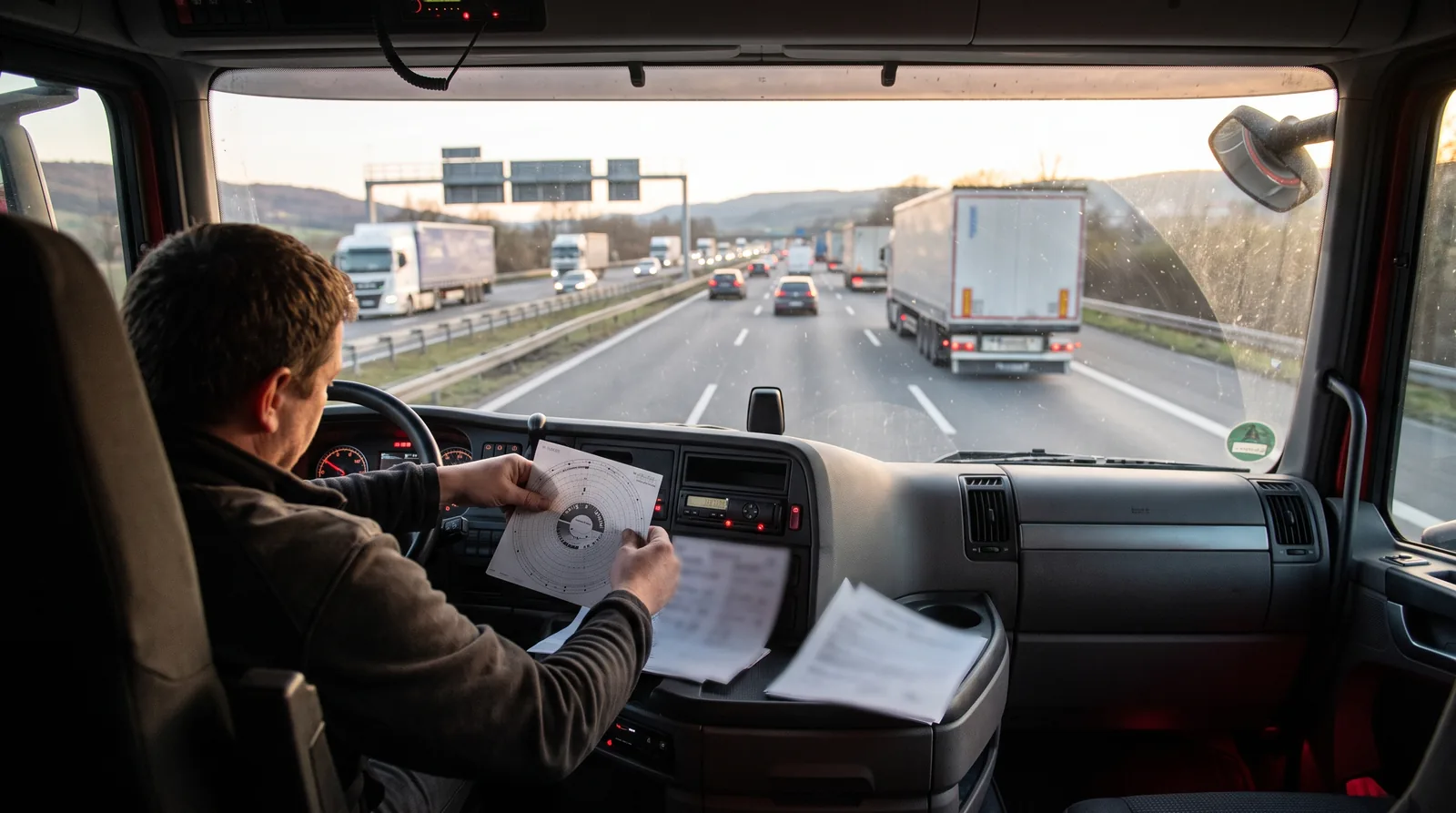
- Second-generation smart tachograph. Regulation (EU) 2020/1054 accelerated the rollout of the smart tachograph 2, which automatically records border crossings and vehicle position. Enforcement became more effective, which means earlier paper “optimisations” stopped working. Enforceability is itself a cost.
Why “cheap countries” stopped being cheap in the west
The core of the change is simple: what counts is the place where the work is performed, not where the firm is registered. A carrier from a lower-cost country still has an edge on bilateral runs, where posting usually does not apply. But to earn on traffic inside western Europe, that is on cross-trade and cabotage, it must account for the driver's hours at host-country rates, complete the posting notifications and factor in the cabotage cooling-off period. The wage arbitrage that the “cheap distribution” model relied on has shrunk in those segments.
Then there is the geometry of routes. The return obligation means a vehicle cannot circle the west indefinitely collecting local orders; it returns to base, and empty or lightly loaded return kilometres weigh on the bill. Anyone promising a rate detached from these realities usually shifts the risk onto the driver: pressure on driving time then collides with the hard limit in Regulation (EC) 561/2006, which we set out in our piece on driver hours, the tachograph and the delivery deadline.
| Type of carriage | Definition in short | Posting / host-country pay | Effect on the rate |
|---|---|---|---|
| Bilateral | from the country of establishment to another state and back | in principle excluded | relatively stable, cost edge remains |
| Cross-trade | between two states other than the country of establishment | covered by posting | increase, labour at western rates |
| Cabotage | carriage inside a foreign country after an international delivery | covered by posting, plus cooling-off | increase and limited availability |
We break down the definitions and limits of cabotage and cross-trade in a separate article on cabotage and cross-trade. The business conclusion here is what matters: these two segments, once the cheapest, now carry the largest extra cost compared with the pre-package state.
What does it do not change?
The Mobility Package did not abolish competition or level all rates. Bilateral runs between Poland and Germany or the United Kingdom still benefit from lower base costs. What changed is that you can no longer legally build an entire model on cheap cabotage and cross-trade across the west. We do not quote specific minimum-wage hourly figures: they differ between countries and change over time, and the binding values are published by national authorities and the EU IMI system. Instead of guessing, check the current thresholds at source. For the rest of what makes up a full-load price, see what an FTL rate costs.
The OTSL role
As an international freight forwarder we choose carriers and route structures that comply with the Mobility Package rather than relying on workarounds that end in a roadside check, a fine and your load standing still. We know when a run is bilateral and when it becomes cross-trade or cabotage with posting obligations, and we price the lane honestly, with returns and realistic driver hours built in. We run traffic between Poland, the United Kingdom, Switzerland and the rest of Europe, with warehouses in Kielce, Legnica and Milton Keynes. More scenarios sit in our knowledge base and the transport risks section, and you can discuss a specific shipment through the contact form.
Step by step
- Identify the movement type. Determine whether your planned journey qualifies as bilateral transport, cross-trade, or cabotage.
- Submit a posting declaration. Register the required journey and driver details in the official portal prior to dispatch.
- Adjust labor cost calculations. Incorporate minimum remuneration rules of the transit and destination countries into your transport planning.
- Arrange base returns. Create an operational schedule ensuring regular return trips for both the vehicle and the driver to the home country.
- Retain digital evidence. Store smart tachograph logs and payroll confirmations for regulatory audits.
Definitions
- Mobility Package: A set of European Union legal acts governing road transport rules and driver posting regulations.
- Cabotage: National carriage of goods performed within one country by a carrier established in another state.
- Cross-trade: International transport of goods between two countries carried out by a haulier based in a third country.
- Second-generation smart tachograph: A digital recording device that automatically logs border crossings, loading, and unloading operations.
- Posting of drivers: The temporary assignment of a commercial driver to work in another member state under local wage rules.