 AI image
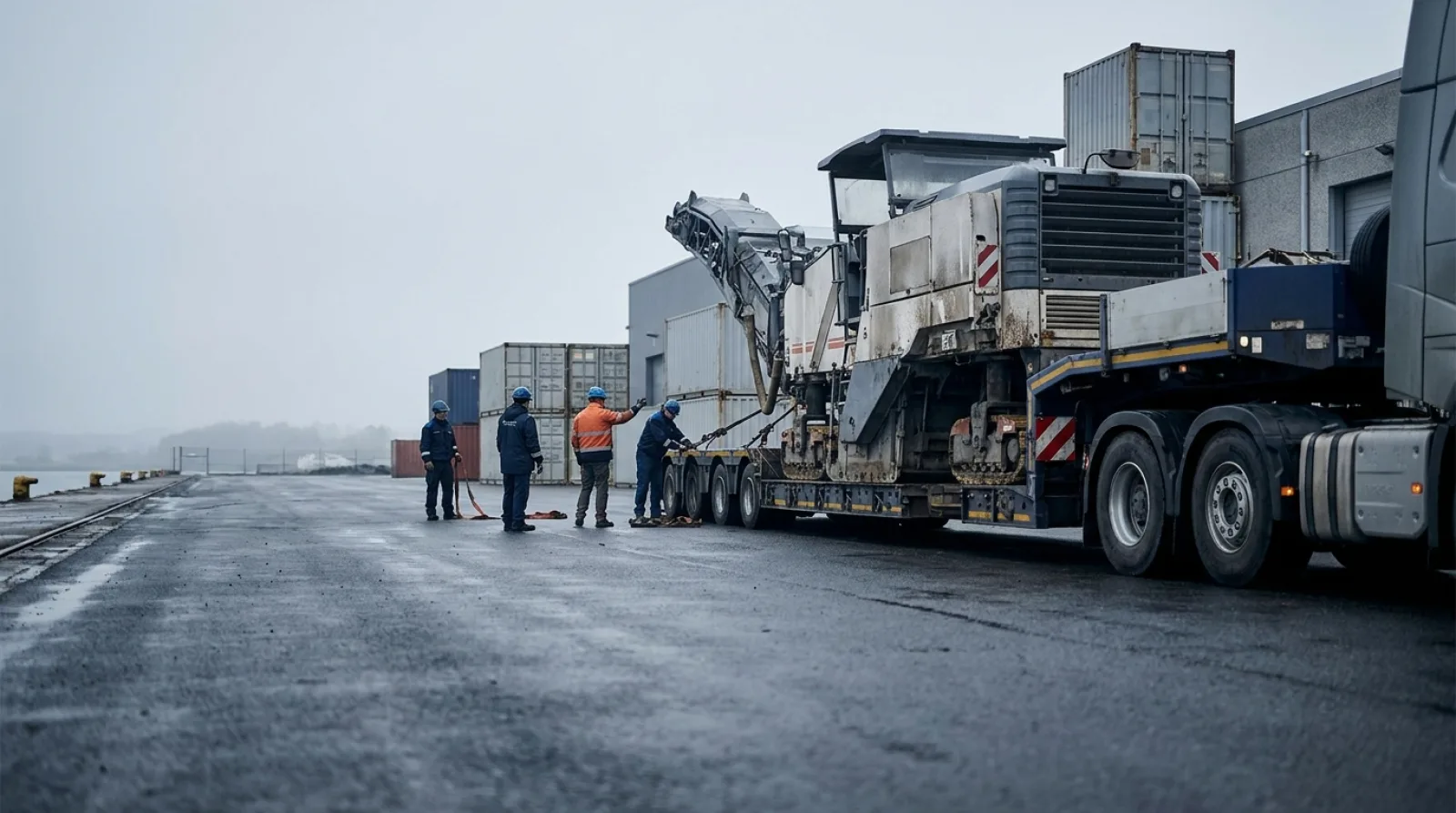
Transporting and importing a road milling machine from the United Kingdom to the European Union requires customs clearance and appropriate machinery preparation. Equipment weighing between 4 and 30 tonnes typically requires disassembly or folding of key components, such as the drum and discharge conveyor, prior to loading.
Why does a road milling machine require disassembly before transport?
A road milling machine (German: Straßenfräse, Polish: frezarka drogowa) is specialized construction machinery with substantial overall dimensions. Because the typical weight range spans from 4 to 30 t, complying with road axle limits and clearance profiles necessitates careful pre-transport steps. Most units cannot be moved safely in their full working configuration.
Practical notes indicate that the drum and discharge conveyor usually require folding or disassembling before transport. Folding or removing these sections prevents exceeding maximum permitted height and width limits during transit and protects sensitive mechanical parts from damage.
How does customs clearance work for auction machinery bought in the UK?
Machines bought at auctions in the UK enter the EU through customs clearance because the UK is treated as a third country for trade purposes. The process involves submitting an import declaration to the relevant customs office alongside commercial documents obtained after winning the auction lot.
The exact tariff heading is not provided here — it is checked in the official tariff database using the technical parameters of the machine. Importers must gather the auction invoice, weight declaration, and transport documentation before submitting the entry.
Importing and transporting a road milling machine step by step
- Check auction terms. Collection times and loading rules depend on the auction conditions set by the auctioneer, which you must review before arranging haulage.
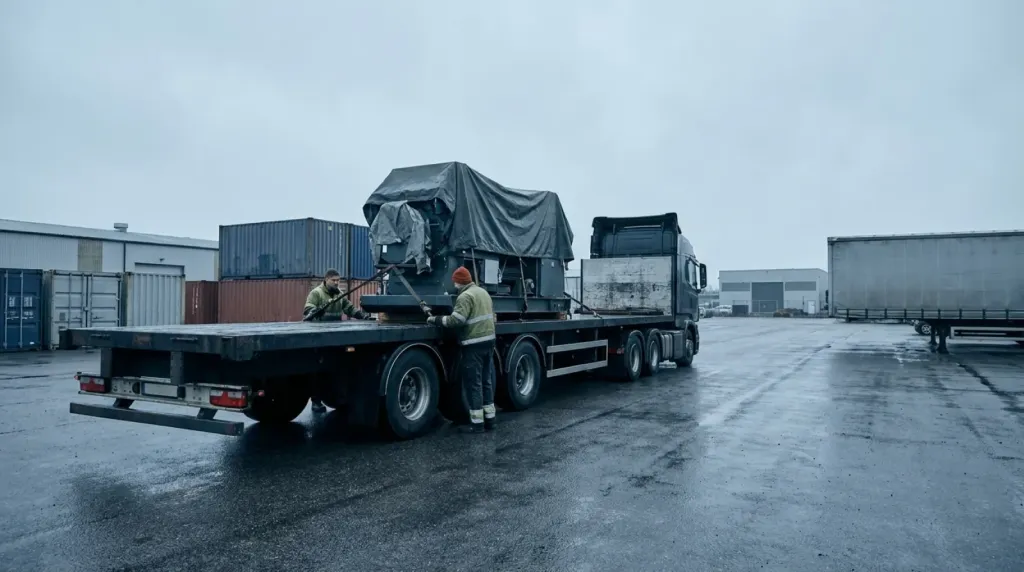
- Prepare the machine. The drum and discharge conveyor usually require folding or disassembling before transport to meet safety and dimensional rules.
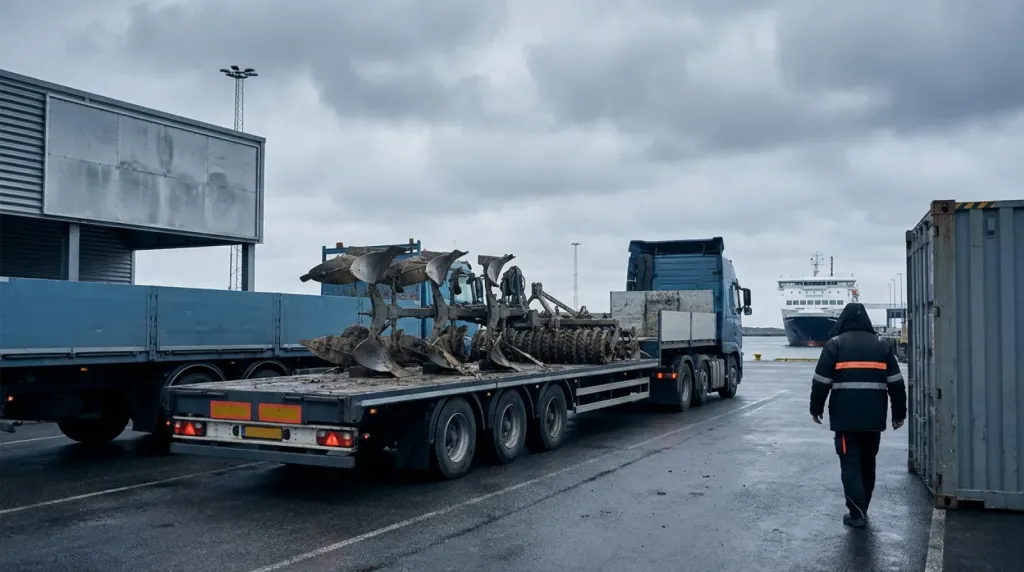
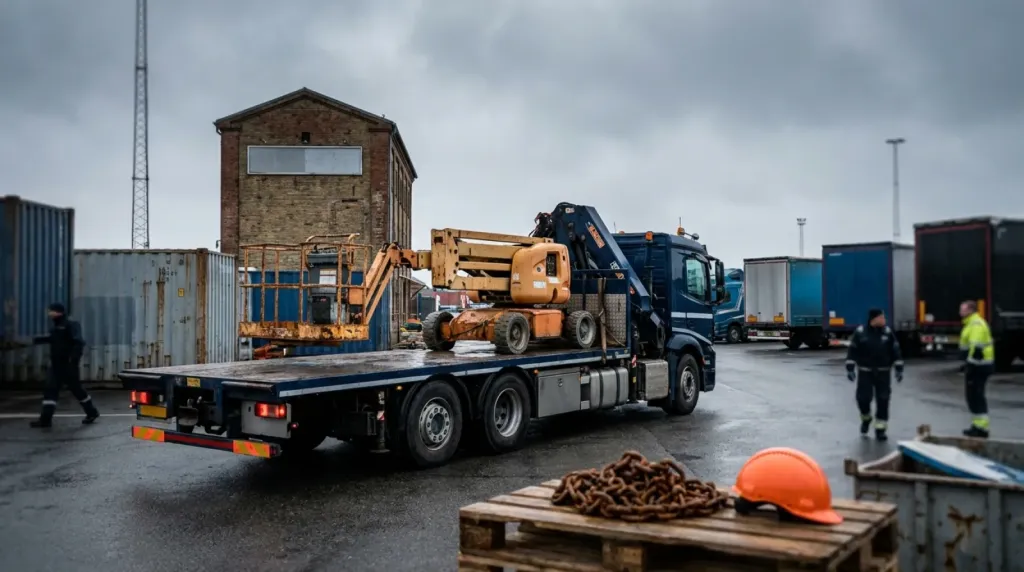
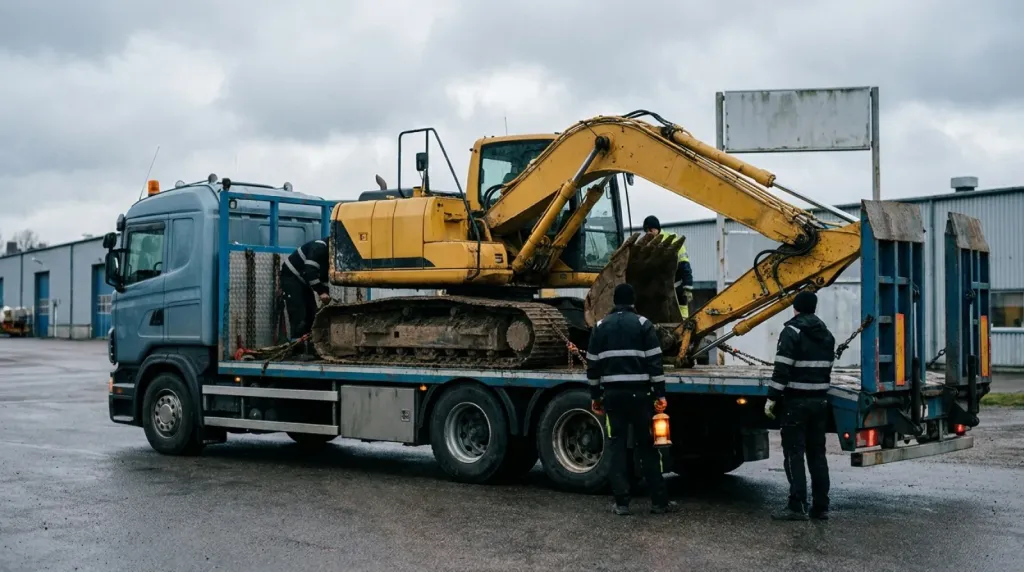
- Select transport equipment. Based on the machine weight of 4–30 t, choose a suitable low-loader or semi-trailer configuration.
- Determine tariff classification. The correct code is checked in the tariff database prior to filing the import declaration.
- Process customs entry. Submit the required paperwork to customs authorities for clearance at the border or inland destination.
- Deliver to final destination. Once cleared by customs authorities, the vehicle carries the machine to its ultimate destination.
Definitions
- EORI (Economic Operators Registration and Identification): A unique reference number assigned to businesses interacting with customs authorities across Europe.
- MRN (Movement Reference Number): A unique tracking number allocated by customs to monitor transit and clearance procedures.
- T1 (External Transit Procedure): A customs document allowing non-Union goods to move within the EU without paying duty immediately.
- HS (Harmonised System): An international standardized system of names and numbers for classifying traded products.
Checklist for road milling machine transport
- Fold or dismantle the discharge conveyor and secure the milling drum.
- Verify the actual equipment weight within the 4–30 t range against the manufacturer plate.
- Ensure no fluid leaks exist before driving or winching the machine onto the trailer.
- Review collection windows detailed in the specific UK auction agreement.
- Check the applicable position in the customs tariff before declaration.
- Gather all invoice documents required for official customs clearance.
When do these rules not apply?
The described import procedure does not apply to machinery movements conducted entirely within the customs territory of the European Union without crossing third-country borders, unless the cargo holds non-EU status. Collection conditions and additional fees depend on the terms specified by the individual auction house.
The OTSL role
OTSL Sp. z o.o., based in Kielce with a facility in Milton Keynes, England, organises international machinery transport. Explore our machinery transport service and read our article on machinery customs clearance in the Netherlands to plan your cross-border logistics effectively.