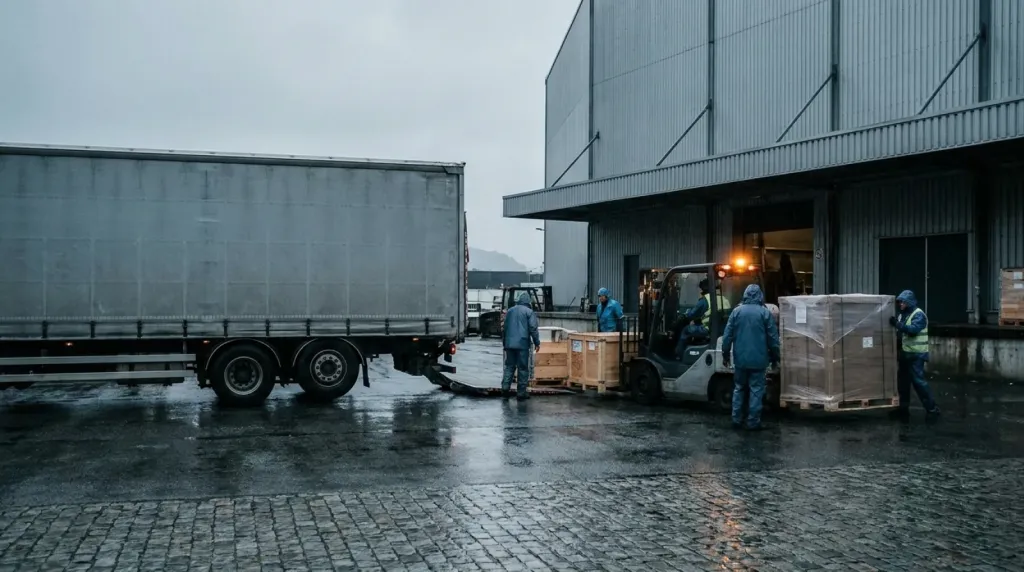
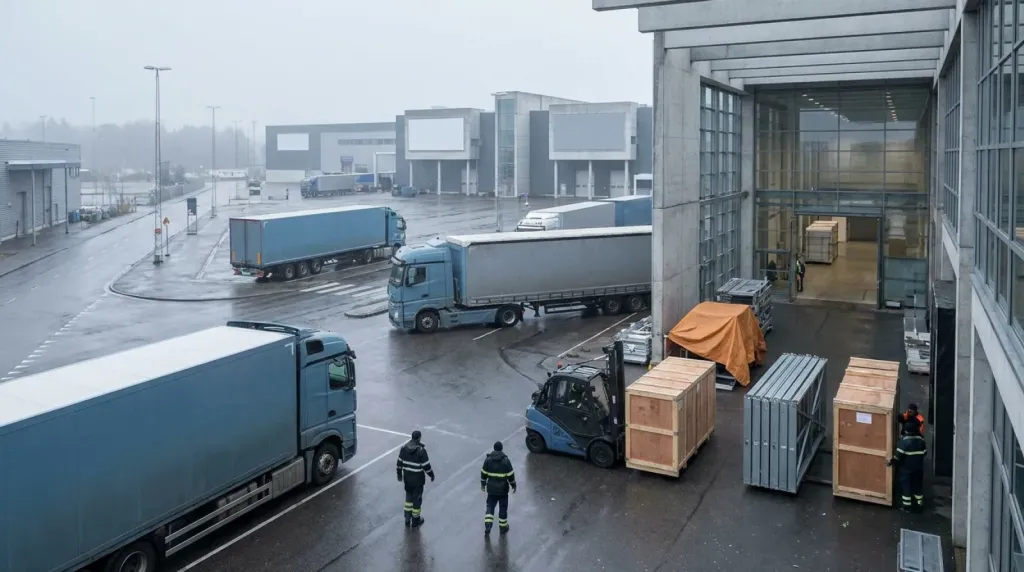
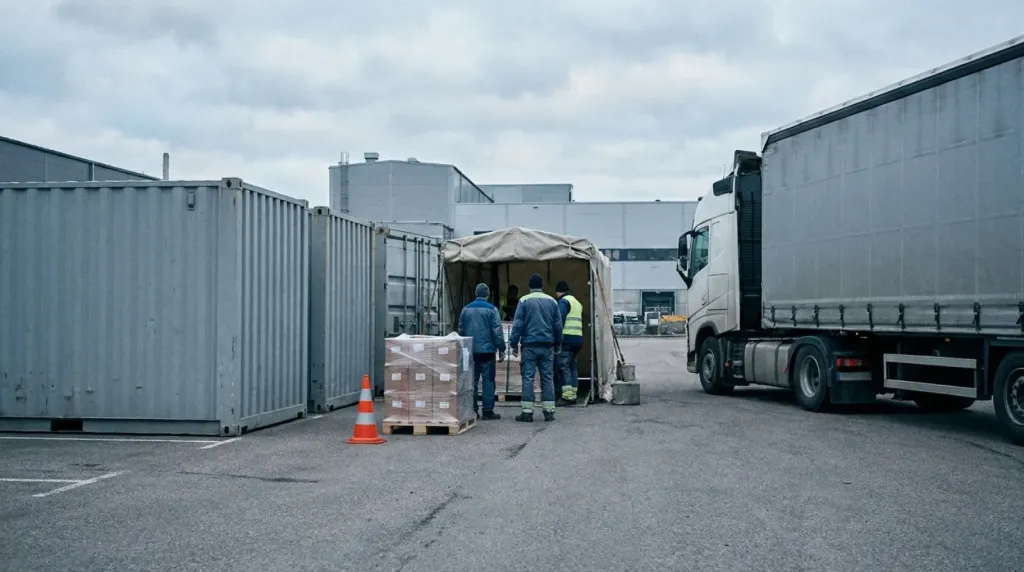
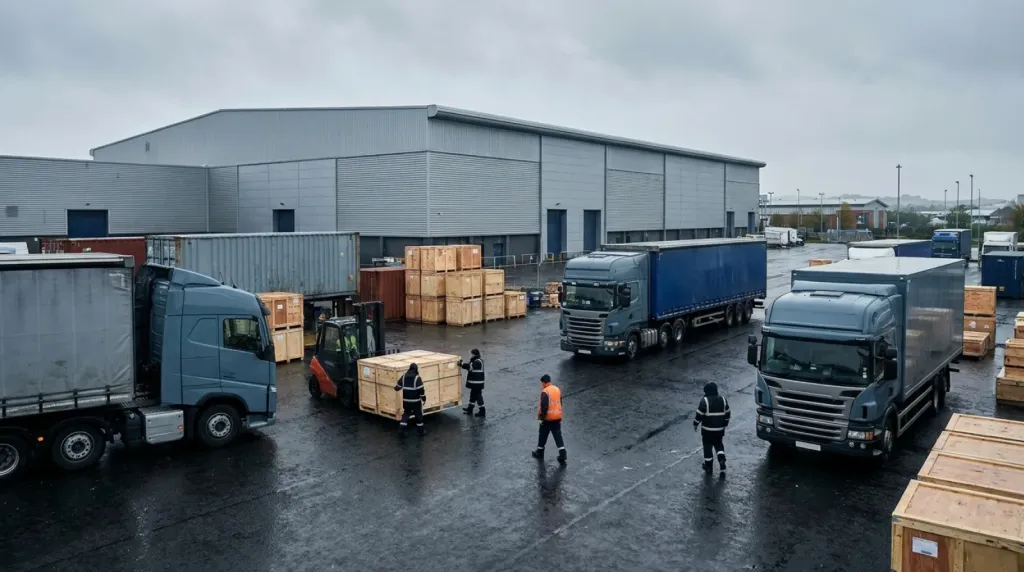
 AI image
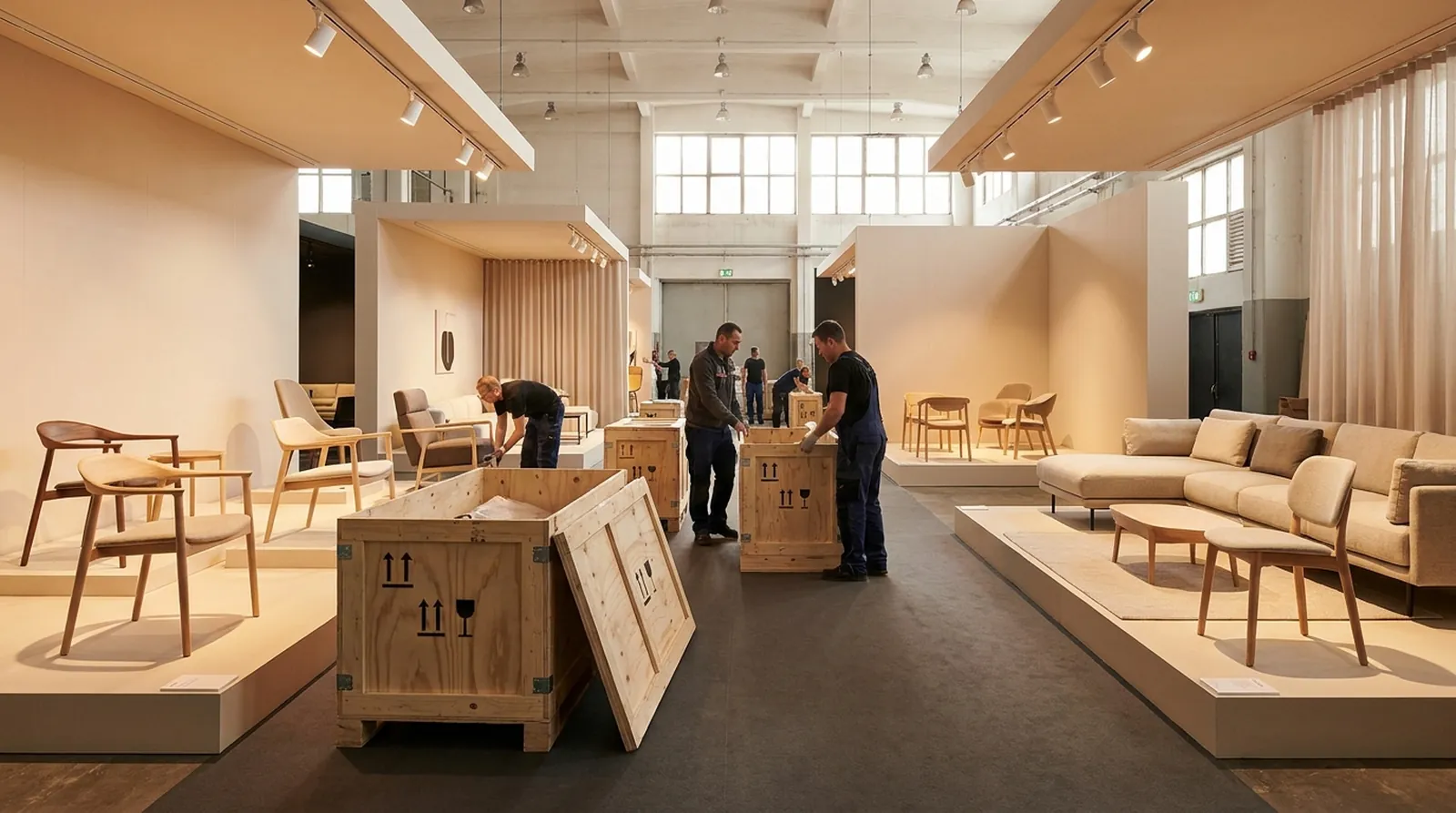
Salone del Mobile in Milan is the most recognised furniture fair in Europe, held at the exhibition grounds in the Rho area outside Milan. The exhibitor brings not trade stock but carefully finished show pieces that cannot be quickly replaced. So we plan Salone transport like moving prototypes: full surface protection, no stacking and delivery in the assembly window.
Show furniture is not ordinary freight
- There is one show piece: a scratch on the front is not a claim, it is a missing exhibit.
- Stand build and furniture should arrive in an agreed order, or assembly stops.
- The route across the Alps needs a time reserve for traffic and weather.
How do we carry to Salone?
- Dedicated trucks for a complete stand, or consolidation of several exhibitors on one route.
- Protection as for premium furniture: edge protectors, mats, separators, no second layer without the producer consent. More under furniture industry logistics.
- Delivery and move-out booked by the organiser rules; the driver carries the entry pack.
- Return transport of the show pieces, or delivery straight to the first client after the fair.
The Italian backdrop: trade fair transport to Italy; all events: the European guide.
How do you manage access slots and unloading operations at the Fiera Milano Rho fairgrounds?
Entering the Fiera Milano Rho exhibition site with a heavy goods vehicle requires mandatory pre-registration in the venue traffic management portal at least 14 days prior to the build-up phase. The slot booking issues a strict time window: haulage vehicles over 7.5 tonnes receive a maximum allowance of 180 minutes to enter, discharge cargo, and exit the hall perimeter, whereas lighter vehicles up to 3.5 tonnes are allocated exactly 90 minutes. Exceeding these thresholds results in immediate penalty charges from the venue operator and potential removal of the vehicle to an off-site holding park. The driver must carry a printed access pass with a QR barcode alongside the consignment note (CMR) and appropriate customs documentation (such as an ATA (Admission Temporaire, the temporary admission document) Carnet or Transit Accompanying Document / TAD for non-EU goods), with entry and exit timestamps validated at the gate.
Traversing the Alpine corridors via the Gotthard or Brenner routes introduces microclimatic challenges during transit. Temperature variations between the northern Alps and the Lombardy plains can exceed 15°C within a 30-minute drive, creating severe condensation inside standard box trailers or curtainsiders. When transporting high-end lacquered veneer or solid timber structures, relative humidity levels inside the cargo hold must not surpass 60%. To prevent timber swelling or surface bloom on polished finishes, industrial desiccant bags and temperature-monitored trailers are deployed. Furthermore, wooden crates containing display structures must be stowed to ensure axle load compliance, maintaining a maximum cargo height limit of 2.7 metres to clear the entry portals of the exhibition halls.
Operational parameters to maintain during the logistics planning cycle include:
- Schedule the vehicle arrival with a buffer of at least 48 hours before the main hall doors close for heavy vehicle traffic.
- Anchor individual crates weighing over 300 kg onto four-way entry heavy-duty pallets to allow efficient forklift handling.
- Ensure that floor point loading inside the trailer does not exceed 500 kg per square metre to avoid structural displacement.
This strict venue slot booking procedure and timed hall access rules do not apply when you are delivering exhibition items directly to independent city-centre showrooms or galleries participating in Fuorisalone outside the Rho fairgrounds. City-centre consignments are instead governed by Milan urban access restrictions (Area C and Area B low-emission zones) and local night-time unloading bylaws.
Step by step
- Schedule planning. Establish the exact assembly window and vehicle access sequence for the Rho exhibition grounds.
- Surface protection. Apply protective mats, edge guards and separators to safeguard delicate premium finishes.
- Orderly loading. Load stand elements and furniture in the precise sequence required for unloading on site.
- Alpine route buffer. Add extra transit time to account for weather conditions and mountain traffic.
- Fairground delivery. Deliver the show pieces directly to the exhibition stand within the assigned window.
Definitions
- Show piece: A unique item of furniture finished specifically for an exhibition stand that cannot be easily replaced if damaged.
- Assembly window: A strictly defined time slot during which the vehicle must deliver the cargo to the fairgrounds to allow stand construction.
- No stacking rule: A transport safety instruction prohibiting the placement of a second freight layer on top of furniture without producer consent.
- Consolidation: Combining shipments from multiple exhibitors on a single route to optimise transport.
When does this rule not apply?
This strict show furniture protocol does not apply when shipping standard commercial inventory in master cartons destined for general distribution.
The OTSL role
We help exhibitors coordinate smooth deliveries to Milan using efficient road transport (FTL) solutions. Discover how poor exhibition logistics costs more than the transport itself and how to prevent delays.