 AI image
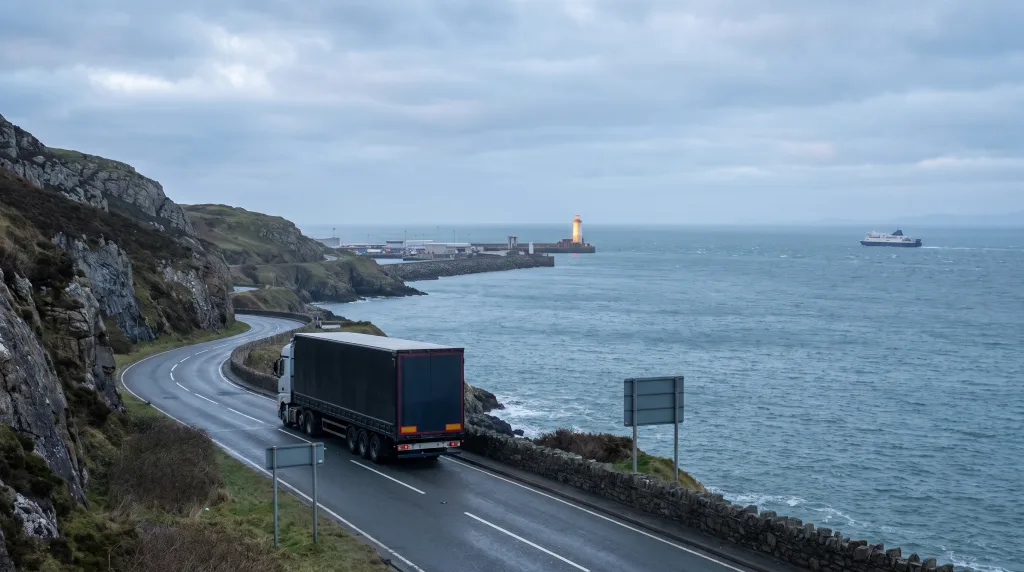
Scandinavian companies with a plant or warehouse in Poland move goods between their own locations on a steady rhythm. The point is not finding a truck once but repeatability: the same vehicle type, a predictable transit time and consistent document handling. Inside the EU, to Sweden and Denmark, there is no customs clearance, and the time game is played on the crossing and the planning. Norway adds full clearance, being outside the EU.
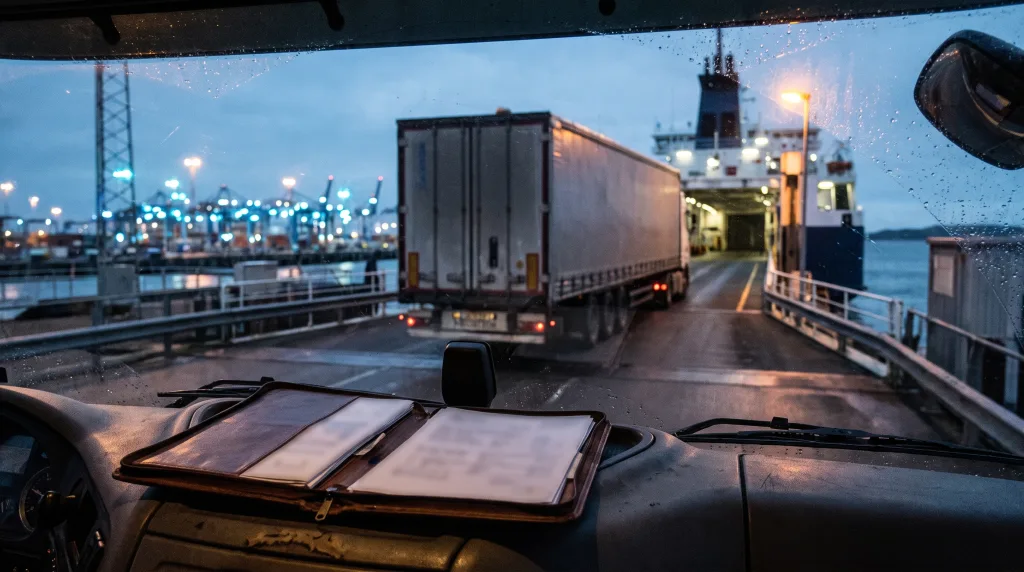
Ferry or overland
| Ferry | Denmark and bridge | |
|---|---|---|
| Driving hours | crossing counts as rest | full driving |
| Schedule dependence | high, book ahead | none |
| Predictability | high when space is available | high |
| When to choose | steady rhythm, planned departures | urgent deadlines, no ferry space |
What makes a flow repeatable
- A fixed vehicle type. If the Swedish consignee has no ramp, a tail-lift rigid is required, and the same vehicle should run every time.
- Crossings booked ahead. In season, ferry space runs out sooner than vehicle availability.
- One data set for documents. On a standing flow, consignee data, codes and descriptions should not be re-typed each time.
- Consolidation. With smaller batches it pays to gather freight in Poland and despatch less often but fuller.
Norway is a different case
Norway is outside the EU, so every shipment needs an EU export declaration and a Norwegian import declaration, with digital border reporting. It is not an obstacle, but clearance time must be built into the schedule and the documents prepared before reaching the border, not at it.
What does a Polish site change?
For a Nordic group, a plant in Poland is usually production, assembly or a central warehouse for Central Europe. Transport then stops being an import from a supplier and becomes part of an internal chain. Predictability and punctuality gain weight while the single rate loses it, because a delay stops your own production rather than someone else's delivery.
Seasonality to plan for
Nordic lanes have clear peaks. Summer brings holiday season and tourist traffic on ferries, so truck space can be tight. Winter means road conditions requiring vehicle preparation and a real risk of delay in the northern part of the region. Both can be planned for, but neither can be improvised in the delivery week.
Denmark as a natural stage
On the overland route Denmark is not only a transit country but often a sensible place to split the run or add freight. Companies running regularly to Sweden sometimes add a Danish drop to use the vehicle better — on a steady rhythm that is a real saving, not a theoretical optimisation.
Language and contact with the consignee
In an intercompany flow both ends are staffed by the same group, but not always by people sharing a language. Establishing who receives on the Nordic side, during which hours and on which number, matters as much as with an external customer. An internal consignee can even be harder, because nobody treats the delivery as a priority.
What does OTSL do?
We handle Nordic lanes alongside the rest of Europe, in one job with one coordinator. For groups with a plant in Poland and headquarters in Scandinavia that means a single point of contact for the whole flow rather than a separate provider per country.
Clearance on both sides of the border is handled by our own customs agencies: customs clearance. Lanes we serve: destinations.
Definitions
- EU (European Union): An economic community where the movement of goods between member states does not require customs clearance.
- Customs clearance: The official administrative procedure required when moving cargo across non-EU borders, such as into Norway.
- Ferry crossing: Maritime transport of a goods vehicle between Polish and Swedish ports.
- Driving hours: Regulated periods of vehicle operation and mandatory rest breaks for commercial drivers.
When does this rule not apply?
Simplified transit without border documentation does not apply to shipments destined for Norway, as it is outside the European Union.
The OTSL role
OTSL organizes regular transport routes between Poland and Scandinavia, helping companies arrange efficient sea crossings through our ferry booking service. For urgent shipments that require immediate dispatch outside standard schedules, we also provide support through express vans and time-critical transport across Europe. See also: A company with sites in Poland and the UK: how to structure transport between your own locations.