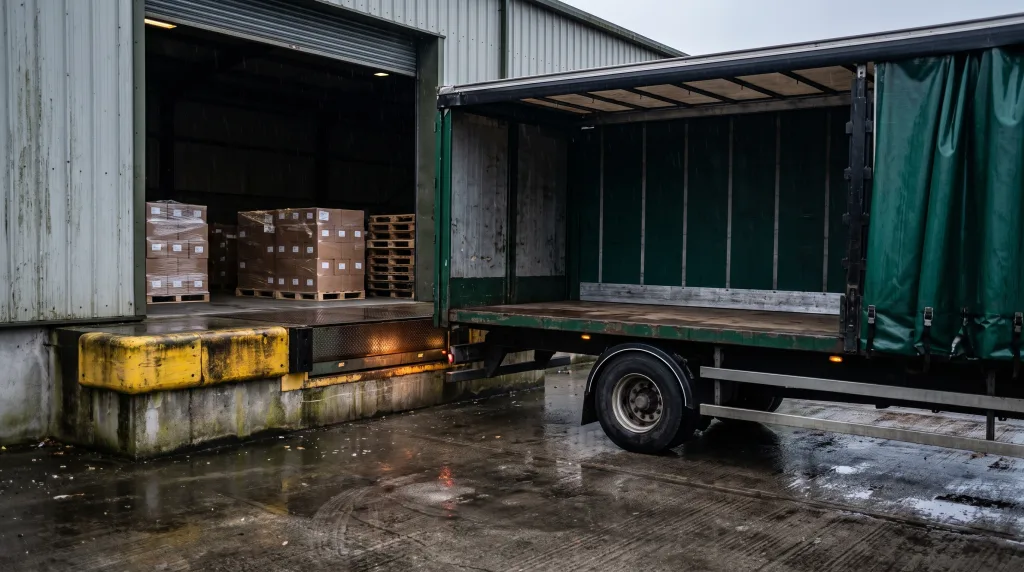
 AI image
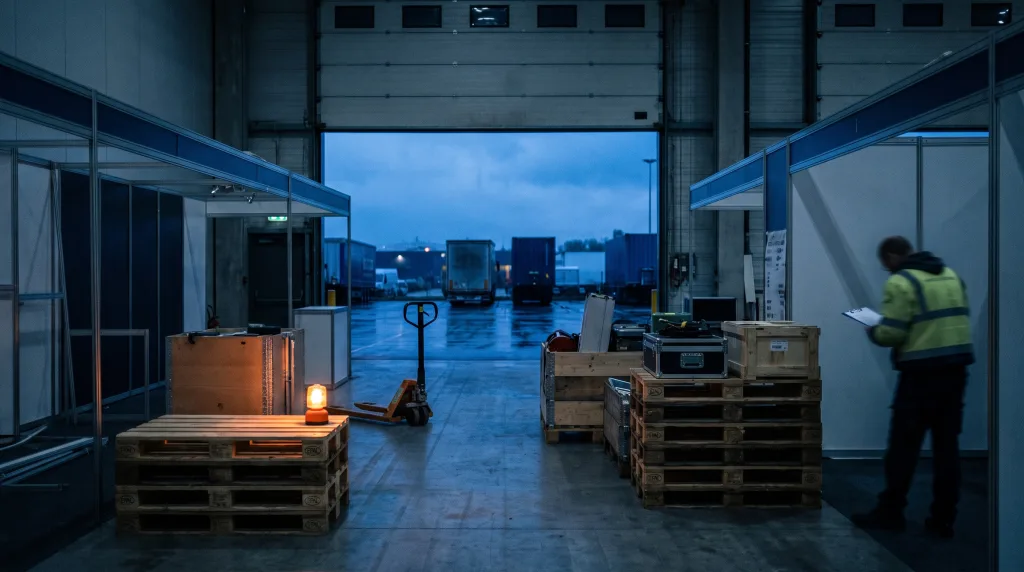
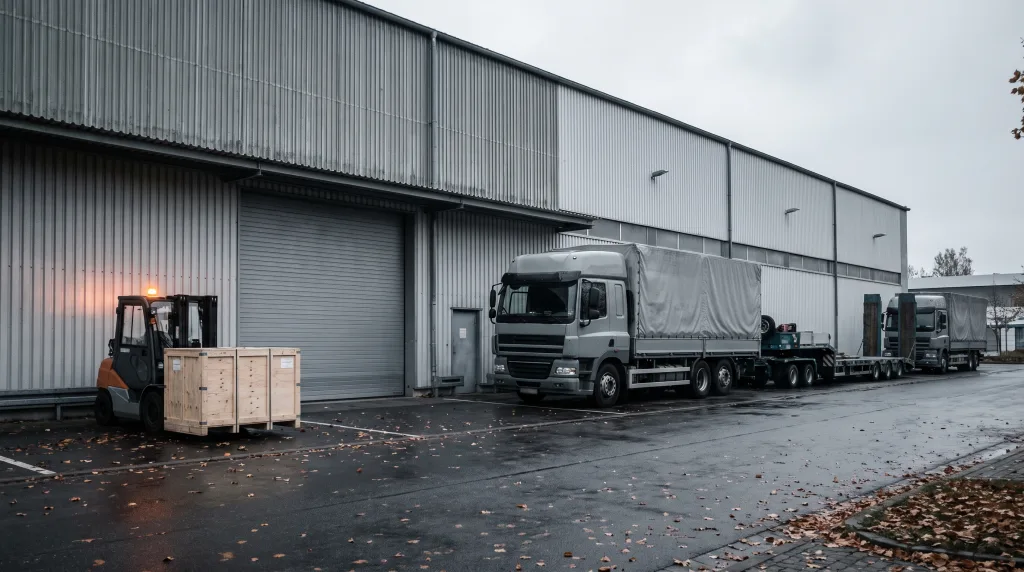
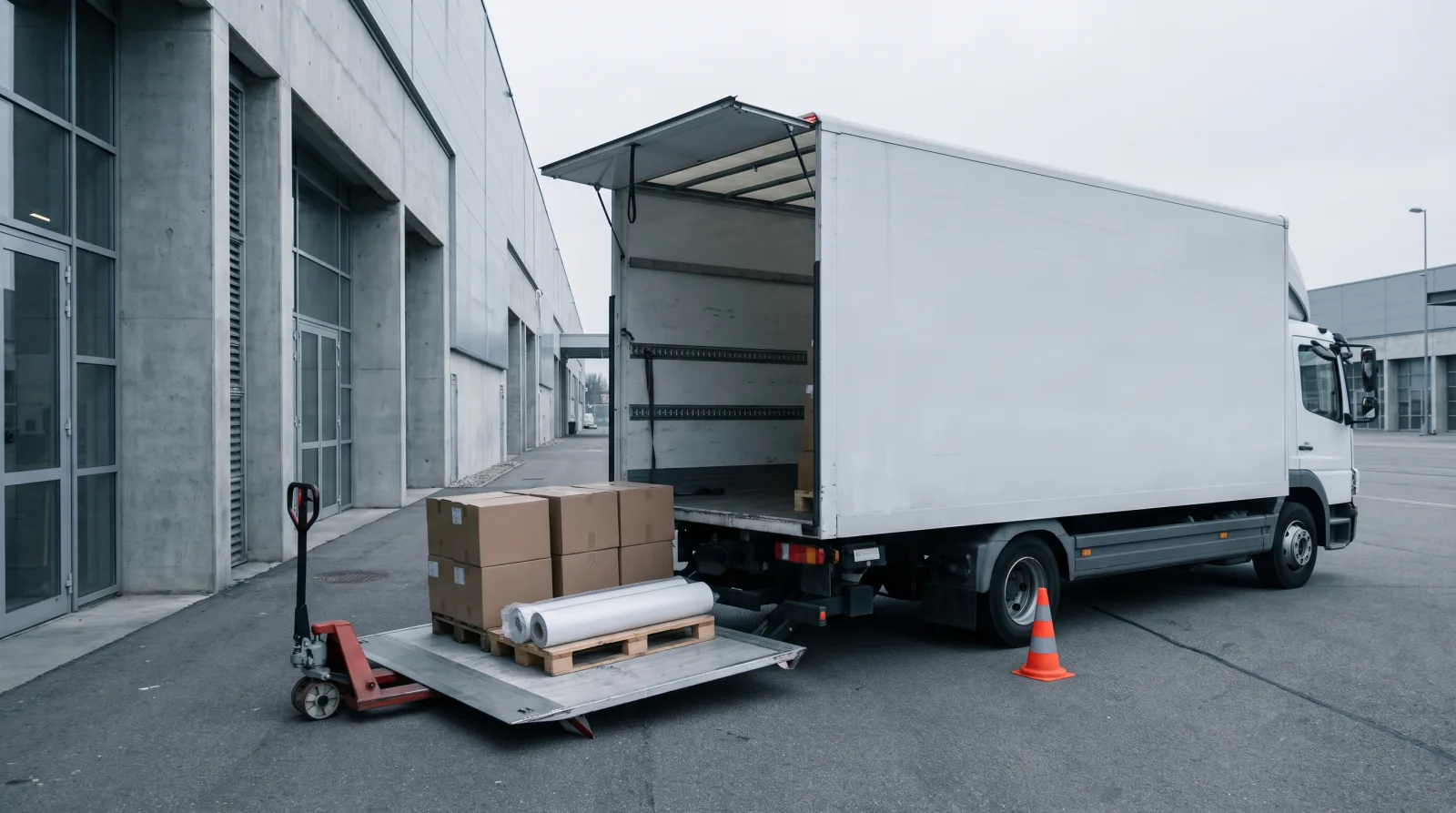
A small exhibitor with one to three pallets for a stand in Kielce does not have to pay for a whole truck. OTSL carries groupage from a single pallet, and a 12 t or 18 t rigid with a tail lift to 1.5 t pulls up at the hall and unloads pallets without a ramp and without waiting for the venue's forklift. When pallets come from several places, they go first to the OTSL depot in Kielce and one vehicle drives to the hall in the build-up window. Four facts are enough for a quote: number of pallets, weight of the heaviest, height, and whether the post-show collection goes home or to the warehouse.
Why should a small exhibitor not book a whole trailer?
Three pallets in a trailer built for thirty-three means paying for thirty empty spaces. Groupage (LTL) solves that: your pallets travel with other loads heading the same way, and the cost is shared between shippers. On the road to Kielce, where dozens of exhibitors converge in build-up week, such combining is natural.
The second reason is unloading. At an exhibition hall an articulated truck needs a ramp or a forklift, and in the build-up window those are taken by the larger exhibitors. A rigid with a tail lift has its own way of getting a pallet down to road level — an advantage that counts for more than the price of the haul itself.
When is a tail-lift rigid enough, and when is it not?
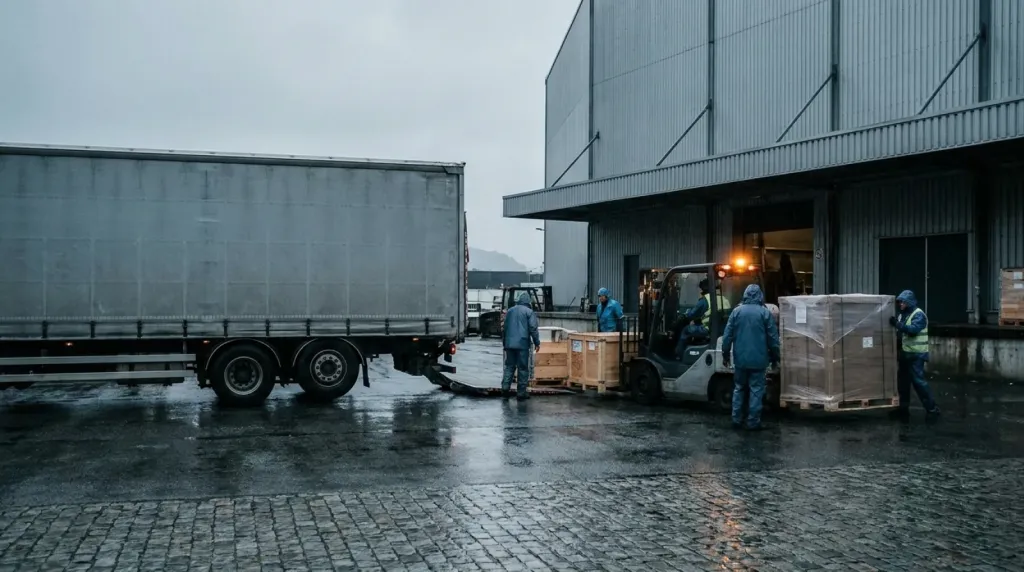
The tail lift on OTSL rigids raises up to 1.5 t per cycle, and unloading is done with a hand pallet truck. That is enough for typical pallets of stand materials, boxes of products, roll-up banners or furniture — provided no single pallet weighs more than 1.5 t and there is a hard, level surface in front of the hall.
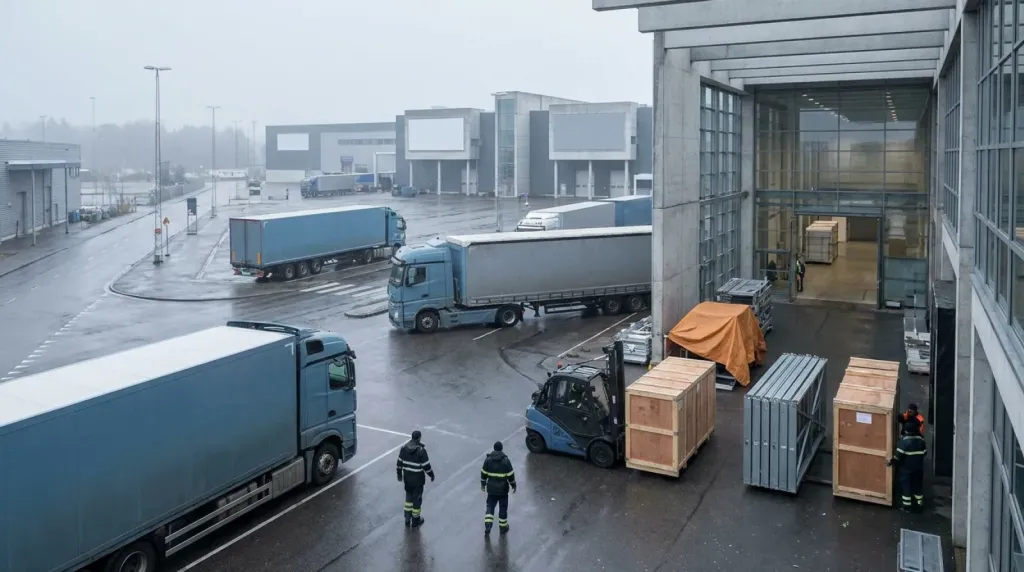
It is not enough for a heavy machine, non-palletised goods, or when the venue regulations do not allow unloading with your own equipment at that spot. Handling work on the Targi Kielce grounds is carried out by the contractor appointed by the organiser; OTSL is responsible up to the side of the truck and checks before departure whether tail-lift unloading at the hall is possible for that edition.
Delivering a small stand to Kielce step by step
- Four facts for the quote. Number of pallets, weight of the heaviest, height, and whether the goods go home or to the OTSL warehouse after the show.
- Date and build-up window. Check the edition date in the organiser's calendar and download the exhibitor materials with entry hours.
- Pallet collection. A groupage vehicle collects the pallets from the company; if materials come from several places (printer, warehouse, manufacturer), all are routed to the OTSL depot in Kielce.
- Consolidation. In the warehouse the pallets are combined into one delivery, counted and labelled with hall and stand number.
- Booking-in. The forwarder notifies the organiser of the delivery in line with the edition's regulations; the rigid's driver receives the time, gate and stand number.
- Unloading and collection. Pallets come down on the tail lift at the hall if the regulations allow; after dismantling the same vehicle takes the goods home or to the buffer.
Definitions
- Groupage (LTL, Less Than Truckload): carriage of consignments smaller than a full load, combined with other freight heading the same way; the cost is spread across shippers.
- Rigid truck: a vehicle with a single fixed body and no trailer, with a gross weight of 12 t or 18 t; easier to manoeuvre at a hall or in a city centre than an articulated combination.
- Tail lift: a hydraulic platform at the rear of a rigid, lowered to road level; on OTSL rigids it lifts up to 1.5 t per cycle.
- Hand pallet truck: a manual truck the driver uses to move a pallet off the lift and set it down at the unloading point; needs a hard, level surface.
- Consolidation: combining pallets from different origins into one delivery at the warehouse, so that one vehicle reaches the hall in one entry slot.
- Booking-in: notifying the organiser or venue of a delivery with entry time, vehicle data and stand number; done by the forwarder, not the driver.
Checklist for a small exhibitor before shipping to Kielce
- Number of pallets, weight of the heaviest and height given to the forwarder — the basis for vehicle choice and quote.
- No single pallet over 1.5 t; heavier pieces reported separately.
- Edition date confirmed in the organiser's calendar, exhibitor materials with entry hours downloaded.
- Every pallet and box labelled with the exhibitor's name, hall and stand number.
- Decided whether the post-dismantling collection goes home or stays in the OTSL buffer for the next show.
- A crew member reachable by phone at delivery time to show the driver where to set the pallets down.
Is tail-lift unloading at the hall always possible?
No. Whether you may unload with your own equipment depends on the venue regulations and the materials for that edition — handling work on the Targi Kielce grounds is done by the contractor appointed by the organiser. Unloading by tail lift and pallet truck at the hall is feasible unless the regulations rule it out, the surface is soft or uneven, or a pallet exceeds 1.5 t. When any of these conditions fails, OTSL agrees another route before departure: hand-over to the venue contractor for unloading, or delivery via the buffer in Kielce.
The OTSL role
OTSL serves exhibitors at Targi Kielce whatever the stand size: it carries groupage from a single pallet, supplies tail-lift rigids, consolidates deliveries from several places at the depot at ul. Batalionów Chłopskich 71 (24/7) and books the delivery in according to the edition's regulations. OTSL is not the venue's official forwarder — it is responsible up to the side of the truck, and unloading at the hall follows the organiser's rules. How booking-in and slots work is covered in the article on delivery to Targi Kielce, and what entry and working with hall staff look like in delivery to the Targi Kielce hall. Services: groupage from one pallet and 12 t and 18 t rigid with tail lift.