 AI image
Participation in UK machinery auctions requires prior registration, identity verification, and security in the form of a card or deposit. A winning bid forms a legally binding purchase contract without cancellation rights. Buyer's premium and VAT are added to the hammer price. Goods are sold as is, where is, making physical inspection during view days and prior transport feasibility checks essential before submitting an offer.
How does account registration and identity verification work for UK auctions?
Every auction house in the United Kingdom requires prospective buyers to complete account registration prior to submitting any bids. During registration, companies must provide full business details and submit identification documentation for authorised representatives. According to the specific auction terms and conditions, the auction house may require a payment card on file or a financial deposit as security. The exact deposit requirement and acceptable payment methods depend on the rules established by the auction house in its terms of sale.
Failure to complete identity verification or accept the terms and conditions prevents participants from placing bids. Completing all administrative requirements well in advance is necessary to gain access to the bidding platform. Auction houses establish their own timelines for approving registration requests, so all documentation should be submitted before the designated bidding days begin.
Why are auction bids legally binding and what additional fees apply to the hammer price?
Bidding on machinery can take place in person, online, or through a mixed auction format. Every bid placed during an auction is legally binding and does not represent a conditional reservation. The fall of the hammer creates an immediate and enforceable contract of sale. The winning bidder is obligated to pay the full amount corresponding to the hammer price alongside all additional fees specified in the auction terms.
On top of the hammer price, the auction house charges a buyer's premium. This fee is calculated as a percentage rate set individually by the auction organiser in the terms and conditions. Furthermore, Value Added Tax (VAT) is applied to the transaction according to auction rules and official tax regulations. Bidders must calculate the total real cost of purchasing the equipment before placing a bid rather than after the auction finishes.
What does as is, where is mean and why is physical inspection necessary?
Machinery and industrial equipment sold at British auctions are offered on an as is, where is basis. This condition means that items are purchased in their exact current state and physical location, without any statutory warranty or guarantee regarding operational condition, functionality, or completeness. The auction organiser bears no liability for hidden defects or missing components.
The only reliable method to verify the technical condition of an item is through physical examination on official view days arranged by the auction house. Attending designated viewing days enables prospective buyers to inspect equipment thoroughly on site before making a binding financial commitment. Bidding without prior physical inspection creates a risk of acquiring faulty or incomplete machinery.
Machinery auction process step by step
- Account creation and document submission. Registering on the auction house platform requires entering company details and submitting identity verification files.
- Providing financial security. Bidders must place a payment card on file or pay a financial deposit as required by auction terms.
- Attending inspection days. Inspecting equipment at the auction site allows buyers to evaluate machinery sold without warranty.
- Calculating total purchase costs. Before placing a bid, buyers must calculate the hammer price plus buyer's premium and applicable VAT.
- Placing binding bids. Participating in online or in-person bidding creates an irrevocable commitment to purchase upon winning.
- Invoice settlement and collection coordination. After winning, the buyer settles payment with the auction house and organises transport from the site.
Definitions
- Buyer's premium: An additional fee charged by the auction house calculated as a percentage of the hammer price specified in the terms.
- As is, where is: A sale condition meaning goods are sold in their current state and location without warranty or guarantee.
- Hammer price: The final winning bid amount acknowledged by the auctioneer upon concluding the bidding on a specific lot.
- VAT (Value Added Tax): Consumption tax added to the transaction according to auction conditions and statutory tax regulations.
- Security deposit: A financial sum or payment card authorization required by the auctioneer to secure bidding privileges.
Checklist before bidding on machinery
- Reviewing the terms and conditions of the auction house regarding registration and deposit rules.
- Checking designated viewing dates and conducting on-site physical inspection of the equipment.
- Factoring buyer's premium percentages into maximum bid calculations prior to bidding.
- Verifying VAT application rules for the specific auction lot being targeted.
- Evaluating access routes, disassembly requirements, and machine dimensions before placing bids.
When do these rules not apply?
These auction procedures do not apply to direct commercial purchases made outside of formal auction channels under standard commercial contracts. Specific registration steps, deposit amounts, and fee structures depend on individual auction house rules and do not apply universally unless bidding takes place under formal UK auction terms.
The OTSL role
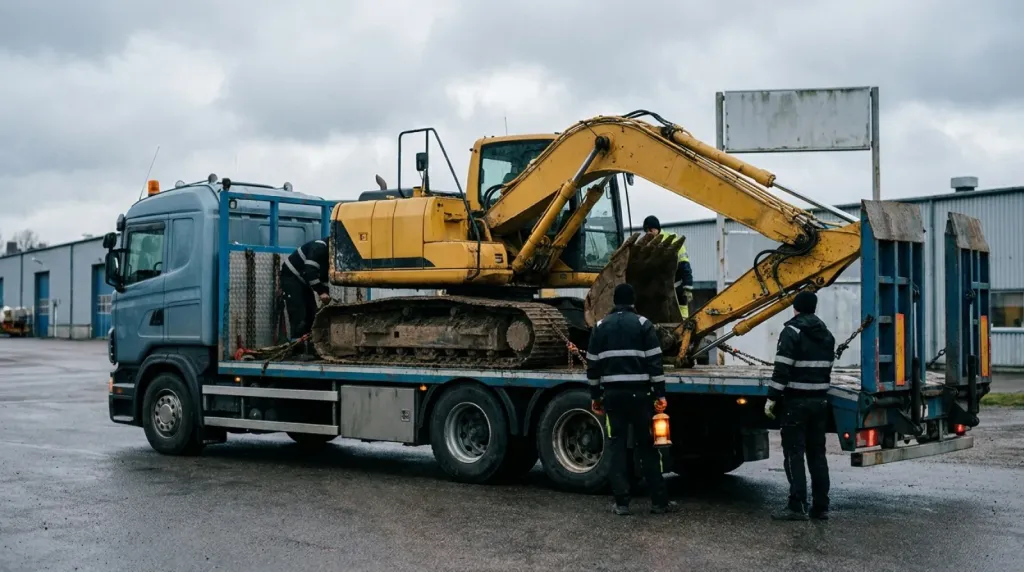
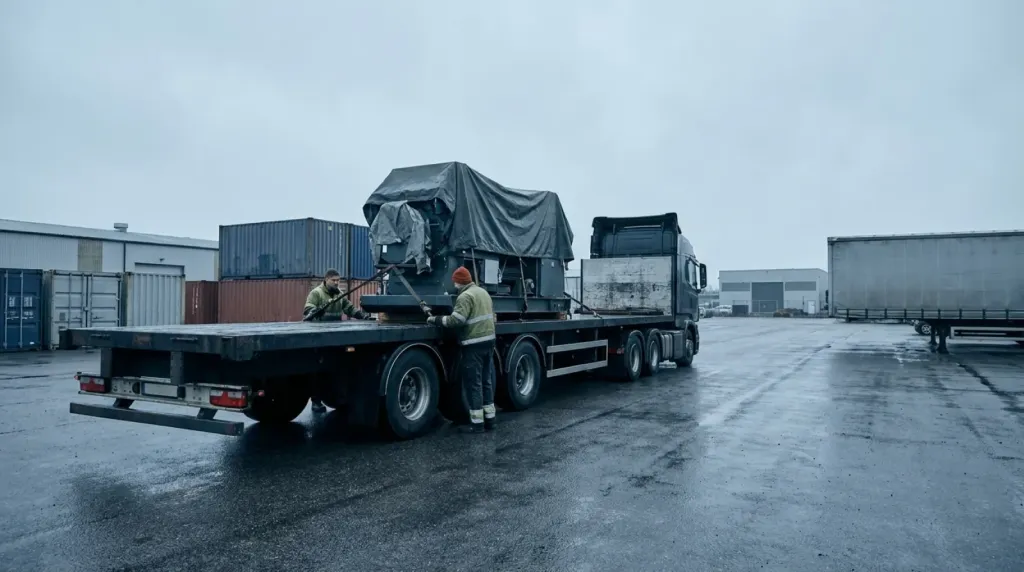
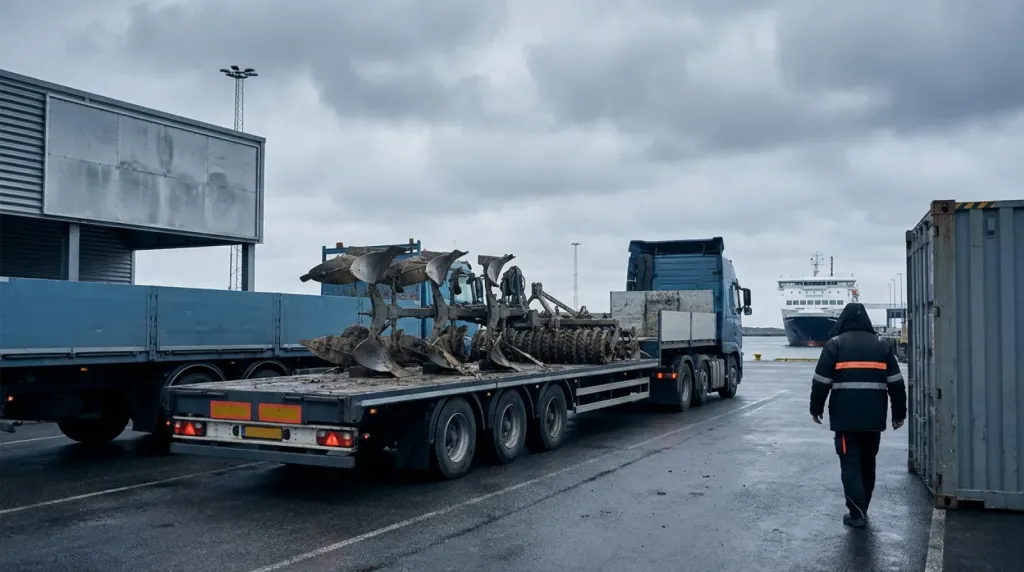
Freight forwarding company OTSL Sp. z o.o., based in Kielce with a distribution and support centre in Milton Keynes, UK, does not bid on behalf of clients or enter into purchase contracts. Before bidding takes place, OTSL evaluates transport feasibility by verifying machine dimensions, disassembly options, and site access conditions to ensure winning lots can be removed safely. We provide services including machinery transport and out of gauge transport. You can also read our related guide on buying machinery at Euro Auctions Leeds. See also: Buying at Bonhams auction in UK and machinery transport to Poland and Machinery transport from Clarke & Simpson UK auction to Poland.