 AI image
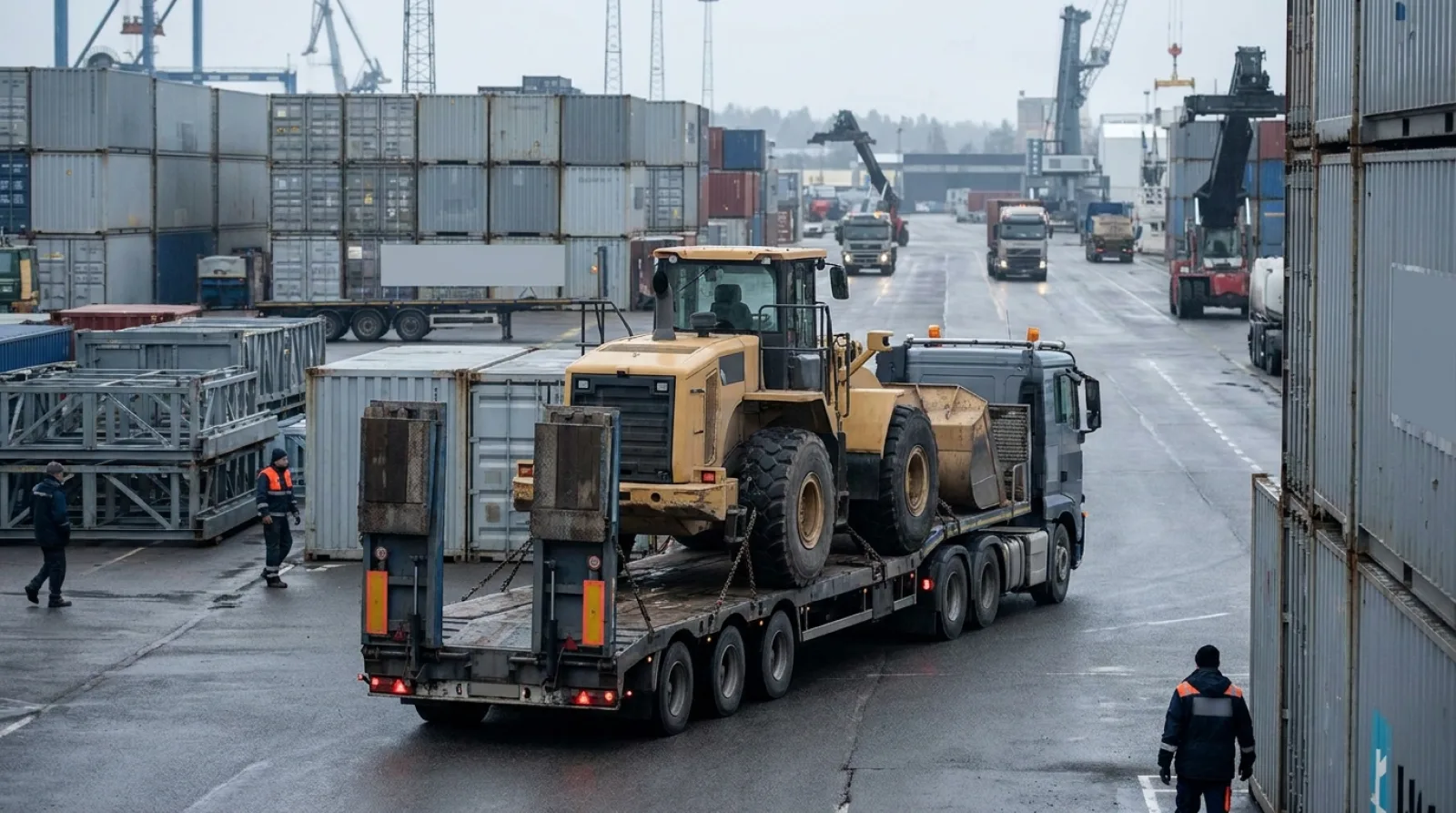
Transporting and importing a wheel loader (German: Radlader) from Great Britain to the European Union involves customs clearance and specific transport preparations. Machines in the typical weight range of 4–30 t usually require component disassembly. Because the width with the bucket attached often exceeds the standard permissible vehicle width, the bucket is frequently carried separately and secured next to the machine. Equipment purchased at UK auctions enters the EU through customs clearance under CN code 8429 51.
How to prepare an auction-purchased wheel loader in the UK for transport?
Buying machinery at British auctions requires efficient collection planning from the auction site. A wheel loader, given its dimensions and structure, rarely fits standard transport profiles without prior preparation. The most critical step is evaluating the overall width of the unit. The width with the bucket attached is often greater than the maximum allowed for standard road haulage. Therefore, standard practice involves detaching the bucket and securing it alongside the main body on the same low-loader trailer.
Before collection, it is essential to verify whether the machine can be driven onto the trailer or if external lifting equipment must be arranged. Pickup deadlines and potential storage charges depend on the specific rules in the auctioneer manual. Importers must review the seller's terms to prevent unexpected charges at the collection point in the United Kingdom.
What customs procedures apply to machinery classified under CN 8429 51?
Every wheel loader imported from Great Britain into the European Union must undergo customs clearance. Under the Combined Nomenclature (CN), these front-loading mobile machines are classified under code 8429 51. The customs declaration requires complete documentation, including the auction purchase invoice, transport paperwork, and technical specifications confirming the mass and dimensions.
Customs formalities can take place at the destination or at the first EU port of entry. Determining the correct customs value depends on the invoice details and any additional buyer fees charged by the auction house, as outlined in the sale terms and conditions set by the auctioneer.
How to organise wheel loader transport step by step?
- Technical and auction spec check. Verify the gross operating weight (within the 4–30 t range) and overall dimensions listed in the specification sheet or auction listing.
- Equipment disassembly assessment. Determine if the width with the bucket exceeds road limits, and arrange bucket removal so it can be secured next to the machine.
- Collection scheduling at the auction site. Confirm pickup slots and release requirements in accordance with the exhibitor manual.
- Customs paperwork preparation. Gather the commercial invoice, technical documentation, and assign CN code 8429 51.
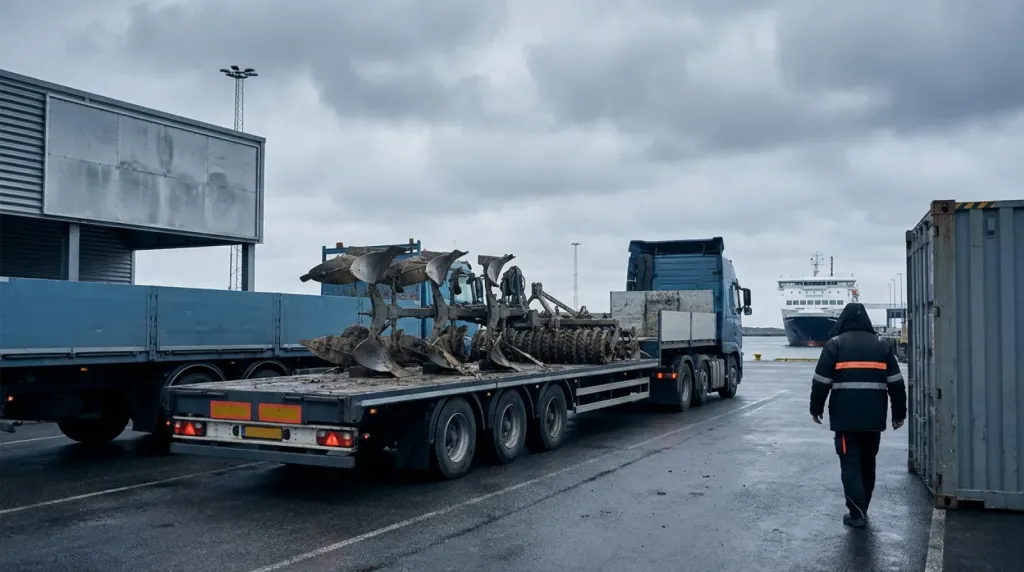
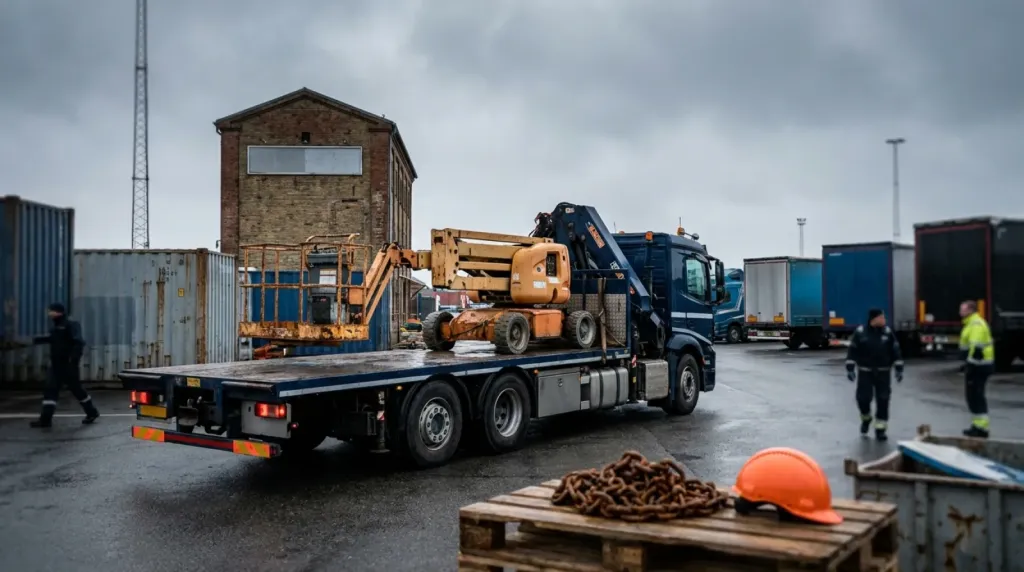
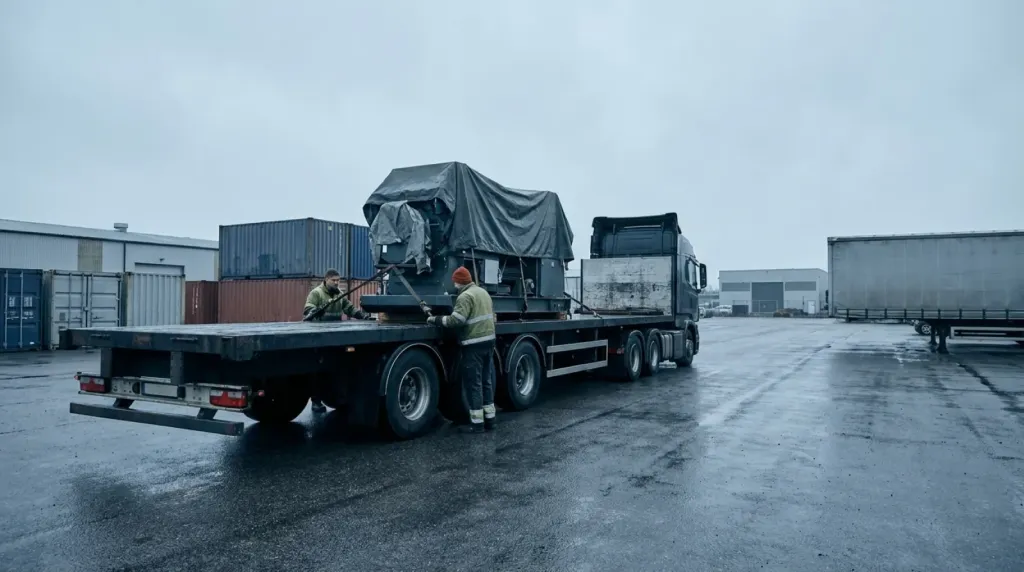
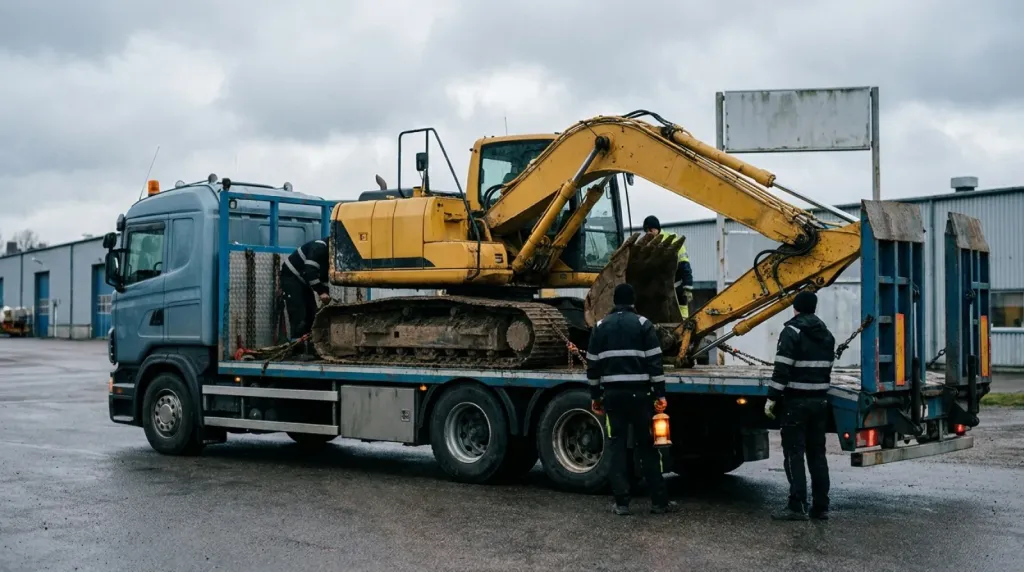
- Loading and lashing on the trailer. Drive or hoist the machine onto the low-loader trailer and secure both the unit and the bucket with certified lashing chains and straps.
- Clearance execution and final delivery. Complete import customs clearance at the border or internal customs office and deliver the equipment to its final destination. Close
Definitions
- Wheel loader (German: Radlader): A self-propelled heavy equipment machine on wheels equipped with a front-mounted bucket designed to scoop and transfer bulk material.
- CN code 8429 51: The Combined Nomenclature classification code used across the European Union for self-propelled front-end shovel loaders.
- Customs import declaration: The official notification submitted to customs authorities when bringing goods from a third country into the EU customs territory.
- Low-loader trailer: A specialised semi-trailer featuring a lowered deck height designed for transporting heavy and oversized construction machinery.
Checklist for wheel loader transport
- Obtain commercial invoice stating total mass and machine serial number.
- Measure machine width both with and without the bucket attached.
- Review collection conditions in the auctioneer manual.
- Confirm loading method (drive-on capability or crane requirement).
- Ensure availability of heavy-duty lashing chains and straps.
- Submit customs declaration under CN code 8429 51 to the customs agency.
When do these transport rules not apply?
The outlined procedures do not apply to tracked machinery or units exceeding 30 tonnes in weight, which fall under higher-grade abnormal load permitting rules. The guidelines also do not apply to equipment moved purely within intra-EU transport where no customs boundary exists. Specific loading times, free storage periods, and site access rules depend on the auction house conditions or individual contract terms.
The OTSL role
OTSL Sp. z o.o., headquartered in Kielce with a fulfilment warehouse facility in Milton Keynes, England, organises haulage and customs clearance for heavy equipment between Great Britain, Poland, Switzerland, Norway, and the rest of Europe. Operations include routine machinery transport and specialized routing for out of gauge cargo. The OTSL team assists importers with complete customs clearance processes, ensuring accurate paperwork and smooth transit across customs borders. For further detail regarding European border import practices, refer to the article on machinery customs clearance in the Netherlands. See also: Transport and import of a skid steer loader from the UK.