 AI image
Winning a machinery auction in the UK triggers a strict timeline: the auction house issues an invoice combining the hammer price, buyer's premium, and VAT. The machinery yard will only release the equipment once full payment is settled and an official release note is presented. Risk of loss or damage passes to the buyer upon the fall of the hammer, and missing the collection deadline results in ongoing storage charges.
How do payment and document release work following a successful bid?
Once you win a lot at an auction, the auction house issues a final invoice. This document details the hammer price, buyer's premium, and applicable VAT calculated according to the specific rules of the auctioneer. The payment term is short and measured in days from the auction date. Immediate settlement is essential because collection procedures will not initiate until funds have been fully received and cleared by the seller.
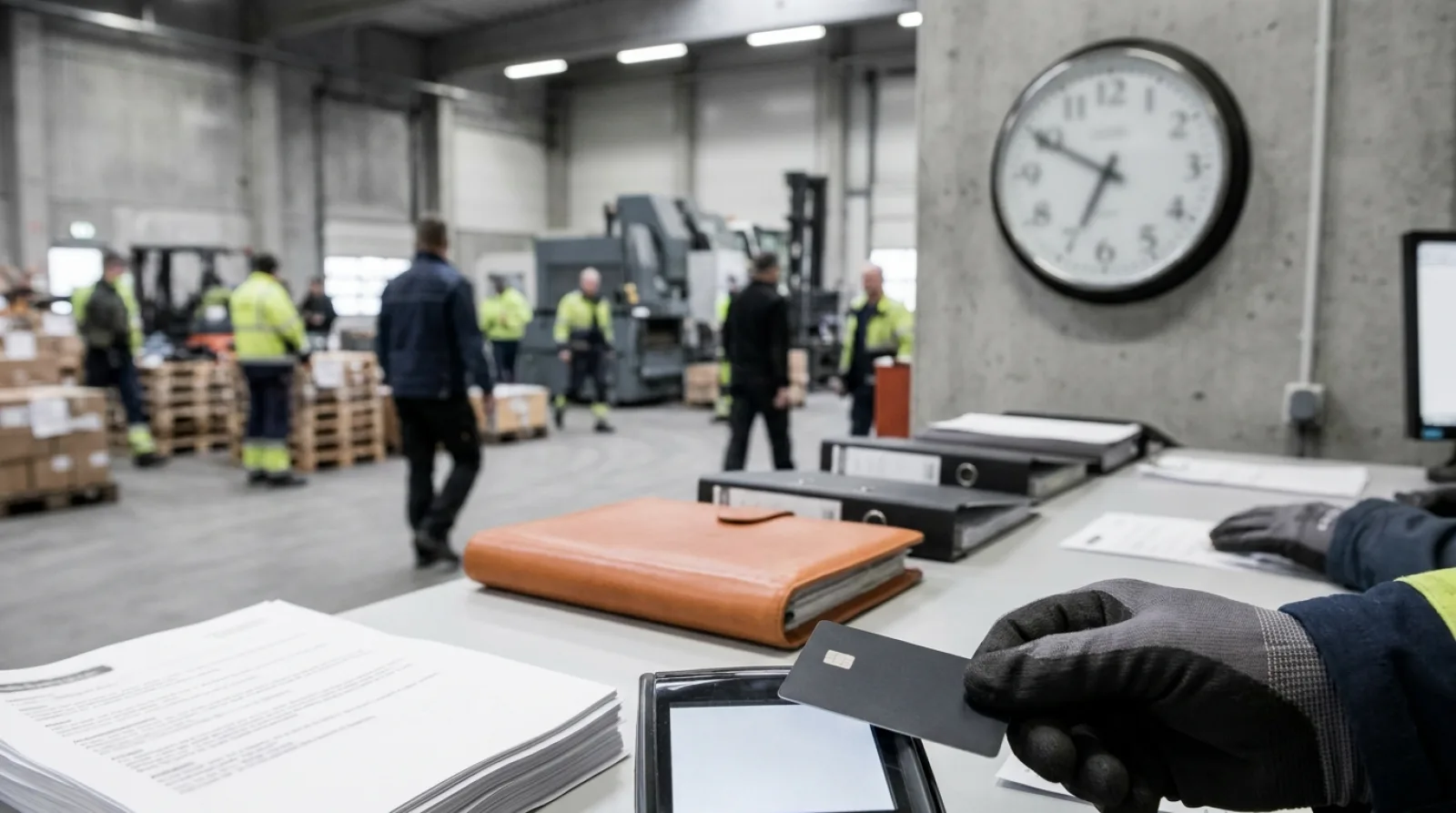
A simple proof of payment or bank transfer receipt is generally insufficient to secure collection at the yard. The auction house issues an official release note only after confirming full payment clearance in their system. Yard personnel will not release machinery to any driver or transport company without this document. Clear communication between buyer, auctioneer, and logistics provider is required to prevent delays at the collection site.
When does risk transfer occur and how does the collection clock function?
Under the standard terms of most UK auction houses, the risk of accidental loss or damage transfers to the buyer immediately upon the fall of the hammer. This means that from the moment bidding closes, the machine remains on the site at your own responsibility, even prior to invoice settlement or physical collection. Securing insurance coverage effective from the purchase date is strongly advised.
Simultaneously, the collection clock starts counting down the permitted free storage period. Each auction house establishes its own rules specifying the collection deadline within their bidder conditions. If the equipment is not collected within this timeframe, the auctioneer levies daily storage fees. Specific rates and schedule limits vary across auction houses and are outlined in the auctioneer's published terms.
Step by step guide to organising transport from a UK auction yard
- Invoice receipt and payment settlement. You receive the invoice detailing hammer price, buyer's premium, and VAT, then process the bank payment per auction terms.
- Obtaining the official release note. You ensure cleared payment status with the auction house to obtain the official release document needed for yard access.
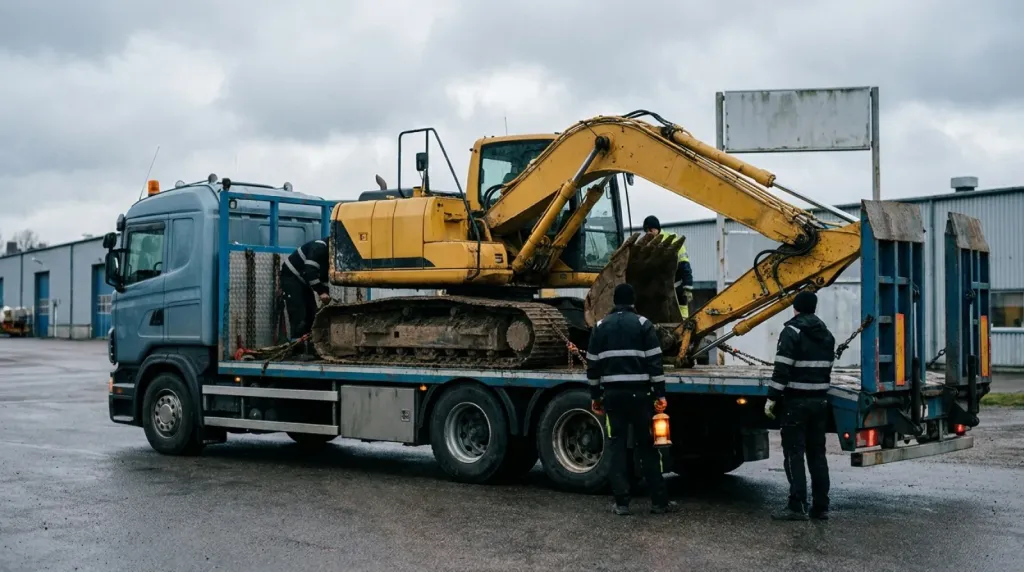
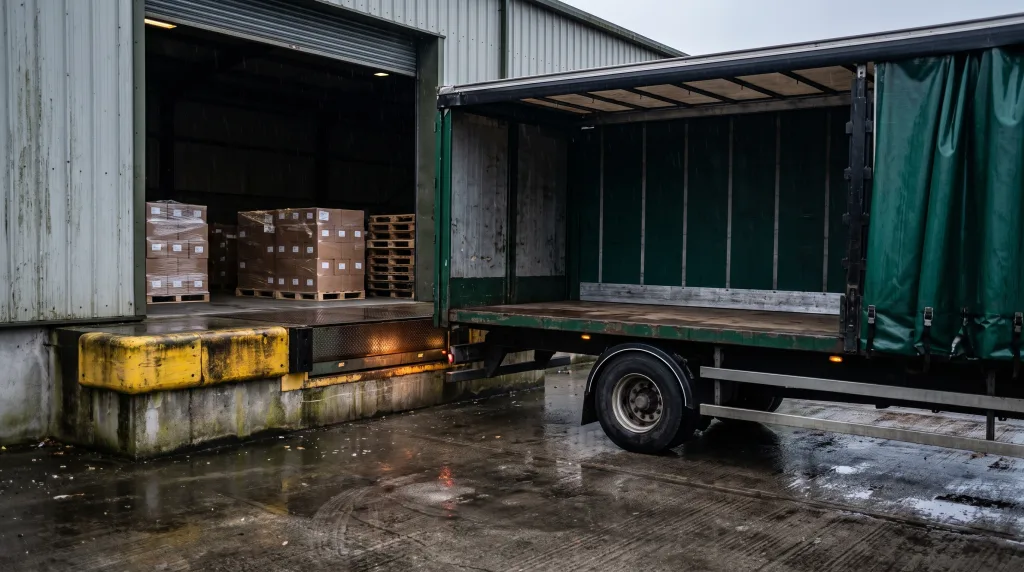
- Scheduling the collection window. You forward the release note to us, allowing us to contact the UK yard and book an approved collection slot.
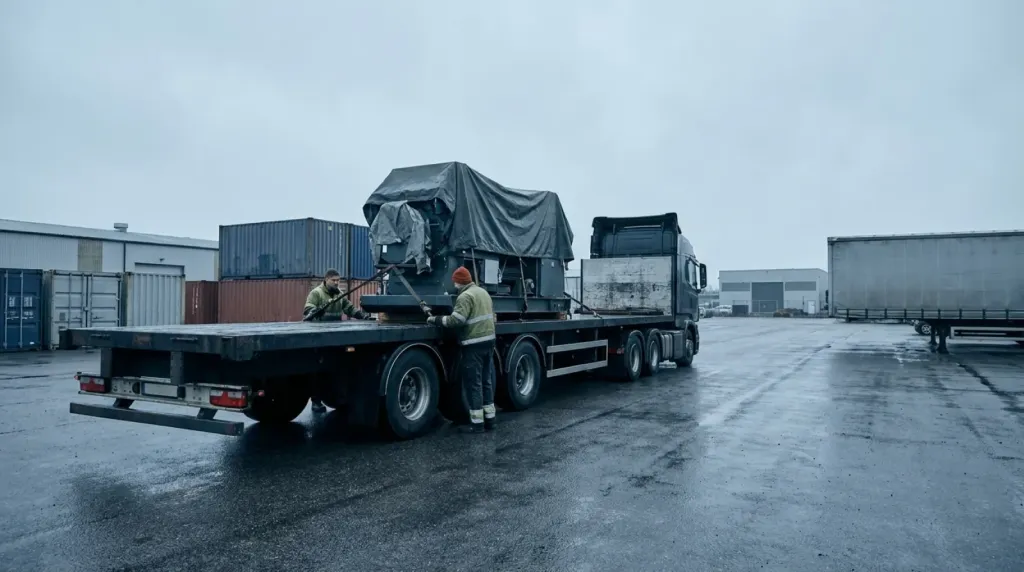
- Positioning suitable transport equipment. We allocate and dispatch appropriate transport vehicles suited to the dimensions and condition of the machinery.
- Executing UK export clearance. We submit the export declaration to HM Revenue and Customs (HMRC) prior to departing the United Kingdom.
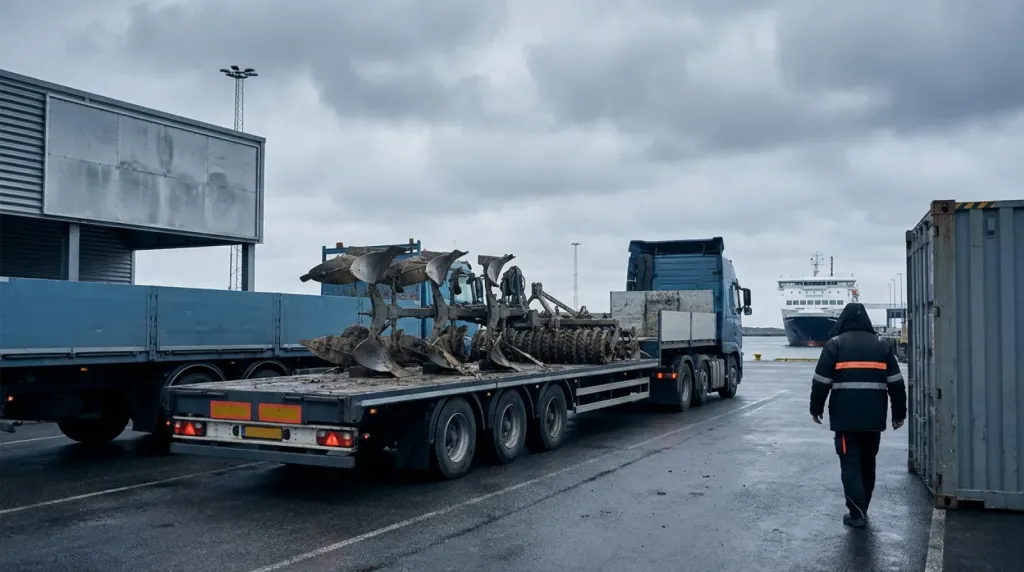
- Transport execution and final delivery. We transport the machinery across the border and deliver it to your designated terminal or facility.
Definitions
- Buyer's premium: An additional administrative fee charged by the auction house on top of the hammer price as set out in auction terms.
- Release note: An official authorisation document issued by the auction house once payment clears, enabling the yard to release goods to transport.
- Hammer price: The final winning bid amount recorded when the auctioneer brings down the hammer on a lot.
- HMRC: Her Majesty's Revenue and Customs, the United Kingdom government department responsible for collecting taxes and customs enforcement.
Checklist for picking up machinery from a UK auction
- Review payment terms and bank account details on the auction invoice carefully.
- Confirm that payment has cleared and the official release note has been generated.
- Check the bidder manual for the precise deadline regarding free storage at the yard.
- Obtain cargo coverage active from the day of purchase to protect against post-bid risk.
- Provide your transport provider with full release documentation and yard contact details.
- Prepare necessary commercial details required for UK customs export procedures.
When does the standard collection procedure not apply?
The standard process outlined above does not apply if the auction house provides inclusive loading and delivery services within the winning bid price, or if custom sales terms apply. Where equipment is non-runner, damaged, or dismantled, collection procedures depend on yard capabilities and special handling agreements, which vary by venue. Always consult the specific bidder manual and site regulations provided by the auctioneer.
The OTSL role
OTSL organises machinery haulage from auction yards across the UK to destinations in Poland and continental Europe. We maintain operational facilities in Kielce and a central warehouse in Milton Keynes, England. Upon receiving your invoice and release note, we schedule the collection window with the yard, deploy appropriate transport equipment, and complete UK export customs formalities. Learn more on our machinery transport and customs clearance service pages. You can also review our guide on auction logistics: Buying machinery at Eddisons CJM auction and transport to Poland. See also: Auction Machinery Documents in UK: Invoice, Release Note, and V5C and Auction Site Collection Deadlines and Storage Fees.