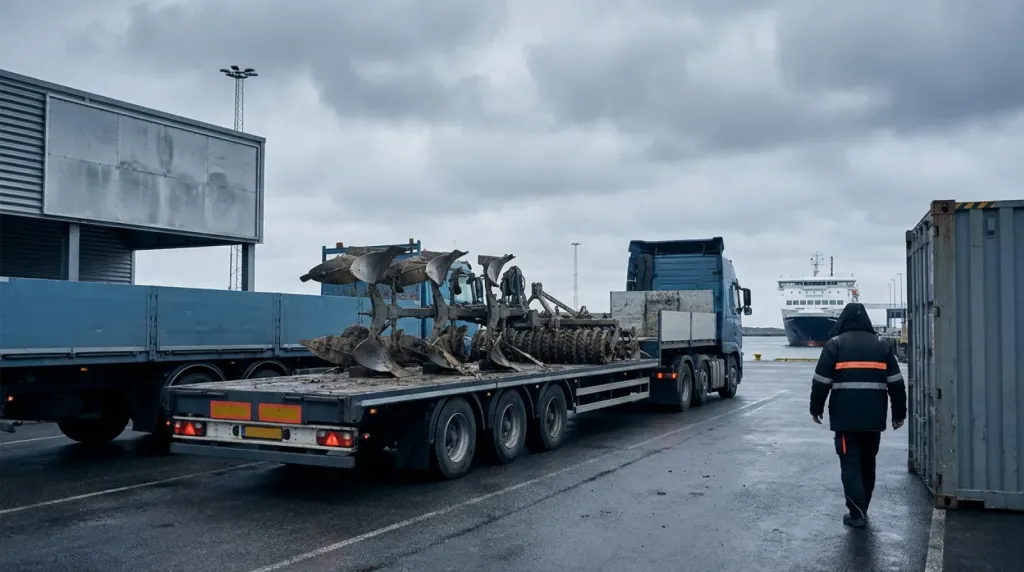
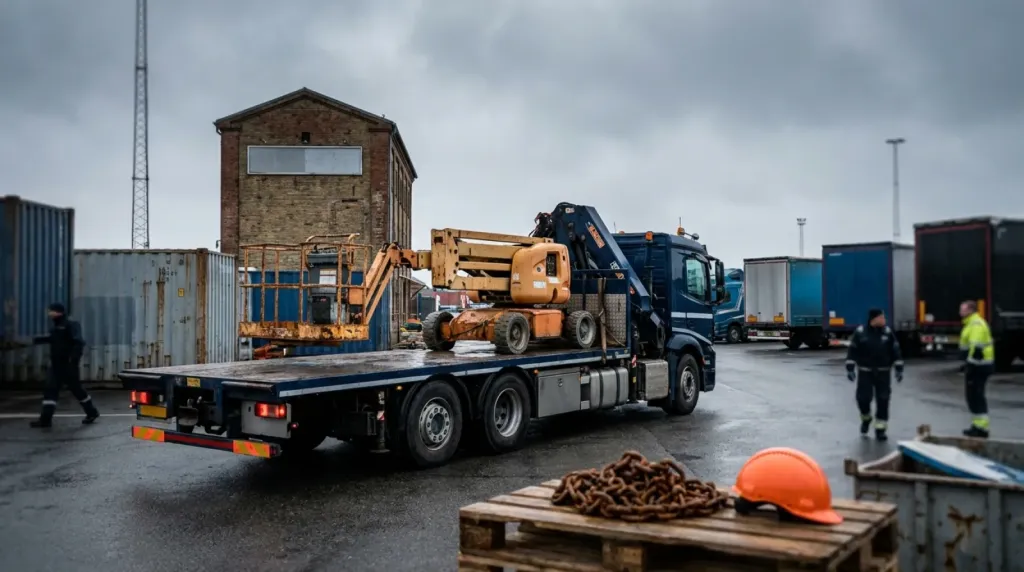
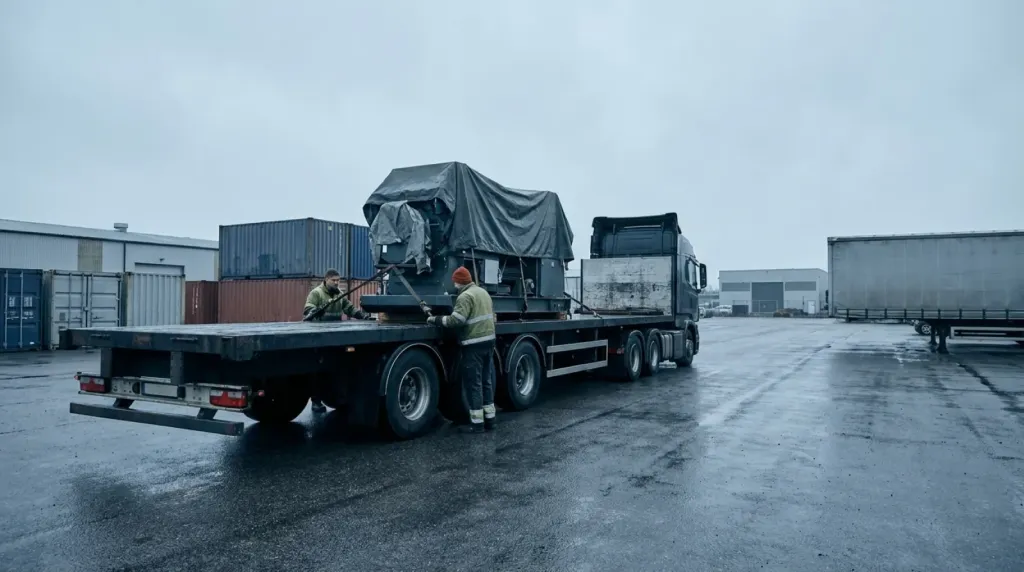
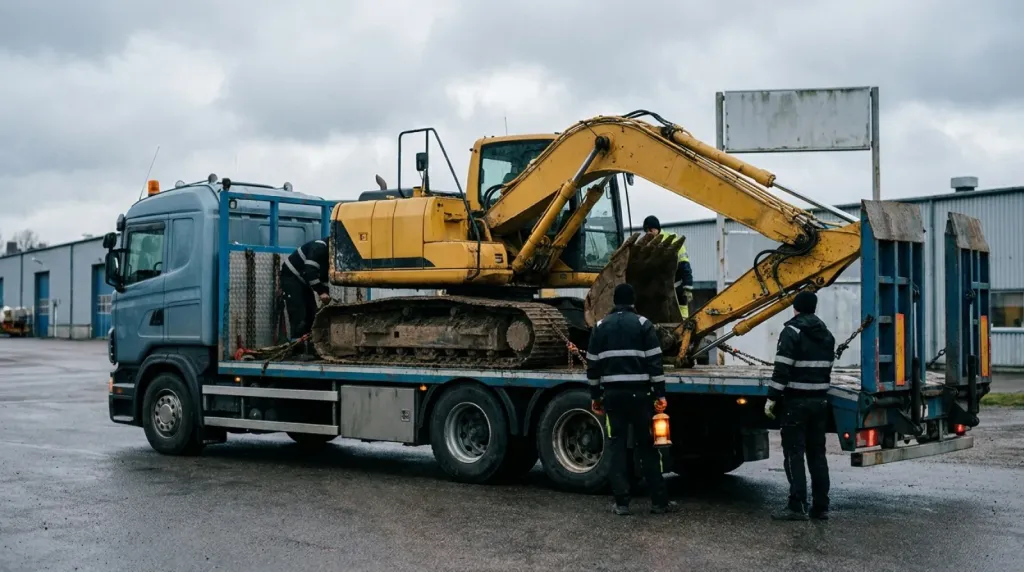
 AI image
Transporting and importing a construction air compressor from the United Kingdom into the European Union requires customs clearance and road freight management. These units, typically weighing between 0.3 and 5 tonnes, fall under CN code 8414 40. An air compressor usually does not require disassembly for transport. Although single-axle chassis versions can be towed, international transport requires loading onto a semi-trailer. Equipment purchased at UK auctions enters the EU following formal clearance.
How to prepare an air compressor bought at auction for customs clearance?
Purchasing machinery at a UK auction requires submitting export declarations in Great Britain and import declarations in the European Union. Every construction air compressor must be accompanied by proof of purchase, such as an invoice or bill issued by the auction site. It is vital to verify the serial number and physical condition of the machine against the details recorded on the sales documentation.
Collecting the compressor from the auction yard requires clear authorization and release documentation. Equipment collection depends on the auction terms and conditions set out in the exhibitor manual, which should always be consulted before dispatching a vehicle. The customs declaration uses CN code 8414 40, which applies to air pumps and air compressors. Correct classification helps prevent border delays.
How is an air compressor transported internationally on a trailer?
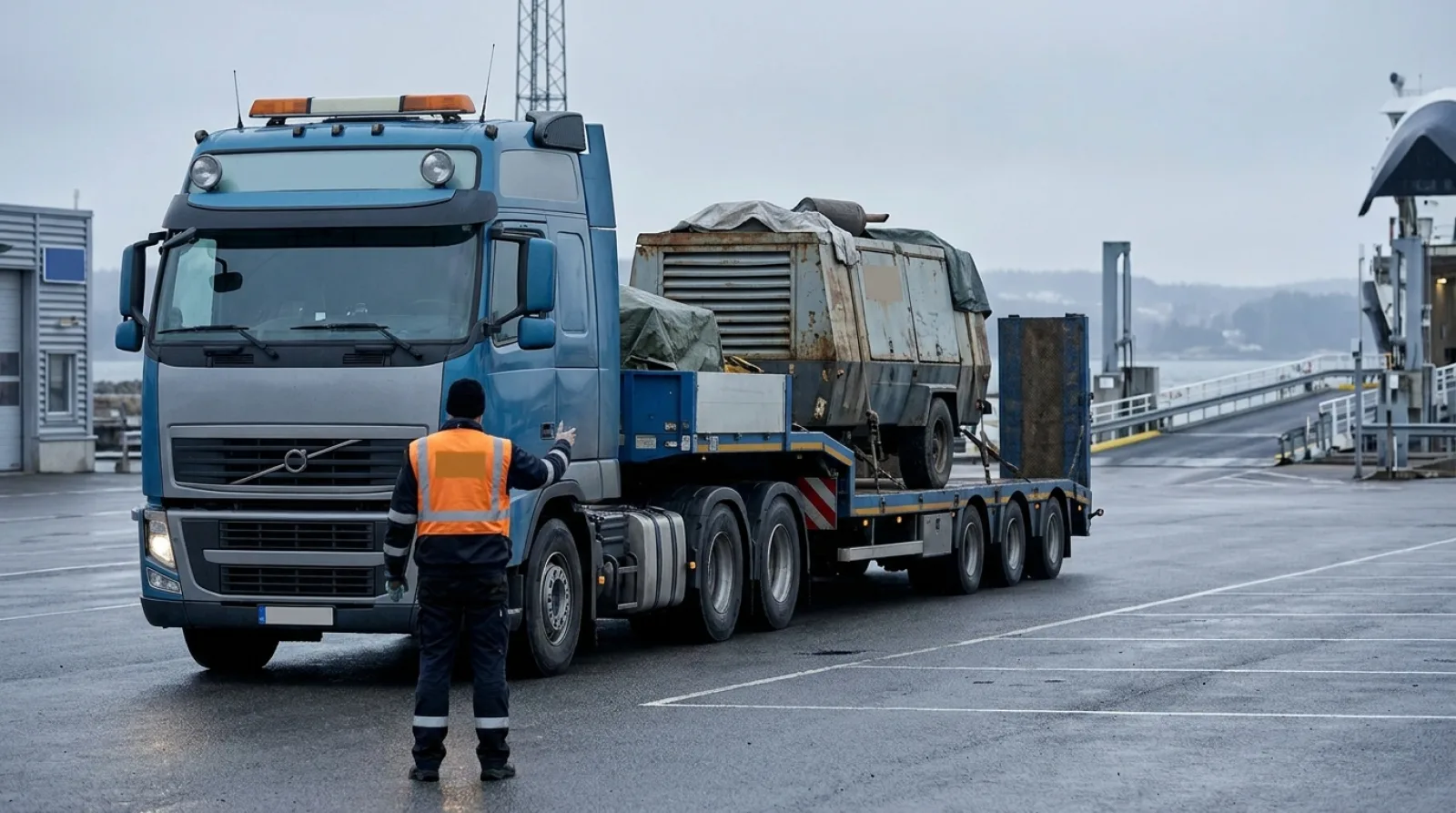
Construction air compressors generally weigh between 0.3 and 5 tonnes. Even though single-axle versions are built to be towed locally, cross-border transit from Great Britain is handled by loading the unit onto a standard cargo trailer. This method protects the machinery, prevents tyre and axle wear over long distances, and ensures compliance with international transit regulations.
The compressor does not normally require disassembly before loading. The machine is either driven, winched, or lifted onto the trailer bed and secured using lashing straps or chains attached to certified trailer anchor points. Securing all access doors, side panels, and valves is necessary to prevent accidental opening during transit.
Importing an air compressor step by step
- Gathering purchase documentation. Receiving the auction invoice, packing list, and machine specification sheet from the seller.
- Reviewing collection procedures. Checking vehicle pre-advice requirements and gate collection rules specified in the auction terms.
- UK export clearance. Lodging the export declaration in the UK customs system under CN heading 8414 40.
- Loading and securing on trailer. Positioning the compressor on the trailer, wheel-chocking, and strapping the load securely.
- EU transit and import clearance. Crossing the border with a T1 document and completing final customs release within the EU.
Definitions
- CN (Combined Nomenclature): An eight-digit goods classification system used by the EU for international trade statistics and duties.
- EORI (Economic Operators Registration and Identification): A unique identification number required by businesses interacting with UK and EU customs authorities.
- T1 (Transit Document): A customs declaration allowing non-EU goods to move under duty suspension between customs offices.
- SAD (Single Administrative Document): The official standard form used for customs declarations in international import and export operations.
Checklist for compressor transport preparation
- Obtain the official purchase invoice and proof of payment from the auction house.
- Confirm that the compressor weight fits within the 0.3–5 t range on official documents.
- Latch and lock all canopy panels, service doors, and outlet valves.
- Inspect tyre condition on single-axle chassis models prior to loading.
- Ensure the transport vehicle carries rated lashing straps and securing gear.
- Provide the driver with the necessary EORI numbers and customs paperwork.
When does this transport procedure not apply?
The transport and customs process described here does not apply to shipments moved entirely within the European Customs Union. These rules also do not apply to equipment under temporary admission procedures, unless the machine status changes to permanent import. Specific collection timeframes and loading protocols depend on the individual auction house rules and site guidelines.
The OTSL role
OTSL Sp. z o.o., located in Kielce, coordinates cross-border transport and customs clearance between the United Kingdom, Poland, Switzerland, Norway, and the wider European region. With an operational hub in Kielce and warehouse facilities in Milton Keynes, England, the company manages machinery transport on trailers. Further details on moving industrial equipment can be found under machinery transport services. Information regarding EU import mechanisms is outlined in the article concerning regime 42 customs procedures.