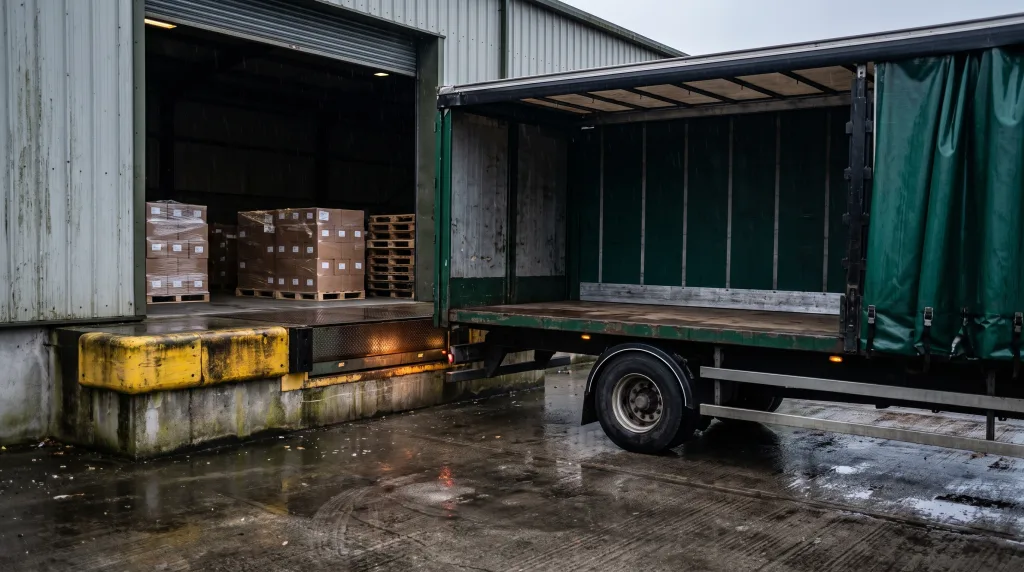
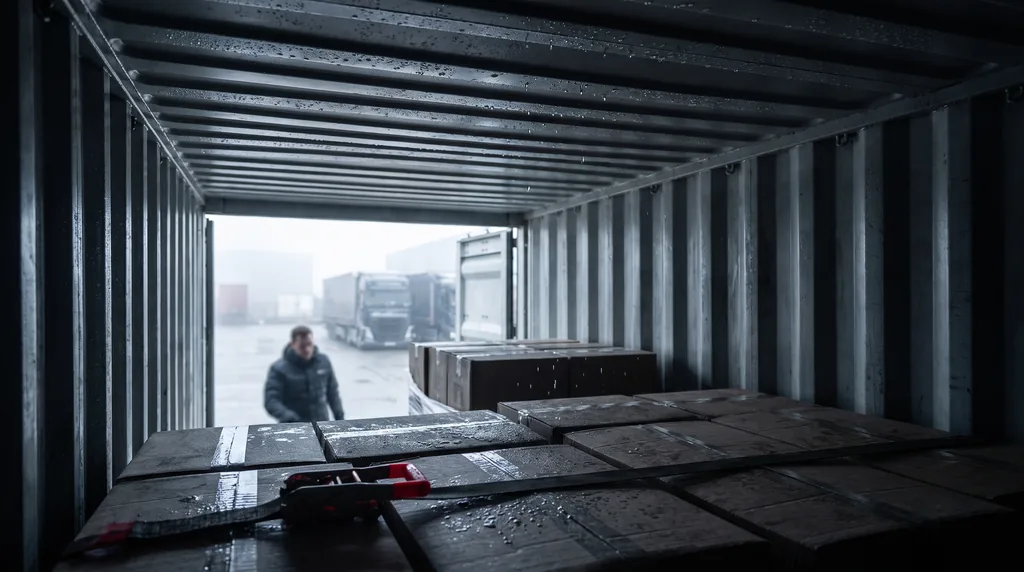
 AI image
When fragile cargo breaks, first separate the damaged items from the sound ones, because shards, spills and pressure can contaminate the goods next to them. Then document the damage with photos and a list, assess whether the sound items are still usable, safely dispose of the waste, and finally draw up a damage report for the insurer.
Why one breakage is a problem for the whole pallet
Fragile cargo, meaning glass, ceramics or electronics, has one trait: damage to a single item does not always stay with that item. Sharp shards can scratch or pierce the packaging next to them. A spill from a broken container contaminates the goods alongside it. A compromised item loses its rigidity, so pressure from above shifts onto layers that were never meant to carry it. As a result one breakage becomes several damaged items if no one reacts in time.
That is why the first response to a breakage is not to count the losses, but to stop them from spreading. The sooner the damaged item is isolated, the smaller the chance it drags sound goods down with it.
How to segregate after finding a breakage
Segregation means an orderly separation of what is damaged from what is still sound. Work calmly and in sequence, because haste around glass shards is itself a risk.
- Secure the area. Put on cut-resistant gloves and watch for scattered shards before you move anything.
- Separate damaged from sound. Set clearly broken items aside, away from intact goods, so that shards and spills do not touch the sound packaging.
- Set aside doubtful items. Packaging that may have taken pressure, wetting or small shards should form a separate group to check, rather than being treated as sound straight away.
- Do not mix back together. Until the damage is documented, keep the groups apart, because mixing them makes an honest list and assessment harder later.
How to gather evidence before you clean anything up
Evidence is gathered before cleaning, not after. Once the shards go into the waste, you can no longer show what the damage looked like at the moment it was found. The order is simple: documentation first, tidying second.
- Photos. Photograph the damage in context: the whole pallet or load space, then close-ups of the damaged items, and where visible, the state of the securing and the dividers.
- List. Record how many items are broken, how many doubtful and how many sound, and what they are. An honest list is the basis of the later report.
- Context. Note where and when the damage was found and how the goods were secured, because this helps explain the cause.
This set, photos plus list plus context, is what later goes into the report and to the insurer. Without it, a claim rests on words instead of evidence.
How to assess usability and safely dispose of the waste
Once the damage is documented, assess the items. Clearly broken ones go to disposal. Doubtful items need checking, because goods that took pressure or wetting are not always fit to continue, even if the packaging looks intact.
Waste from broken glass is sharp waste. The shards should be collected and packed so they do not cut anyone handling the bag or container later, and removed in line with the waste management rules that apply at the location. This is not ordinary mixed waste. Do not sweep shards up unsecured and do not throw them loose where someone can be cut.
How does OTSL reduce the risk of breakage?
The best breakage is the one that never happens. With fragile cargo, what matters most is what happens before the drive: proper securing that stops items shifting, and dividers that keep them apart and spread the pressure. Add to that a check on the state of the load, so a problem is caught before it grows.
At OTSL we treat the securing of fragile cargo as something planned in advance, not improvised at the trailer. If you move glass, ceramics or electronics and want to reduce the risk of damage, let us settle the details through the contact form. We also support cargo inspection and handling in our warehousing, and we explain terms from this area in the glossary.
Step by step
- Secure the area. Ensure the transport unit is stationary so that further movement does not cause additional breakage.
- Separate damaged goods. Carefully move broken or leaking items away from intact packages to avoid cross-contamination.
- Document the damage. Take clear photographs of the broken items, pallet packaging, and shipping labels.
- Assess remaining items. Verify whether the undamaged cargo retains structural stability and remains clean.
- Draw up a damage report. Record all details of the incident in a written account to submit to the insurer.
Definitions
- Fragile cargo: Goods susceptible to mechanical damage from shocks or pressure, such as glass, ceramics, or electronics.
- Damage segregation: The physical separation of damaged items from intact goods to prevent further contamination or breakage.
- Damage report: A written document detailing the condition of the cargo and circumstances of breakage, serving as the basis for insurance claims.
- Cross-contamination: A scenario where shards or leaking fluids from a broken item damage adjacent intact packaging.
When does this rule not apply?
This rule does not apply if the broken cargo contains hazardous substances requiring specialized containment or when handling damaged items poses an immediate safety risk to personnel.
The OTSL role
When fragile cargo is damaged during transport, our team assists with logistics solutions such as Groupage (LTL) to safely handle remaining items. We also align handling with guidelines described in cargo inspection and insurer reporting to minimise overall losses.
Sources
- European Agency for Safety and Health at Work (EU-OSHA): material on safe handling of loads and the risk of injury.
- United Nations Economic Commission for Europe (UNECE): guidance on cargo securing and safety in road transport.