 AI image
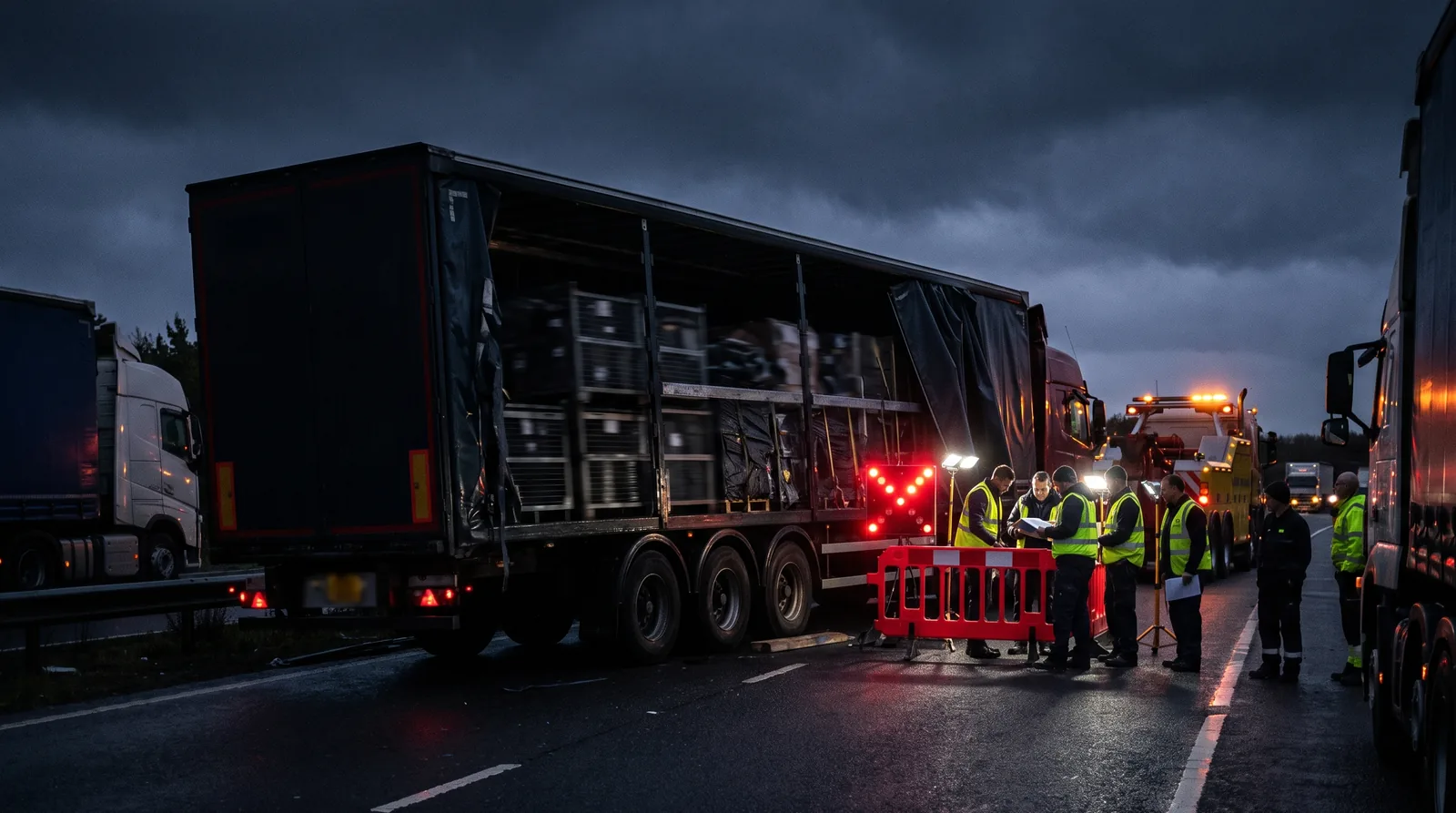
After a road incident such as a collision, a rolled-over trailer or heavy braking, cargo can be damaged even when it looks fine from the outside. That is why a post-accident inspection is necessary: photo documentation, checking the securing and the packaging, and assessing whether the goods are still usable. The result decides whether the cargo moves on, goes to quarantine, is repacked or is disposed of.
Why "it looks fine" is not enough
The forces at work during a collision, a rolled-over trailer or heavy braking do not always leave a mark that is visible at first glance. A box can be intact while the product inside is already damaged. A good outward appearance is therefore not proof that the goods are sound.
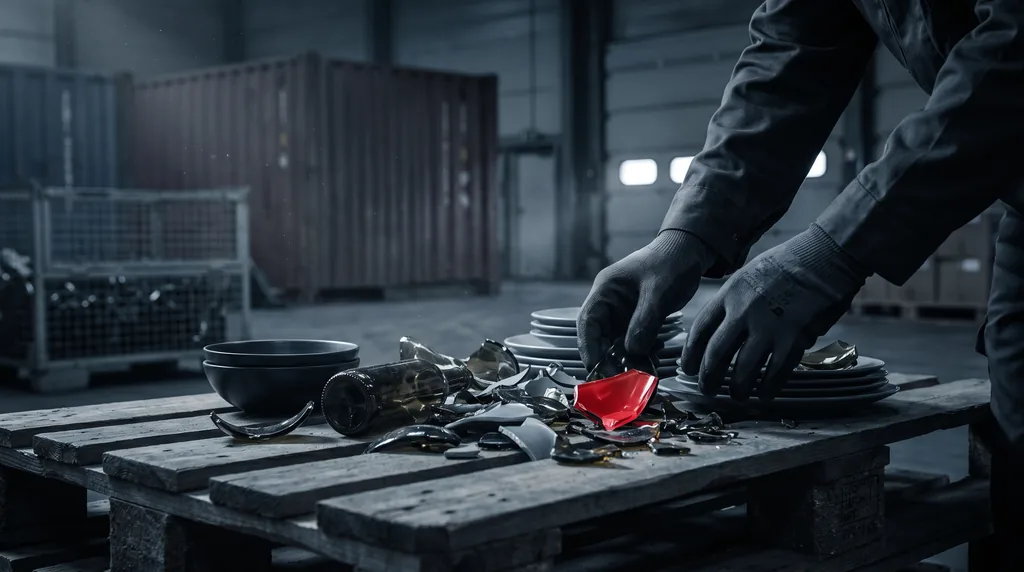
Typical damage that is easy to miss includes the cargo shifting from its original position, micro-cracks, disturbed pallets and loss of packaging seal. Each of these can mean the goods are not fit for further travel or for sale, even though the crate or the wrap look undisturbed. Judging by eye, without opening and checking, is therefore a risk that, in the event of a claim, falls on the party responsible for the cargo.
What to check after an incident
A post-accident inspection follows a fixed logic: first preserve the state, then assess it. Before anything is corrected or reloaded, it is worth going through the points below.
- Photo documentation. Take photos of the cargo, the load space and the securing before moving any goods. These show the real state after the incident and are the basis of the report.
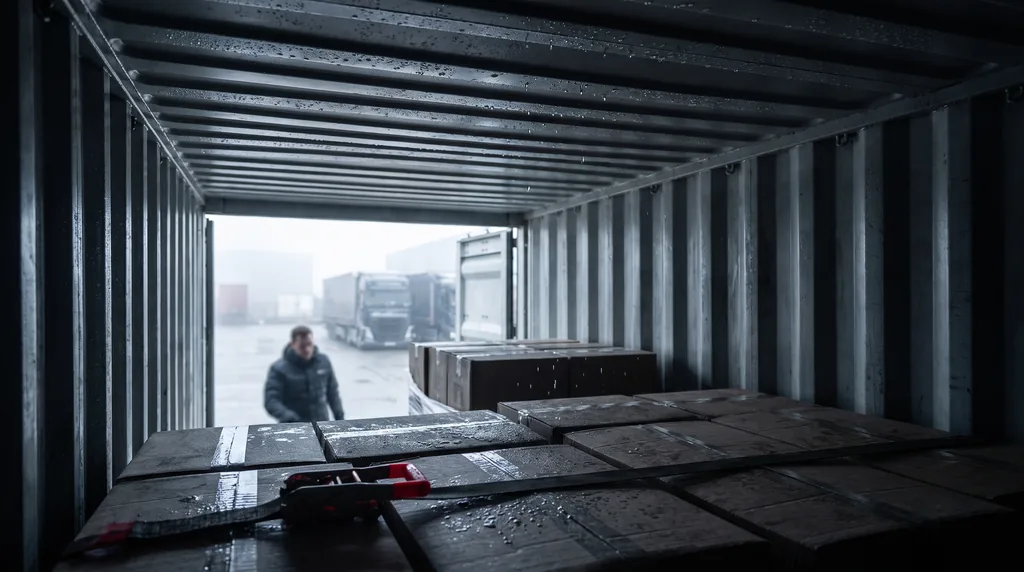
- Securing. Check the straps, anti-slip mats, bracing and the way the load is arranged. Cargo that has shifted or come loose is a sign that forces capable of damaging the goods were at work during the incident.
- Packaging. Look for broken seals, dents, tears and signs of leakage. Compromised packaging may no longer protect its contents, even if the product looks intact at first glance.
- Pallets and load units. A cracked or splayed pallet, torn stretch wrap or tilted layers are reasons to look at the contents more closely.
- Fitness assessment. On the basis of the above you assess whether the goods are fit for further transport and use, or whether they need further steps.
For cargo covered by dangerous-goods rules, that is ADR, checking the tightness and integrity of the packaging is especially important, because a loss of seal is not only damage to the goods but also a risk to the surroundings.
The decision on what happens to the goods
The result of the inspection leads to one of several decisions. Part of the cargo may move on without reservations. Part needs further steps before it returns to circulation.
- Quarantine. Goods in doubt are set aside until the matter is clarified, rather than being mixed with sound cargo.
- Repacking. Where the packaging is damaged but the product itself is not, repacking and returning the goods to transport can be possible.
- Disposal. Goods that are no longer fit for use have to be removed from circulation in a documented way.
Each of these decisions should rest on the report and the photo documentation that go to the insurer. An honest description of the state and of the steps taken is what later brings order to settling the claim.
The role of OTSL and the warehouse
OTSL treats cargo after a road incident as a situation that calls for orderly action, not a hasty roadside judgement. We support documenting the state, checking the securing and the packaging, and preparing the report for the insurer. Warehouse space provides a place where goods can be safely separated for quarantine, repacked, or prepared for disposal, instead of decisions being made in road conditions.
If your cargo has been through a road incident and you are not sure about its state, let us settle the next steps through the contact form. We handle cargo inspection and warehousing, and we explain transport terms in the glossary.
Why is a visual inspection of external packaging not enough?
Forces generated during heavy braking or trailer rollover can cause severe internal structural damage to goods without leaving visible marks on the outer boxes.
Step by step
- Secure the incident scene. Ensure driver safety and secure the vehicle area before initiating any inspection procedures.
- Take photo documentation. Photograph the trailer position, pallet arrangement, securing straps, and any visible damage.
- Inspect securing systems and packaging. Check whether lashings snapped and if primary packaging retained its structural integrity.
- Determine quarantine or repacking needs. Isolate doubtful cargo for secondary checks if internal damage is suspected.
- Prepare the loss report. Document all observations precisely and submit the statement to the cargo insurer.
Definitions
- Post-accident inspection: An orderly check of cargo, packaging, and securing devices following a road incident to determine its further transport usability.
- Cargo quarantine: Temporary isolation of goods pending a detailed expert assessment or insurer decision regarding safety.
- Hidden damage: Structural or internal harm caused by collision forces that leaves no visible marks on external packaging.
- Post-accident report: Official documentation detailing the condition of goods after an incident for insurance claim processing.
When does this rule not apply?
Standard post-accident inspection procedure does not apply when emergency services order an immediate cargo disposal at the scene due to an imminent environmental hazard.
See also: Sanitary inspection of a food cargo after a trailer breach (EHO / HACCP) and Are goods fit for sale after trailer tampering? | OTSL.
Sources
- UNECE, Transport of Dangerous Goods (ADR): the official source on the carriage of dangerous goods and packaging requirements.
- United Nations Economic Commission for Europe (UNECE): the body responsible for international road-transport regulations.