 AI image
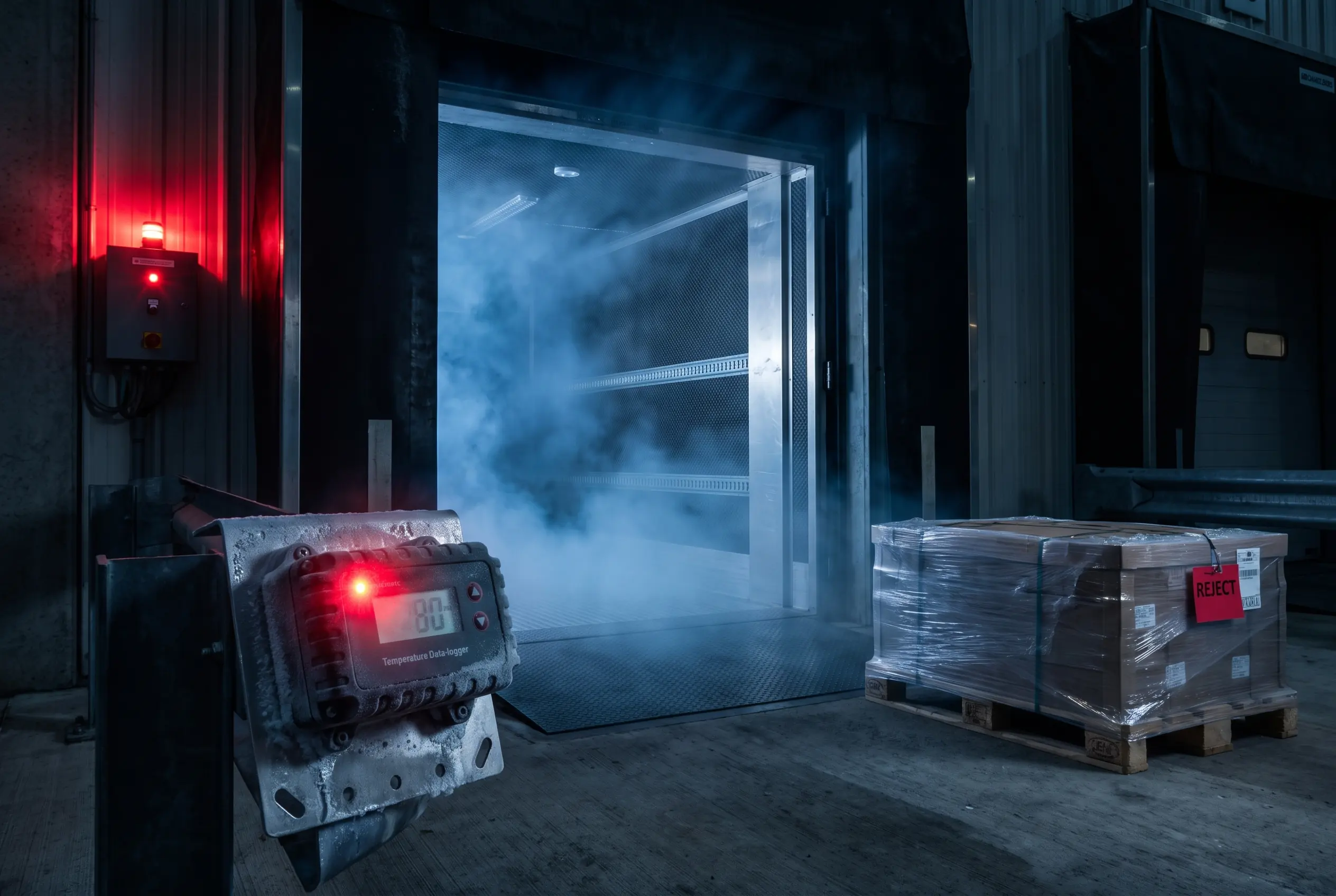
Chilled goods become un-sellable the moment the data logger records a temperature outside the agreed range, not when spoilage becomes visible. The receiver or a food-safety authority can reject the entire batch on the record alone. The product may look perfect and still be barred from sale.
What goes wrong?
A cold chain is a chain of records, not a matter of touch. What counts is continuous measurement from loading to unloading. The most common points where the chain breaks:
- Loading goods that were not pre-chilled to the required temperature, forcing the trailer to cool them down instead of holding them.
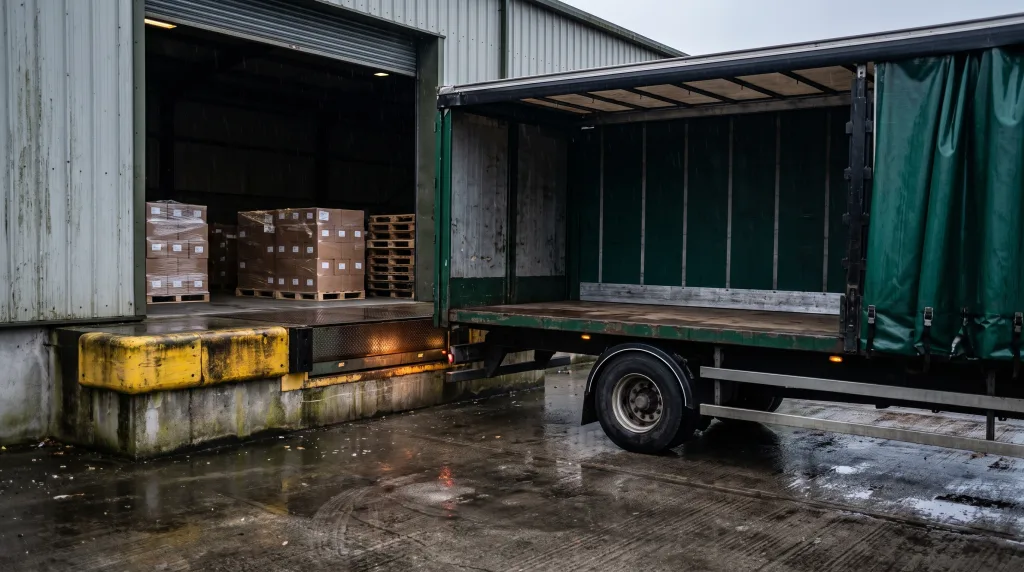
- Long stops with the doors open, at the dock or during checks, when the refrigeration unit cannot recover the temperature fast enough.
- Poorly arranged cargo that blocks airflow, so part of the pallets warm up despite a correct unit setpoint.
- A missing or badly placed logger that does not reflect the actual product temperature at the critical spots.
- Gaps in the data, where the measurement drops out and it becomes impossible to prove the temperature held the whole time.
For food and pharma-adjacent loads the record is the evidence. If the record shows an excursion or a gap, the receiver assumes the worst and refuses acceptance.
The real cost
The loss rarely ends at one pallet. When the logger shows the range was breached, the consequences cascade:
- Rejection of the whole batch, not only the part actually affected, because the receiver will not risk releasing product without full documentation.
- Write-off and disposal of the goods, often with the added cost of the disposal itself.
- A dispute over who is liable: shipper, forwarder or carrier, dragging on for weeks and holding up payment.
- A missed delivery window into a retail network or a production line, which hurts the relationship with the receiver more than the cargo value alone.
- Lost trust: a receiver who once got a batch with a questionable record scrutinises the data on every delivery that follows.
The most painful part is that the product may have been physically fine. You pay for the missing proof, not for spoilage.
How to avoid it and how OTSL handles it
A cold chain is won on documentation and discipline, not on the refrigeration unit alone. In temperature-controlled transport OTSL works so the record defends the goods rather than condemning them:
- We fix the required temperature range and permitted tolerances before loading, based on the shipper's specification rather than by default.
- We check that goods are pre-chilled before loading, because the unit holds a temperature, it does not pull it out of a warm load.
- We watch pallet arrangement and airflow so the unit setpoint matches the temperature across the whole cargo space.
- We keep a continuous temperature record for the entire journey and make sure the data has no gaps.
- We shorten door-open exposure at docks and during checks by planning stops and customs so they do not break the cooling continuity.
- We document the chain from loading to unloading and hand over a complete record the receiver can verify.
The result is simple: when the temperature question comes up at unloading, the answer is a complete, continuous record, not an explanation. That is the difference between an accepted batch and a returned one. If you move temperature-sensitive cargo between Poland and the UK, Norway, Switzerland or the rest of Europe, send us the parameters in advance and we will set the transport up so the proof is on your side.
Step by step
- Check product temperature. Verify that goods are pre-chilled to the specified setpoint before starting the loading process.
- Prepare the trailer interior. Set the correct cooling unit temperature and cool the loading space before cargo arrives.
- Position pallets correctly. Arrange the cargo to leave sufficient space for air to circulate freely around every pallet.
- Position data loggers. Install loggers in critical thermal zones inside the compartment to track conditions.
- Monitor throughout transit. Keep track of readings during the journey and minimise door opening times at docks.
Definitions
- Cold chain: An unbroken system of maintaining controlled thermal conditions from loading to delivery.
- Data logger: A measuring device placed inside the trailer that continuously records ambient temperatures.
- Refrigeration unit: Equipment fitted to the trailer that holds the target setpoint throughout the journey.
- Pre-chilling: The process of cooling goods down to the required temperature prior to loading.
- Airflow circulation: The unimpeded movement of cooled air around pallets ensuring uniform temperature distribution.
When does this rule not apply?
This rejection rule does not apply if the carriage agreement allows brief temperature variances and a subsequent quality assessment proves the cargo remains undamaged.
The OTSL role
When you plan shipments that require strict temperature stability, consider our temperature-controlled transport service. For details on cargo evaluation after issues, read our guide on whether goods are fit for sale after a seal breach.