 AI image
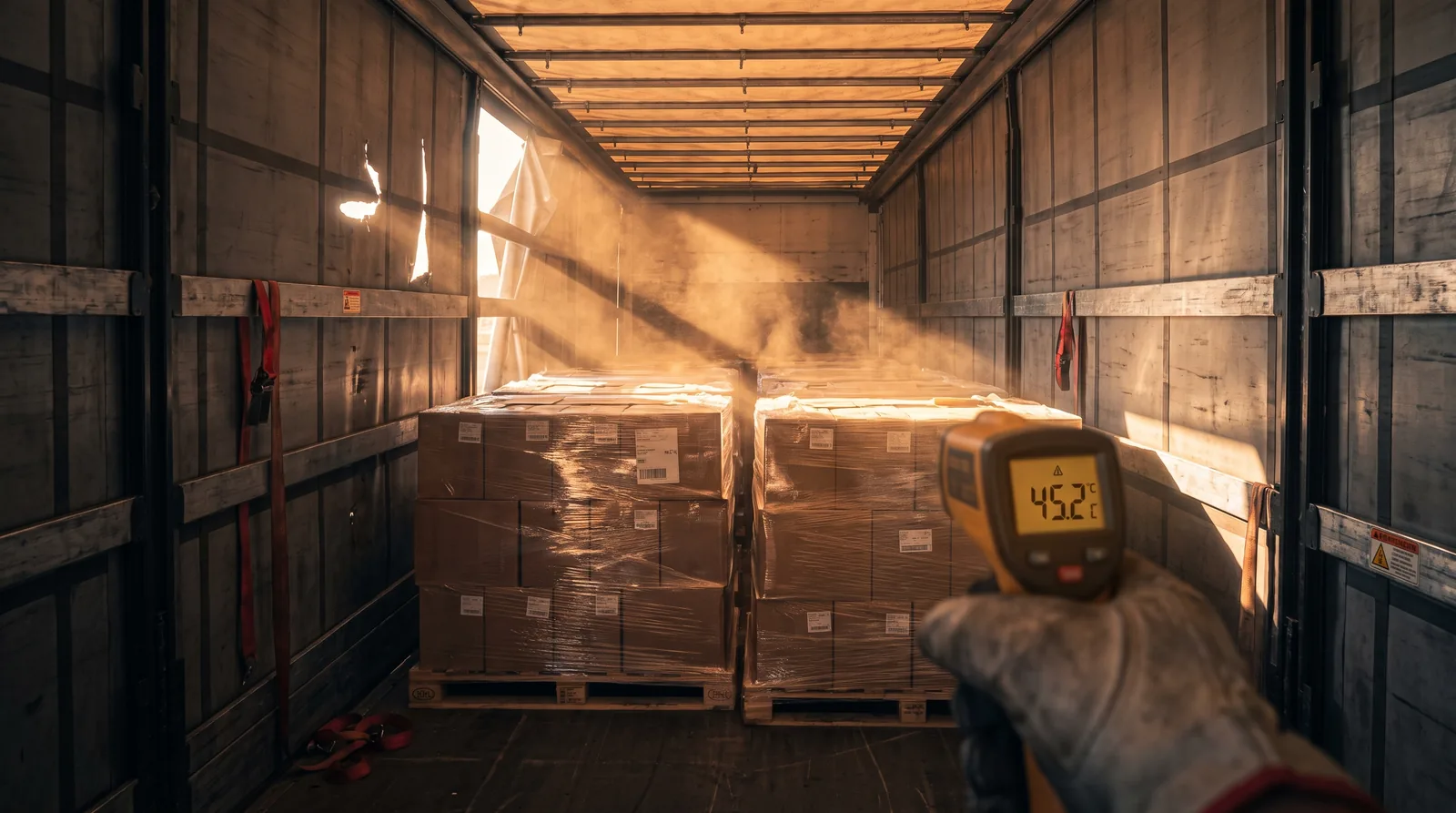
In summer the inside of a curtain-sided trailer gets far hotter than the outside air, and a parked vehicle heats up fastest. Cocoa butter softens at temperatures a trailer interior reaches with ease on a summer day, so chocolate, cosmetics and candles shipped without a reefer travel at the sender's risk: under Article 17 CMR the carrier is normally not liable for a wrong choice of equipment.
A curtain-sider in July is a greenhouse on wheels
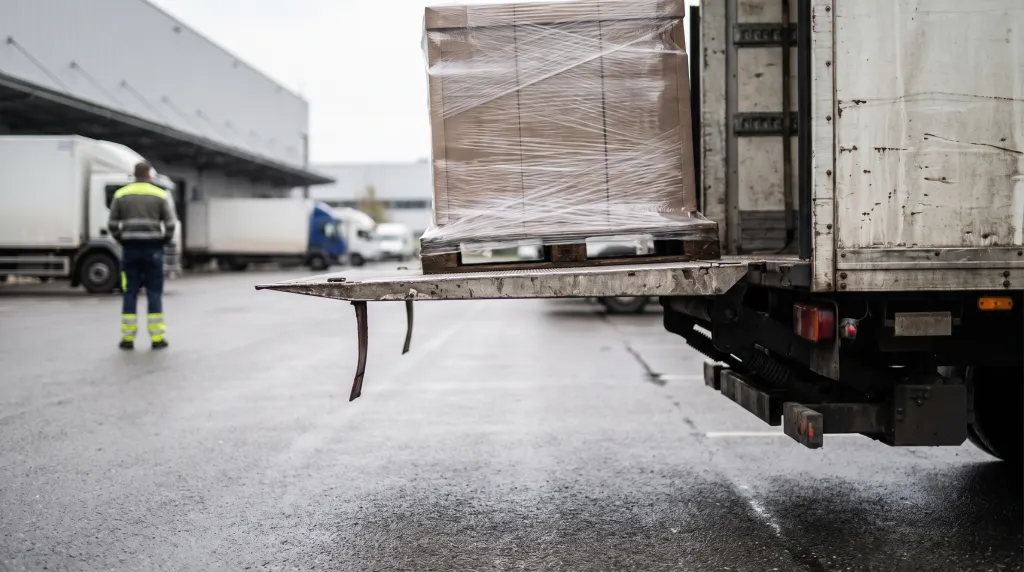
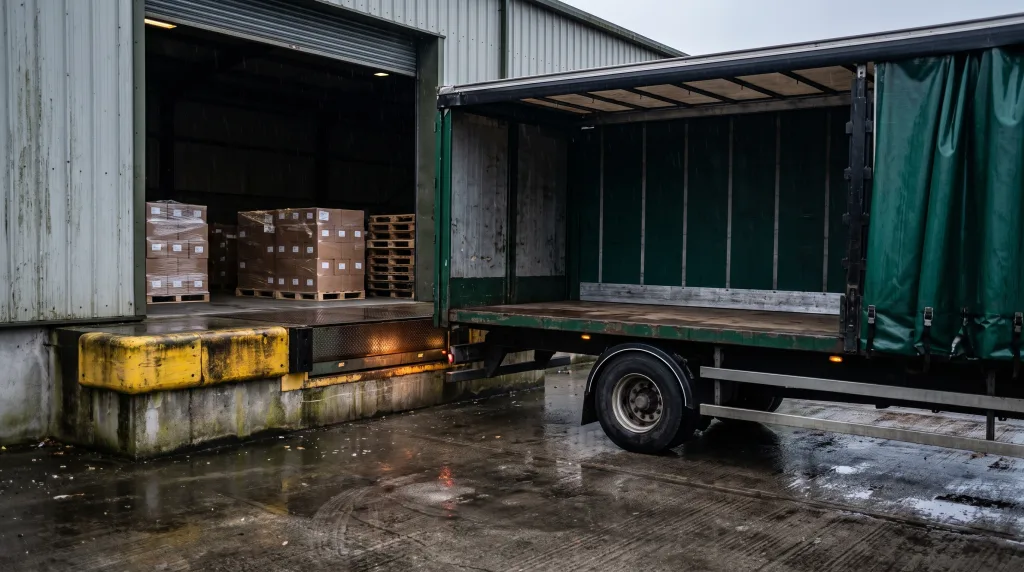
A standard curtain-sided trailer has no thermal insulation. The tarpaulin absorbs sunlight, the enclosed load space releases heat slowly, and on a bright day the temperature inside climbs well above the air temperature outside. Parking makes it worse: a trailer left on an open yard over a weekend keeps warming its cargo for two days with no ventilation at all. Pallets near the roof and the walls take the worst of it, which is why heat damage often affects only part of a consignment and turns the claim into an argument about percentages.
Seasonality is the trap. A lane that runs clean from October to April suddenly produces cartons of fused pralines in July. The shipper who has not seen a single claim in six months sees no reason to pay for a reefer, and that is exactly where the most expensive temperature claims are born: invisible at loading, obvious at delivery. If you import confectionery or cosmetics from Poland or elsewhere on the continent into the UK, add port queues to the picture: a trailer waiting for a crossing in full sun is standing metal, not moving air. Most freight quotes stay silent about all of this, because the cheaper curtain-sider wins every rate comparison right up to the first July claim.
What does heat does to chocolate, cosmetics and candle?
- Chocolate. Cocoa butter softens long before it fully melts. Bars bend, pralines fuse into blocks, and after the load re-solidifies the surface shows fat bloom: a white haze that is harmless to eat and fatal on a retail shelf. A supermarket quality check rejects the whole delivery. Why goods become un-sellable before they physically spoil is covered in our article on the broken cold chain.
- Cosmetics. Emulsions and creams separate at elevated temperatures, lipsticks and balms melt and set crooked, active ingredients lose their declared performance. Aerosols carry the manufacturer's own overheating warnings printed on the can. The damage hits more than the formula: bulged premium packaging looks like a factory second, and the brand pays for it.
- Candles and wax products. Wax softens gradually, so candles deform under their own weight, sets fuse inside their moulds and fragrance sweats out to the surface. Double-stacked pallets press on the bottom layer precisely when it is at its softest.
The common denominator is brutal: none of this is visible at the loading ramp. The driver collects neat, shrink-wrapped pallets, and three days later the consignee opens cartons containing one solid lump. With seasonal ranges, for example Christmas production shipped in summer, you lose not just the batch but a selling window that cannot be bought back.
Curtain-sider, insulated box, reefer, multi-temp: what you are really choosing
| Equipment | Thermal protection | Cost | When it makes sense in summer |
|---|---|---|---|
| Curtain-sider | none, the interior heats above ambient | lowest | goods insensitive to heat |
| Insulated box | passive: slows warming, does not cool | middle | short transits without long stops, goods with some tolerance |
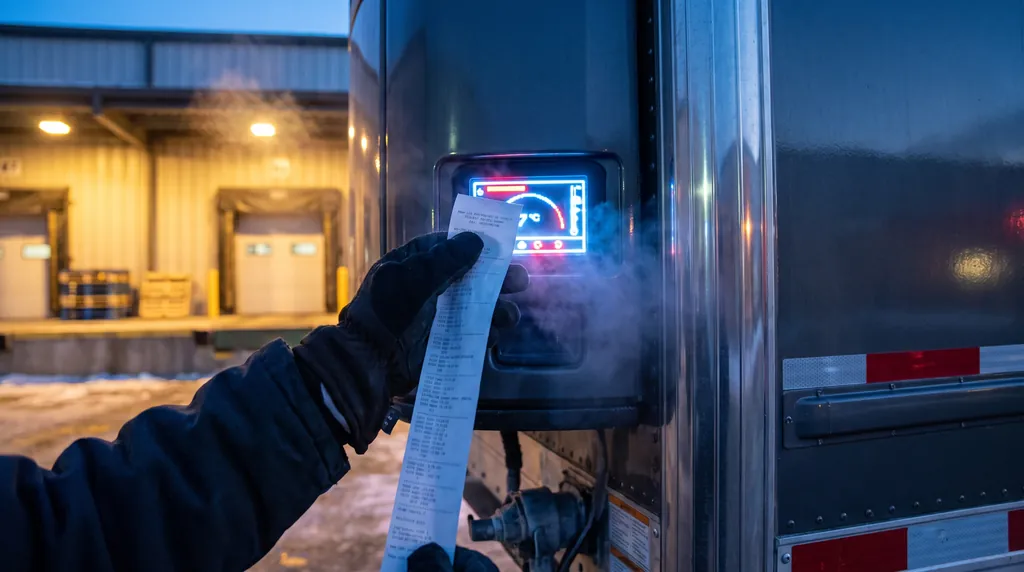
| Reefer | active: the unit holds a set temperature, usually with a log | higher | chocolate, cosmetics and candles in the summer season |
| Multi-temp | several temperature zones in one chain | depends on configuration | consolidation and buffering before distribution |
How temperature-controlled carriage works and how the equipment classes differ is explained in our article on temperature-controlled transport and the cold chain. On the warehouse side the counterpart is multi-temperature storage: ambient, chilled and frozen zones under one roof, so sensitive goods wait for distribution in a hall instead of a hot trailer.
When does a reefer is not in the budget: operational measure?
- Night or early-morning loading. The goods leave cool and spend the hottest hours on the move, and a moving vehicle warms up more slowly than one parked in the sun. This is the cheapest single protective measure there is.
- Routing without a weekend layover. Weekend and holiday driving bans for trucks in several transit countries mean the vehicle stands still, often on an unshaded truck stop in full sun. That is the longest heat exposure in the whole chain. Plan departure so the load does not spend Saturday and Sunday inside the trailer.
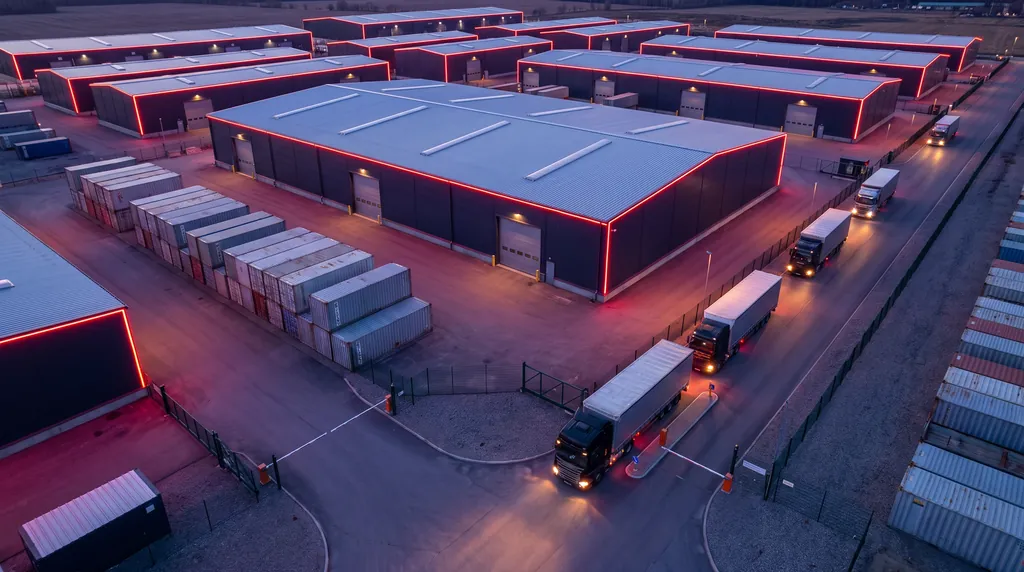
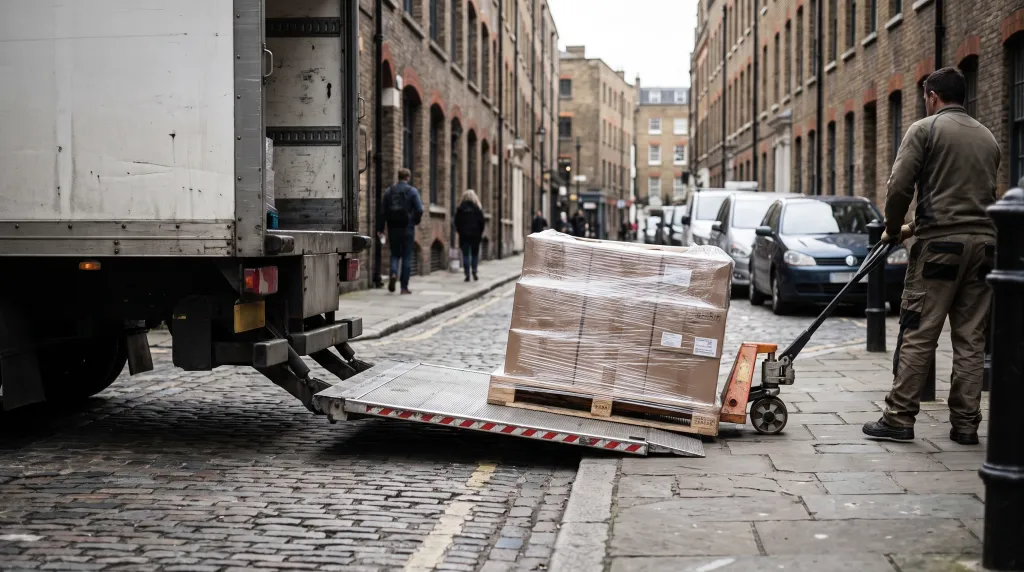
- Direct transport, no cross-docking. Every terminal means hours on a ramp or a yard. Groupage freight passing through several hubs multiplies the windows in which nobody controls the temperature.
- A temperature logger in the shipment. A simple logger will not cool the load, but it turns a shouting match about temperature into a conversation about data. What such a dispute looks like without data is shown in our article on temperature disputes in refrigerated transport.
- A temperature-controlled warehouse buffer. If the goods have to wait for distribution or repalletising, let them wait in a hall. How 52 pallets of chocolate get restacked without warming up is described in our chocolate restacking scenario.
Who pays for a melted load when nobody ordered a reefer
The CMR Convention, applied in the United Kingdom through the Carriage of Goods by Road Act 1965, gives the carrier a strong defence: Article 17(4)(d) relieves him of liability where the damage arises from the nature of goods which exposes them to internal spoilage or wastage. Article 18(2) adds a presumption: if the carrier establishes that the damage could be attributed to such a cause, it is presumed that it was. Chocolate in a curtain-sider in July is the textbook example. And where the principal himself specified a standard trailer, Article 17(2) joins in: the carrier is not liable for damage caused by the instructions of the claimant. The choice of equipment is the sender's decision, and its consequences sit with the sender.
The balance flips only under Article 18(4): where carriage is performed in a vehicle specially equipped to protect the goods from heat, the carrier may rely on the nature of the goods only if he proves that the equipment was properly selected, maintained and used. A booked reefer with the temperature regime written into the order and the CMR note turns temperature into the carrier's obligation. Hence the one sentence that matters most in this article: write the required temperature into the transport order and the consignment note, or accept that you travel at your own risk. On delivery of damaged goods, enter reservations under Article 30 CMR before signing a clean note. More scenarios sit in our transport risks section.
The OTSL role
As a road freight forwarder we match the equipment to the goods and the season: reefers and insulated trailers between Poland, the United Kingdom, Switzerland and the rest of Europe, night loadings, routings planned around weekend layovers, and buffering of sensitive goods in our warehouses in Kielce, Legnica and Milton Keynes. Before a July order goes out on a curtain-sider because it always has, we will price the risk and the alternatives with you. Describe your cargo through the contact form; the full offer is in our services section and further reading in the knowledge base.
Step by step
- Assess cargo sensitivity. Determine the maximum safe temperature threshold for chocolate, cosmetics or candles prior to booking.
- Check route weather. Review forecasted temperatures along the entire journey, paying close attention to static parking periods.
- Select suitable equipment. Choose between a curtain-sided trailer, an insulated box or a reefer based on heat exposure risk.
- Provide clear instructions. Specify temperature control requirements and handling rules in the transport order.
- Review temperature logs. Inspect the data log from the recorder upon delivery to confirm stable internal conditions.
Definitions
- CMR Convention (Convention on the Contract for the International Carriage of Goods by Road): an international treaty defining liability rules and documentation for road freight transport.
- ATP Agreement (Agreement on the International Carriage of Perishable Foodstuffs): a UNECE treaty establishing equipment classifications for temperature-sensitive cargo.
- Insulated box (Isotherm): a vehicle body with insulated walls but no refrigeration unit, designed to slow down heat exchange.
- Reefer: a temperature-controlled trailer fitted with a cooling unit that actively maintains a set temperature throughout transport.