 AI image
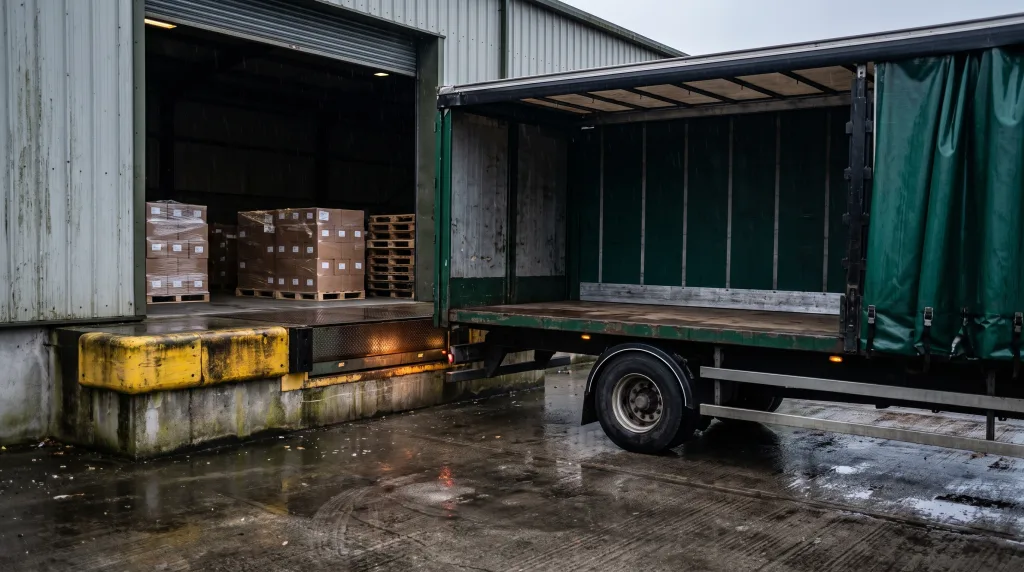
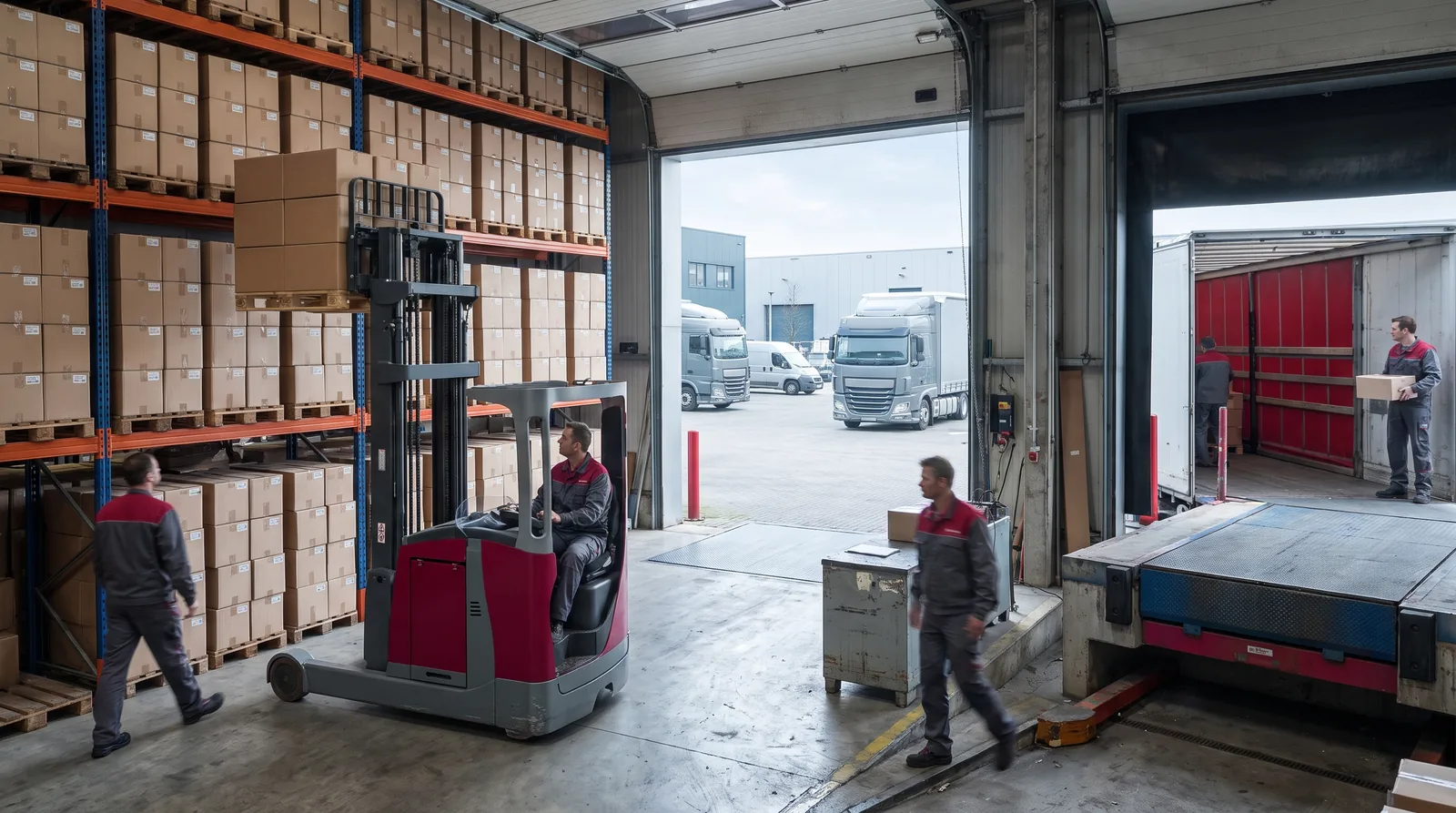
A production buffer is stock kept close to the plant, replenished by long-haul transport and delivered to production in agreed slots. The Legnica base plays that role for suppliers to plants of the Legnica Special Economic Zone and the region: goods wait a few kilometres from the line, not a few hundred, so a delay en route does not stop production.
Why a supplier needs a buffer
Manufacturing plants order deliveries into slots and have no room for someone else's stock. A supplier from the other end of Poland or from abroad has a choice: bet that every truck arrives to the hour, or keep stock closer to the plant gate. The buffer is the second option. Long-haul transport moves goods in economical batch sizes, and the short leg from Legnica completes the delivery exactly when the plant needs it.
How does it work operationally?
- Replenishment: full trucks arrive at the Legnica base on schedule, without nervously chasing a slot.
- Preparation: goods are repacked and palletised to the plant intake requirements.
- Slot delivery: the short approach means the time window sets the departure hour from the base, not a prayer for clear roads over hundreds of kilometres.
- Contingency: when production speeds up, the next batch is at hand, not on the road.
The stakes: the cost of having no buffer
A stopped production line costs money no matter whose fault it is, and contracts with plants rarely forgive late deliveries. One delayed truck can eat the margin of many shipments. A buffer does not remove risk from the route, it moves the risk to where it is cheap: onto the long-haul leg with time to spare, instead of the last hour before the slot.
When does it start to make sense?
A buffer pays off for repeat deliveries to the same plant, even small ones. Regularity matters, not scale. Deliveries from the base are handled by our road transport, smaller batches travel as groupage, and the transfer mechanics are described in the piece on the cross-dock on the A4. Location details: the Legnica base and the other OTSL warehouses.
How much buffer stock do you need to hold to avoid line-stop penalties?
You calculate the required stock level at the local hub based on lead-time variability from the origin factory and the average daily consumption on the assembly line. A standard operational buffer should cover between 2 to 3 days of continuous plant production. If your long-haul haulage from the UK or Western Europe takes an average of 48 hours, any transit or customs delay exceeding 12 hours requires increasing safety stock levels by at least 20%. For a full trailer load of 33 euro-pallets, this means maintaining a rolling reserve of at least 6 pallets on a weekly cycle. Goods are transferred from bulk transit packaging onto standard 1200x800 mm pallets designed for the recipient's automated storage systems.
This operational rule has defined boundaries where it does not apply:
- When the shelf life of the component is less than 24 hours from the moment of manufacture.
- When component sequencing follows real-time VIN allocations (Just-in-Sequence), making pre-buffering impossible due to part variance.
- When total delivery volume falls below 2 pallets per month, making fixed storage costs higher than the risk of contract penalties.
The required response window from the moment a call-off is triggered in the factory system to the trailer passing inward clearance at the gate is typically 45 minutes. If your transport provider requires more than 2 hours to dispatch an articulated lorry from the local hub, the risk of micro-stoppages shifts to the final leg. Outbound delivery schedules must therefore be built around factory shift patterns, incorporating a 15% time buffer for gate intake control procedures.
Step by step
- Transport planning. You coordinate long-haul schedules from the supplier base to the buffer node.
- Delivery to the base. Long-haul trucks unload full batches into the local storage facility near the economic zone.
- Stock registration. Goods are logged and held in readiness for production calls.
- Slot booking. The manufacturing plant issues a precise unloading time slot for delivery.
- Shuttle delivery. A short local run moves components straight to the factory floor.
Definitions
- Buffer warehouse: A storage facility located close to the manufacturing plant used to keep safety stock.
- LSSE (Legnica Special Economic Zone): A designated economic area providing specific commercial conditions for industrial companies.
- Delivery slot: An agreed time window for unloading goods at the production plant.
- Long-haul transport: The movement of goods over long distances between main logistics hubs.
The OTSL role
OTSL manages line-feed logistics and buffer stock movements to ensure unbroken production flows. See how our road transport services operate and explore how freight forwarding works from A to Z to optimize supply routes.