 AI image
For parcels up to about 31.5 kg, use a courier. For one or several pallets you do not want to break down into parcels, use pallet freight (LTL groupage). When the load is urgent, fragile, oversized or fills a whole truck, use a dedicated (FTL) service. You decide on five parameters: weight, dimensions, value, urgency and pallet count.
Five parameters that settle the choice
A shipper who sends a few times a year usually looks only at price. That mistake costs you either a damaged load or a late delivery. Before you compare rates, describe the shipment with five numbers and one question about the deadline.
- Actual and volumetric weight. Carriers charge on dimensional weight (volume converted to kilograms). A light but bulky box can cost as much as a heavy parcel.
- Dimensions and shape. Anything that will not fit a standard parcel or overhangs a pallet drops out of the courier tariff.
- Value and fragility. The more expensive and delicate the load, the fewer handling points you want it to see.
- Urgency. A fixed deadline (a production line, a trade-fair stand) tips the maths towards dedicated transport.
- Pallet count. One, a few or a full truck. This is the first filter that separates groupage from FTL.
When a courier is the right choice
Couriers win with small, light and moderately valued shipments that pack into standard parcels. The express network is dense, delivery is fast and the price of a single parcel is low. The ceiling is usually around 31.5 kg per parcel plus length and girth limits, which differ by carrier.
Watch one trap: splitting a heavy pallet into a dozen courier parcels is often more expensive and riskier than a single pallet shipment. Parcels travel separately, may drift apart in time and route, and a claim for one lost box from a set is your problem, not the neighbouring parcel's carrier.
When pallet freight (LTL) makes sense
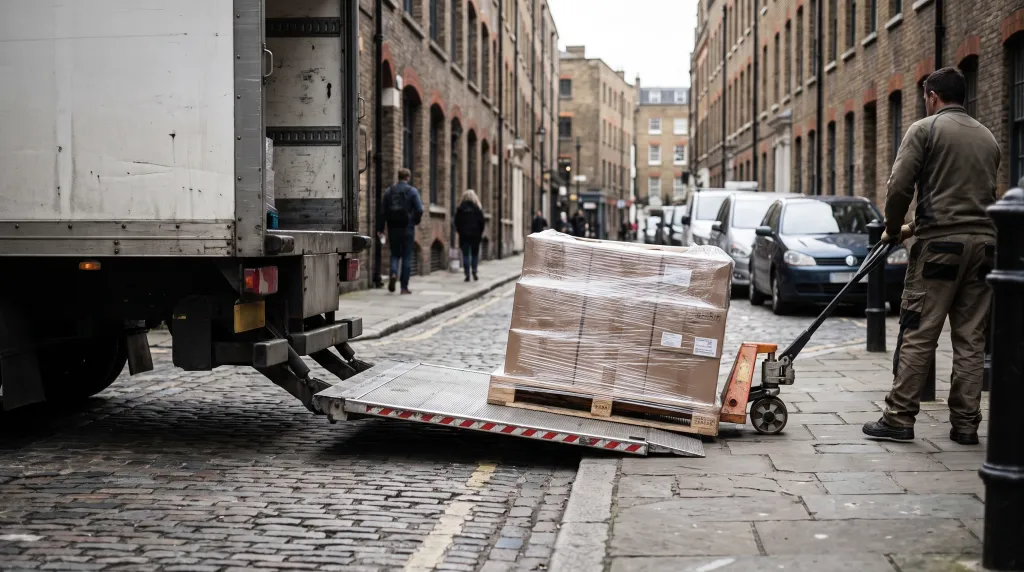
Once your goods sit on a pallet, wrapped and strapped, and you do not want to split them into parcels, you choose groupage. You pay for the space you occupy in the truck, so one pallet up to two or three pallets is the classic LTL zone. The load travels as a whole, on one consignment note, with one tracking number.
Groupage has a hidden cost: transhipments at cross-dock terminals. Every transhipment is a moment when a pallet can take a knock on the corner. That is why good securing matters, along with pallet height (above roughly 2 metres a pallet is often non-stackable and costs more, and the exact limit depends on the trailer's internal height) and an honest description of the goods. We cover the mechanics of this transport in our article on groupage and LTL across Europe.
When does a dedicated load (FTL) or sensitive transport fit?
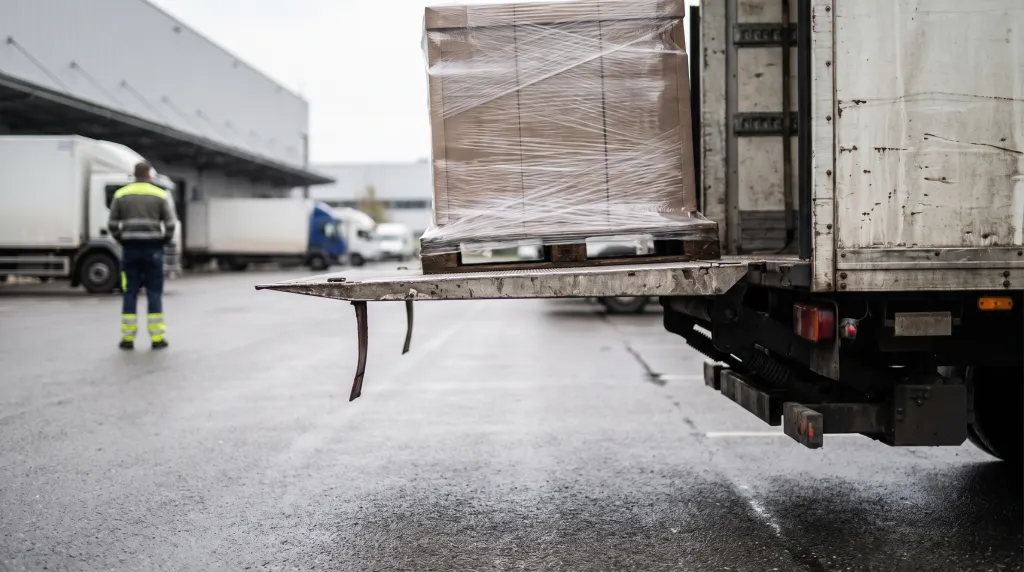
A dedicated service means a whole truck for one load. It works when you have enough pallets to fill the trailer, when the deadline cannot move, or when the goods cannot bear transhipment. It is chosen by shippers sending to trade-fair stands, to just-in-time production lines, and for valuable, fragile cargo. The truck runs straight from point A to B, with no terminals in between, so the risk of damage and delay is lowest.
The line between groupage and a dedicated truck is not sharp. With a dozen or more pallets it pays to price both options. We break it down in our piece on whether to choose FTL or LTL.
Table: courier, groupage or dedicated truck
| Criterion | Courier | Groupage (LTL) | Dedicated (FTL) |
|---|---|---|---|
| Typical weight | up to ~31.5 kg/parcel | from one pallet up | full truck |
| Load form | parcel | 1 to a few pallets | many pallets or whole truck |
| Transhipments | many, by machine | at cross-dock terminals | none or minimal |
| Urgency | fast network | fixed schedules, less flexible | handles a hard deadline |
| Sensitive load | risky | moderate | safest |
| Unit cost | lowest when small | optimal for pallets | highest, but exclusive |
International transport: documents and the customs border
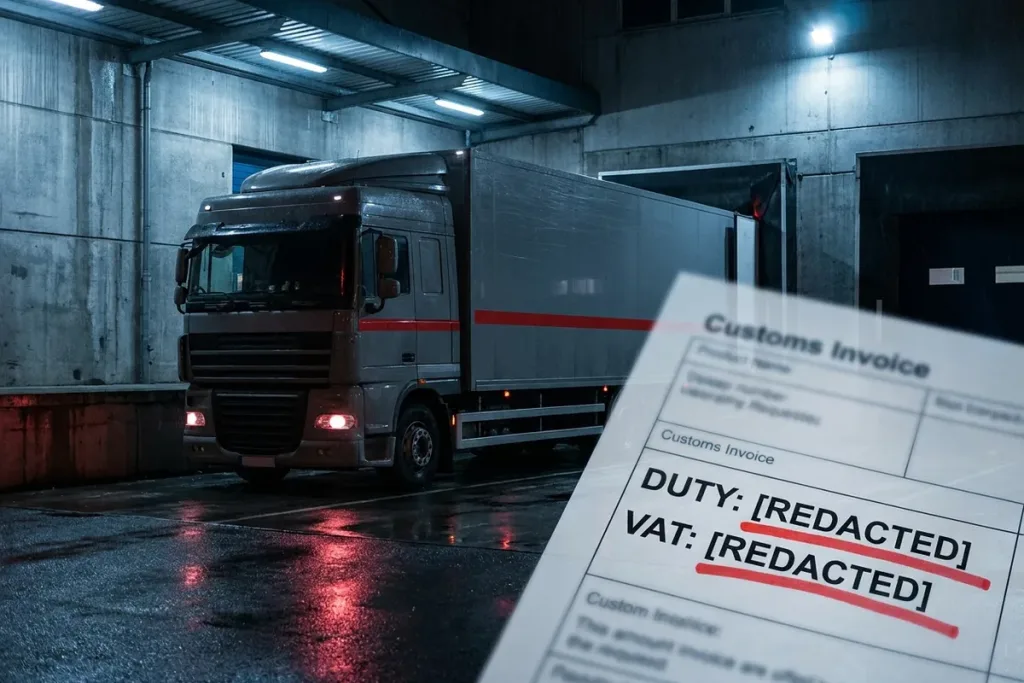
For shipments within the European Union, the courier-versus-pallet-versus-truck choice rests mainly on dimensions and urgency. Outside the Union, for example to the United Kingdom, Switzerland or Norway, a customs layer is added. Every shipment, courier included, needs a customs declaration, an invoice and a correct tariff code. A courier usually clears customs for you under its simplified procedure, but only for simple low-value shipments; for commercial or higher-value goods the clearance may be full and charged separately (a disbursement fee). The cost and formalities still fall on the sender or receiver, depending on the agreed delivery terms (Incoterms).
For pallets to the UK it pays to have a forwarder who runs customs clearance and watches the paperwork on both sides of the Channel. A single pallet to the islands is a topic of its own, because here the border makes a real difference in price and time. We describe it in our article on single-pallet transport to the UK for small quantities. For Switzerland, remember that since 1 January 2024 industrial products are duty-free on import (BAZG), so machinery and most manufactured goods carry no duty; import VAT (standard 8.1 percent) still applies regardless. Duty charged on gross weight (per 100 kg) now mainly concerns agricultural and food products, where weight and packaging genuinely affect the bill. Clearance on the Swiss side is handled by the Swiss customs administration.
The most common shipper mistakes
- Sending a pallet as courier parcels. Cheap in the short term, costly in the long run when one box vanishes from the set.
- Wrong weight and dimension declaration. Correction surcharges can exceed the saving from a lower tariff.
- No pallet securing. Stretch film and strapping are not decoration. Without them groupage will not survive transhipment.
- Ignoring customs clearance. Outside the Union, missing documents stop the shipment at the border, whether it is a courier or a truck.
How to match the option to your shipment
A simple path: parcels up to 31.5 kg and standard size mean a courier. Goods on a pallet, one to a few units, with no fixed deadline mean groupage. A full truck, valuable, fragile or urgent cargo means a dedicated service. For international shipments, add the customs layer and documents. A single point of contact on the forwarder's side will arrange this for you, even when you do not know which category your shipment falls into.
Not sure what to pick for a specific load? Give us the weight, dimensions, direction and deadline through our contact form, and we will match the option and cost it honestly, without breaking your pallet into random parcels.
Step by step
- Measure and weigh the cargo. Check if the consignment meets parcel limits or requires palletisation.
- Assess cargo fragility. Determine if the goods can withstand automated handling in sorting hubs.
- Calculate pallet count. Work out how many pallet spaces or loading metres your goods will occupy.
- Check delivery urgency. Choose direct transit without intermediate handling when time is critical.
- Book the shipment. Submit cargo parameters to arrange transport and customs clearance.
Definitions
- FTL (Full Truck Load): Full truckload transport where a single shipper uses the entire cargo space of the vehicle.
- LTL (Less than Truck Load): Groupage transport where your load shares space inside the trailer with goods from other shippers.
- LDM (Loading Metre): Unit of measurement corresponding to one linear metre of cargo space along the length of a trailer.
- Courier shipment: Express transport of individual parcels through an automated sorting network.
The OTSL role
OTSL arranges freight transport between Poland, the UK, Switzerland and Norway, matching the shipping option to your cargo parameters. You can book regular groupage services or consult the guide Transport całopojazdowy czy drobnica to select the right solution.