 AI image
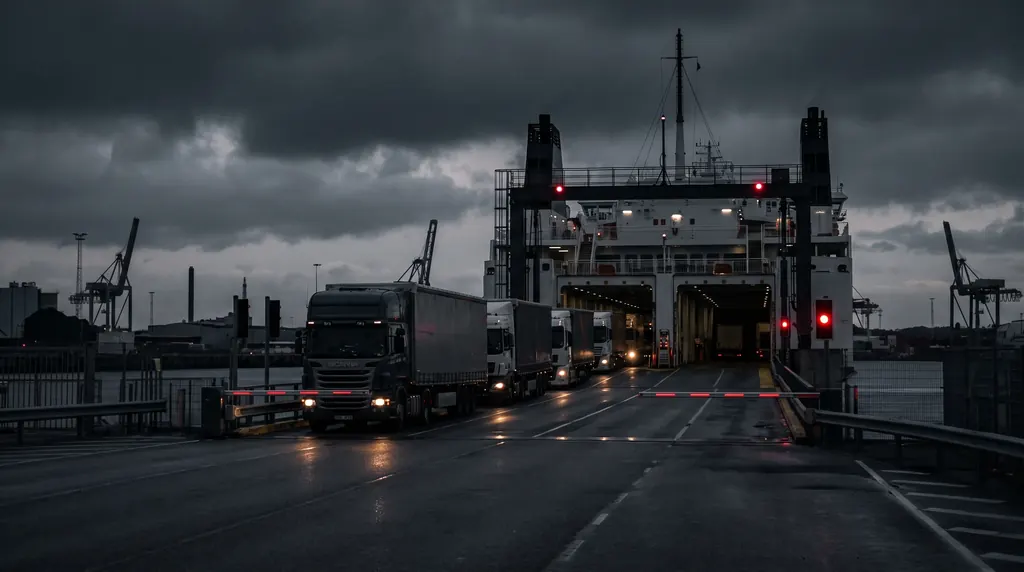
UK customs clearance after Brexit requires an EU export declaration (EX/EAD), an ENS safety declaration, a GB import declaration and a GMR in the GVMS system. The order matters: without the full set of declarations the driver will not board the ferry or the train, and the goods wait at the border instead of moving to the consignee.
Before the truck moves
Clearance starts before loading, not at the border. The exporter needs an EU EORI number and the importer a GB EORI; without them the declarations will not go through. Add a commercial invoice with the value, currency and Incoterms, a goods specification and the correct tariff code. How to get the number is covered in the text on the EORI number, and the split of duties between sender and consignee in the article on Incoterms for UK transport.
Step by step
- Commercial invoice, specification and goods data: tariff code, weight, value.
- EU export declaration (EX/EAD); if preferences apply, a statement on origin on the invoice, above EUR 6,000 with REX (Registered Exporter system) registration.
- ENS safety declaration before arrival at the border.
- GB import declaration prepared by a customs agency in the UK.
- Creating the GMR in GVMS and assigning the declarations to it.
- The crossing (e.g. Dunkirk-Dover) and release of the goods on the British side.
- Confirmation of export, needed among other things for the zero VAT rate on export.
The consignment value affects how tax is settled on the British side. According to GOV.UK, for a consignment valued at GBP 135 or less sold directly to a customer in Great Britain, VAT is charged at the point of sale as UK supply VAT rather than as import VAT; the GBP 135 threshold applies to the value of the whole consignment, not individual items. It is worth settling this distinction before issuing the invoice.
Who is responsible for what?
| Document | Who prepares it | When |
|---|---|---|
| Commercial invoice and specification | the exporter (sender) | before loading |
| EX/EAD export declaration | a customs agency in the EU | before the truck departs |
| ENS declaration | the carrier or a customs agency | before arrival at the border |
| GB import declaration | a customs agency in the UK | before the GMR is created |
| GMR in GVMS | the carrier | before entering the terminal |
The most common traps
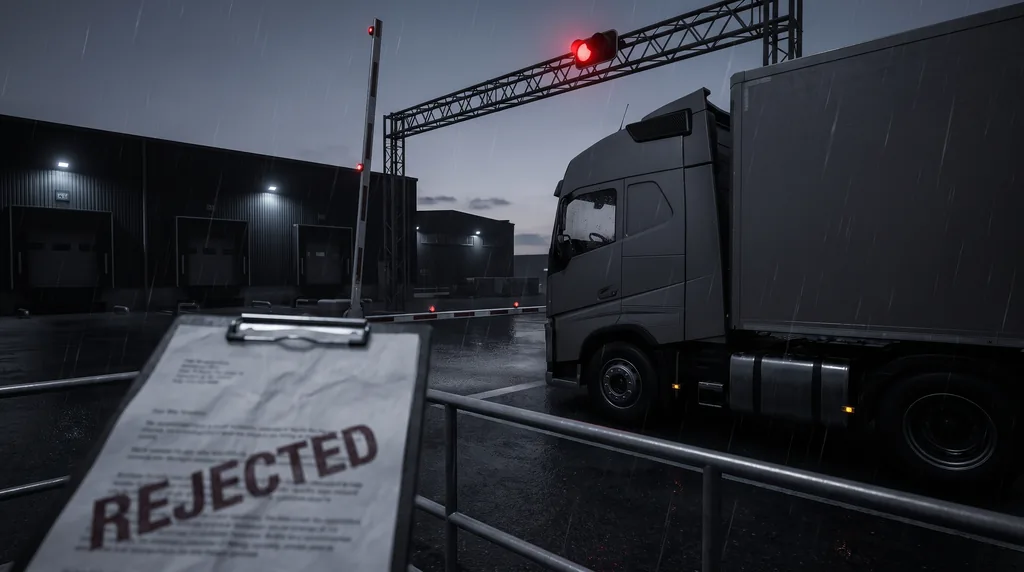
- The GB import declaration delivered too late: the GMR cannot be created, the truck waits.
- Discrepancies between the invoice, the specification and the CMR (the Convention on the contract for international carriage of goods by road), for example a different pallet count.
- A missing GB EORI of the importer or a typo in the number.
- A generic goods description in the safety declaration, which the system rejects.
How do we run it at OTSL?
We have our own customs agencies in Poland and the United Kingdom, so export, import and the GMR form one process together with transport, delivered as our customs clearance service. We check the full set of documents before the truck departs, not at the border, when it is too late for corrections. See customs clearance and transport to the United Kingdom.
Definitions
- EX/EAD (Export Accompanying Document): An EU export accompanying document confirming that goods have been declared for export.
- ENS (Entry Summary Declaration): A safety and security declaration required prior to bringing goods into the destination territory.
- GMR (Goods Movement Reference): A unique reference code verifying that all required customs declarations are completed for the vehicle.
- GVMS (Goods Vehicle Movement Service): A UK IT system used to link customs declarations directly to a transport vehicle.
- EORI (Economic Operators Registration and Identification): An identification number required for businesses undertaking customs activities in the EU and the UK.
When does this rule not apply?
This standard customs clearance process does not apply to goods moved under the T1 transit procedure or personal removals, where requirements depend on separate customs relief rules.
The OTSL role
We handle customs clearance and coordinate road transport using our logistics base in Kielce and facility in Milton Keynes. We help maintain a smooth movement of goods and prevent border delays described in skopana odprawa, a ekipa stoi i czeka.
Sources
- GOV.UK: import goods into the UK
- GOV.UK: VAT on overseas goods and the GBP 135 threshold
- GOV.UK: export goods
- European Commission: Taxation and Customs Union
- PUESC: Polish customs and tax administration (KAS)
Planning a shipment to the UK? Describe the load in the contact form and we will set the document list and run clearance together with transport.