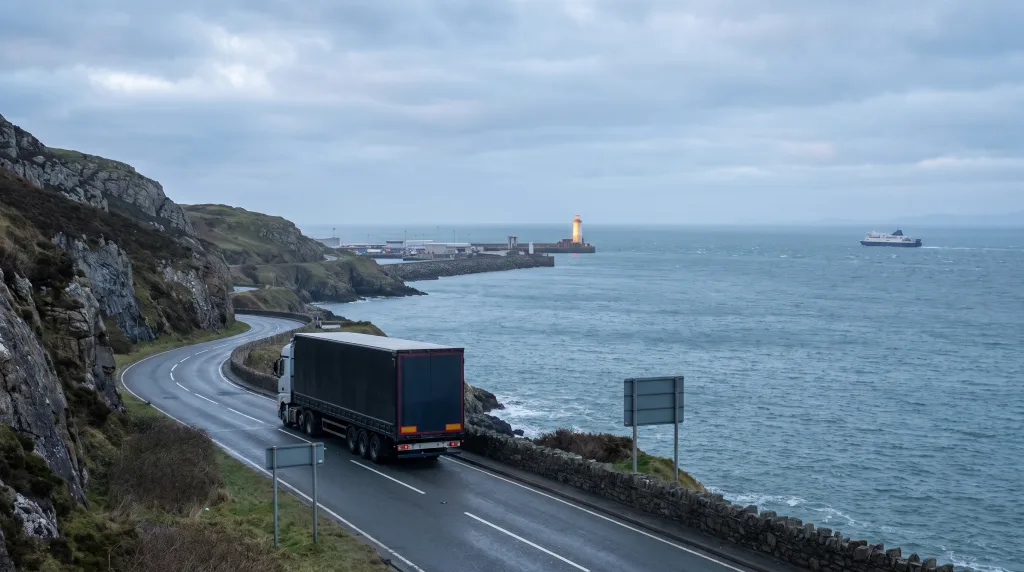
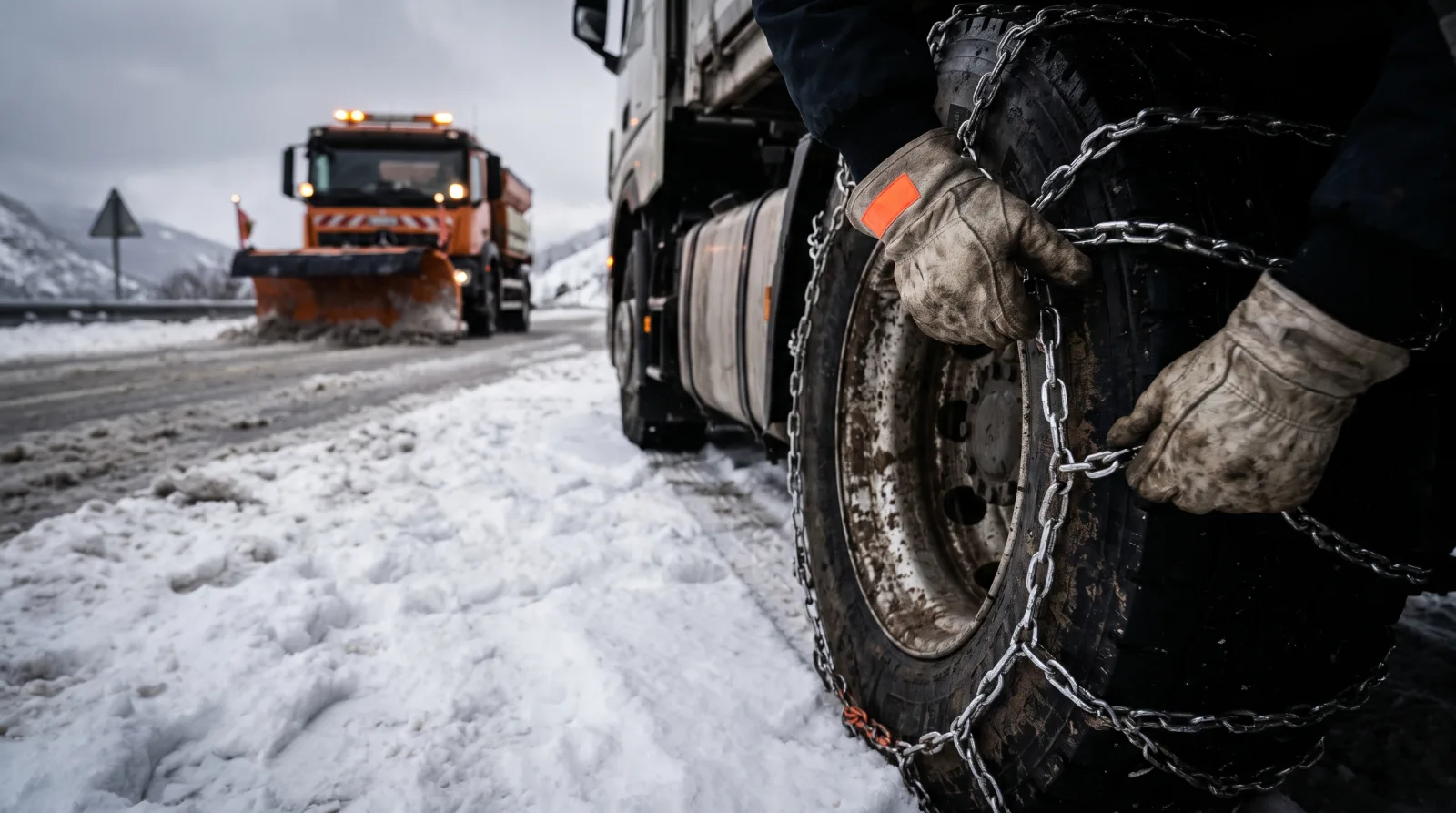
 AI image
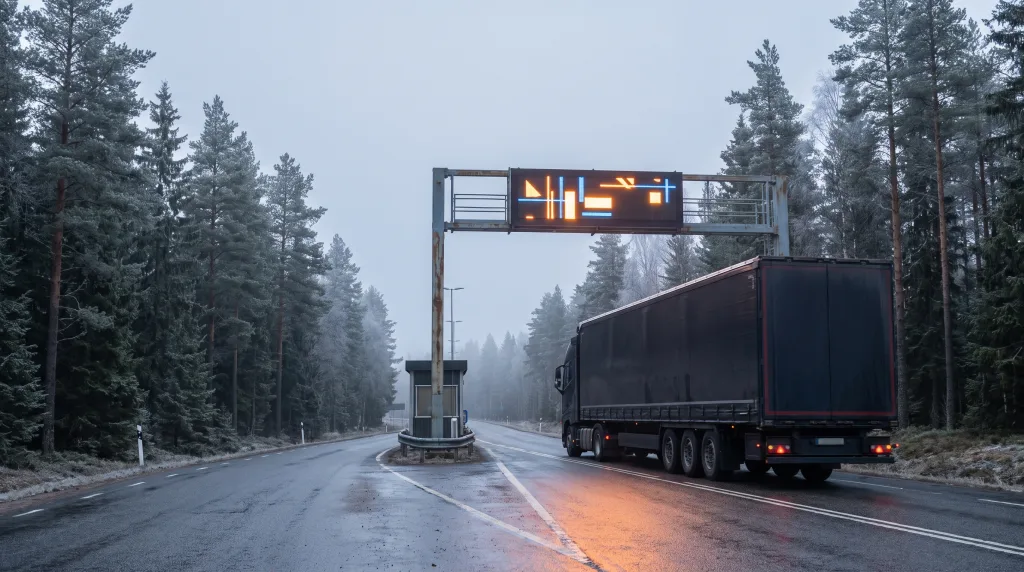
In the winter season heavy vehicles in Norway must carry snow chains on board, and heavy vehicles are subject to requirements on winter tyres and minimum tread depth. Numbers, season dates and values are set by Statens vegvesen. On the mountain passes, including the E16 and E134 to Bergen, difficult conditions bring convoy driving behind a snowplough (kolonnekjøring) or temporary road closures. Equipment checks are frequent, and missing chains or the wrong tyres mean the vehicle is held until the deficiency is put right.
What winter equipment must a truck carry in Norway?
Two requirements are fundamental. First: in the winter season a truck must carry snow chains on board, and their number depends on the vehicle configuration, that is whether it runs solo, with a semi-trailer or with a drawbar trailer. Second: heavy vehicles are subject to requirements on winter tyres and minimum tread depth during the winter period. The exact season dates, chain numbers and tread depth values are published by Statens vegvesen on vegvesen.no and must be checked before every season, which is why this text deliberately does not repeat them.
The winter period is not uniform across the country: in the northern regions it is longer. A truck heading for Trondheim or beyond falls under the requirements earlier in autumn and later into spring than one ending its run in Oslo. When planning a delivery at the turn of the season, you check the dates for the destination region, not for the border at Svinesund.
What is kolonnekjøring, and what does the driver do when a pass is closed?
On the mountain passes, including the E16 over Filefjell and the E134 over Haukeli on the way to Bergen, the road authorities introduce convoy driving behind a snowplough in difficult conditions, kolonnekjøring in Norwegian. Vehicles gather at a designated point and wait to be called; the convoy sets off behind the plough at set intervals, and overtaking or turning back is ruled out. When conditions are worse, the road is closed temporarily and there is no convoy.
For the driver this means one thing: the state of the pass is checked before leaving Oslo, not at the foot of the mountain. If the Statens vegvesen bulletin says convoy, waiting time goes into the plan; if it says closure, the alternative route or a stop. Waiting for a convoy uses up driver hours just like driving, which is why we plan winter deliveries to Bergen with a buffer the customer knows about before departure.
Preparing a truck for winter in Norway step by step
- Check the season dates for the destination region. On vegvesen.no; the north has a longer winter period than the south.
- Complete the chains for your configuration. Solo, tractor with semi-trailer and drawbar combination have different requirements; the chains must fit the tyres and be reachable from the cab, not at the bottom of a locker.
- Verify the tyres. Winter tyres meeting the heavy-vehicle requirements and tread depth above the minimum on all axles, including the trailer.
- Check the route on the day of departure. Statens vegvesen bulletins on the passes: convoy, closure, restrictions for heavy vehicles.
- Write a buffer into the driver-hours plan. Waiting for a convoy and slower driving use up driver hours; the delivery date is given as a window.
- Inform the consignee before departure. We communicate the risk of weather delay before the truck sets off, not while it is standing below the pass.
Definitions
- Kolonnekjøring – convoy driving behind a snowplough introduced on the passes in difficult conditions; vehicles wait at a designated point to be called forward.
- Statens vegvesen – the Norwegian Public Roads Administration; it sets the winter requirements for vehicles and publishes road condition bulletins.
- Snow chains (kjettinger) – mandatory truck equipment in the winter season; the number depends on the vehicle configuration.
- Minimum tread depth – the value below which a tyre does not meet the winter requirements for heavy vehicles; the current value is published on vegvesen.no.
- E16 and E134 – the main routes from Oslo to Bergen over the Filefjell and Haukeli passes, subject to winter restrictions.
Winter checklist before entering Norway
- Winter season dates for the delivery region checked on vegvesen.no.
- Chains in the number required for the vehicle configuration, matched to the tyres, reachable from the cab.
- Winter tyres on all axles with tread depth above the minimum, including the trailer.
- Bulletins on the passes along the route checked on the day, alternative route known to the driver.
- Time buffer in the driver-hours plan for a convoy or a detour.
- Consignee informed of the weather risk and the delivery window before departure.
When do the winter requirements not apply to your movement?
Outside the winter season defined by Statens vegvesen the chain and winter tyre obligation does not apply, but when the season starts and ends depends on the region: in the north it lasts longer. Convoy driving applies only to sections where the authorities introduce it; a delivery to Oslo along the E6 from Svinesund usually crosses no pass and convoy driving does not affect it, unless the weather also closes lowland roads. The requirements described here are Norwegian; in Sweden, through which the route runs, separate winter rules apply, and the general requirements of European countries are covered in a separate OTSL article.
The OTSL role
Winter conditions lengthen journey times and use up driver hours, which is why OTSL plans winter deliveries to Norway with a buffer and tells the customer about the risk of weather delay before departure, not after. Vehicles on Norwegian lanes run under road transport with winter equipment checked before the season. The general requirements of European countries are collected in winter equipment for trucks in Europe, and how the same problem looks in the Alps is shown in Switzerland in winter. Why waiting for a convoy moves the delivery date is explained in driver hours vs delivery deadline. The lane as a whole: transport to Norway.